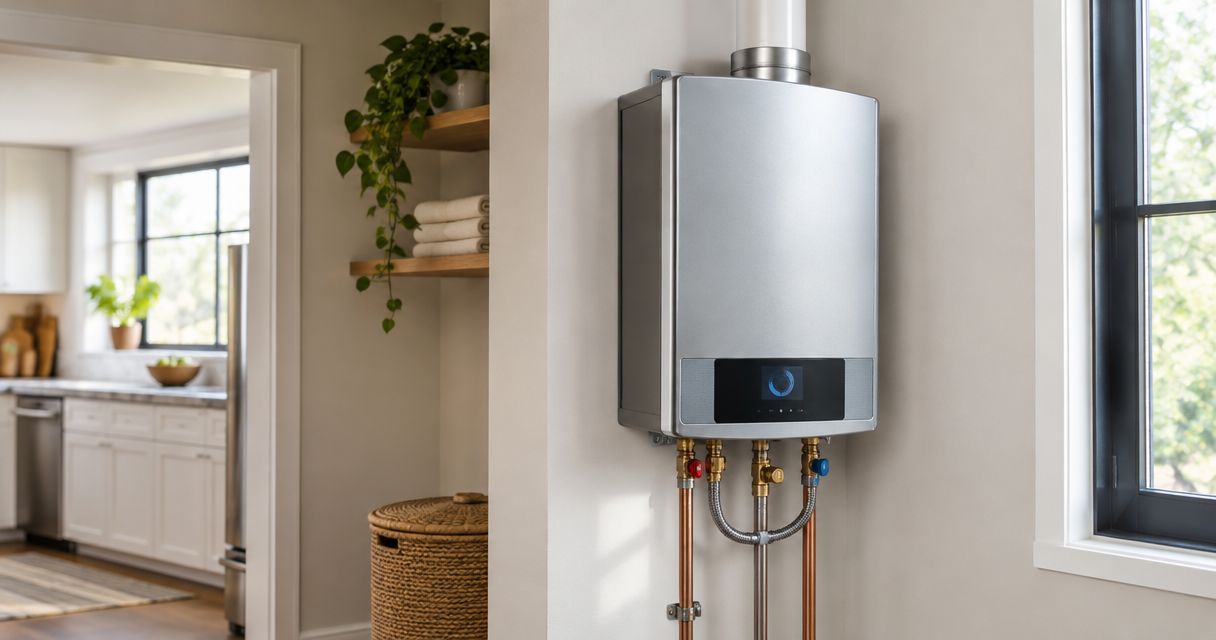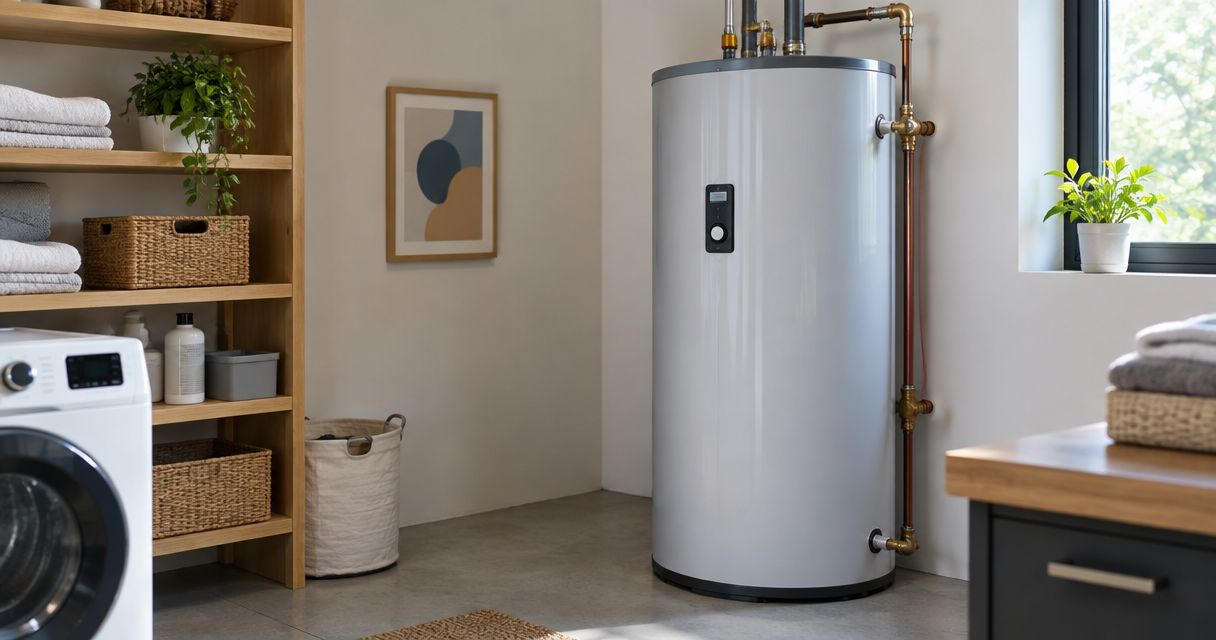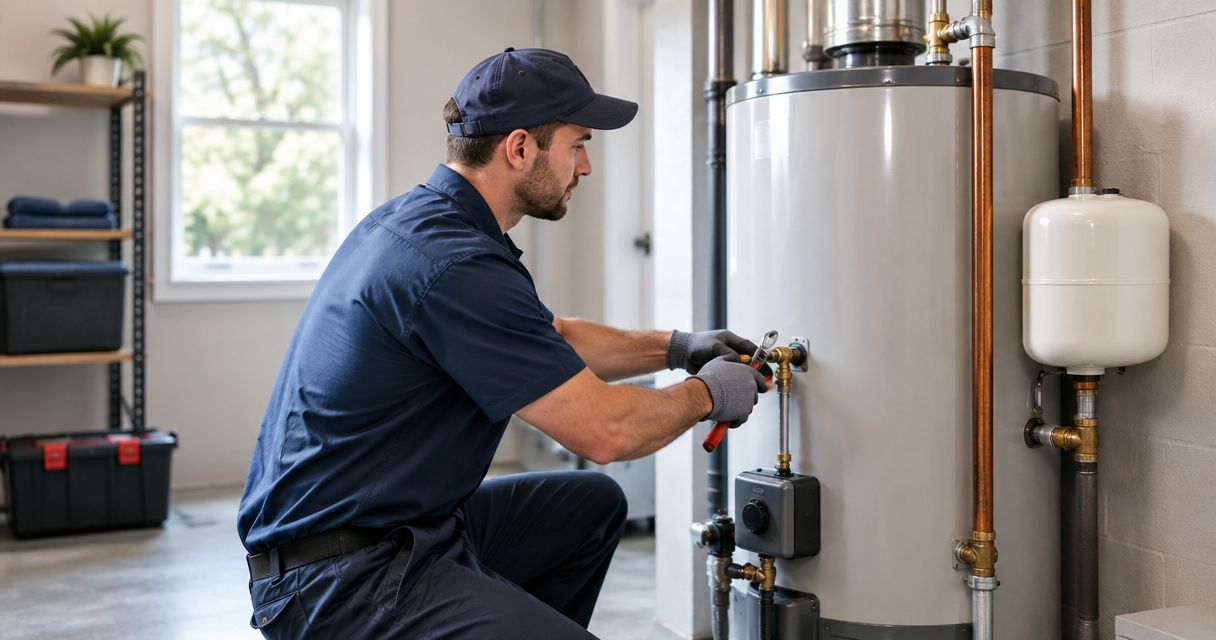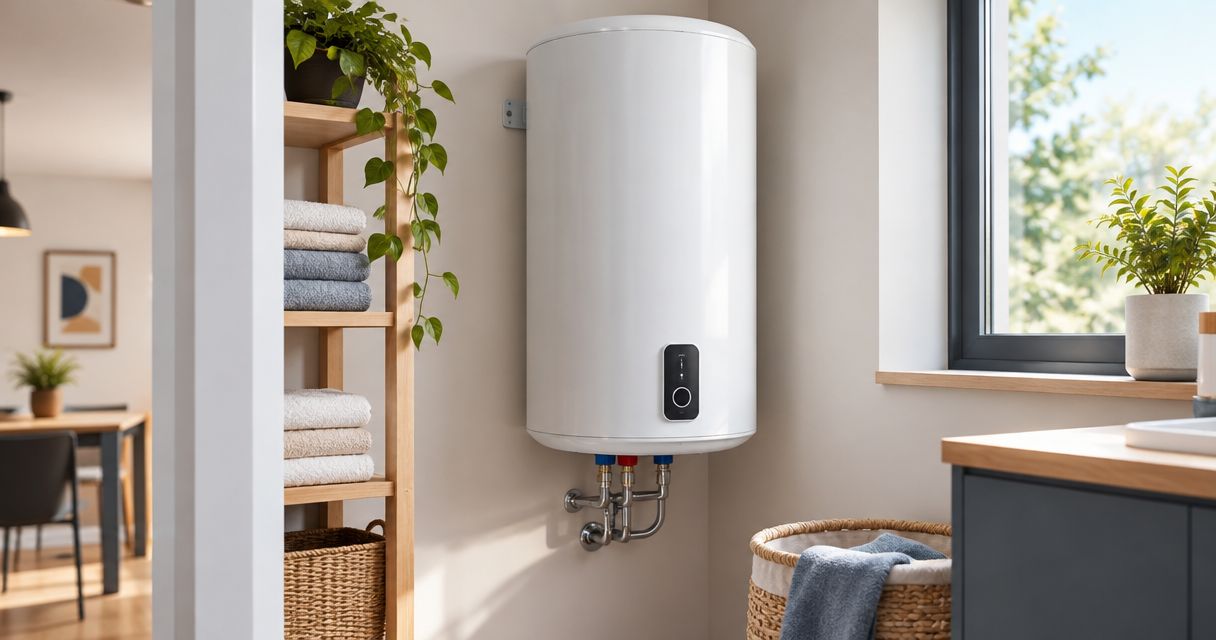
Best overall: a compact electric storage-tank water heater. Best for reducing electricity use: a heat-pump water heater. Best for freeing floor space: an electric tankless water heater. This 2026 guide compares heater types, not individual models; Mainline Plumbing connects homeowners nationwide with vetted local licensed and insured plumbers for water heater service.
- The best electric water heaters for small homes fit your peak hot-water demand, electrical supply, and installation space.
- Compact electric storage tanks are the default recommendation for a straightforward whole-home replacement.
- Heat-pump water heaters suit homes with installation space that meets the manufacturer's airflow and clearance requirements.
- Electric tankless water heaters save floor space, but electrical capacity must be checked before purchase.
- Mainline Plumbing connects homeowners with vetted local plumbers for electric water heater repair and installation.
Why this matters
A small home does not automatically need the smallest water heater. A shower, dishwasher, and washing machine can create overlapping demand regardless of your home's floor area. Choose for the busiest hot-water period, not the square footage.
The wrong choice creates a specific problem: a storage tank runs out, a tankless unit cannot meet simultaneous demand, or a heater does not fit its installation space. Before choosing a replacement in 2026, identify which problem you actually need to solve.
If your current heater leaks, stop treating this as a shopping exercise. Keep away from wet electrical equipment, stop using the heater, and arrange plumbing service. Never reach through standing water to operate a breaker or disconnect.
What makes the best electric water heater for a small home?
Use these criteria before comparing equipment. An attractive cabinet size means little if the heater cannot serve your shower or connect safely to your electrical system.
- Peak hot-water demand: List the fixtures and appliances you use together. For storage heaters, check the first-hour rating: how much hot water the heater can deliver during its first hour of use.
- Usable installation space: Measure height, width, access, and service clearance. Include room for connections and any drain pan required by local rules or the installation instructions.
- Electrical compatibility: Match the selected heater's voltage and circuit requirements to the home. Equipment can require 120 volts or 240 volts; the exact model's nameplate and installation manual control.
- Operating efficiency: Compare published energy information alongside your usage pattern. Heat-pump equipment moves heat from surrounding air into water rather than relying only on electric resistance heating.
- Installation conditions: Check airflow, condensate drainage, pipe routing, and structural support. Water alone weighs approximately 8.34 pounds per gallon, before adding the tank's weight.
- Service access: Leave enough room for maintenance and future replacement. A heater that fits through a doorway still needs access to the parts a technician must service.
For a 2026 purchase, compare current model documentation. Do not assume that the replacement has the same connections, clearances, or electrical requirements as the old heater.
Electric water heaters at a glance
The ranking below gives each heater type a separate job. No individual model wins without a fit and demand check.
| Rank and heater type | Best for | Standout feature | Key limitation |
|---|---|---|---|
| Compact electric storage tank | Straightforward whole-home replacement | Stores hot water for immediate use | Stored supply is finite |
| Heat-pump water heater | Households prioritizing electricity efficiency | Transfers heat from surrounding air | Needs suitable air space and condensate drainage |
| Electric tankless water heater | Homes prioritizing floor space | Heats water as it flows | Electrical demand can rule it out |
| Point-of-use electric water heater | A remote sink with a long hot-water wait | Heats water near the fixture | Does not replace whole-home capacity |
| Lowboy electric storage tank | Short installation spaces | Uses a shorter tank profile | Width and service access still matter |
1. Compact electric storage tank: best for a simple replacement
A compact electric storage-tank heater holds water and heats it with electric elements. When you open a hot tap, stored hot water leaves the tank while cold water enters to replace it. The tank then needs time to heat that replacement water.
This is the default starting point when your existing electric tank serves the household adequately and you want a replacement with a similar setup. Compact does not mean interchangeable: compare the new heater's dimensions, first-hour rating, connections, and circuit requirements.
Compact electric storage tank pros:
- Supplies stored hot water without heating the entire demand as it passes through.
- Provides a familiar replacement option for an existing electric storage installation.
- Lets you compare usable output through the published first-hour rating.
- Does not require the air supply needed by heat-pump equipment.
Compact electric storage tank cons:
- Runs out when demand exceeds stored capacity and recovery.
- Occupies floor or cabinet space.
- Uses energy to keep stored water hot between draws.
Best for: A small home whose existing storage heater already meets peak demand.
Ask whether running out of hot water comes from undersizing or a repairable fault before replacing the heater. A failed heating element can make a suitable tank appear too small. Verdict: Buy a compact electric storage tank when its rated output meets your demand and the installation checks out.
2. Heat-pump water heater: best for electricity efficiency
A heat-pump water heater transfers heat from surrounding air into stored water. Many models also include electric resistance elements for operating modes that need additional heating. Those modes matter when you compare expected operation, not just the efficiency label.
For a small home, the installation room is the deciding factor. Check the manufacturer's air-volume, temperature, clearance, and ventilation requirements, along with a suitable route for condensate drainage. A tight cupboard is not automatically an acceptable location.
Heat-pump water heater pros:
- Uses heat transfer to reduce reliance on resistance heating.
- Stores hot water for household use.
- Offers a clear efficiency-focused alternative to conventional electric tanks.
Heat-pump water heater cons:
- Needs installation conditions that meet the manufacturer's air requirements.
- Produces condensate that needs proper drainage.
- Adds fan and compressor sound to the installation space.
Best for: A household prioritizing operating efficiency with a suitable utility area.
Discuss where the heater draws air and where cooled air goes. Installation suitability comes before efficiency claims; a model's published performance does not excuse an unsuitable location. Verdict: Buy a heat-pump water heater after confirming air space, drainage, and peak-demand capacity.
3. Electric tankless water heater: best for freeing floor space
An electric tankless water heater heats water as it flows through the unit instead of storing it in a tank. Its compact housing can free space, but the electrical equipment needed to serve whole-home demand is a separate consideration.
Output depends on both water flow and the temperature rise required. Colder incoming water requires more heating to reach the same outlet temperature. Compare the manufacturer's output information for your conditions, not only the highest flow figure advertised.
Electric tankless water heater pros:
- Removes the need for a large storage tank.
- Heats water during use rather than maintaining a stored supply.
- Has no stored volume to exhaust while demand stays within its rated output.
Electric tankless water heater cons:
- Whole-home units can require substantial electrical capacity.
- Simultaneous fixtures can exceed the unit's heating output.
- Scale control and maintenance requirements still apply.
Best for: A space-constrained home with verified electrical capacity and compatible hot-water demand.
Have a qualified professional check the panel, electrical service, required circuits, and wiring before ordering. Do not treat an unused breaker position as proof that the home can support the load. Verdict: Hold an electric tankless purchase until electrical capacity and cold-weather output are confirmed.
4. Point-of-use electric heater: best for a remote sink
A point-of-use electric water heater serves a fixture close to where the heater is installed. It can be a small storage unit or a tankless unit, depending on the application. Its job is local hot water, not automatically the entire home's supply.
This option addresses a different problem from an undersized main heater: a sink far from the central heater waits while water travels through the pipe. Installing heat near that sink reduces dependence on that long pipe run.
Point-of-use electric heater pros:
- Places the hot-water source close to the fixture.
- Targets a local problem without replacing the central heater.
- Can suit a limited space when the chosen model permits it.
Point-of-use electric heater cons:
- Has limited storage or heating output.
- Needs suitable electrical and plumbing connections nearby.
- Adds another appliance to maintain.
Best for: A remote sink with a persistent wait for hot water.
Check the intended fixture flow and the installation instructions. A small sink heater is not a shortcut to supplying a shower, dishwasher, or multiple fixtures. Verdict: Buy a point-of-use heater for a confirmed local need; skip it as an unverified whole-home substitute.
5. Lowboy electric storage tank: best for low-clearance spaces
A lowboy electric water heater uses a shorter storage-tank profile. It suits an installation where available height prevents a taller tank from fitting. The trade-off is often a wider footprint, so height alone cannot decide the purchase.
Measure the entire installation route as well as the final location. Doorways, pipe connections, drain arrangements, and access to service panels all affect whether a shorter tank is practical.
Lowboy electric storage tank pros:
- Addresses a height restriction directly.
- Provides stored hot water like a conventional electric tank.
- Lets you retain storage heating where a taller cabinet will not fit.
Lowboy electric storage tank cons:
- A wider body can create a different clearance problem.
- A low installation location can restrict service access.
- A shorter profile does not establish adequate hot-water output.
Best for: A replacement location with a genuine height restriction.
Ask the installer to confirm that the heater can be maintained and removed later. Do not build permanent cabinetry around equipment that needs access. Verdict: Buy a lowboy electric storage tank when height is the constraint and its output still meets household demand.
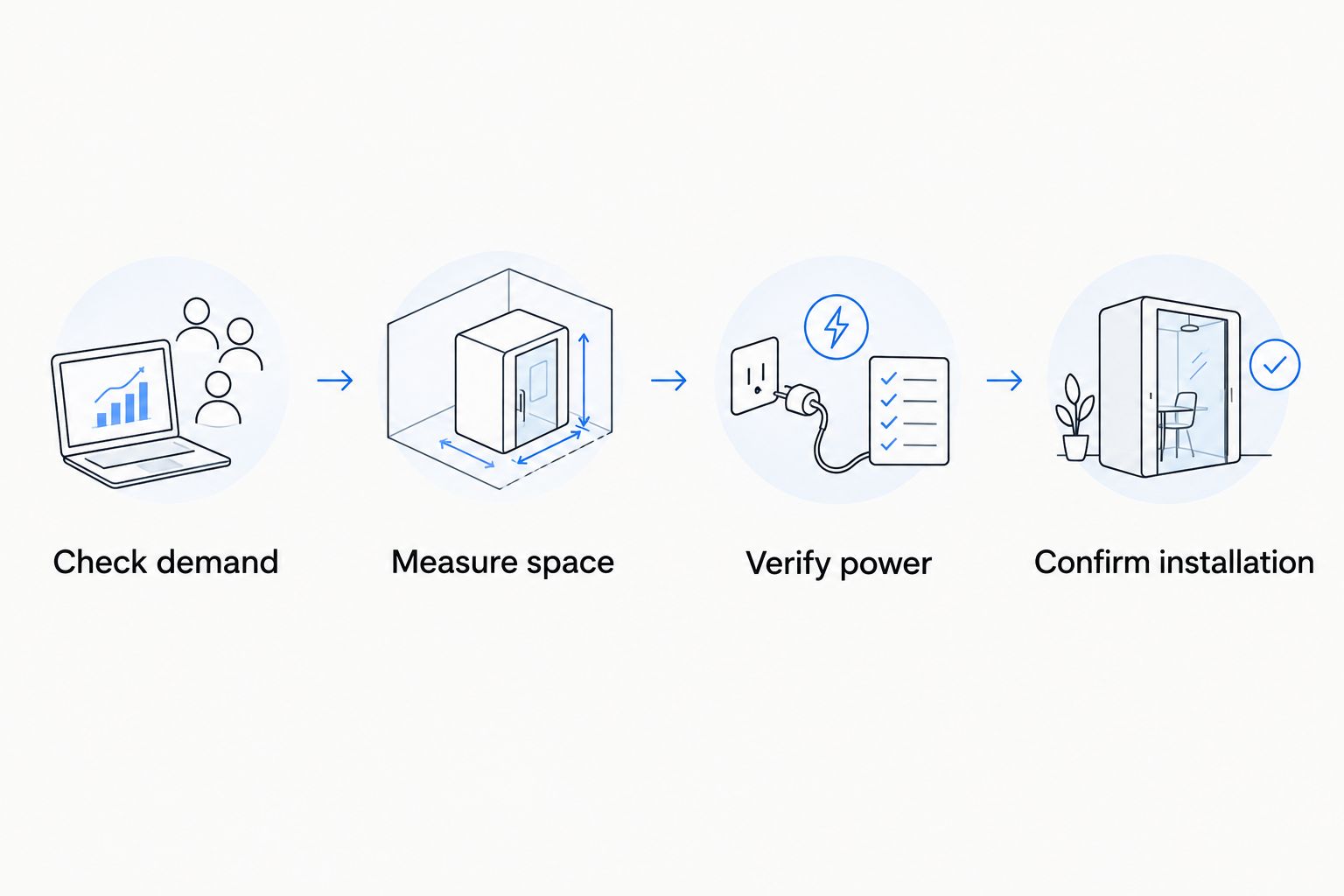
Before you order: check demand, space, and power
Use this sequence to narrow your 2026 shortlist. It prevents buying a heater for one advantage while overlooking the condition that makes it unsuitable.
- Check demand: Write down which showers, taps, and appliances run together. Tell the installer whether your problem is running out, slow delivery, or no hot water.
- Measure space: Record the installation area's dimensions and the route into it. Include service clearance rather than measuring only the old heater.
- Verify power: Have the required voltage, circuit, wiring, and total electrical load checked for the selected model.
- Confirm installation: Review drainage, ventilation where required, local rules, and the manufacturer's instructions before booking the replacement.
Keep the old heater's model information and photos of accessible connections ready for the appointment. Do not remove electrical covers or disturb wiring to gather details.
How the heater types are ranked
This 2026 ranking prioritizes demand fit, installation fit, electrical compatibility, efficiency, and service access. The compact storage tank is the default because it is a direct option for replacing an existing electric storage installation. Other types take priority when you have a specific constraint.
Mainline Plumbing is a service option for homeowners choosing and installing electric water heaters, not a water heater manufacturer. The equipment decision belongs to the installation assessment, not the brand name on the booking page.
Which electric water heater should you choose?
Start with a compact electric storage tank if your current system meets demand and you want a straightforward replacement. Choose a heat-pump heater for efficiency only after checking the room. Choose tankless for floor space only after checking power and output.
Keep point-of-use heaters focused on local fixtures, and lowboy tanks focused on height restrictions. Neither is a universal answer to a small home's hot-water needs.
For a 2026 replacement, Mainline Plumbing connects you with vetted local licensed and insured plumbers nationwide. Book an assessment before buying equipment so the selected heater matches your home, not just the available cupboard.
Book your water heater assessment
Connect with a vetted local licensed and insured plumber for water heater repair or installation.
FAQ
What's the best electric water heater for a small home?
A compact electric storage tank is the default choice for a straightforward replacement when its rated output meets household demand. A heat-pump, tankless, point-of-use, or lowboy heater becomes the better fit when efficiency, floor space, a remote fixture, or limited height is the priority.
Is an electric tankless water heater better than a tank?
An electric tankless water heater is better for eliminating a large storage tank, but it is not automatically better for your home. Its electrical requirements and output at your incoming water temperature must support the fixtures you use together.
Can a heat-pump water heater go in a small closet?
A heat-pump water heater belongs in a closet only when that installation meets the manufacturer's airflow, temperature, clearance, and ventilation requirements. Condensate drainage and service access also need to be addressed.
How do I know what size water heater I need?
Size a water heater around peak hot-water use, not home floor area alone. Compare storage heaters by their first-hour rating and tankless heaters by output at the required temperature rise.
Will a small under-sink heater supply my whole home?
An under-sink heater intended for a local fixture is not a whole-home replacement. Match its rated capacity or heating output to the specific fixture it will serve.
How much does electric water heater installation cost?
Electric water heater installation needs a site-specific estimate. Heater type, electrical work, plumbing changes, access, drainage, and local installation requirements affect the work involved.
Should I replace a water heater that suddenly stops heating?
A heater that suddenly stops heating needs a diagnosis before a replacement decision. An electrical supply issue, thermostat fault, or failed heating element can require a different response from a leaking tank.
Can Mainline Plumbing help with an urgent water heater problem?
Mainline Plumbing offers 24/7 availability and connects homeowners nationwide with vetted local licensed and insured plumbers. Keep away from water near electrical equipment and arrange service for a leaking or unsafe heater.
One last thing
A long wait at a distant tap and running out during a shower are different problems. Tell the plumber exactly where and when hot water fails before choosing equipment. A larger central heater does not remove the length of the pipe to a remote sink.
Book a water heater assessment to confirm whether you need a repair, a different heater type, or a change at the affected fixture.