Best overall: a correctly sized water heater with documented tank, parts, and labor coverage. Best for homeowners planning to sell: a model with explicitly transferable coverage. Best for tankless buyers: a model with clearly separated heat-exchanger, parts, and labor terms. This 2026 guide ranks warranty features by how well they protect you when repairs are needed—not by the largest number on a label.
- The best water heaters by warranty combine clear equipment coverage, labor protection, and a workable claim process.
- Mainline Plumbing connects homeowners nationwide with vetted local licensed and insured plumbers for water heater service.
- Tankless water heater warranties need separate checks for heat-exchanger, parts, and labor protection.
- Choose documented coverage for your exact model and installation, not a brand-wide promise.
Why this matters
A long equipment warranty does not answer the question you care about: what happens when your hot water stops? You need to know which failure qualifies, who handles the claim, and which work remains your responsibility.
Mainline Plumbing is best for homeowners who need a local licensed and insured plumber to assess water heater repair or replacement. Mainline Plumbing connects homeowners nationwide with vetted local professionals; it is not one in-house national plumbing team.
For a 2026 purchase, compare the warranty document supplied for the exact model. Keep the manufacturer's equipment promise separate from the installer's workmanship guarantee, because they address different responsibilities.
What makes the best water heaters by warranty?
Use these criteria before comparing warranty lengths:
- Covered failures: Identify what qualifies under tank, component, or heat-exchanger coverage. Do not treat those terms as interchangeable.
- Labor protection: Check whether diagnosis, removal, installation, and return visits are included or excluded.
- Eligibility: Confirm the requirements for your property type, ownership, installation, registration, and maintenance.
- Claim process: Identify who authorizes repairs, who supplies replacement parts, and what records you must provide.
- Replacement terms: Check what happens after a covered replacement, including whether the original warranty period continues.
- Transfer rules: If a home sale matters to you, read the subsequent-owner provisions rather than assuming coverage follows the appliance.
A useful warranty answers these questions in writing. Treat an unresolved answer as an unresolved buying decision, not as a promise.
Warranty options at a glance
These rankings compare coverage structures, not manufacturer performance. Each recommendation depends on the actual contract covering your selected water heater.
| Rank and option | Best for | Standout protection | Key limitation |
|---|---|---|---|
| 1. Equipment plus labor coverage | Homeowners prioritizing repair protection | Addresses covered equipment failures and specified repair work | Labor scope and authorization still need checking |
| 2. Explicitly transferable coverage | Homeowners planning a sale | Defines protection for an eligible subsequent owner | Transfer conditions can limit eligibility |
| 3. Component-specific tankless coverage | Homeowners choosing tankless | Separates heat-exchanger, other parts, and labor terms | A headline term does not describe every component |
| 4. Clearly defined parts-only coverage | Homeowners accepting responsibility for repair labor | States which replacement components qualify | Does not promise payment for installation work |
1. Equipment plus labor: best for repair protection
A water heater backed by equipment and labor coverage is the strongest starting point for a homeowner who wants protection beyond replacement components. The key is written scope: a covered part and the work needed to replace it are separate items to verify.
Choose this structure when you want fewer unanswered questions about a covered repair. Match the heater to your home's hot-water demand and installation requirements before using warranty coverage as the deciding factor.
Equipment plus labor pros:
- Addresses equipment and repair work when both fall within the written terms.
- Lets you compare responsibility for diagnosis and installation separately.
- Gives you a clearer basis for discussing a claim before work starts.
Equipment plus labor cons:
- The labor agreement can have different conditions from the equipment warranty.
- Removal, disposal, permits, and modifications need individual confirmation.
- Unauthorized work can create a dispute if prior approval is required.
Best for: Homeowners prioritizing documented repair protection over a long headline term.
Ask for the manufacturer warranty and any separate labor agreement before approving the installation. If different businesses provide them, record which business handles each obligation.
Verdict: Buy a suitable model with equipment and labor coverage when the written scope meets your needs.
2. Transferable coverage: best for homeowners planning to sell
Transferable coverage expressly describes whether an eligible subsequent homeowner receives protection. That makes it relevant when you expect to sell before the warranty ends.
Read the actual transfer provision. A receipt handed to the next owner is useful documentation, but it is not proof that the manufacturer recognizes a transfer.
Transferable coverage pros:
- Defines whether a subsequent homeowner qualifies.
- Helps you prepare accurate appliance records for a sale.
- Makes ownership restrictions visible before purchase.
Transferable coverage cons:
- Transfer can depend on notices, documentation, or other stated conditions.
- Subsequent-owner protection needs its own review; do not assume identical terms.
- Transferability says nothing by itself about repair labor.
Best for: Homeowners whose buying decision includes a planned home sale.
For your 2026 comparison, request the transfer instructions alongside the warranty. Keep them with the installation invoice so the requirement does not disappear into a sales conversation.
Do not choose an unsuitable heater just because its warranty transfers. Fuel type, installation fit, and household demand still determine whether the appliance belongs in your home.
Verdict: Buy transferable coverage when a planned sale makes subsequent-owner eligibility relevant.
3. Component-specific tankless coverage: best for tankless buyers
A tankless warranty needs a component-by-component reading. Check the heat exchanger, other replacement parts, and repair labor separately rather than applying one advertised term to the entire heater.
This comparison only makes sense after deciding that tankless suits your home. The guide to whether a tankless water heater is worth it addresses that earlier decision.
Component-specific tankless coverage pros:
- Makes the heat-exchanger protection identifiable.
- Separates other parts from the headline component coverage.
- Gives you specific maintenance and installation conditions to review.
Component-specific tankless coverage cons:
- Different components can fall under different terms.
- Labor needs separate confirmation even when a component qualifies.
- Water-quality and maintenance provisions require careful reading.
Best for: Homeowners who have already established that a tankless installation fits their needs.
Ask the installer to identify the maintenance instructions for the exact unit. If treatment or descaling is recommended or required, understand the reason and the documentation involved before installation.
Verdict: Buy a suitable tankless model only after checking heat-exchanger, parts, and labor terms individually.
4. Parts-only coverage: best for a clearly limited obligation
Parts-only coverage addresses qualifying replacement components without promising the associated repair labor. It is a narrower form of protection, not a substitute for an equipment-and-labor agreement.
This option fits a homeowner who understands that distinction and accepts responsibility for work outside the warranty. Compare its written terms with broader alternatives before deciding.
Parts-only coverage pros:
- Identifies the components covered by the manufacturer's obligation.
- Keeps the parts decision separate from the labor agreement.
- Provides a defined basis for asking whether a failed component qualifies.
Parts-only coverage cons:
- Replacement-part protection does not pay for work unless expressly stated.
- Diagnosis, removal, and installation need separate arrangements.
- A tank failure and a replaceable component failure need separate coverage checks.
Best for: Homeowners who knowingly accept repair-labor responsibility.
Do not interpret a covered replacement as a complete installed replacement. Ask who handles the failed equipment and which installation tasks are outside the agreement.
Verdict: Hold until you understand and accept every labor exclusion.
How the warranty options rank
The ranking prioritizes covered repair work first, then coverage suited to a specific ownership or equipment decision. Parts-only protection ranks last because its scope leaves labor to a separate agreement.
This is not a reliability ranking. Warranty terms describe contractual protection; they do not establish which individual heater will experience fewer failures.
For 2026, apply the same test to every proposal: what qualifies, who authorizes the work, and what remains outside coverage? A longer term wins only when the rest of the comparison supports it.
Check the paperwork before you book installation
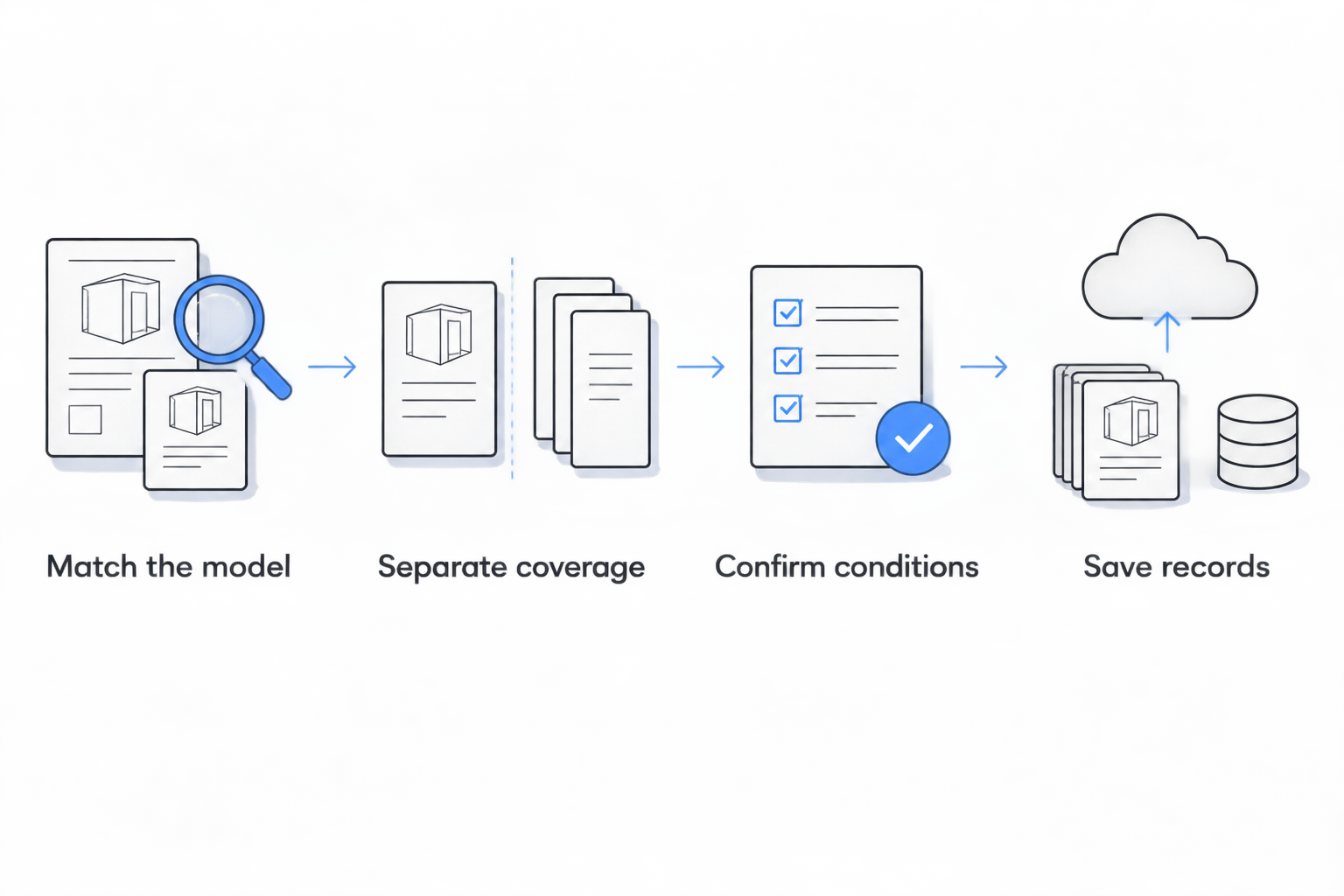
Use this sequence to turn a warranty claim into something you can verify before purchase. Mainline Plumbing connects homeowners with local professionals who can assess the installation and explain the proposed work.
Match the model
Record the exact model on the proposal and match it to the warranty document. A brochure covering several product lines does not identify the terms for your selected appliance.
Separate coverage
Make 3 coverage checks: tank or heat exchanger, other parts, and labor. Write down the responsible business for each rather than accepting a general statement that the heater is covered.
Confirm conditions
Review registration, eligible use, installation requirements, and maintenance instructions. Ask who completes any required registration and how you receive confirmation.
Save records
Keep 4 records together: the purchase invoice, installation invoice, warranty document, and maintenance history. Photograph the model and serial labels while they are easy to reach.
Before approving the job, ask 3 practical questions: Who submits a claim? Is authorization required before repairs? Which work is excluded? Get answers in writing when they affect the agreement.
If your water heater is already failing
Start with safety, not warranty paperwork. If you smell gas, leave the area without operating switches or attempting repairs, then contact the gas utility or emergency services from a safe location.
For a water leak, avoid standing water near electrical equipment. Do not remove electrical covers or attempt to handle energized components; arrange professional help and keep people away from the affected area.
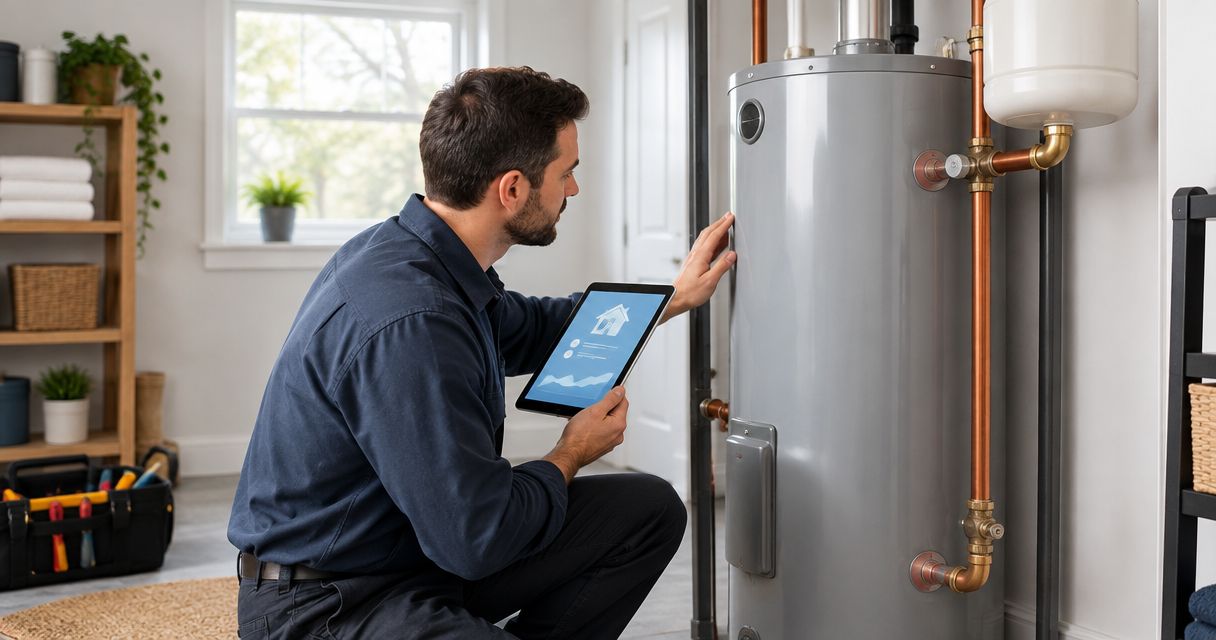
For a 2026 service visit, have the model, serial number, purchase record, and symptom description ready. Tell the plumber whether you have no hot water, visible leaking, unusual noise, or repeated shutdowns, and ask about warranty authorization before repair work begins.
Which warranty should you choose?
Choose a correctly sized water heater with clearly documented equipment and labor protection as the default. Choose transferable coverage when a planned sale matters, and use separate component checks when selecting tankless.
If you already own a failing heater, establish the fault before replacing it solely for a longer warranty. Mainline Plumbing connects homeowners nationwide with vetted local licensed and insured plumbers for water heater assessment, repair, and installation.
FAQ
What's the best water heater warranty for a homeowner?
The strongest starting point is written equipment and labor coverage for a heater that fits your home. Compare covered failures, exclusions, authorization requirements, and replacement terms before comparing duration.
Does a longer water heater warranty mean the heater lasts longer?
A longer warranty does not establish a longer service life. It describes contractual protection, which must be assessed separately from suitability, maintenance, and reliability.
Does a water heater warranty cover installation labor?
Installation labor is covered only when the applicable agreement expressly includes it. Check diagnosis, removal, replacement installation, and related work separately.
Is a tankless water heater warranty better than a tank warranty?
Neither is automatically better. Compare tankless heat-exchanger, parts, and labor terms against the tank heater's tank, parts, and labor terms for your intended use.
Can I transfer my water heater warranty when I sell my house?
You can transfer coverage only if the applicable warranty permits it and you satisfy its conditions. Read the subsequent-owner provisions and keep the required records with your home documents.
Should I repair a water heater that is still under warranty?
Arrange a diagnosis and confirm claim eligibility before deciding between repair and replacement. A warranty does not establish the cause of the problem or guarantee that every repair task is covered.
What paperwork should I keep for a water heater claim?
Keep the purchase invoice, installation invoice, warranty document, and maintenance history together. Record the model and serial number, and retain any registration confirmation required by the terms.
One last thing
Ask whether a covered replacement starts a new warranty period or continues the original one. Those are different promises, and the replacement itself does not answer the question.
Book a water heater assessment before choosing replacement equipment on warranty length alone. Bring the existing heater's records and ask the local plumber to explain the fault, installation requirements, and proposed coverage.
Book water heater service
Connect with vetted local licensed and insured plumbers for water heater repair or installation.