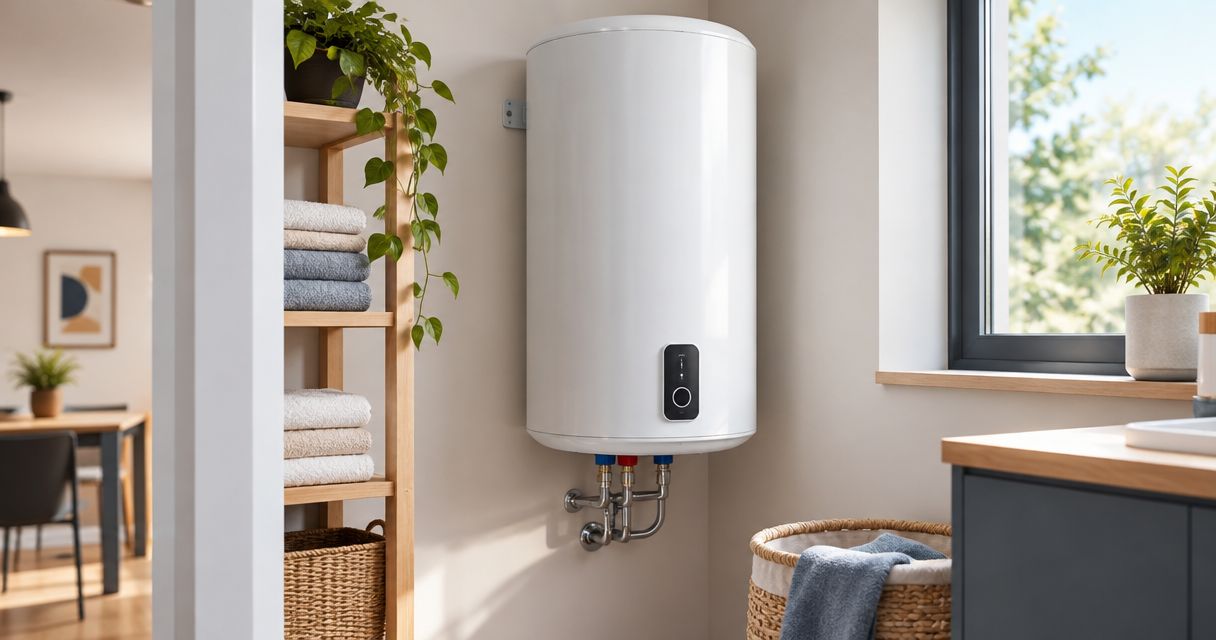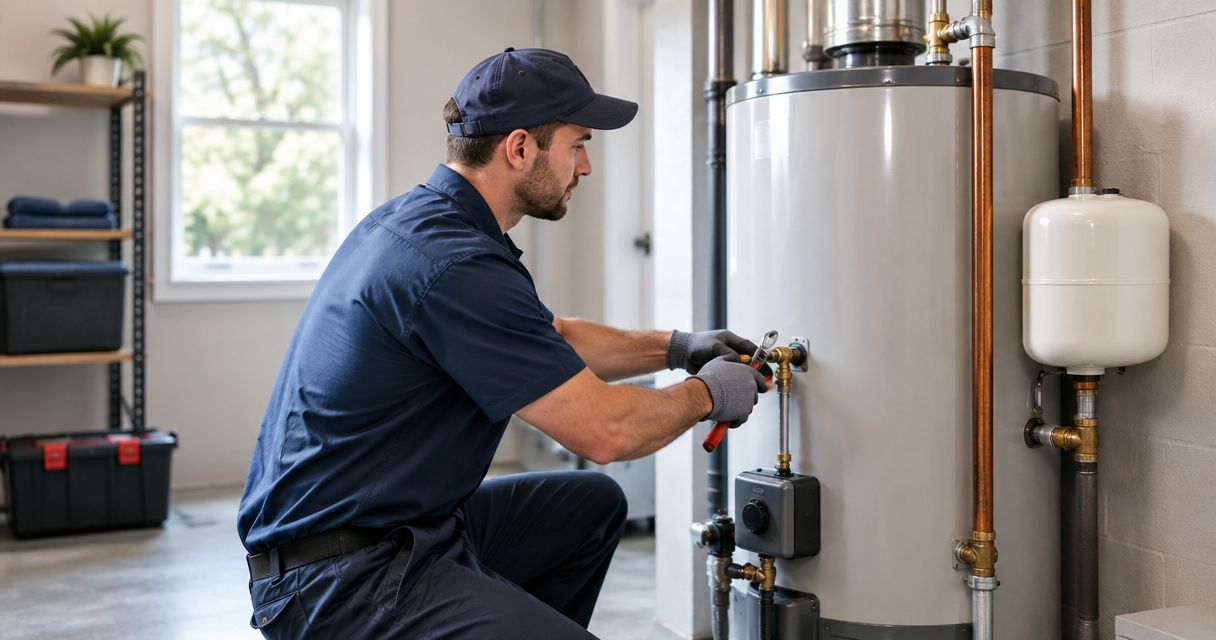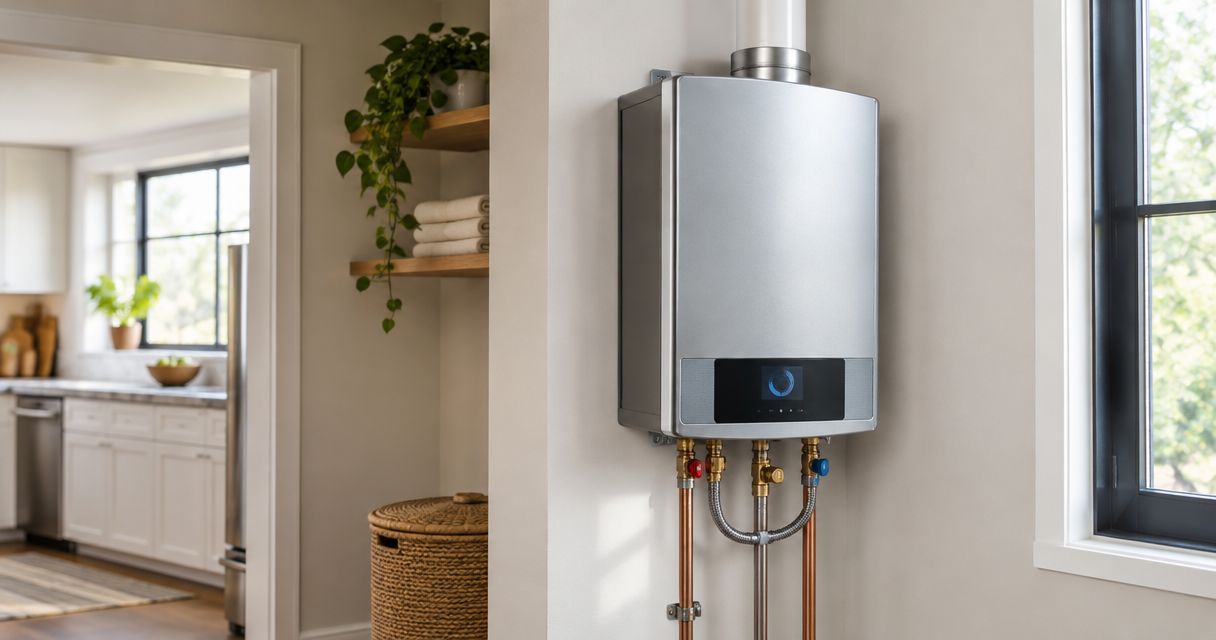
Best overall for a gas-ready home: a condensing natural-gas tankless water heater. Best for an all-electric home: a whole-house electric unit with verified electrical capacity; best for one distant sink: a point-of-use electric unit. This 2026 guide compares the best tankless water heaters by household need, installation requirements, and the trade-offs that matter before you replace your current heater.
- The best tankless water heaters match your incoming water temperature, simultaneous fixtures, and utility capacity.
- Condensing natural-gas tankless heaters are the default recommendation for gas-ready homes with suitable installation conditions.
- Whole-house electric tankless heaters require an electrical-capacity check before selection.
- Point-of-use electric heaters serve individual fixtures, not an entire household.
- Mainline Plumbing connects homeowners nationwide with vetted local licensed and insured plumbers for water heater service.
Why this matters
A tankless heater heats water as it passes through the unit instead of keeping a tank hot. That changes how you choose it: you need enough heated flow for the fixtures you use together, not just a unit that fits the wall.
Mainline Plumbing is best for homeowners who want local licensed and insured help selecting and installing a tankless water heater. Mainline Plumbing connects homeowners nationwide with vetted local professionals; it is not one in-house national plumbing team.
For a 2026 replacement, start with your home's gas supply, electrical capacity, incoming water temperature, and venting options. Those conditions determine which heater belongs on your shortlist. A model with appealing features still fails the fit test if your home cannot support it.
What makes the best tankless water heaters?
Use these criteria before comparing models:
- Heated flow: The heater must serve the fixtures you actually use together at the required temperature rise.
- Utility fit: Confirm gas-delivery capacity or electrical requirements before choosing a unit.
- Installation fit: Gas heaters need suitable venting and combustion-air arrangements. Condensing heaters also need condensate drainage.
- Maintenance access: Leave access for servicing, cleaning, and isolation valves rather than hiding the heater behind permanent finishes.
- Distance to fixtures: A central heater does not eliminate the wait for hot water already sitting far down a pipe.
- Household fit: Choose for your normal peak demand, not for every faucet in the house running at once unless that reflects actual use.
Best tankless water heaters at a glance
These are ranked heater configurations, not interchangeable product models. Each recommendation answers a different installation problem.
| Rank and heater type | Best for | Standout feature | Key limitation |
|---|---|---|---|
| 1. Condensing natural-gas tankless | Gas-ready homes replacing a central heater | Recovers additional heat from exhaust | Needs suitable venting and condensate disposal |
| 2. Whole-house electric tankless | All-electric homes with verified electrical capacity | Does not need combustion venting | Electrical demand can require substantial changes |
| 3. Propane tankless | Homes already served by propane | Whole-house heating without natural-gas service | Requires adequate propane storage and delivery capacity |
| 4. Point-of-use electric tankless | A distant sink with a long hot-water wait | Heats water close to the fixture | Limited scope; not a whole-house replacement |
| 5. Non-condensing natural-gas tankless | Gas-ready homes where its venting configuration fits | Does not create a condensing-system drainage requirement | Uses less of the exhaust heat than a condensing heater |
1. Condensing natural-gas tankless: best for gas-ready homes
A condensing natural-gas tankless heater captures additional heat from combustion exhaust before releasing it outside. It serves as a central hot-water source and needs a suitable gas supply, approved venting, and a way to dispose of condensate.
This is the starting recommendation for a gas-ready home in 2026. The recommendation depends on installation fit, not simply on having a gas meter outside.
Condensing natural-gas tankless pros:
- Recovers heat that a non-condensing heater sends out through the exhaust.
- Suits central hot-water service when correctly sized.
- Avoids storing a tank of heated water.
Condensing natural-gas tankless cons:
- Requires condensate drainage and any treatment required by the installation instructions or local rules.
- Existing gas piping and venting need verification; replacement is not automatically a direct swap.
- Hard-water scale still requires attention.
Best for: Homeowners replacing a central heater where natural gas, venting, and drainage support a condensing installation.
Verdict: Buy this configuration after a plumber verifies the site's requirements.
2. Whole-house electric tankless: best for all-electric homes
A whole-house electric tankless heater uses electric heating elements rather than a gas burner. It does not need a combustion flue, but the home must support the unit's electrical demand.
The electrical check comes before the purchase. Panel space alone does not establish adequate service capacity, and an existing tank heater's circuit does not automatically suit a tankless replacement.
Whole-house electric tankless pros:
- Does not require natural gas or propane.
- Eliminates combustion venting from the installation.
- Provides central hot water when demand and electrical capacity match.
Whole-house electric tankless cons:
- Can require new circuits, wiring, or electrical-service changes.
- Cold incoming water increases the heating required for each gallon.
- Simultaneous fixture use must remain within the unit's heated-flow capability.
Best for: All-electric households with verified electrical capacity and a workable peak hot-water demand.
Verdict: Hold until a qualified electrician confirms capacity and a plumber confirms sizing.
3. Propane tankless: best for homes already using propane
A propane tankless heater provides central hot water where natural-gas service is not the household's fuel source. Select a unit approved for propane, and follow the manufacturer's requirements for fuel supply, venting, and installation.
Propane is the fuel choice, not a separate efficiency design. Propane tankless heaters can be condensing or non-condensing, so you still need to resolve the exhaust and drainage requirements.
Propane tankless pros:
- Provides a gas-fired option without natural-gas service.
- Fits homes already equipped to receive and store propane, subject to capacity checks.
- Offers a central hot-water solution when correctly sized.
Propane tankless cons:
- Hot-water operation depends on maintaining a propane supply.
- Tank capacity, regulators, and piping need verification for the selected heater.
- Gas combustion still requires an approved venting arrangement.
Best for: Homeowners whose existing propane system can support a tankless water heater.
Verdict: Buy only after confirming both heater compatibility and propane-delivery capacity.
4. Point-of-use electric tankless: best for one distant sink
A point-of-use electric tankless heater heats water near a particular fixture. It addresses a different problem from whole-house replacement: a remote sink that takes too long to receive hot water from the central heater.
Check the fixture's required flow, the incoming water temperature, and the unit's wiring requirements. A compact housing does not mean the heater can run from any nearby outlet.
Point-of-use electric tankless pros:
- Places the heat source close to the fixture.
- Addresses a local hot-water problem without replacing the central heater.
- Avoids combustion venting at that location.
Point-of-use electric tankless cons:
- Does not replace a whole-house heater.
- Output depends on the required temperature rise and flow.
- Installation still needs suitable plumbing and electrical connections.
Best for: A homeowner solving a long wait at one distant sink rather than a household-wide shortage.
Verdict: Buy for a verified single-fixture need; skip as a substitute for central hot water.
5. Non-condensing natural-gas tankless: best for suitable venting sites
A non-condensing natural-gas heater heats water on demand without recovering the additional exhaust heat captured by a condensing unit. Its hotter exhaust requires venting materials and a layout approved for that heater.
Consider this configuration when the site assessment supports it. Do not assume the vent from an old tank heater can stay simply because both appliances burn natural gas.
Non-condensing natural-gas tankless pros:
- Provides central hot water without a storage tank.
- Does not require disposal of condensate created by condensing operation.
- Fits installations where its approved venting arrangement is practical.
Non-condensing natural-gas tankless cons:
- Sends more usable heat out with the exhaust than a condensing design.
- Requires venting suitable for its exhaust temperature.
- Still needs gas-capacity checks and routine maintenance.
Best for: Gas-ready homes where a plumber confirms a non-condensing installation fits the site.
Verdict: Hold until its installation requirements are compared with a condensing alternative.
How to size a tankless heater without guessing
For your 2026 shortlist, use heated-flow performance at your home's temperature rise. A maximum-flow headline alone does not establish how much hot water the heater delivers during cold weather.
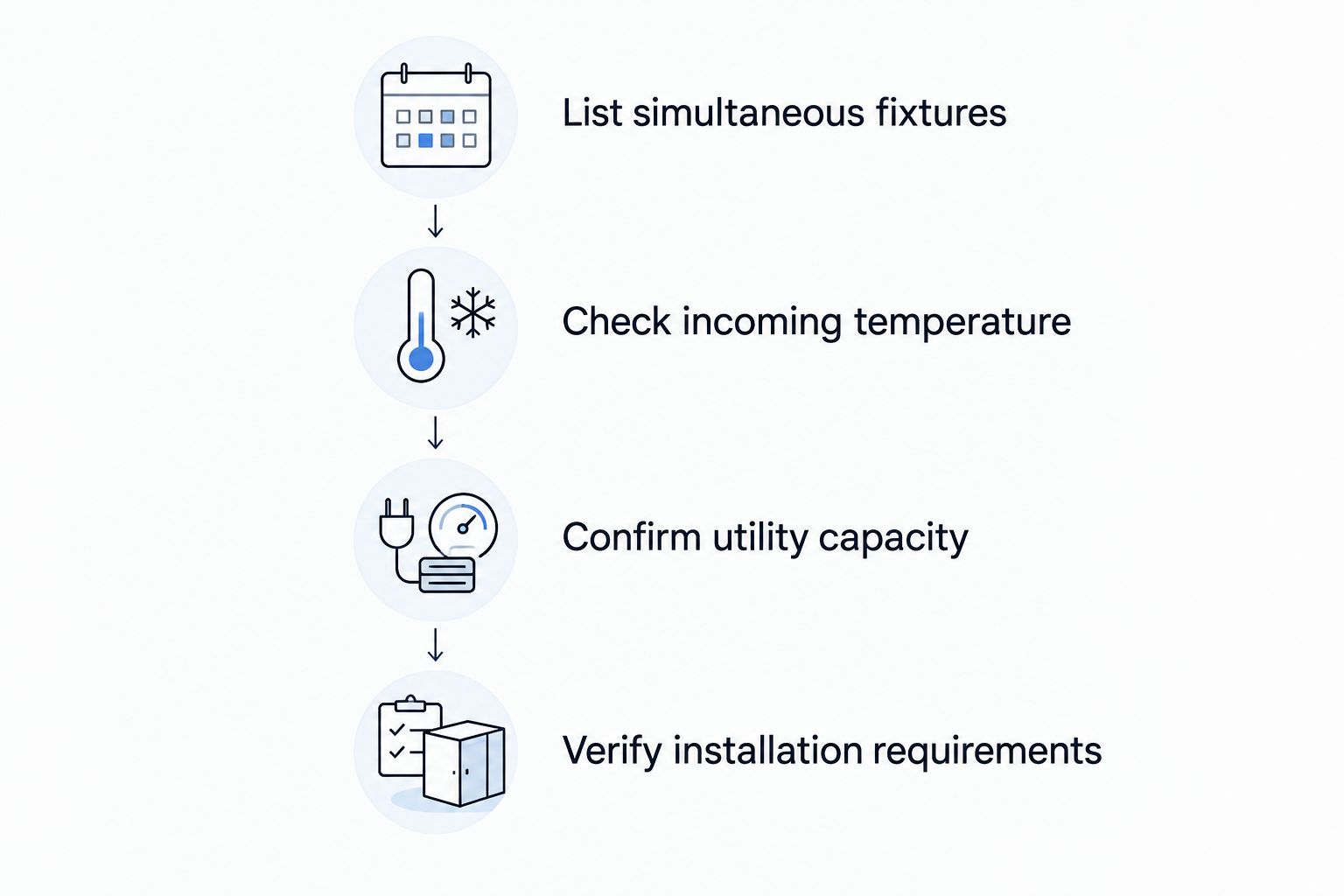
List simultaneous fixtures
Write down the fixtures you genuinely use together. For an illustrative calculation, two showers using 2 gallons per minute each, plus a faucet using 1 gallon per minute, require 5 gallons per minute of heated water. These are example inputs, not assumed fixture ratings for your home.
Check incoming temperature
Temperature rise is the difference between incoming water and the desired outlet temperature. In a sizing example, heating water from 40°F to 120°F requires an 80°F rise; heating it from 70°F to 120°F requires a 50°F rise. These examples explain the calculation, not a recommendation to change your household's temperature setting.
Confirm utility capacity
Give the selected heater's requirements to the appropriate professional. A gas installation needs supply verification; an electric installation needs electrical-capacity verification. Do this before ordering equipment.
Verify installation requirements
Confirm vent routing, drainage where needed, service access, and local permit requirements. Ask the installer to show how the proposed unit meets your peak demand at the expected incoming water temperature.
Repair, replace, or stop using the heater?
No hot water does not automatically mean you need a new heater. A failed component, interrupted utility supply, or maintenance issue needs diagnosis before replacement becomes the answer.
Stop using the appliance and get urgent help if you smell gas or a carbon-monoxide alarm sounds. Leave the affected area and contact emergency services or your gas utility from a safe location. Do not troubleshoot a suspected gas leak yourself.
For a water leak, shut off the water supply only if you can reach the valve safely. Keep away from wet electrical equipment. Photograph visible leakage or record an error message without opening panels or touching unsafe components.
Mainline Plumbing offers 24/7 availability through vetted local licensed and insured professionals. Describe the symptom first: no hot water, a leaking heater, an error message, or inconsistent shower temperature.
How we ranked these heater types
This 2026 ranking prioritizes household fit over model features. The order reflects heated-flow needs, utility compatibility, installation requirements, maintenance access, and the specific problem each configuration solves.
Condensing natural gas takes the default slot for gas-ready homes. Whole-house electric addresses all-electric homes, propane addresses existing propane households, and point-of-use electric addresses a distant fixture. Non-condensing natural gas remains a site-dependent alternative, not the automatic first choice.
Which tankless water heater should you choose?
Choose a condensing natural-gas tankless heater when your home supports its gas supply, venting, drainage, and required heated flow. For an all-electric home, resolve electrical capacity before selecting a whole-house electric unit.
If your central heater works and only one distant sink has a long wait, investigate a point-of-use solution before replacing the entire system. Different problems need different equipment.
For a 2026 installation, ask Mainline Plumbing to connect you with a local professional who can compare the proposed heater with your home's actual conditions. Require a written scope that identifies necessary utility, venting, and plumbing changes.
FAQ
What's the best tankless water heater for a home?
A condensing natural-gas tankless heater is the default recommendation for a gas-ready home with suitable venting, drainage, and supply capacity. The final selection must meet your simultaneous hot-water demand at the expected incoming water temperature.
Is an electric tankless water heater better than gas?
An electric tankless heater is the better fit when your home is all-electric and has verified electrical capacity for the selected unit. Gas is a separate installation choice with fuel-supply and venting requirements; neither type is best for every home.
Can a tankless heater run two showers at once?
A tankless heater can serve two showers together when its heated-flow output covers their combined demand at the required temperature rise. Use the actual fixture flow rates rather than assuming every shower uses the same amount of water.
Will a tankless water heater give me instant hot water?
A central tankless heater does not eliminate the wait for hot water to travel through the pipes. A point-of-use heater places the heat source closer to a fixture, while other designs require a separately evaluated recirculation arrangement.
How much does tankless water heater installation cost?
An installation estimate depends on the selected heater and the work your home requires. Ask for an itemized scope covering utility changes, venting, drainage, permits, and removal of the existing heater.
Do tankless water heaters need maintenance?
Tankless water heaters need maintenance according to the manufacturer's instructions. Water quality affects scale buildup, so discuss cleaning requirements and service access before installation.
Who can help me choose and install a tankless water heater?
Mainline Plumbing connects homeowners nationwide with vetted local licensed and insured plumbers for water heater service. Ask the local professional to verify sizing, installation requirements, and any necessary electrical work before equipment is selected.
One last thing
A long wait at one faucet is not proof that your central heater is too small. The distance between the heater and that fixture matters. Tell the plumber whether your problem is waiting for hot water, running out during simultaneous use, or getting no hot water at all; that distinction changes the next step.
Related guides
Book water heater service before choosing equipment. Get your home's requirements checked and the proposed work explained before installation begins.
Book water heater service
Connect with a vetted local licensed and insured plumber to assess your heater and installation needs.