Best overall: Resideo L1. Best for hard-to-reach sensor locations: YoLink Water Leak Sensor. Best for an existing Honeywell Home setup: Honeywell Home Wi-Fi Water Leak and Freeze Detector. This 2026 guide ranks water leak detectors by manufacturer-stated battery life, then separates the choices by connection requirements, maintenance, and where you need alerts.
- For best water leak detector battery life, Resideo L1 and YoLink Water Leak Sensor advertise up to five years.
- Honeywell Home Wi-Fi Water Leak and Freeze Detector advertises up to three years; Aqara Water Leak Sensor advertises two years.
- Battery estimates are not replacement schedules: test water sensors and respond to low-battery warnings.
- Mainline Plumbing connects homeowners with vetted local licensed and insured plumbers when leak detection reveals a repair problem.
Why this matters
A leak detector is useful only when it has power, sits where water reaches it, and delivers an alert you notice. A long battery-life claim does not solve poor placement or a disconnected hub. Choose the alert system first, then compare maintenance demands.
For homeowners choosing water leak detectors, Mainline Plumbing connects you nationwide with vetted local licensed and insured plumbers when an alarm reveals a leak. A sensor warns you about water; a plumber finds and repairs the cause.
The battery figures in this 2026 comparison are manufacturer-stated estimates, not measured results or guaranteed replacement intervals. Compare the exact model before ordering, because similar names can identify different generations.
What makes the best water leak detector for battery life?
Use these criteria before treating the longest advertised runtime as the winner:
- Advertised battery life: Compare manufacturer estimates for the exact detector, not the brand's entire sensor range.
- Alert path: Decide whether you need an audible alarm, phone notifications, or both. Remote alerts depend on a working connection.
- Battery replacement: Check the battery type and whether you can reach the compartment without moving an appliance.
- Low-battery warning: Make sure you know where the warning appears and who will respond to it.
- Leak coverage: A point sensor detects water at its contacts. A sensing cable covers a different footprint.
- System requirements: Include any required hub and its power supply in your decision, even when the detector itself runs on batteries.
For a 2026 purchase, rank battery life within the alert system you will actually maintain. A longer-lasting sensor on an unattended hub is not the stronger choice.
Water leak detectors at a glance
The table ranks advertised maximum battery life first. Ties are separated by the homeowner use case, not by an unsupported claim that one detector lasts longer in real homes.
| Rank and detector | Advertised battery life | Best for | Standout feature | Key limitation |
|---|---|---|---|---|
| 1. Resideo L1 | Up to 5 years | Standalone Wi-Fi alerts | Leak sensing cable and audible alarm | Remote notifications require a working Wi-Fi connection |
| 2. YoLink Water Leak Sensor | Up to 5 years | Hard-to-reach sensor locations | Hub-based sensor connection and replaceable batteries | Requires a compatible YoLink hub |
| 3. Honeywell Home Wi-Fi Water Leak and Freeze Detector | Up to 3 years | An existing compatible Honeywell Home setup | Water, temperature, and humidity monitoring | Shorter advertised runtime than the leading pair |
| 4. Aqara Water Leak Sensor | About 2 years | An existing compatible Aqara setup | Compact Zigbee water sensor | Requires a compatible hub; no onboard audible alarm |
These figures come from Resideo's L1 product information, YoLink's original Water Leak Sensor documentation, Honeywell Home's Wi-Fi detector documentation, and Aqara's Water Leak Sensor specifications. They describe the named battery-powered models, not every detector sold by those manufacturers.
1. Resideo L1: best water leak detector for standalone Wi-Fi alerts
The Resideo L1 combines water detection, a local audible alarm, and phone notifications through Wi-Fi. Its sensing cable gives you another way to place detection along an appliance or plumbing area rather than relying only on the detector's immediate footprint.
Resideo advertises up to 5 years of battery life for the L1. That puts it at the top of this list alongside the original YoLink Water Leak Sensor; it does not establish a measured runtime advantage over YoLink.
Resideo L1 pros:
- Long advertised battery life reduces the planned battery-maintenance burden.
- Direct Wi-Fi connectivity avoids a separate sensor hub.
- An audible alarm provides a local warning without relying solely on your phone.
- A sensing cable supports placement beyond the detector body.
Resideo L1 cons:
- Remote alerts depend on the home's Wi-Fi and internet connection.
- Water must reach the detector contacts or sensing cable to trigger detection.
- The advertised maximum is not a promise that batteries will last five years in your installation.
Best for: Homeowners who want a Wi-Fi water alarm without adding a dedicated hub.
Place the cable where escaping water is likely to travel, not simply where it looks tidy. Keep the detector accessible for testing and battery changes.
Verdict: Buy Resideo L1 if you want long advertised battery life and standalone Wi-Fi alerts.
2. YoLink Water Leak Sensor: best for hard-to-reach sensor locations
The original YoLink Water Leak Sensor communicates through a compatible YoLink hub rather than connecting each sensor directly to your Wi-Fi router. YoLink advertises up to 5 years of battery life for this model.
This makes YoLink a practical option when you want to place multiple sensors around a home and manage their alerts through a shared system. It remains a placement-and-connection decision: confirm that each installed sensor communicates with the hub before leaving it unattended.
YoLink Water Leak Sensor pros:
- Advertised battery life matches the longest estimate in this comparison.
- Replaceable batteries let you keep the sensor in service after its first battery set.
- A shared hub supports a coordinated group of water sensors.
- Sensor communication does not require a direct Wi-Fi connection at each detector.
YoLink Water Leak Sensor cons:
- A compatible YoLink hub is required.
- Hub power and connectivity become additional parts of the alert system to maintain.
- Features vary across YoLink sensor models, so the original detector's specifications do not apply automatically to other versions.
Best for: Homeowners placing sensors in utility areas, basements, or other locations where they prefer a hub-based connection.
Choose the exact YoLink model before comparing features. Do not assume that every version includes the same audible alarm, sensing cable, or battery estimate.
Verdict: Buy YoLink Water Leak Sensor if you want a hub-based system and will test every sensor in its final location.
3. Honeywell Home: best for an existing compatible setup
The Honeywell Home Wi-Fi Water Leak and Freeze Detector monitors water and environmental conditions and sends alerts through a Wi-Fi connection. Manufacturer documentation states up to 3 years of battery life for the named detector.
Its strongest use case is continuity: you already understand the compatible app and want a detector that fits that setup. For a new installation focused strictly on advertised battery life, the two higher-ranked options have longer stated maximums.
Honeywell Home detector pros:
- Water, temperature, and humidity monitoring combines related warning functions.
- Wi-Fi connectivity does not require a dedicated sensor hub.
- A local audible alarm supplements remote notifications.
Honeywell Home detector cons:
- The advertised battery maximum is shorter than Resideo L1's and YoLink's.
- Remote notifications still depend on network connectivity.
- Product generations and app compatibility require careful model checking.
Best for: Homeowners extending an existing compatible Honeywell Home detector setup.
For a 2026 purchase, match the full product name and manufacturer documentation rather than selecting by the Honeywell name alone. Similar-looking detectors are not automatically interchangeable.
Verdict: Hold Honeywell Home Wi-Fi Water Leak and Freeze Detector as a compatibility choice, not the battery-life leader.
4. Aqara Water Leak Sensor: best for an existing Aqara system
The Aqara Water Leak Sensor is a compact Zigbee sensor that reports water detection through a compatible hub. Aqara lists approximately 2 years of battery life for its standard Water Leak Sensor.
Choose Aqara when the hub is already part of your home and you understand how its notifications work. Do not treat the sensor as a standalone audible alarm: the detector itself does not provide that warning.
Aqara Water Leak Sensor pros:
- Compact size supports placement in tight spaces.
- A replaceable coin-cell battery avoids replacing the whole sensor when power runs low.
- Hub-based alerts fit an existing compatible Aqara setup.
Aqara Water Leak Sensor cons:
- Its advertised battery life is shorter than the other detectors in this comparison.
- A compatible hub is required.
- No onboard audible alarm means you must configure and test another warning route.
Best for: Homeowners who already use a compatible Aqara hub and want water detection within that system.
Before relying on Aqara, test the notification with your phone in its usual everyday settings. An alert that is silenced or overlooked is not useful protection.
Verdict: Buy Aqara Water Leak Sensor for an existing Aqara system; skip it when battery life alone drives your choice.
How the ranking works
This 2026 ranking uses manufacturer-stated battery estimates as its first sorting rule. Resideo L1 and YoLink share the longest advertised maximum here, so their different connection requirements determine which homeowner each serves best.
The remaining criteria are alert delivery, battery access, coverage, and setup requirements. No score claims measured endurance, fewer missed leaks, or faster notifications. An advertised five-year maximum is a comparison point, not permission to ignore the detector for five years.
Set up your detector so battery life actually helps
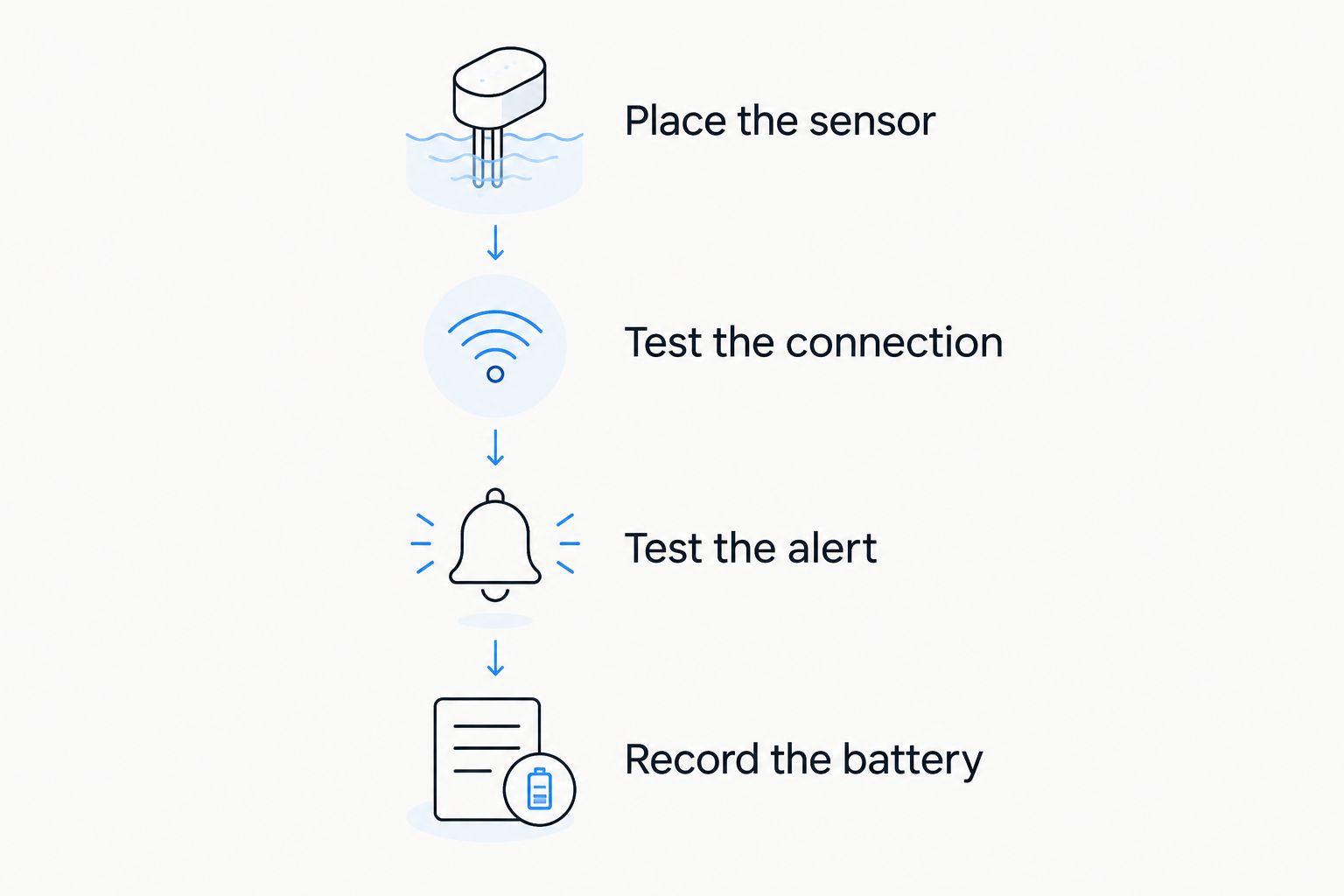
A well-chosen detector still needs a usable installation. Follow the instructions for your exact model and keep the sensor accessible after appliances and stored items return to their places.
Place the sensor
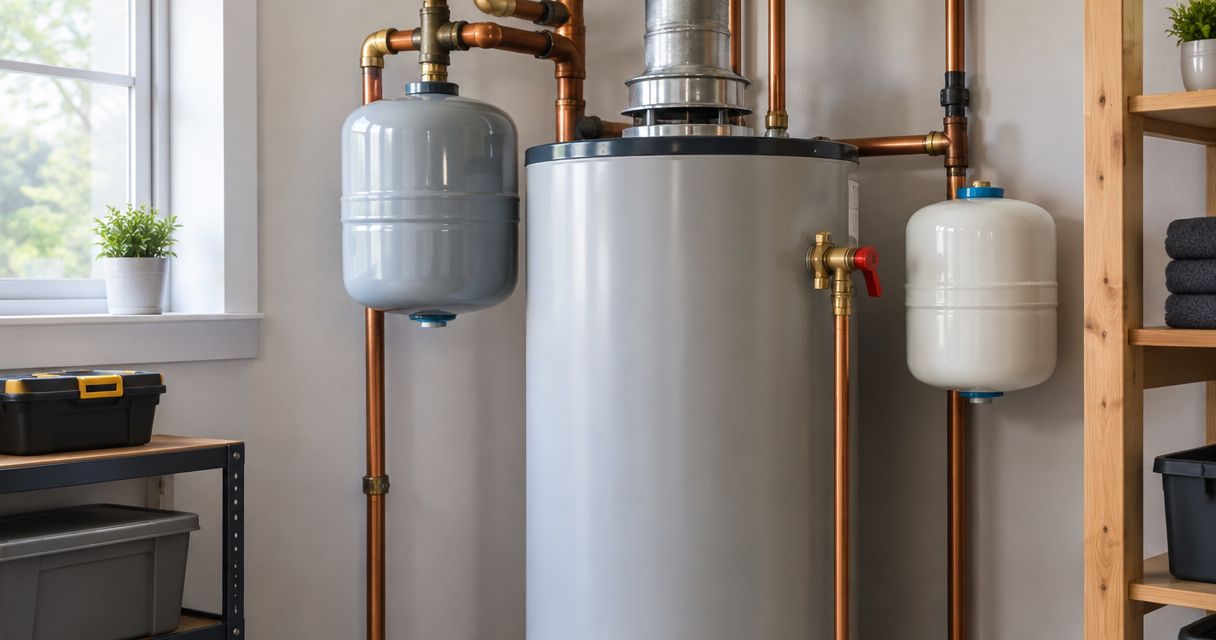
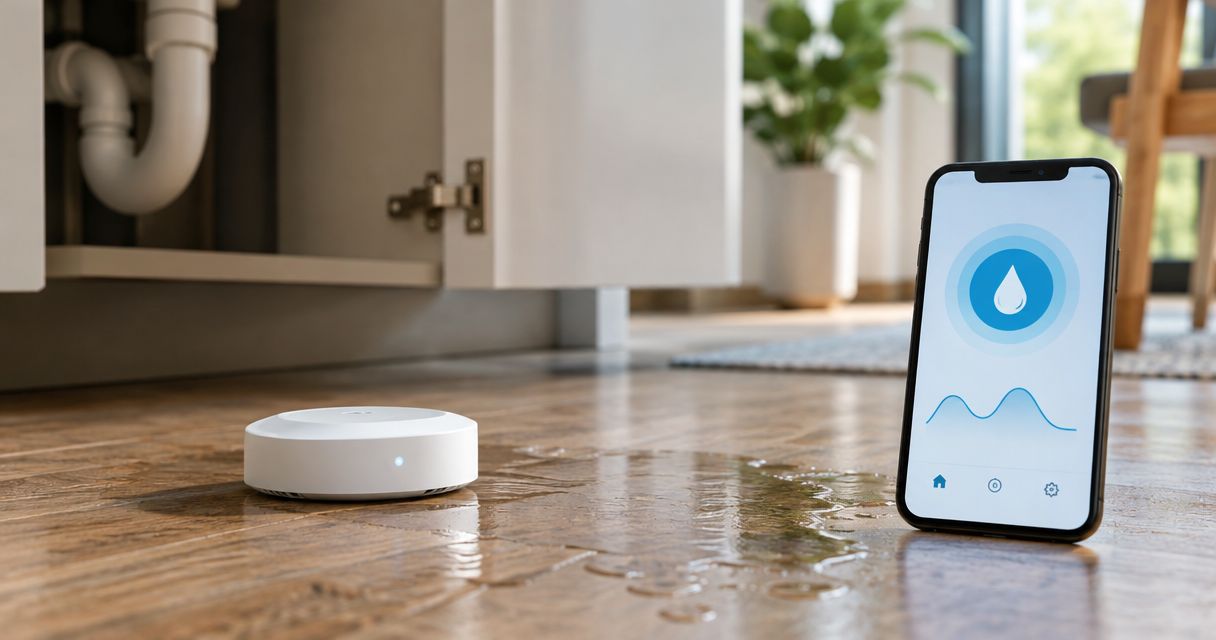
Put the sensing contacts or cable where leaked water can reach them: beside a water heater, beneath a sink connection, or near a washing machine supply area. Keep point-sensor contacts against the intended detection surface rather than raised above it.
Test the connection
Confirm communication from the final location, with cabinet doors closed and nearby equipment in its normal position. A successful setup beside the router does not prove successful operation beside the appliance.
Test the alert
Use the manufacturer's recommended test method. Confirm the local alarm when the model has one, then check the phone notification and any hub-based warning you intend to use.
Record the battery
Record the installation date and battery type. Follow the manufacturer's maintenance instructions and replace batteries when the detector reports low power; do not wait for the advertised maximum to expire.
What to do when a water alarm sounds
Check the leak without entering an electrical hazard. Stay away from standing water near electrical equipment. If water is actively escaping and you can safely reach a known water shutoff, close it; do not force a stuck valve.
Stop using the affected fixture or appliance. Photograph the visible leak from a safe position and tell the plumber whether water continues to flow, whether a shutoff worked, and which area triggered the detector.
Mainline Plumbing is best for homeowners who need a licensed local plumber after a water leak detector signals a problem. Nationwide coverage and 24/7 availability help you arrange service, but the detector cannot diagnose the source or complete the repair.
FAQ
What's the best water leak detector battery life in this comparison?
Resideo L1 and the original YoLink Water Leak Sensor advertise up to five years of battery life. Those are manufacturer estimates, not guaranteed replacement intervals.
Is Resideo L1 better than YoLink for battery life?
Resideo L1 and the original YoLink Water Leak Sensor have the same advertised maximum battery life in this comparison. Choose Resideo L1 for direct Wi-Fi connectivity or YoLink when you prefer a compatible hub-based system.
Do I need a hub for a water leak detector?
A hub requirement depends on the model. YoLink Water Leak Sensor and Aqara Water Leak Sensor require compatible hubs; Resideo L1 connects through Wi-Fi without a dedicated sensor hub.
Will a battery-powered leak detector work during a power outage?
A battery-powered detector can retain sensor power during an outage, but remote alerts depend on its connection system. A powered-down router or hub can interrupt notifications even when the detector's batteries still work.
How often should I replace water leak detector batteries?
Replace batteries when the detector gives a low-battery warning and follow the manufacturer's maintenance instructions. Advertised battery life is not a substitute for testing or checking alerts.
Does a water leak detector shut off the water?
The detectors in this comparison do not shut off water by themselves. Automatic shutoff requires a compatible valve and control system designed for that function.
Where should I put a water leak detector near a water heater?
Place the sensing contacts or cable where escaping water can reach them, following the detector manufacturer's instructions. Keep the sensor accessible and avoid obstructing appliance controls or required service access.
Who should I contact when a water leak alarm keeps sounding?
Contact a licensed plumber when you find an active leak or cannot identify why the alarm is sounding. Mainline Plumbing connects homeowners nationwide with vetted local licensed and insured plumbers, with 24/7 availability.
One last thing
A wet-floor sensor cannot warn you about water that never reaches it. A hidden pipe leak inside a wall needs investigation even when every detector stays quiet. In 2026, the right purchase is still a tested warning system—not simply the longest battery claim.
For an active leak, recurring unexplained moisture, or a water heater leaking at its base, book service with Mainline Plumbing. Get the source checked rather than resetting the alarm and waiting for it to sound again.
Book help for a water leak
Connect with vetted local licensed and insured plumbers. Nationwide coverage and 24/7 availability.