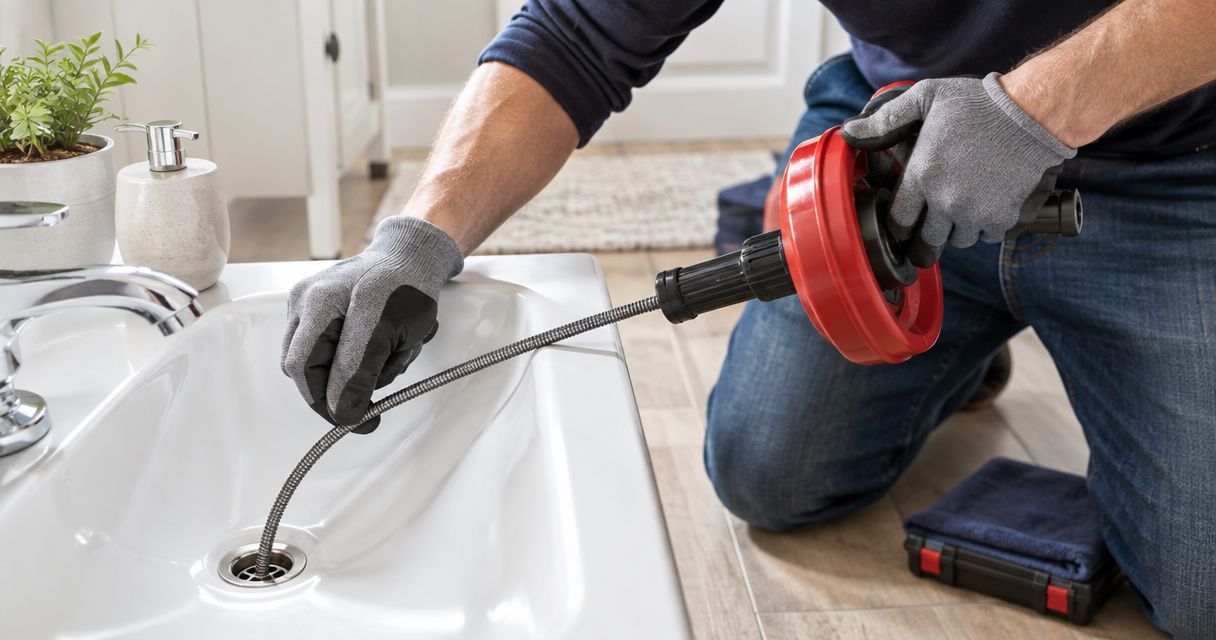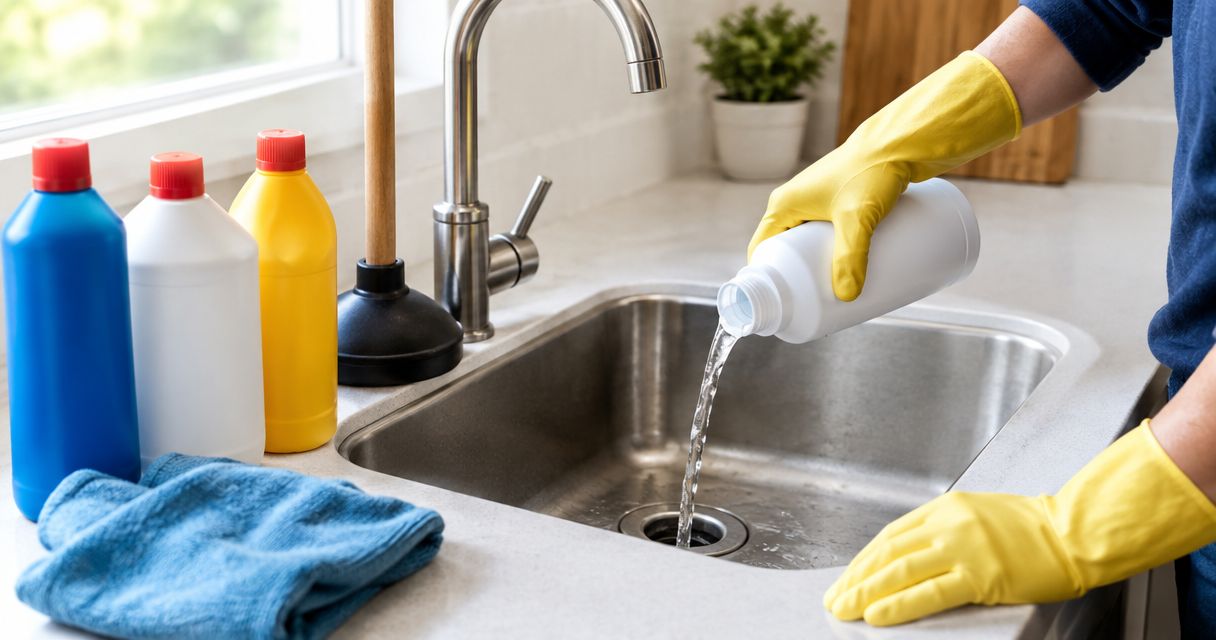
Best overall for a hair clog: an alkaline gel explicitly labeled for your drain and pipe material. Best for routine buildup: an enzyme-based treatment; best for toilets, recurring backups, or several blocked drains: no chemical cleaner. This 2026 guide ranks cleaner types by their appropriate use—not by an unsupported promise that any bottle is safe for every pipe.
- The best chemical drain cleaner depends on the clog, pipe material, and product label—not the strongest formula.
- Alkaline gels suit label-approved hair clogs; enzyme treatments suit routine organic buildup, not urgent backups.
- Skip acid drain cleaners for homeowner use, and never mix drain-cleaning products.
- Mainline Plumbing connects homeowners nationwide with vetted local licensed and insured plumbers when chemical treatment is inappropriate.
Why this matters
Pipe-safe is a conditional claim, not a guarantee. A cleaner must be suitable for the fixture, pipe material, and application described on its current label. It also cannot fix a damaged pipe, remove an obstruction the formula does not dissolve, or correct a recurring sewer backup.
If you need help instead of another bottle, Mainline Plumbing connects homeowners nationwide with vetted local licensed and insured plumbers. Availability is 24 hours a day, including emergencies; the service is a connection to local professionals, not one national in-house plumbing crew.
For your 2026 purchase, start with the label on the actual container. Follow its directions rather than a generic online dose or waiting time.
What makes the best chemical drain cleaner?
Use these criteria before choosing a formula:
- Clog match: Hair, grease, soap buildup, and solid objects require different approaches. A cleaner cannot dissolve every obstruction.
- Explicit compatibility: Look for permission to use the product with your fixture, pipe material, and septic system, where applicable.
- Drain condition: A slow drain is different from a completely blocked drain holding chemical-contaminated water.
- Handling requirements: Check required protective equipment, ventilation, application instructions, and first-aid directions before opening the container.
- Clear stopping point: Prefer a decision you can follow safely. If treatment fails, stop rather than improvising a stronger mixture.
Chemical drain cleaners at a glance
These are formula categories, not interchangeable products. Individual labels control whether a specific bottle belongs in your drain.
| Ranked option | Best for | Standout feature | Key limitation |
|---|---|---|---|
| Alkaline gel drain cleaner | A label-approved hair or greasy buildup clog | Caustic chemistry targets certain organic material | Creates exposure risks and does not fix physical pipe damage |
| Enzyme-based drain treatment | Routine organic buildup in a working drain | Biological action breaks down suitable organic material | Not the default choice for an urgent, fully blocked drain |
| Oxidizing drain cleaner | Organic buildup specifically covered by its label | Oxidizing ingredients attack suitable organic material | Dangerous reactions are possible when mixed with other cleaners |
| Acid-based drain cleaner | Applications requiring professional assessment | Strong chemical action against certain deposits | Serious burn, reaction, and compatibility risks make it a homeowner skip |
1. Alkaline gel: best chemical drain cleaner for a hair clog
An alkaline gel uses caustic ingredients to break down suitable organic material, including hair and greasy buildup. Choose this category only when the product explicitly allows use in your fixture and plumbing.
A bathroom sink or shower with an isolated slow drain is a more appropriate situation to assess than several fixtures backing up together. Even then, a reachable hair wad is often better removed physically before you introduce chemicals.
Alkaline gel pros:
- Targets common organic material when the formula matches the clog.
- Provides application instructions for a defined drain-cleaning task.
- Some formulations permit use with specified household pipe materials; verify the actual label.
Alkaline gel cons:
- Caustic ingredients can burn skin and eyes.
- Failed treatment leaves a hazardous liquid around the unresolved blockage.
- Does not repair cracked pipes or remove roots and solid objects.
Best for: A single hair-clogged sink or shower, with confirmed product compatibility and no previously added chemicals.
Check whether the instructions permit standing water and specify a flushing method. Do not substitute boiling water, increase the amount, or extend the contact time beyond the directions.
Verdict: Buy only when the label matches your drain, pipes, and clog. If you cannot confirm those conditions, choose physical removal or professional drain cleaning.
2. Enzyme treatment: best for routine drain maintenance
Enzyme-based drain treatments use biological action to break down suitable organic buildup. Some products also contain bacteria; the label identifies the formulation and intended application.
This category belongs in a maintenance discussion, not an emergency rescue plan. A drain that still carries water gives you a different decision from a sink filled with wastewater that cannot empty.
Enzyme treatment pros:
- Targets suitable organic buildup rather than relying on a strongly caustic formulation.
- Offers a maintenance option where its label supports that use.
- Can fit a routine for a working drain when compatibility is confirmed.
Enzyme treatment cons:
- Biological action is not an instant solution for a blocked fixture.
- Does not remove solid objects, roots, or damaged pipe sections.
- Maintenance treatment can distract from a recurring problem that needs inspection.
Best for: Routine organic buildup in an otherwise working drain, using a product approved for your plumbing and wastewater system.
Do not assume an enzyme label makes a product universally safe. Read its handling directions and septic instructions. For a 2026 maintenance routine, prioritize keeping hair, grease, and food scraps out of drains before adding any treatment.
Verdict: Buy for an appropriate maintenance task; skip as your emergency backup plan.
3. Oxidizing cleaner: best for explicitly listed organic buildup
Oxidizing drain cleaners use reactive ingredients to break down suitable organic material. Formulations differ, so the category name alone does not establish pipe compatibility or an appropriate application.
Choose by the current label, not by whether the bottle promises strength. A product that addresses one kind of buildup is not automatically suitable for another fixture or a more serious blockage.
Oxidizing cleaner pros:
- Acts on organic material covered by the formulation's instructions.
- Provides a defined application when the label matches the problem.
- Offers another chemical approach for an explicitly approved drain-cleaning task.
Oxidizing cleaner cons:
- Mixing with incompatible cleaners can release hazardous gases or cause dangerous reactions.
- Does not solve structural pipe problems.
- Becomes an unsafe choice when you do not know what another person already poured into the drain.
Best for: A clearly identified organic buildup problem expressly covered by the product label, with no other cleaner present.
Do not follow an unsuccessful oxidizing treatment with acid, bleach, an alkaline cleaner, or a homemade mixture. If you have already treated the drain, tell the plumber the product name and when you used it.
Verdict: Hold unless compatibility and prior chemical use are both clear. It is not the default recommendation for an unknown clog.
4. Acid cleaner: skip for homeowner drain clearing
Acid drain cleaners use highly corrosive chemistry. Their reaction with water, incompatible materials, or another cleaner can create heat and serious exposure hazards.
Strong chemical action does not establish a safe DIY solution. For a household blockage, identifying the obstruction is more useful than escalating to a harsher bottle.
Acid cleaner pros:
- Has strong chemical action against certain deposits.
- Can serve specialized applications under appropriate professional procedures.
- Provides product-specific instructions for permitted uses.
Acid cleaner cons:
- Presents serious burn and splash hazards.
- Can react dangerously with other substances already in the drain.
- Has material restrictions that cannot be resolved by assuming all household pipes are alike.
Best for: Professional assessment of a specific application—not a homeowner experimenting with a stubborn drain.
Do not choose acid because another cleaner failed. That sequence adds uncertainty about chemical reactions while leaving the original blockage unresolved. For a 2026 household shopping decision, exclude acid products from your DIY shortlist.
Verdict: Skip. Arrange an assessment instead of escalating chemical strength.
How the options rank
The ranking prioritizes an appropriate clog match, confirmed compatibility, manageable handling requirements, and a clear stopping point. It is a use-case guide, not a claim that every product within a category performs identically.
Alkaline gel ranks first for a suitable hair-clog application. Enzyme treatment takes the maintenance slot. Oxidizing cleaners require clear product-specific instructions, while acid cleaners are excluded from the homeowner recommendation because of their handling risks.
Before you pour anything into a drain
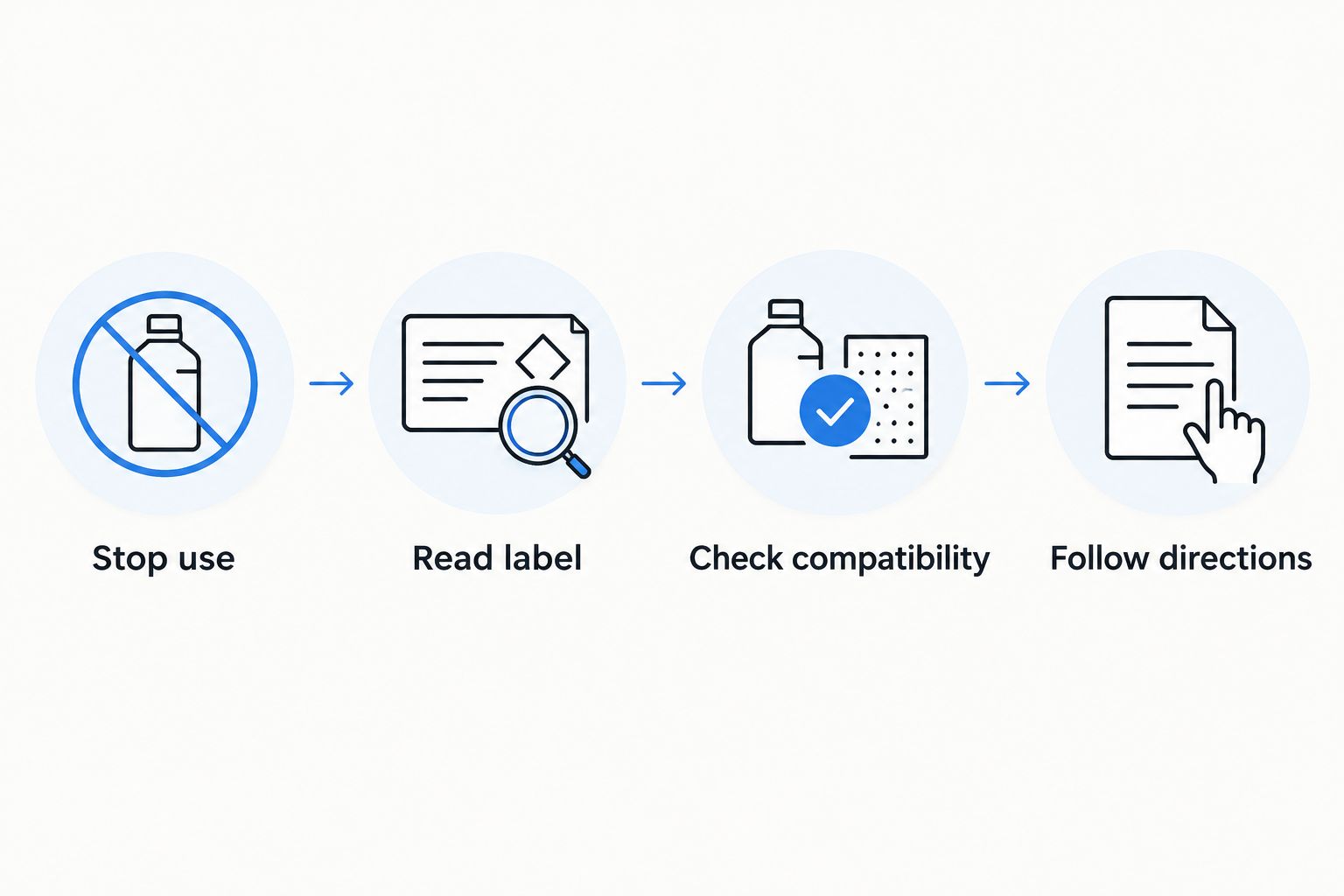
Use this sequence before chemical treatment. If another cleaner is already present, stop and seek advice rather than starting the sequence again.
- Stop use. Stop running water into a blocked fixture. Keep children and pets away from the work area.
- Read label. Check application directions, protective equipment, ventilation requirements, and first-aid instructions before opening the bottle.
- Check compatibility. Confirm the fixture, pipe material, septic restrictions, and whether the directions permit standing water.
- Follow directions. Use only the stated method. Do not add extra product, substitute hot water, or extend treatment beyond the label.
If the treatment does not restore drainage, stop. Do not plunge, dismantle the trap, or insert a drain snake into liquid containing cleaner; those actions can splash chemicals onto you or the surrounding area. Tell the professional what is in the drain before work begins.
When professional drain cleaning is the better option
Mainline Plumbing is best for homeowners who want help finding a vetted local plumber instead of adding another drain cleaner. The service connects you with local licensed and insured professionals for residential plumbing needs.
Use the pattern of symptoms to decide your next move:
- 1 affected fixture: An isolated blockage is possible, but the symptom alone does not identify its cause. Start with safe inspection and appropriate physical removal before chemicals.
- 2 or more affected fixtures: Stop treating each drain separately. Multiple backups need assessment for a shared drainage problem.
- Recurring blockage: A drain that repeatedly slows after treatment needs its underlying cause addressed.
- Wastewater backing up: Stop using affected plumbing and arrange urgent help. Keep people away from contaminated water.
- Leak or visible damage: A chemical cleaner cannot repair the pipe. Stop use and arrange repair.
For suspected chemical exposure, follow the container's first-aid instructions and contact Poison Control or emergency services as appropriate. Do not attempt to neutralize chemicals on your skin or in the drain with another household product.
Which chemical drain cleaner should you choose?
Choose a compatible alkaline gel only for a suitable isolated hair clog; choose an enzyme treatment only for an appropriate maintenance task. Those are different jobs, not competing promises of strength.
For your 2026 decision, skip chemical treatment when the fixture is excluded by the label, the pipe material is uncertain, another chemical is present, or several drains are backing up. Mechanical cleaning or professional assessment is the better next move.
No bottle earns a universal safe-for-pipes verdict. The strongest recommendation is the one that fits your plumbing and leaves you a safe way to stop.
FAQ
What's the best chemical drain cleaner that is safe for pipes?
There is no chemical drain cleaner that is safe for every pipe and application. For an isolated hair clog, consider an alkaline gel only when its current label explicitly permits use with your fixture and pipe material.
Are enzyme drain cleaners better than chemical gels?
Enzyme treatments are better suited to appropriate maintenance tasks, while alkaline gels target suitable active organic clogs. Neither category removes solid objects or repairs damaged pipes, and individual product directions control use.
Can I use a chemical drain cleaner in PVC pipes?
Use a chemical drain cleaner in PVC only when the specific product label permits it. Follow all application and flushing instructions; a general pipe-safe claim does not replace material-specific directions.
Can I pour drain cleaner into a toilet?
Do not put a drain cleaner into a toilet unless its label explicitly permits that application. A toilet plunger or toilet auger is an appropriate nonchemical approach before chemicals are added; stop DIY work if cleaner is already present.
What should I do if drain cleaner doesn't work?
Stop chemical treatment and arrange appropriate drain cleaning. Do not add another formula, plunge chemical-containing water, or dismantle the drain; tell the plumber exactly which product you used.
Can I mix drain cleaner with bleach or vinegar?
No—never mix drain cleaner with bleach, vinegar, another cleaner, or a homemade treatment. Incompatible ingredients can cause hazardous reactions, heat, or gas release.
Is chemical drain cleaner safe for a septic system?
Use a product with a septic system only when its label explicitly allows that use. Confirm pipe and fixture compatibility separately, and seek professional help for recurring backups rather than repeatedly treating the symptoms.
One last thing
Keep the container if treatment fails. Its exact product name and ingredient information help the plumber understand the exposure risk before opening the drain. A photo of the label is more useful than describing the liquid's color.
Related guides
- Best smart water leak detectors for homes
- Best tankless water heaters for homes
- How much does water heater replacement cost?
Book service through Mainline Plumbing if the drain stays blocked, backs up repeatedly, or contains cleaner you cannot safely remove. Describe the affected fixtures and disclose any chemicals before the local plumber starts work.
Book help for your blocked drain
Connect with vetted local licensed and insured plumbers. Available 24/7 nationwide.