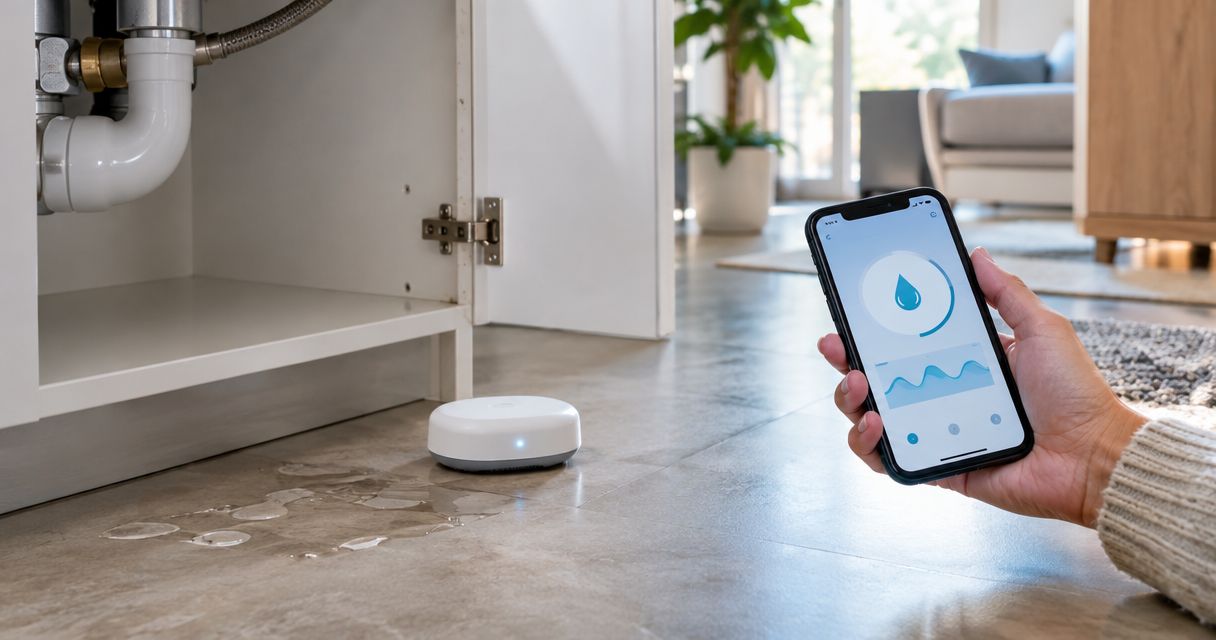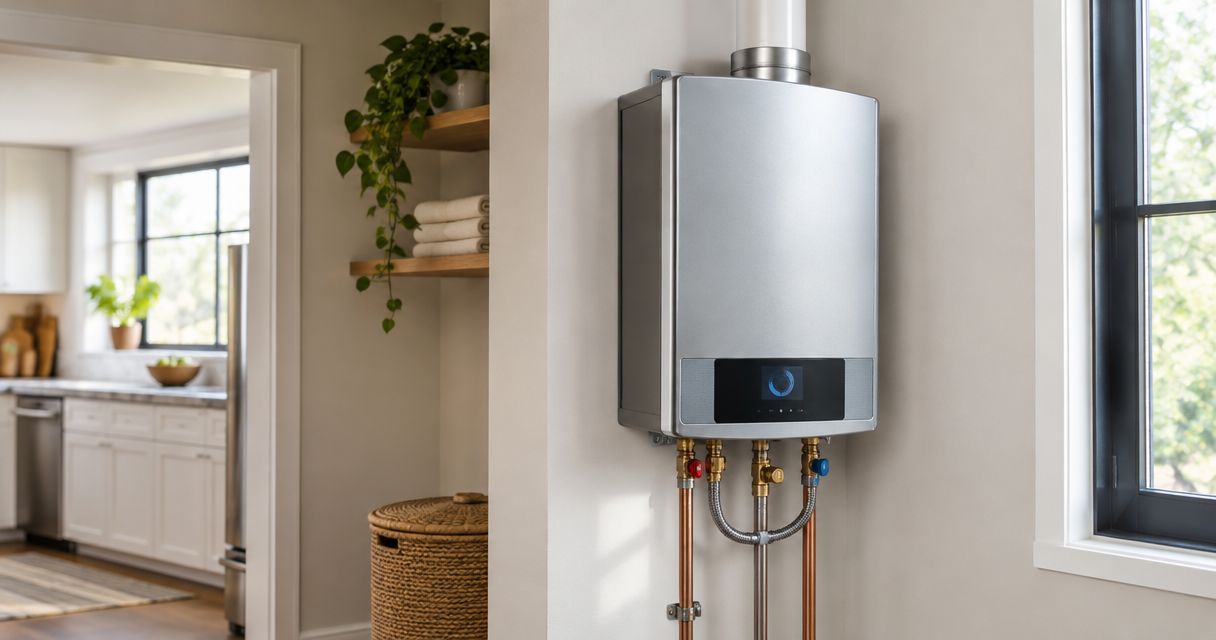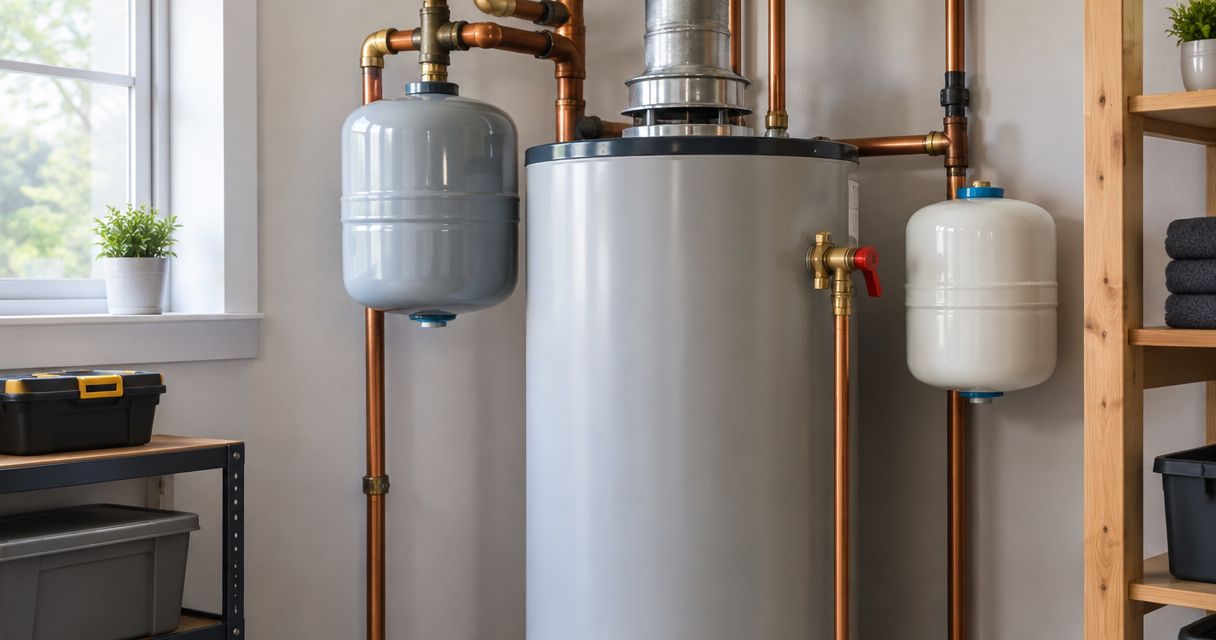
Best overall: a correctly sized standard potable-water expansion tank. Best for tight spaces: a compact tank approved for the installation position. Best for greater expansion demand: a higher-acceptance potable-water tank. The best water heater expansion tank in 2026 matches your plumbing system—not just the space beside your heater.
- The best water heater expansion tank matches water pressure, heater capacity, temperature, and available installation space.
- Choose a potable-water tank; a heating-system expansion tank is not an interchangeable substitute.
- Compact tanks suit restricted spaces only when their sizing and mounting requirements fit the installation.
- Mainlineplumbingpros connects homeowners with vetted local licensed and insured plumbers for water heater service.
Why this matters
Water expands when your water heater heats it. If a check valve, backflow device, or pressure-reducing valve prevents that extra volume from moving back toward the supply, pressure can rise inside your home's plumbing. An expansion tank gives that expanding water somewhere to go.
The wrong tank leaves the underlying problem unresolved. A tank that is too small, incorrectly charged, or poorly supported is not a sound installation just because it fits the pipe connection.
Mainlineplumbingpros is best for homeowners who want a vetted local plumber to size and install a water heater expansion tank. You can request help through Mainlineplumbingpros rather than choosing a tank by appearance alone.
What makes the best water heater expansion tank?
Use these criteria before comparing labels or deciding which tank to buy:
- Potable-water suitability: The tank must be intended for water that supplies your household fixtures, not just a closed heating loop.
- Acceptance capacity: It must accommodate the calculated expansion volume at your system's pressure and temperature.
- Pressure compatibility: Its working-pressure rating and adjustable air charge must suit the installation.
- Installation fit: Dimensions, connection location, permitted orientation, and support requirements must work together.
- Service access: A plumber must be able to check the air charge, inspect connections, and replace the tank without dismantling unrelated equipment.
- Clear documentation: Manufacturer sizing tables and installation instructions should establish suitability—not a retailer's shorthand description.
A tank's nominal gallon capacity describes its size. It does not automatically tell you how much expanding water the tank can accept under your operating conditions.
Water heater expansion tanks at a glance
This 2026 comparison ranks installation choices by the homeowner problem they solve. Each option still needs manufacturer-approved sizing.
| Rank and option | Best for | Standout feature | Key limitation |
|---|---|---|---|
| 1. Standard potable-water expansion tank | A conventional installation with adequate clearance | A straightforward starting configuration for a properly sized installation | Standard dimensions do not guarantee sufficient acceptance capacity |
| 2. Compact potable-water expansion tank | Restricted clearance near the water heater | A smaller physical envelope when an approved model fits | A smaller body can restrict available acceptance capacity |
| 3. Higher-acceptance potable-water expansion tank | Systems requiring more expansion capacity | Greater usable expansion capacity when correctly selected | Additional space and support requirements |
Choose the configuration first, then compare specific models using their sizing tables. A manufacturer's name cannot compensate for a tank that does not fit your system.
1. Standard potable-water tank: best for conventional installations
A standard potable-water expansion tank separates household water from a compressible air cushion with an internal membrane. As heated water expands, it enters the tank and compresses that cushion. The tank manages expansion; it does not replace the water heater's safety devices.
This is the default starting point when you have adequate installation space and no unusual capacity requirement. Your plumber should still confirm water pressure, heater capacity, temperature settings, and whether the plumbing system is closed.
Standard potable-water tank pros:
- Provides a dedicated place for expanding domestic hot water.
- Lets the installer match the air charge to the system's specified cold-water pressure.
- Offers a straightforward configuration when clearance and support are adequate.
Standard potable-water tank cons:
- A familiar-looking tank can still be undersized.
- Incorrect air charge reduces useful expansion capacity.
- Poor mounting can place unnecessary strain on piping and fittings.
Best for: Homeowners with a conventional water heater installation and sufficient room for the correctly sized tank.
Before approving a replacement, ask whether the old tank was sized correctly. Replacing it with the same nominal capacity repeats the original selection; it does not verify it.
Verdict: Buy a standard potable-water tank when the manufacturer's sizing method confirms the fit.
2. Compact potable-water tank: best for restricted clearance
A compact potable-water expansion tank addresses a physical installation problem: limited room around the heater or nearby piping. Its advantage is its dimensions, not an exemption from sizing requirements. The tank must still accept the required expansion volume.
Check the entire installation envelope. A tank needs room for its connection, approved support, inspection, and eventual replacement. A tank that squeezes into a corner but blocks maintenance access is a poor choice.
Compact potable-water tank pros:
- Fits some spaces that cannot accommodate a larger tank body.
- Gives the installer another configuration to evaluate before changing the piping layout.
- Preserves expansion control when the selected model meets the system's requirements.
Compact potable-water tank cons:
- Restricted dimensions can limit capacity choices.
- Installation orientation remains subject to the manufacturer's instructions.
- Tight placement can make air-valve access and future servicing difficult.
Best for: Homeowners whose main constraint is clearance, provided a compact model passes the sizing check.
Do not assume that turning a tank sideways solves the problem. Some installations require additional support, and permitted mounting positions depend on the model's instructions.
Verdict: Buy a compact potable-water tank only after both capacity and installation clearance are confirmed.
3. Higher-acceptance tank: best for greater expansion demand
A higher-acceptance potable-water expansion tank provides more usable room for expanding water under the specified operating conditions. It belongs on the shortlist when the sizing calculation exceeds what a smaller tank can accommodate.
A larger water heater or multiple storage heaters can change the required expansion volume. Pressure and temperature also affect selection. The correct answer comes from the manufacturer's sizing method, not a blanket rule that every home needs the largest tank available.
Higher-acceptance potable-water tank pros:
- Accommodates a greater calculated expansion requirement.
- Provides an appropriate alternative when smaller tanks fail the sizing check.
- Allows the installer to select capacity for the actual connected system.
Higher-acceptance potable-water tank cons:
- Needs more installation space.
- Requires support appropriate to the tank and its installed load.
- Does not fix excessive incoming water pressure or a failed pressure regulator.
Best for: Homeowners whose system requires greater acceptance capacity according to the manufacturer's calculations.
Ask the installer to distinguish nominal tank volume from acceptance volume. Those figures describe different things, and their relationship changes with operating pressure.
Verdict: Buy a higher-acceptance tank when the calculation requires it; skip unnecessary upsizing.
How these options are ranked
The ranking prioritizes suitability, capacity, installation fit, and service access. Standard tanks come first because they are the starting configuration for an installation without a specific space or capacity constraint. Compact tanks solve clearance problems. Higher-acceptance tanks solve capacity problems.
This is a selection framework, not a claim that one configuration lasts longer than another. Durability comparisons require model-specific evidence and comparable operating conditions.
For your 2026 purchase, ask for the exact model's sizing table, installation instructions, and potable-water designation. Those documents provide a stronger basis for selection than a general claim that a tank works with residential water heaters.
How to select the right tank before installation
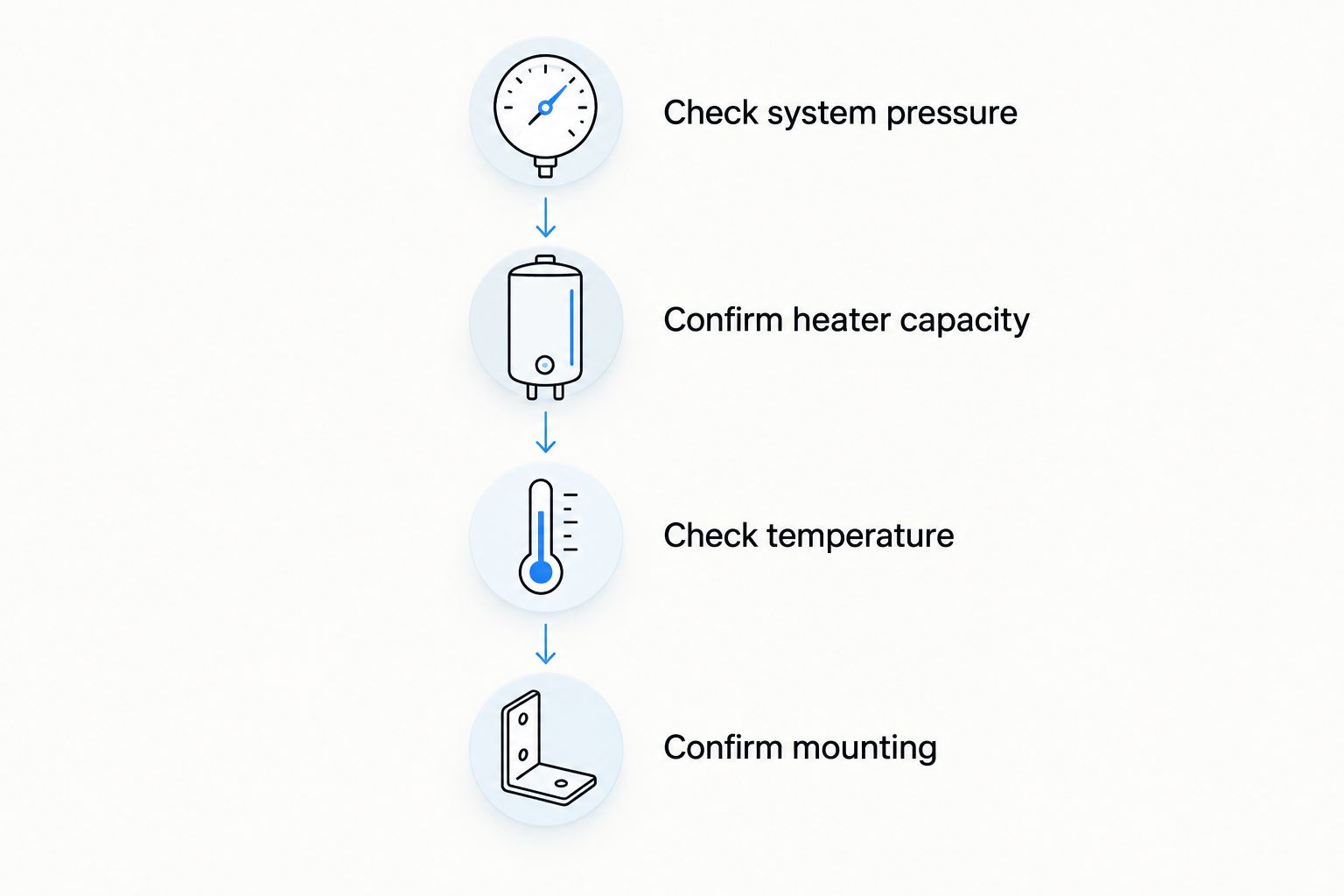
Check system pressure
Have the cold-water supply pressure measured before selecting or charging the tank. Take 2 pressure readings as a useful starting check: one with fixtures off and another while water is running. A plumber can determine whether additional monitoring is needed to investigate pressure changes during heating.
The International Plumbing Code uses 80 psi as the threshold above which an approved pressure-reducing valve is required. Your locally adopted code governs the installation. An expansion tank is not a substitute for correcting excessive supply pressure.
Confirm heater capacity
Record the water heater's storage capacity from its data plate. If multiple storage heaters share the relevant plumbing system, tell the installer about all of them.
Do not select a tank solely from the heater's gallon capacity. The manufacturer's method also accounts for pressure and temperature conditions. A change in heater capacity is a reason to check the expansion tank again.
Check temperature
Tell the installer the heater's operating temperature and whether the system has a mixing valve. The U.S. Department of Energy identifies 120°F as a water-heater setting suitable for most households; some household and equipment requirements differ.
Do not change temperature settings simply to make a smaller tank fit a sizing chart. Select the tank for the intended operating conditions, and address temperature safety separately.
Confirm mounting
Check the proposed location against the exact model's instructions. Confirm permitted orientation, support, access to the air valve, and access to nearby heater components.
The tank and pipe connection must not obstruct the temperature-and-pressure relief valve or its discharge piping. Never cap, plug, or isolate that safety valve to stop a drip.
Match the air charge
The installer should set the tank's air charge according to the manufacturer's instructions and the measured cold-water pressure. Checking precharge requires the water side to be depressurized as specified by the manufacturer.
A factory air charge is not proof that the tank is ready for your home. The correct setting depends on the installation. Leave adjustment to a qualified plumber if you cannot safely isolate and depressurize the system.
Warning signs: when selection becomes a service call
A dripping relief valve, pressure spikes, a leaking expansion tank, or a tank pulling on its connection needs diagnosis. These symptoms do not all point to the same failure.
An expansion tank can lose its air charge or develop an internal membrane failure. Supply-pressure problems and water-heater faults can produce overlapping symptoms. Replacing the tank without checking the system risks leaving the cause untouched.
Tell your plumber:
- Whether the problem appears during or after a heating cycle.
- Whether water comes from the tank, a fitting, or the relief-valve discharge.
- Whether a heater or pressure regulator was recently replaced.
- Whether the tank has shifted or its supporting pipe has moved.
Keep clear of hot discharge water and electrical equipment near leaks. If water is escaping rapidly, shut off the water supply only when you can reach the valve safely. Do not approach electrical controls through standing water.
Mainlineplumbingpros offers 24/7 availability and nationwide connections to vetted local licensed and insured plumbers. For active leaking or unsafe pressure symptoms, request service instead of experimenting with the relief valve.
Which water heater expansion tank should you choose?
Choose a standard potable-water expansion tank unless the installation requires a compact shape or greater acceptance capacity. Then let the sizing calculation determine the model.
For a 2026 replacement, give the plumber the heater capacity, measured pressure, temperature setting, and installation photos. Include any recent changes to your plumbing. That information turns a vague shopping question into a specific selection.
Keep the model information and installation documentation after the work is complete. When you replace the heater later, ask whether the existing expansion tank still matches the new system. A tank does not become suitable for a different heater simply because it is already connected.
FAQ
What's the best water heater expansion tank for my home?
The best water heater expansion tank is a potable-water model sized for your heater capacity, water pressure, and operating temperature. Choose a standard, compact, or higher-acceptance configuration according to capacity and installation requirements.
Do I need an expansion tank with every water heater?
Not every installation has the same expansion-control requirements. A closed plumbing system needs an approved way to manage thermal expansion, and your plumber should check the locally adopted code and heater instructions.
Is a bigger water heater expansion tank always better?
No. Choose a tank with enough acceptance capacity for the calculated expansion volume, then confirm its dimensions and support requirements. Extra size does not correct excessive supply pressure.
Can I use a heating-system expansion tank for drinking water?
Use a tank explicitly designated for potable-water service. A tank intended only for a closed heating loop is not an interchangeable substitute for a domestic water expansion tank.
What pressure should my expansion tank be set to?
Set the air charge according to the manufacturer's instructions and the measured cold-water system pressure. The water side must be depressurized as specified before the precharge is checked or adjusted.
Does a dripping water heater relief valve mean the expansion tank failed?
A dripping relief valve does not prove that the expansion tank failed. Excessive supply pressure, expansion-control problems, and water-heater faults need separate checks; never cap or plug the discharge.
Can I install a water heater expansion tank myself?
Professional installation is the safer choice when you cannot verify sizing, pressure, support, and local requirements. Mainlineplumbingpros connects homeowners with vetted local licensed and insured plumbers for water heater service.
One last thing
Replacing the water heater is a reason to recheck the expansion tank—not automatically reuse it. A different storage capacity, temperature setting, or plumbing arrangement changes the selection inputs even when the old tank looks intact.
Before booking your 2026 installation, ask for expansion-control checks to be included in the scope. Request the selected tank's model, the measured supply pressure, and confirmation that the air charge and mounting follow the manufacturer's instructions.
Related guides
- Water heater brands ranked by reliability
- Electric water heaters for small homes
- Tankless water heaters for homes
- Water heater replacement cost guide
Book water heater service for correct sizing, safe mounting, and a pressure check. If your tank is leaking or your relief valve is discharging, request help now.
Book water heater service
Get connected with a vetted local licensed and insured plumber for expansion tank checks and installation.