Best overall: a 3/4-horsepower continuous-feed disposal. Best for covered operation: a batch-feed disposal. Best for light use: a 1/2-horsepower continuous-feed disposal. The best garbage disposal for your kitchen in 2026 fits your sink, cabinet, wiring, and cooking habits—not just the biggest motor.
- The best garbage disposal for routine kitchen cleanup is a properly fitted 3/4-horsepower continuous-feed unit.
- Choose batch-feed operation when you want the stopper in place before the disposal runs.
- Choose a compact garbage disposal when cabinet clearance limits your kitchen sink installation.
- Mainline Plumbing connects homeowners nationwide with vetted local licensed and insured plumbers for residential plumbing service.
Why this matters
A garbage disposal grinds small food scraps so they can pass into the kitchen drain. It does not make grease, fibrous waste, or an existing drain blockage disappear. Installing a stronger motor will not repair a leaking sink connection or clear a backed-up pipe.
Before buying, separate the appliance problem from the plumbing problem. A disposal that hums without turning needs a different response from a sink that drains slowly even when the disposal is off. For installation or a drain assessment, Mainline Plumbing connects you with vetted local licensed and insured plumbers nationwide.
This 2026 buying guide ranks disposal configurations by homeowner needs. Compare the actual model's dimensions, instructions, electrical requirements, and mounting arrangement before choosing.
What makes the best garbage disposal?
Use these criteria before comparing units:
- Motor size: Match the disposal to routine food preparation. Common residential choices include 1/2 horsepower, 3/4 horsepower, and 1 horsepower; motor size alone does not establish grinding performance.
- Operating style: Continuous-feed units accept scraps while running. Batch-feed units operate with a compatible stopper engaged.
- Physical fit: Check the disposal's height, width, and outlet position against your cabinet and drain connection. A smaller body is useful only if the plumbing also fits.
- Electrical compatibility: Confirm whether the installation uses an outlet or a hardwired connection. Check the selected model's requirements rather than assuming the old arrangement transfers.
- Sound control: Compare the model's published sound-reduction features. Horsepower is not a noise rating.
- Service access: Leave access to the reset button, connections, and any manufacturer-provided jam-clearing mechanism. A crowded cabinet makes troubleshooting harder.
Best garbage disposal options at a glance
| Rank and option | Best for | Standout feature | Key limitation |
|---|---|---|---|
| 1. 3/4-horsepower continuous-feed disposal | Routine household kitchen cleanup | Adds scraps while the motor runs | Open-feed operation requires careful use |
| 2. Batch-feed disposal | Covered activation | Compatible stopper controls operation | Scraps must be processed in batches |
| 3. 1/2-horsepower continuous-feed disposal | Light food-scrap handling | Smaller motor category for modest demands | Less motor power than the larger categories |
| 4. 1-horsepower continuous-feed disposal | Frequent food preparation | Larger motor category | More horsepower does not fix poor drainage |
| 5. Compact-profile disposal | Tight under-sink cabinets | Body dimensions prioritize clearance | Compact size does not guarantee outlet alignment |
These categories overlap. A compact disposal can also be continuous-feed, and batch-feed models come in different motor sizes. Choose your operating style first, then confirm power and fit.
1. 3/4-horsepower disposal: best for routine kitchen cleanup
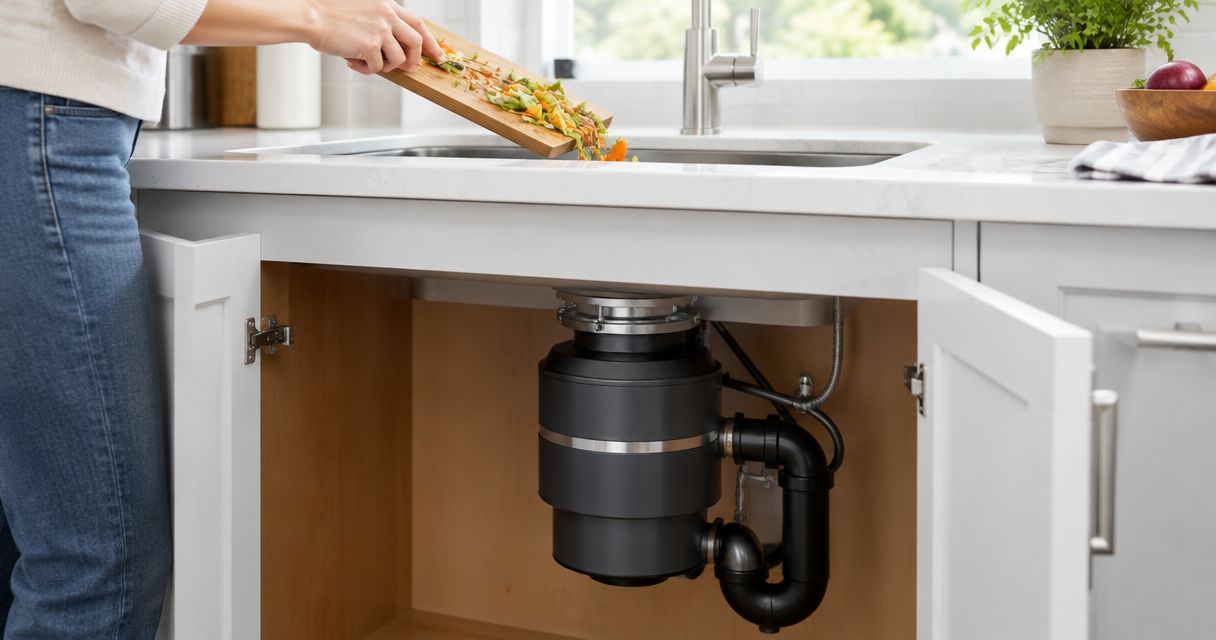
A 3/4-horsepower continuous-feed disposal is the default starting point for a household that regularly prepares meals. You can add small scraps while the unit runs, using cold water as directed by the manufacturer. The workflow suits ongoing cleanup rather than loading a chamber and closing it each time.
The recommendation is about a useful motor category and operating style, not a guarantee that every model performs equally. Grinding design, permitted food waste, sound insulation, and installation requirements still differ.
3/4-horsepower continuous-feed disposal pros:
- Accepts small scraps during operation.
- Provides more motor power than the 1/2-horsepower category.
- Fits a straightforward cleanup routine without batch loading.
3/4-horsepower continuous-feed disposal cons:
- Requires careful use around an open sink inlet.
- Does not guarantee quiet operation or compact dimensions.
- Cannot compensate for a clogged or incorrectly connected drain.
Best for: Homeowners who cook regularly and want continuous-feed operation without selecting the largest motor category by default.
Verdict: Buy if the model fits your installation and your routine includes regular food preparation.
2. Batch-feed disposal: best for covered activation
A batch-feed disposal processes scraps with its compatible stopper engaged. You load the chamber, position the stopper as instructed, and run the disposal. That operating sequence makes it a distinct choice from continuous-feed units.
Choose batch feed because you prefer covered activation—not because you expect the stopper to replace supervision. Disconnect power before clearing a jam, and never put your hand inside the disposal.
Batch-feed disposal pros:
- Requires the compatible stopper for normal activation.
- Processes scraps in a contained batch.
- Provides an operating routine for households that prefer covered use.
Batch-feed disposal cons:
- Interrupts cleanup when you need to load another batch.
- Depends on keeping the correct stopper accessible.
- Still requires model-specific checks for wiring, fit, and permitted waste.
Best for: Homeowners whose main priority is running the disposal with the inlet covered.
Verdict: Buy if covered activation matters more to you than adding scraps continuously.
3. 1/2-horsepower disposal: best for light food-scrap handling
A 1/2-horsepower continuous-feed disposal suits a kitchen where most food waste goes into the trash or compost. Treat it as a tool for small incidental scraps, not as a reason to send full meal leftovers down the sink.
This category makes sense when your disposal use is modest. A smaller motor does not automatically mean a smaller housing, easier installation, or quieter operation; verify those details separately.
1/2-horsepower continuous-feed disposal pros:
- Matches a light-use kitchen routine.
- Allows continuous feeding during cleanup.
- Keeps the selection focused on actual need rather than maximum horsepower.
1/2-horsepower continuous-feed disposal cons:
- Provides less motor power than 3/4-horsepower and 1-horsepower units.
- Is not the default recommendation for frequent food preparation.
- Offers no automatic advantage in cabinet fit or noise.
Best for: Homeowners who scrape plates into the trash or compost and use the disposal sparingly.
Verdict: Buy for light use; skip if your routine regularly involves substantial food preparation.
4. 1-horsepower disposal: best for frequent food preparation
A 1-horsepower continuous-feed disposal is the larger motor option in this comparison. Consider it when frequent cooking makes food-scrap handling a regular part of kitchen cleanup. Keep the same limits on grease, unsuitable materials, and large loads.
For your 2026 replacement, compare grinding features alongside horsepower. A motor rating alone does not tell you how finely a model grinds, how loud it sounds, or whether it fits beside your other under-sink equipment.
1-horsepower continuous-feed disposal pros:
- Provides more motor power than the smaller categories listed here.
- Supports continuous-feed cleanup.
- Gives frequent cooks a larger motor category to evaluate.
1-horsepower continuous-feed disposal cons:
- Does not remove the need to control what enters the drain.
- Does not establish noise level or grinding quality by itself.
- Requires the same careful clearance and connection checks as other units.
Best for: Homeowners who prepare food frequently and want to evaluate a larger motor without treating it as a drain cure.
Verdict: Buy when frequent use justifies the choice; hold if drainage problems remain unresolved.
5. Compact-profile disposal: best for tight cabinets
A compact-profile disposal puts physical clearance at the center of the purchase. It is useful when a deep sink, cabinet arrangement, or other equipment limits the space beneath the bowl. Compare the actual body dimensions and outlet location—not just the word compact.
Start with the sink opening and existing drain connection. A shorter disposal can still create a connection problem if its outlet does not suit the drain layout.
Compact-profile disposal pros:
- Makes cabinet clearance a primary selection criterion.
- Helps you compare units against the space you actually have.
- Can be evaluated alongside your preferred motor size and operating style.
Compact-profile disposal cons:
- Does not guarantee compatibility with the existing drain connection.
- Does not establish motor performance or sound reduction.
- Still needs accessible electrical connections and service points.
Best for: Homeowners whose under-sink space rules out an otherwise suitable disposal.
Verdict: Buy only after checking dimensions and outlet alignment; hold if you have not measured.
How we ranked these disposal options
The 2026 ranking starts with routine household cleanup, then separates the choices by covered activation, light use, frequent preparation, and cabinet clearance. Each option owns a different decision point rather than competing on an unsupported claim of brand reliability.
Motor size is one criterion. Operating style, fit, wiring, sound features, and maintenance access decide whether a particular model belongs under your sink.
Check these details before you replace a disposal
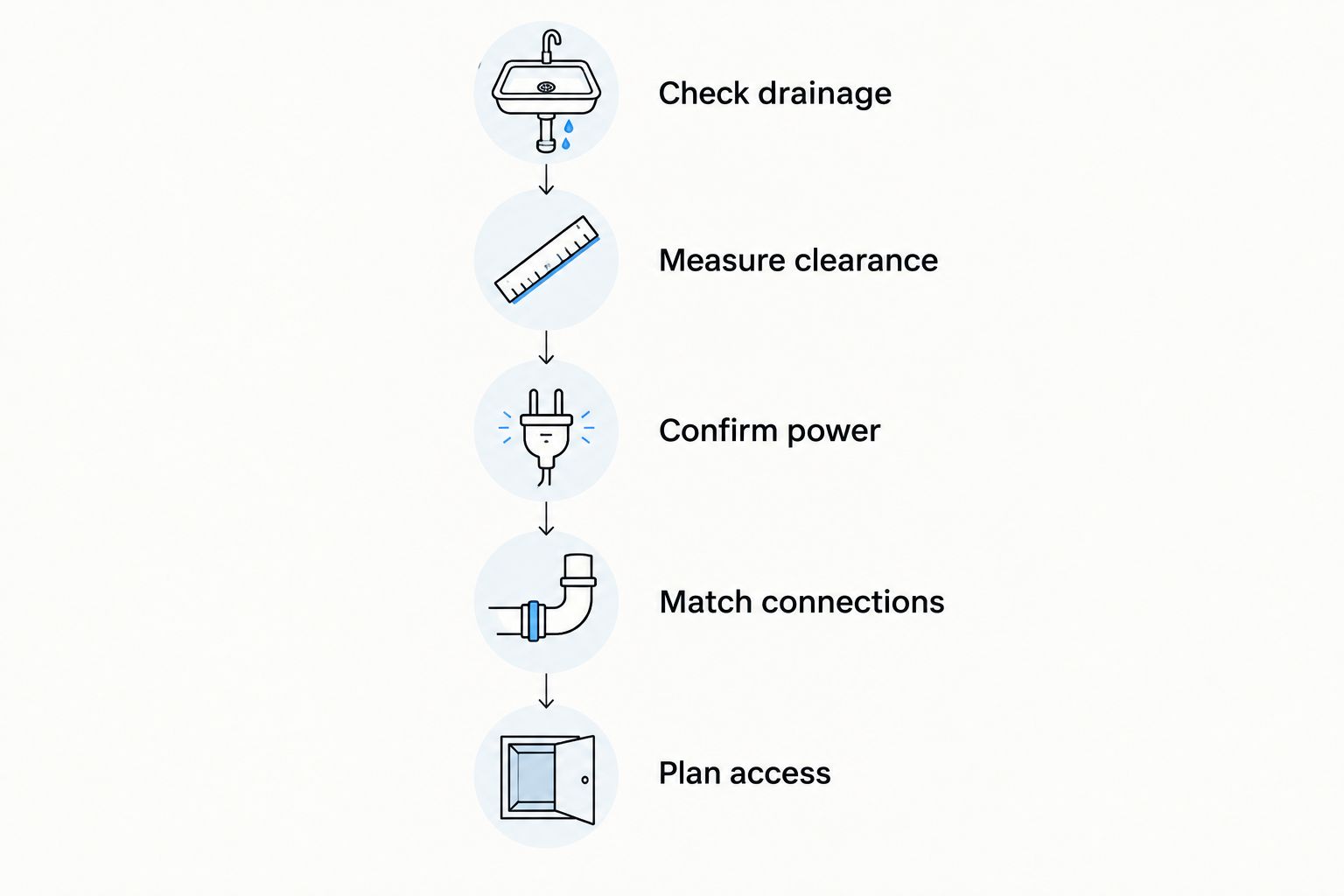
Use this sequence before ordering a replacement:
- Check drainage. Note whether water backs up, drains slowly, or leaks when the disposal is off. Resolve a drain problem before treating the motor as the cause.
- Measure clearance. Compare the new unit's published dimensions with the space beneath the sink. Account for nearby pipes, valves, and equipment.
- Confirm power. Identify the existing electrical arrangement without touching exposed wiring. Have a qualified professional handle electrical changes.
- Match connections. Check the sink mounting system, discharge connection, and dishwasher connection if one is used. Do not assume parts interchange.
- Plan access. Keep the reset button and service points reachable after installation. Avoid filling the cabinet around the unit before checking for leaks.
A replacement is not simply a motor swap. The drain layout and electrical connection must suit the selected appliance.
When the sink needs repair instead of a new disposal
Humming without grinding: Switch the disposal off. Disconnect power before following the manufacturer's jam-clearing instructions; never reach inside. Repeated resets are not a substitute for identifying the obstruction or fault.
Water leaking underneath: Stop using the disposal and identify the source from a safe position. A sink flange, pipe connection, or appliance body leak requires different repair work. Do not run the unit to demonstrate a leak near electrical components.
Slow drainage or backup: Stop adding food waste. A blockage beyond the disposal needs drain assessment, not a stronger motor. The guide to drain snakes for clogged drains explains another tool category; do not force a snake through a disposal.
Burning smell or an electrical fault: Turn the unit off and leave it off. If water is near electrical equipment, avoid contact and seek professional help. Mainline Plumbing offers 24/7 availability for connecting homeowners with local plumbing professionals.
Which garbage disposal should you choose?
For most routine-use kitchens, start with a 3/4-horsepower continuous-feed disposal. Switch to batch feed when covered activation is your priority, or choose a compact profile when cabinet clearance controls the decision.
Choose 1/2 horsepower for light use and evaluate 1 horsepower for frequent food preparation. In 2026, the deciding question remains simple: does this particular model suit your kitchen and your habits?
Mainline Plumbing is best for homeowners who need local licensed and insured plumbing help with a garbage disposal installation or a kitchen drain problem. The service connects homeowners nationwide with vetted local professionals; it is not one in-house national plumbing team. Model selection still requires checking your installation.
FAQ
What's the best garbage disposal for a kitchen sink in 2026?
A properly fitted 3/4-horsepower continuous-feed disposal is the default recommendation for routine household kitchen cleanup. Choose batch feed for covered activation or a compact profile when cabinet clearance is the main constraint.
Is a 1-horsepower garbage disposal better than a 3/4-horsepower model?
A 1-horsepower disposal has more motor power, but that alone does not make it the better choice. Compare grinding design, dimensions, sound features, and installation requirements against your cooking routine.
Is batch feed better than continuous feed?
Batch feed is better when you prefer operation with a compatible stopper engaged. Continuous feed is better when you want to add small scraps while the disposal runs.
Can I replace a garbage disposal myself?
Replacement requires safe electrical isolation and compatible mounting and drain connections. Use a qualified professional when wiring needs changing, the drain layout does not fit, or you cannot complete the work safely.
Will a stronger disposal fix a clogged kitchen sink?
No, a stronger disposal does not clear a blockage downstream in the drain. Stop adding food waste and address the drainage problem before choosing a replacement.
What should never go down a garbage disposal?
Keep grease, nonfood objects, and materials prohibited by the manufacturer out of the disposal. Put unsuitable scraps in the trash or compost rather than relying on the motor to make them drain-safe.
Who can help install a garbage disposal near me?
Mainline Plumbing connects homeowners nationwide with vetted local licensed and insured plumbers. Explain whether you need replacement, leak repair, or help with a backed-up kitchen sink so the service request identifies the problem.
One last thing
When a dishwasher drains through a newly installed disposal, check the manufacturer's instructions for the dishwasher inlet plug. Leaving that plug in place prevents the dishwasher from draining through that connection. This small installation detail matters more than buying a larger motor.
Related guides
- Smart water leak detectors for homes
- Enzyme drain cleaners for septic systems
- Chemical drain cleaners and pipe safety
Book help with your kitchen sink
Need a disposal installed, a leak repaired, or a backed-up drain checked? Request service and describe the symptoms. Leave a leaking or electrically faulty disposal switched off until a professional assesses it.
Book kitchen plumbing service
Connect with vetted local licensed and insured plumbers for installation, leaks, or drain problems.