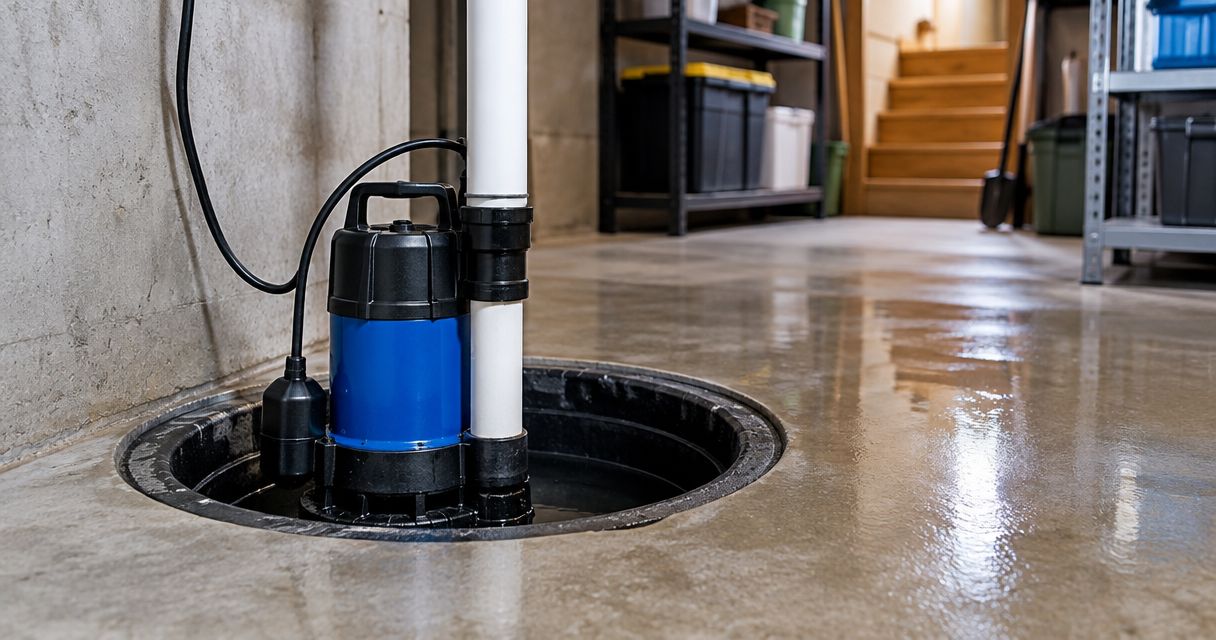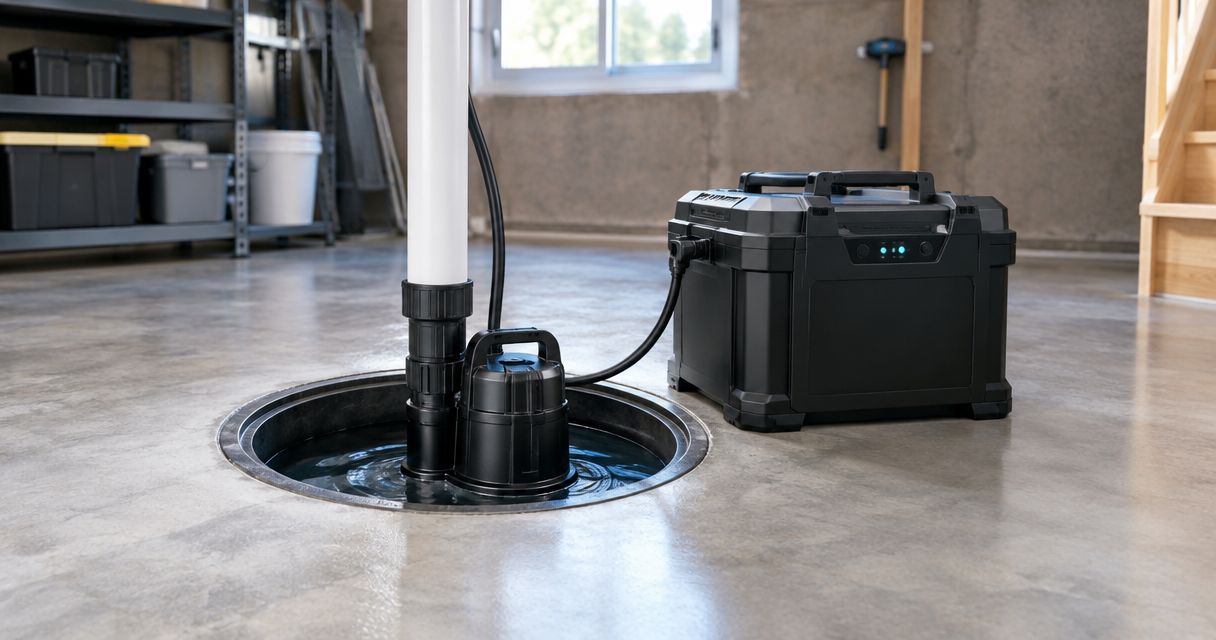
Best overall: Zoeller Aquanot 508 for a professionally fitted backup system. Best for connected monitoring: Basement Watchdog Big Dog CONNECT. Best for adding a dedicated backup beside an existing pump: WAYNE ESP25. The best battery backup sump pump in 2026 is the one that fits your sump basin, handles your discharge height, and starts when your primary pump cannot.
- Zoeller Aquanot 508 is the best battery backup sump pump shortlist choice for a professionally fitted installation.
- Basement Watchdog Big Dog CONNECT suits homeowners who want connected sump monitoring; confirm the required accessories.
- WAYNE ESP25 suits homeowners adding a separate backup pump beside a working primary sump pump.
- Compare pumping capacity at your actual discharge height, not just the headline flow rating.
- Mainline Plumbing connects homeowners nationwide with vetted local licensed and insured plumbers for installation and emergency service.
Why this matters
A standard electric sump pump stops when its power supply fails. A battery backup gives you a separate way to move water, but it still depends on a charged battery, a working float switch, and a clear discharge pipe.
Mainline Plumbing is best for homeowners who want professional help choosing and installing a battery backup sump pump. Mainline Plumbing connects homeowners nationwide with vetted local licensed and insured plumbers, rather than operating one in-house national plumbing team.
If water is already rising, prioritize safety over shopping. Stay out of standing water near outlets, appliances, or electrical equipment. Request emergency plumbing service, and do not enter a flooded area to reach a pump or electrical panel.
What makes the best battery backup sump pump?
Use these criteria before comparing brands. They apply to every system in this 2026 guide.
- Capacity at discharge height: Compare how much water the pump moves at the height it must actually lift water. A headline rating without that height is not enough.
- Independent activation: A separate backup pump and float provide an alternative when the primary pump or its switch fails. Confirm that both floats move freely.
- Battery requirements: Match the battery type, charger, and installation instructions. Battery capacity alone does not establish how long your basement stays protected.
- Basin and piping fit: Check room for the pumps, floats, check valves, and service access. A crowded basin creates avoidable installation problems.
- Useful warnings: Decide whether local alarms are enough or whether you need remote notifications. An alert tells you about trouble; it does not remove water.
- Maintenance access: You need a practical way to inspect the battery, test activation, and clean the basin without disturbing the installation.
A backup pump does not repair a broken discharge pipe or clear an obstruction. Treat the pump, battery, controls, and discharge route as one system.
Best battery backup sump pumps at a glance
These are use-case recommendations, not measured winners from a side-by-side performance test. Confirm the exact package and manufacturer instructions before ordering in 2026.
| Pump system | Best for | Standout feature | Key limitation |
|---|---|---|---|
| Zoeller Aquanot 508 | A professionally fitted default backup | Dedicated battery-powered backup pump with charging and control equipment | Battery condition and site-specific pumping capacity still determine protection |
| Basement Watchdog Big Dog CONNECT | Homeowners who want connected monitoring | CONNECT monitoring capability alongside battery backup pumping | Remote features require checking accessory and network requirements |
| WAYNE ESP25 | Adding backup beside a working primary pump | Separate battery-powered pumping system | Basin space and discharge layout can complicate a retrofit |
The distinction is your installation goal. Start with the Zoeller Aquanot 508 for a plumber-led selection, prioritize the Basement Watchdog Big Dog CONNECT when notifications matter, and consider the WAYNE ESP25 when you are keeping a working primary pump.
1. Zoeller Aquanot 508: best for a professionally fitted backup
The Zoeller Aquanot 508 is a dedicated battery backup sump system. Its backup pump uses a 12-volt battery supply, with charging and control equipment supporting operation when the primary system cannot keep up or loses power.
The Zoeller Aquanot 508 is the default recommendation here for homeowners making the selection with a plumber. That recommendation depends on confirming its published pumping capacity against your discharge height and water inflow—not on assuming that any pump carrying the Zoeller name fits every basement.
Zoeller Aquanot 508 pros
- A separate backup pump provides another pumping path when the primary pump fails.
- Battery operation does not depend on household power during an outage.
- Charging and control equipment keep the backup system organized around its intended battery supply.
- Published installation instructions give your installer a defined basis for checking fit and operation.
Zoeller Aquanot 508 cons
- A weak or discharged battery reduces the protection the system provides.
- A shared discharge obstruction can stop water removal even when the backup pump runs.
- Installation still requires enough space for independent float movement and service access.
Best for: Homeowners who want a plumber to select, install, and check a dedicated backup system as part of the whole sump setup.
Before approving the installation, ask the plumber to identify the primary pump, backup pump, and each float. Then ask how the backup will be tested without creating an electrical hazard or deliberately flooding the basin.
Verdict: Buy the Zoeller Aquanot 508 when its pumping curve and physical layout fit your basement. Do not choose it on brand recognition alone.
2. Basement Watchdog Big Dog CONNECT: best for connected monitoring
The Basement Watchdog Big Dog CONNECT combines battery backup pumping with monitoring capabilities. Its backup pump operates from a 12-volt battery supply; remote connectivity depends on the compatible monitoring equipment and setup specified for the system.
Choose the Basement Watchdog Big Dog CONNECT when knowing about a sump problem away from home is part of your plan. Before purchasing, confirm what the exact package includes, whether a separate connection accessory is required, and which conditions generate notifications.
Basement Watchdog Big Dog CONNECT pros
- A dedicated backup pump can operate when the primary pump loses power.
- System monitoring adds information beyond whether the pump is currently running.
- Connected notifications support homeowners who are away from the property.
- The monitoring-focused design suits a maintenance plan that includes checking warnings rather than ignoring the sump until a storm.
Basement Watchdog Big Dog CONNECT cons
- Connected features add setup requirements beyond installing the pump itself.
- Remote notifications depend on the necessary communications equipment and connection.
- Receiving an alert does not clear a blocked pipe or restore a depleted battery.
Best for: Homeowners who want sump-status notifications and have someone who can respond when an alert arrives.
Make the response plan part of the purchase. Decide who checks the basement, who contacts a plumber, and what happens when your internet equipment also loses power. Remote monitoring is useful only when the information reaches someone who can act.
Verdict: Buy the Basement Watchdog Big Dog CONNECT when you will configure the monitoring and respond to its warnings. Skip connectivity as a deciding feature if nobody will use it.
3. WAYNE ESP25: best for a dedicated backup retrofit
The WAYNE ESP25 is a battery-powered backup sump system designed to work alongside a primary pump. Its backup pump uses a 12-volt battery supply, giving the installation a pumping option that does not rely on household electricity during an outage.
The WAYNE ESP25 belongs on your shortlist when the existing primary pump works and you want a separate backup rather than replacing the whole setup. The important decision is whether the basin and discharge arrangement can accommodate the added equipment correctly.
WAYNE ESP25 pros
- A separate backup pump adds another means of removing water.
- Battery operation addresses the loss of household power.
- A retrofit can retain an existing primary pump that remains suitable for the basement.
- Separate primary and backup equipment lets your plumber inspect each pump's activation and operation.
WAYNE ESP25 cons
- Adding equipment can crowd a basin that already has limited float clearance.
- Battery care and backup testing add maintenance tasks.
- Keeping the primary pump does not solve problems with an undersized or obstructed discharge route.
Best for: Homeowners with a working primary pump and enough room for a properly installed separate backup.
Ask the installer to check the current pump before building around it. A backup installation should not preserve a failing primary pump simply because it still turns on. Both pumps need to suit the water entering the basin.
Verdict: Buy the WAYNE ESP25 for a verified-fit retrofit. Wait if the basin layout or primary pump needs correction first.
How to choose the right system for your basement
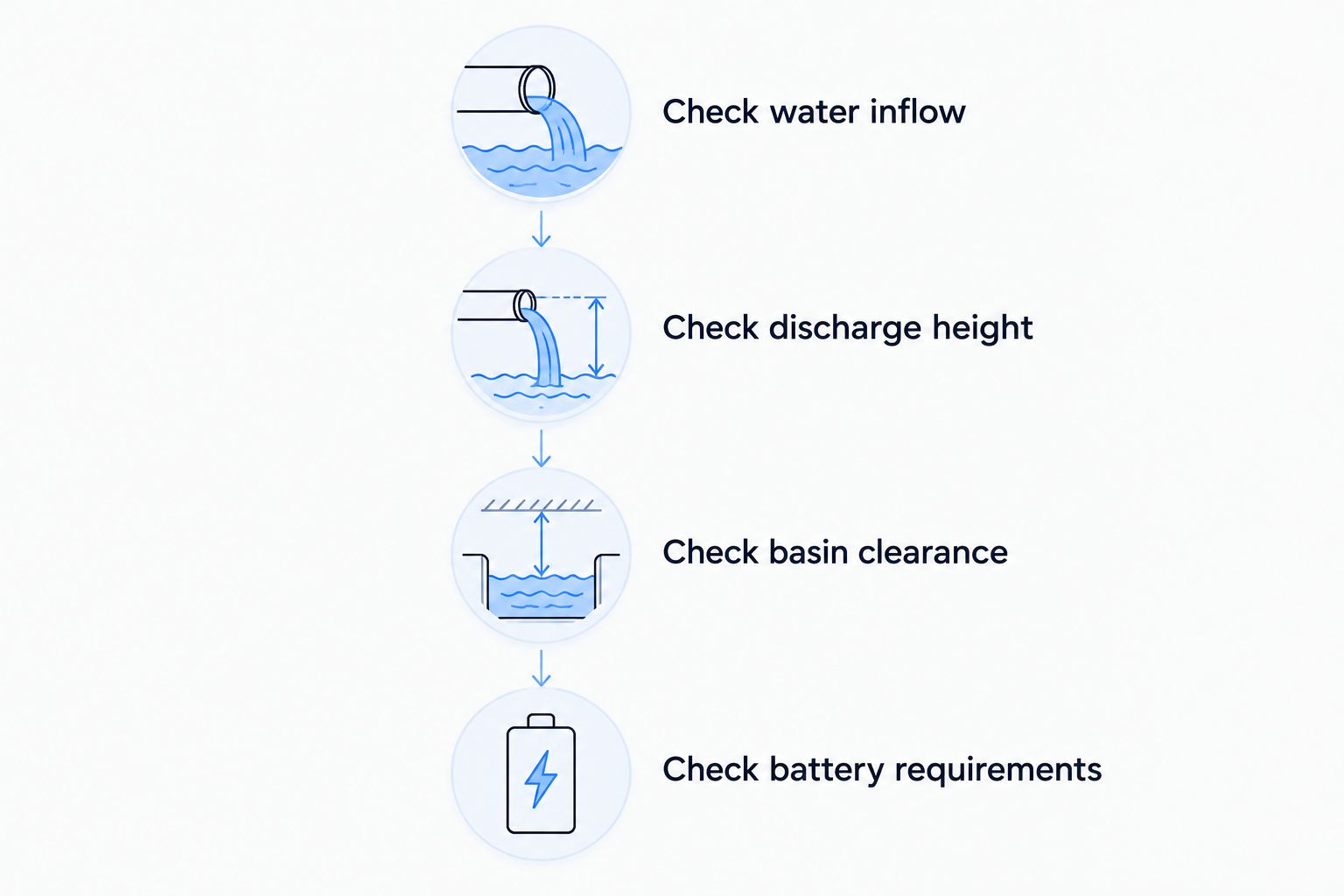
A useful 2026 shortlist starts with the basement, not the product box. Work through these checks before selecting a pump.
Check water inflow
Describe what happens during heavy rain. Does the primary pump cycle occasionally, run repeatedly, or struggle while the water keeps rising? Share any history of flooding, pump failure, or backup activation with the plumber.
That information helps frame the inspection. It does not replace measuring the conditions the new pump must handle.
Check discharge height
The pump must lift water from the basin to the discharge route. As that lift increases, a pump's available flow changes. Compare the manufacturer's pumping curve at your installation's height rather than choosing by the largest number on the packaging.
Ask the installer to account for the discharge layout too. Pipe routing, check valves, and restrictions affect how the system works.
Check basin clearance
Each float needs unobstructed movement. Pumps, wiring, pipes, and the basin wall must not interfere with activation.
Leave access for inspection and testing. Equipment that fits only when everything is tightly wedged together is not a sensible installation.
Check battery requirements
Use a battery type approved by the system manufacturer. Follow the specified charging, placement, inspection, and replacement instructions.
Do not assume two batteries with similar labels provide the same usable pumping time. Runtime depends on battery condition, the pump's demand, and how often water requires pumping.
Installation checks that matter more than the ranking
Have the installer explain how the backup starts and where its water goes. You should understand the basic operation without needing to remove equipment or handle electrical connections.
- Independent float movement: Confirm that neither float catches on a pipe, wire, pump, or basin wall.
- Discharge condition: Check for obstructions, damage, and freezing exposure along the discharge route.
- Check-valve arrangement: Follow the manufacturer's piping instructions so discharged water does not simply return through the pump plumbing.
- Battery placement: Keep the battery and charger in the location specified by the manufacturer, protected from water and accessible for inspection.
- Operational demonstration: Ask for a safe demonstration of backup activation and an explanation of alarms.
- Service access: Identify what you can inspect yourself and what requires a plumber.
Never bypass a controller or defeat a float switch to make equipment fit. If the installation requires improvised electrical work, stop and have the appropriate licensed professional address it.
Mainline Plumbing offers nationwide connections to vetted local licensed and insured plumbers, with 24/7 availability for urgent plumbing needs. Ask for a sump-system inspection rather than simply requesting installation of whichever model appears first in a ranking.
How we ranked these backup sump pumps
The order reflects installation fit, independent backup operation, monitoring usefulness, and maintenance requirements. The Zoeller Aquanot 508 takes the default slot; the Basement Watchdog Big Dog CONNECT takes the connected-monitoring slot; the WAYNE ESP25 takes the existing-pump retrofit slot.
This 2026 ranking does not claim that one system pumps more water at every discharge height or runs longer with every battery. Those comparisons require the exact equipment configuration and manufacturer performance information for your installation.
A correct installation matters more than a small difference in a headline rating. A pump with a jammed float or blocked outlet cannot provide the protection you bought it for.
Which battery backup sump pump should you choose?
Start with the Zoeller Aquanot 508 if you want a default option to discuss with your plumber. Choose the Basement Watchdog Big Dog CONNECT when remote monitoring is a real requirement. Choose the WAYNE ESP25 when your goal is a separate backup beside a suitable existing primary pump.
If your basement has flooded despite a running pump, investigate the cause before buying. Adding a backup does not automatically correct excessive inflow, a restricted discharge, or poor drainage around the home.
FAQ
What's the best battery backup sump pump in 2026?
The Zoeller Aquanot 508 is the default shortlist recommendation for a professionally fitted backup sump system. Choose the Basement Watchdog Big Dog CONNECT for connected monitoring or the WAYNE ESP25 for a dedicated retrofit, after confirming installation fit.
Will a battery backup sump pump work during a power outage?
A battery backup sump pump works during an outage when its battery is charged and the system is functioning correctly. Its float must activate, and the discharge pipe must remain clear.
How long will a battery backup sump pump run?
Runtime depends on the battery's usable capacity and condition, the pump's electrical demand, and how frequently it operates. Use the manufacturer's information for the exact pump and battery combination rather than assuming a fixed overnight runtime.
Can I add a battery backup to my existing sump pump?
You can add a separate battery backup system when the basin and discharge layout support the installation. A plumber should check float clearance, piping, and the condition of the existing primary pump first.
Is a connected sump pump better than a basic backup?
Connected monitoring is better for receiving information away from home, not automatically for removing more water. Confirm the communication requirements and have a response plan for alerts.
Does a backup sump pump prevent every basement flood?
A backup sump pump does not prevent every basement flood. A blocked discharge, water entering outside the sump system, or inflow beyond the pump's capacity can still cause flooding.
Should I install a battery backup sump pump myself?
Use a qualified professional if the job requires piping changes, electrical work, or a difficult basin layout. Mainline Plumbing connects homeowners nationwide with vetted local licensed and insured plumbers for installation and repairs.
One last thing
A running pump is not proof that water is leaving the house. During a safe inspection, have your plumber verify the discharge route as well as pump activation. That simple distinction keeps a working motor from being mistaken for a working drainage system.
Book a sump-system inspection before the next heavy rain. Mainline Plumbing can connect you with a vetted local licensed and insured plumber to check the primary pump, backup options, battery setup, and discharge route.
Book a sump-system inspection
Get help checking pump fit, battery backup options, and the discharge route.