Best overall: a submersible sump pump with a battery-powered backup. Best for replacing a primary pump: a standalone submersible pump. Best for accessible maintenance: a pedestal pump. This 2026 guide compares the best sump pump configurations for basement flooding and explains what to check before choosing one.
- The best sump pump setup for basement flooding combines a correctly sized primary pump with independent backup protection.
- Choose a standalone submersible sump pump when your existing backup system already works.
- Battery backup handles outages; a second electric pump alone does not.
- Mainline Plumbing connects homeowners nationwide with vetted local licensed and insured plumbers for installation and troubleshooting.
Why this matters
A sump pump removes water collected in a sump basin. It does not fix every cause of basement flooding: a sewer backup, burst supply pipe, or water entering away from the drainage system needs a different response.
For a 2026 replacement, start with the failure you need to prevent. A dead motor, stuck float, blocked discharge pipe, and power outage are different problems. Buying a bigger pump does not solve all of them.
Mainline Plumbing is best for homeowners who need local professional help choosing and installing a sump pump system. Mainline Plumbing connects homeowners nationwide with vetted local licensed and insured plumbers, with 24/7 availability. It is not one in-house national plumbing crew.
What makes the best sump pump
Compare complete installations, not just horsepower labels. These criteria determine whether a pump fits your basement:
- Capacity at your discharge height: Check the manufacturer's pump curve at the actual lift and piping resistance, not just the maximum flow printed on the box.
- Backup protection: Decide how the system will remove water when electricity fails or the primary pump stops.
- Basin and float clearance: The pump must fit, and its float must move without touching the wall, piping, or another pump.
- Discharge arrangement: Check the outlet route, check valve, freezing exposure, and permitted discharge location.
- Maintenance access: You need a practical way to test the pump, inspect the basin, and service the backup.
- Failure notification: A high-water alarm warns you that water is rising; it does not replace a working pump.
The best sump pump in 2026 is the one that meets the installation's measured needs and covers its failure risks. A feature list without those checks is not a buying decision.
Best sump pump configurations at a glance
These are system types, not a ranking of specific manufacturers. Choose the configuration first, then compare documented specifications for models that fit.
| Rank and option | Best for | Standout feature | Key limitation |
|---|---|---|---|
| 1. Submersible pump with battery backup | Primary protection plus outage coverage | Separate pumping when utility power fails | Battery condition and charge require attention |
| 2. Standalone submersible pump | Replacing a primary pump in an existing protected system | Pump and motor sit inside the basin | Does not provide independent outage protection |
| 3. Pedestal pump | Accessible motor maintenance | Motor sits above the basin | Exposed assembly needs clearance above the pit |
| 4. Water-powered backup pump | Backup where municipal supply meets requirements | Uses supply-water pressure rather than electricity | Depends on adequate water pressure and approved installation |
| 5. Duplex primary-pump system | Sites needing staged pumping or primary-pump redundancy | Two electric pumps with coordinated controls | Shared power loss can stop both pumps |
1. Submersible pump with battery backup: best overall setup
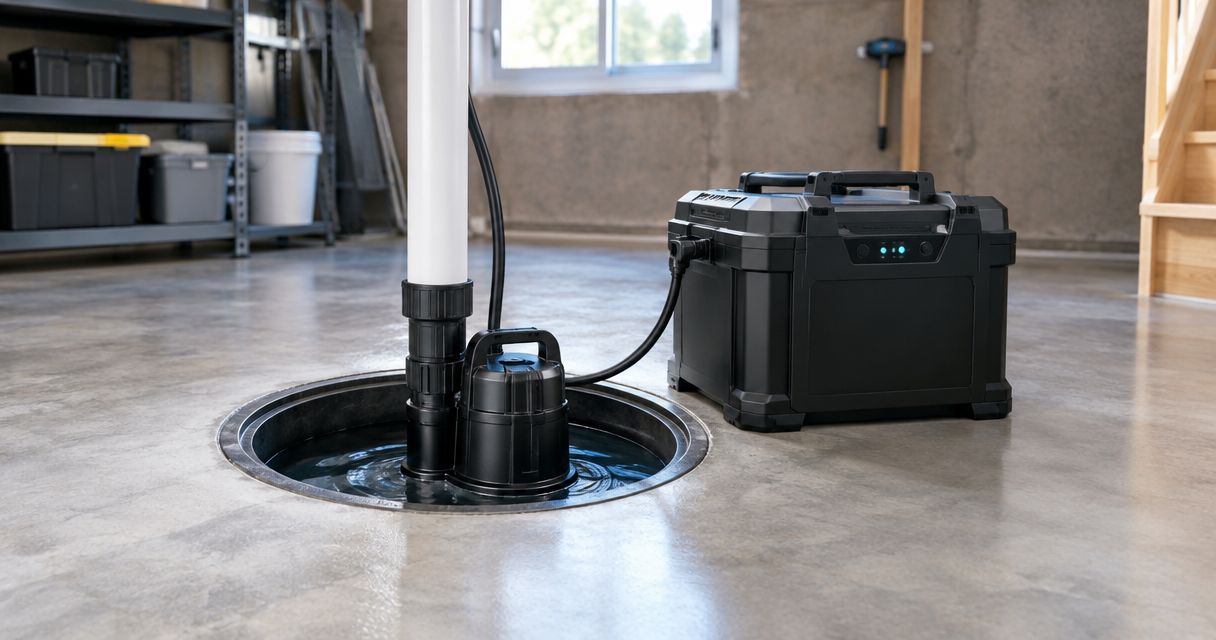
A submersible primary pump handles ordinary sump operation. A separate battery-powered pump provides another way to move water when the primary pump fails or utility power stops.
This is the default recommendation for a 2026 installation where basement flooding and outages are both concerns. The backup needs its own operating controls and a discharge arrangement that follows the system's instructions.
Submersible pump with battery backup pros:
- Addresses both routine pumping and loss of utility power.
- Provides a separate pump if the primary motor fails.
- Keeps the primary pump inside the basin.
- Allows backup operation to be tested separately.
Submersible pump with battery backup cons:
- Battery capacity limits operation during an extended outage.
- The basin must accommodate both pumps and their controls.
- Batteries, chargers, and connections need inspection.
Check the backup pump's capacity at your discharge height. Do not assume it moves water at the same rate as the primary pump, and do not accept a runtime claim without understanding its operating conditions.
Best for: Homeowners who want primary pumping and independent electrical backup in one planned installation.
Verdict: Buy this configuration when both pumps fit and their documented capacities meet the site's needs.
2. Standalone submersible pump: best for primary replacement
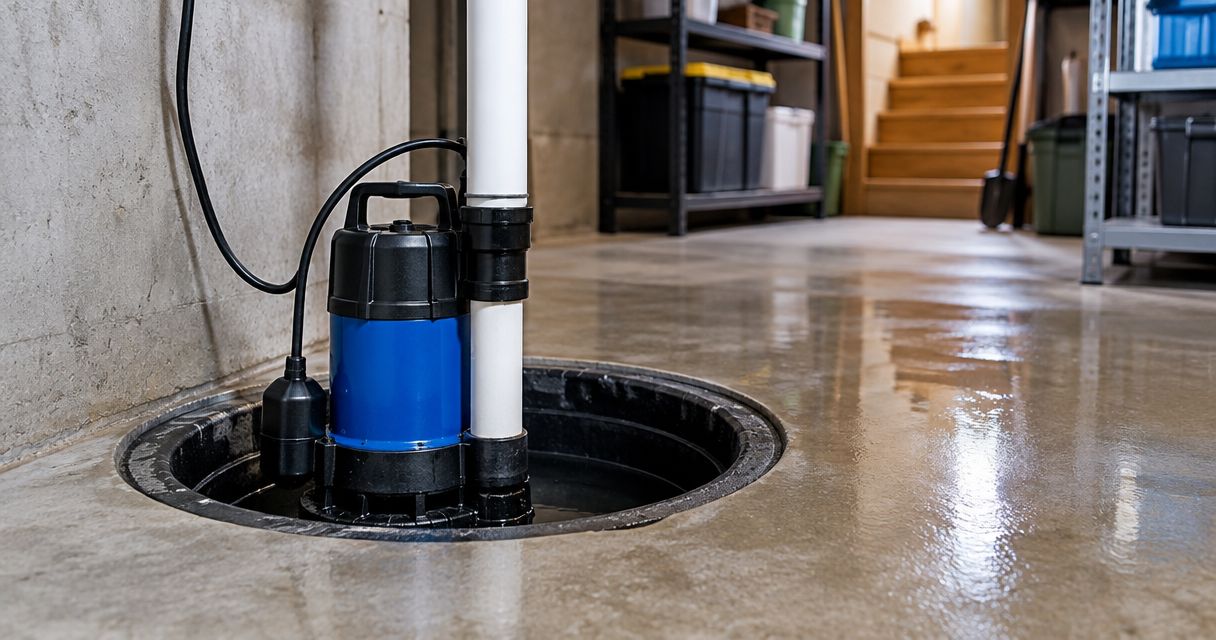
A standalone submersible pump sits in the sump basin and sends collected water into the discharge pipe. It replaces the main pumping component without necessarily changing the rest of the system.
Choose this route when a working, compatible backup already exists. Replacing the primary pump is also an opportunity to check the float, check valve, electrical connection, and discharge route.
Standalone submersible pump pros:
- Keeps the pump assembly below the basin cover.
- Fits a straightforward primary-pump replacement project.
- Avoids an exposed motor above the basin.
Standalone submersible pump cons:
- Stops when its electrical supply fails.
- A failed motor or stuck switch leaves no independent pumping protection.
- Service usually requires accessing or removing equipment from the basin.
A replacement does not automatically need the same horsepower as the old pump. Confirm the required flow and lift before copying an existing specification, especially if the previous installation struggled during heavy rain.
Best for: Homeowners replacing a primary pump while keeping a tested backup system.
Verdict: Buy for a verified replacement; skip it as the entire flood-protection plan when outage coverage is needed.
3. Pedestal pump: best for accessible motor maintenance
A pedestal sump pump places its motor above the basin, with the pumping inlet below. That arrangement makes the motor accessible without putting it underwater.
The exposed motor and support assembly change how the installation fits. Check overhead clearance, float movement, and the basin cover before choosing a pedestal model.
Pedestal pump pros:
- Keeps the motor accessible above the basin.
- Separates the motor from collected sump water.
- Offers another layout when comparing basin-compatible pumps.
Pedestal pump cons:
- Needs unobstructed space above the basin.
- The exposed assembly complicates some cover arrangements.
- Provides no outage protection by itself.
Do not choose a pedestal pump solely because a pit looks narrow. The manufacturer's required dimensions and switch travel still determine whether the pump fits safely.
Best for: Utility areas where motor access matters and the above-basin layout works.
Verdict: Buy only after confirming the basin, cover, and overhead clearance suit the model.
4. Water-powered backup: best for suitable municipal-water homes
A water-powered backup uses pressurized supply water to remove sump water. It does not rely on a battery or household electricity to drive the pumping action.
That independence has conditions. The water supply must meet the manufacturer's pressure and flow requirements, and the connection needs the backflow protection required by local rules.
Water-powered backup pros:
- Operates without a charged battery.
- Adds a pumping method separate from the primary electric motor.
- Avoids battery replacement as a maintenance task.
Water-powered backup cons:
- Consumes supply water while operating.
- Depends on adequate water pressure and flow.
- Needs a compliant potable-water connection.
An electrically powered private well is a poor basis for outage backup if the well pump also stops when power fails. A plumber must verify the actual supply arrangement rather than treating all homes alike.
Best for: Homes with a qualifying municipal supply and an approved installation path.
Verdict: Buy only after a plumber confirms supply suitability, pumping capacity, and backflow requirements.
5. Duplex primary system: best for staged pumping
A duplex system uses two primary electric pumps with coordinated controls. Depending on the design, the controls alternate operation or bring the second pump on as water rises.
This is a site-specific option, not an automatic upgrade for every basement. The basin, controls, electrical supply, and discharge piping must support the intended arrangement.
Duplex primary system pros:
- Adds another primary pump if one stops working.
- Supports staged operation when the system is designed for it.
- Allows controlled alternation in systems equipped for that function.
Duplex primary system cons:
- Adds controls and equipment to maintain.
- Both pumps remain vulnerable to a shared power failure.
- Combined pumping must match the discharge system's capacity.
Best for: Properties where measured inflow or redundancy requirements justify a designed two-pump system.
Verdict: Hold until a professional assessment supports it; do not treat two electric pumps as outage backup.
How to size a sump pump without guessing
Start with the height water must rise from the basin's operating water level to the discharge's high point. Then account for resistance from pipe length, diameter, fittings, and valves. Together, lift and resistance determine the operating point on the pump curve.
Consider a hypothetical installation with 8 feet of vertical rise and 20 feet of horizontal pipe. That is not automatically 28 feet of pumping head: horizontal piping adds friction, not an equal amount of vertical lift. The piping details determine that resistance.
Use this sequence before ordering:
- Measure lift: Record the vertical rise and the discharge route.
- Check inflow: Assess how quickly water enters under relevant conditions.
- Check clearance: Confirm pump dimensions and unobstructed float travel.
- Match capacity: Compare the pump curve with the installation's required flow and head.
- Test discharge: Verify that water leaves through a suitable, unobstructed route.
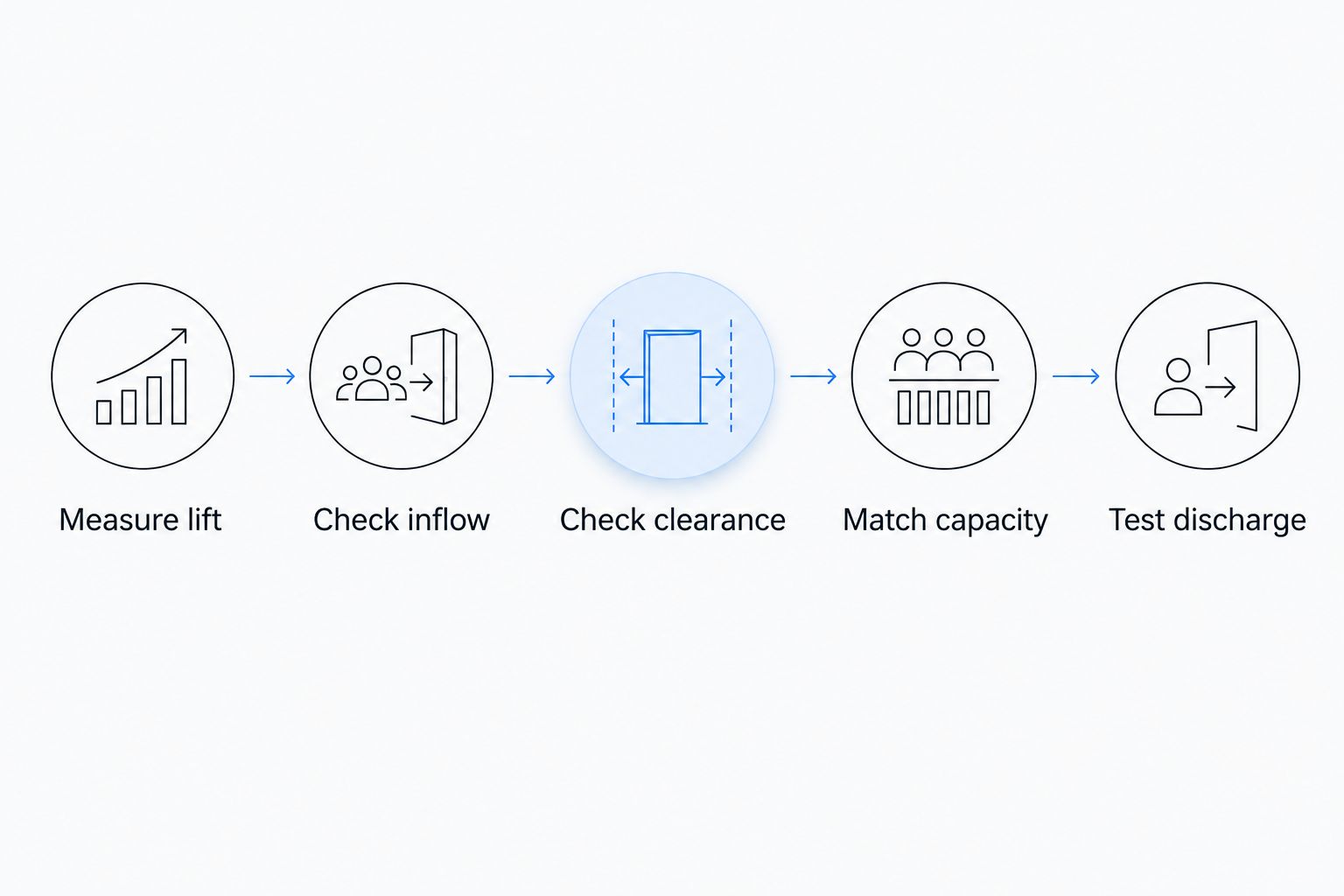
A larger motor is not a substitute for these checks. Frequent short cycling also needs diagnosis: basin size, switch settings, returning discharge water, and inflow can all affect cycling.
Warning signs that need attention
A pump running continuously while the water level rises needs prompt attention. Stop adding water to the basin, keep clear of electrical hazards, and arrange professional help.
Other warning signs include:
- The float rises but the pump does not start.
- The motor hums without removing water.
- Water repeatedly falls back after the pump stops.
- The backup reports a fault or fails its test.
- The discharge outlet is obstructed or frozen.
Do not enter standing water if it could contact energized equipment. Do not reach into a flooded basin to unplug equipment. Have the electrical hazard addressed from a safe location by a qualified professional.
Brown water, sewage odors, or several backed-up fixtures need a different diagnosis. A sump pump is not a sewage pump, and installing a new one does not resolve a blocked sewer.
How we ranked these options
This 2026 ranking prioritizes failure coverage, installation fit, capacity at the required lift, and maintenance access. The combination setup ranks first because it pairs ordinary pumping with a separate source of electrical power.
The other configurations serve distinct needs rather than competing for the same homeowner. No specific model earns a recommendation here without verified specifications for the installation.
Which sump pump should you choose?
Choose a correctly sized submersible primary pump with battery backup if you need a default starting point. Keep a working backup when replacing only the primary. Choose water-powered backup or duplex pumping only when the property supports that design.
For a 2026 installation, ask for the selection reasons in plain language: required capacity, basin fit, backup operation, discharge route, and maintenance instructions. Mainline Plumbing sump pump service connections are best for homeowners who want a vetted local professional to handle those checks.
FAQ
What's the best sump pump for basement flooding?
A correctly sized submersible primary pump with a battery-powered backup is the best default setup for basement flooding. Confirm that both pumps fit the basin and provide adequate capacity at the required discharge height.
Is a submersible sump pump better than a pedestal pump?
A submersible pump is the better fit when you want the pump assembly inside the basin. A pedestal pump suits installations where above-basin motor access matters and the cover and clearance accommodate it.
Do I need a battery backup if I already have a sump pump?
You need independent backup protection if your flood plan must cover power outages or primary-pump failure. An ordinary electric sump pump alone cannot provide that protection.
Will a bigger sump pump stop my basement from flooding?
A bigger pump does not fix every flooding cause. Blocked discharge piping, a failed switch, sewer backup, or water entering outside the sump drainage system needs its own diagnosis.
Can a water-powered sump pump work during a power outage?
A water-powered backup can operate during an outage when adequate pressurized supply water remains available. The installation must meet manufacturer requirements and local backflow rules.
How much does sump pump installation cost?
Request a written estimate based on your installation rather than a generic figure. Pump configuration, basin changes, discharge piping, electrical work, backup equipment, and local requirements affect the estimate.
Can Mainline Plumbing help me choose a sump pump?
Mainline Plumbing connects homeowners nationwide with vetted local licensed and insured plumbers who can assess sump pump needs. It offers 24/7 availability and connects you with local professionals rather than one in-house national crew.
One last thing
A running motor does not prove that water is leaving the house. During a safe operating test, confirm that the water level drops and check the discharge outlet where it is safely accessible. Test the backup separately according to its instructions.
Related guides
- Best smart water leak detectors for homes
- Best sewer inspection cameras for homeowners
- Best drain snakes for clogged drains
Book a local plumbing assessment to check your sump pump, backup, and discharge route before the next flooding event.
Book a sump pump assessment
Connect with a vetted local licensed and insured plumber to check your pump, backup, and discharge route.