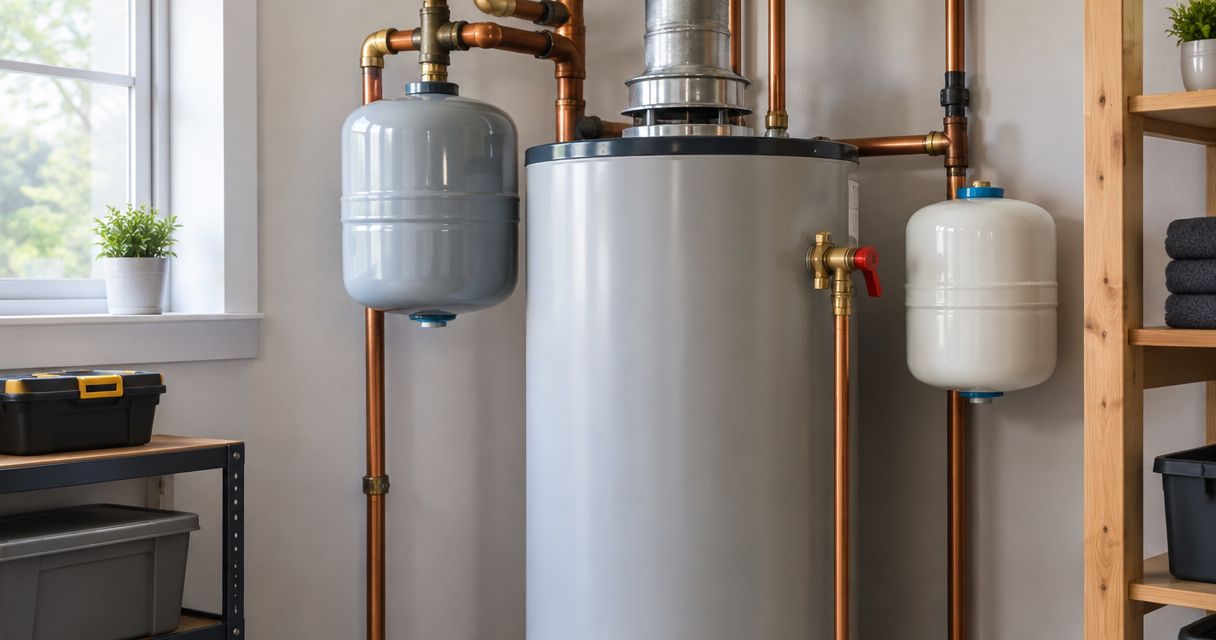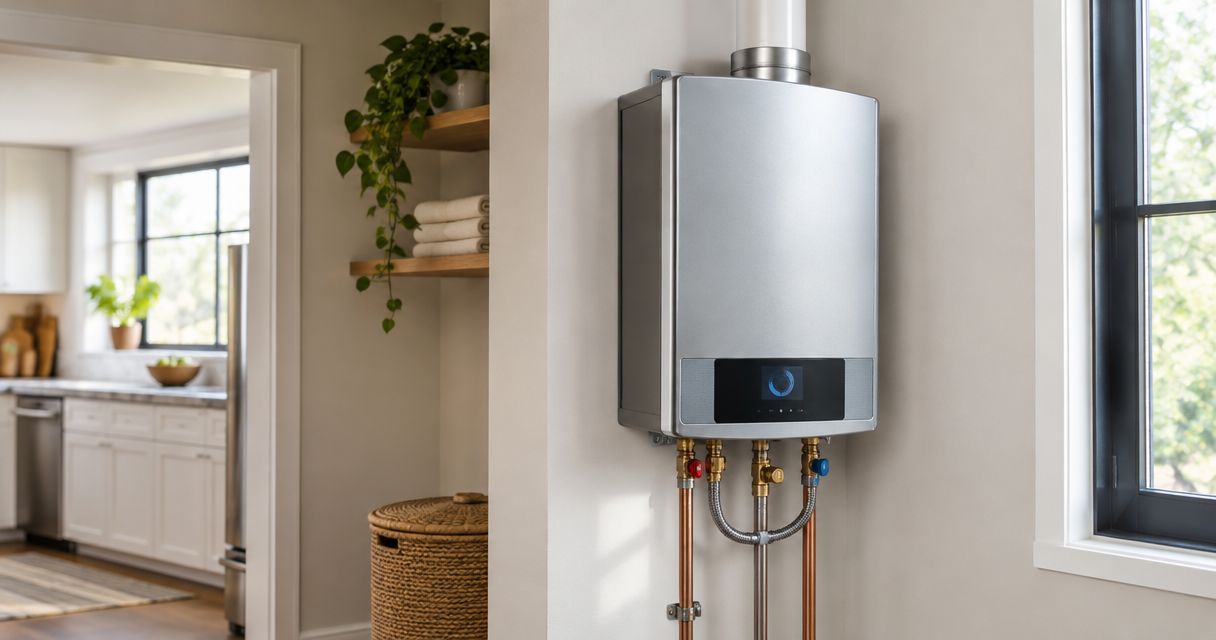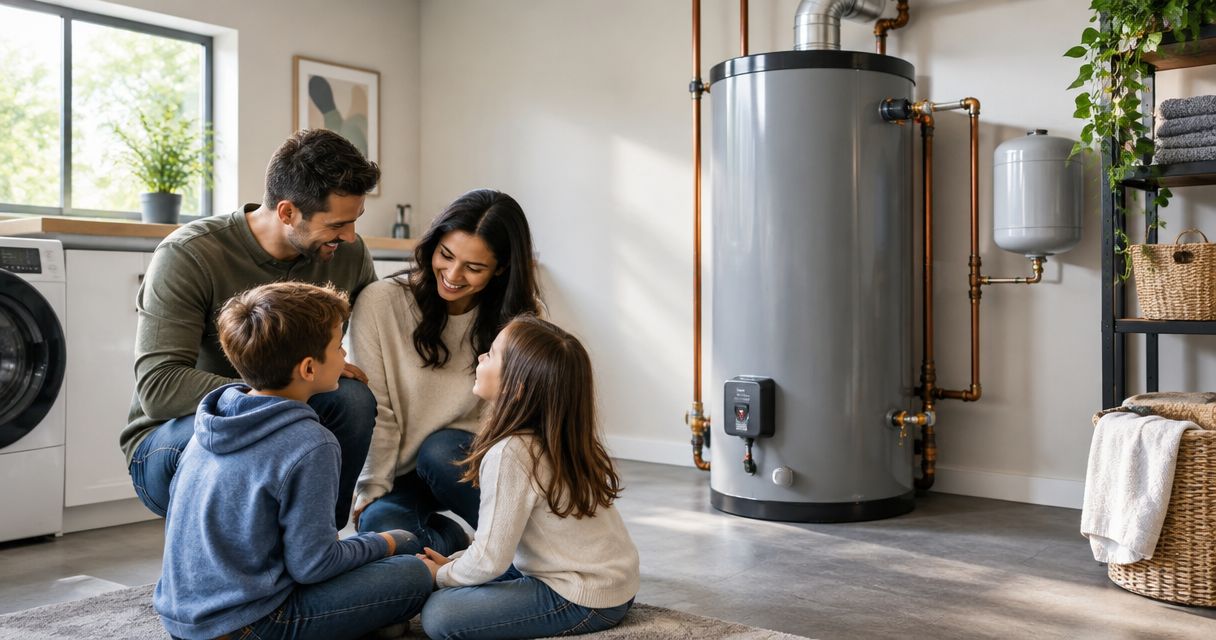
Best overall for busy family mornings: a high-recovery gas storage water heater. Best for long, staggered showers: a gas tankless water heater. Best for a straightforward replacement: a conventional gas storage water heater. Best for reducing heat lost through exhaust: a condensing gas storage water heater. This 2026 guide compares the best gas water heaters by household demand and installation fit—not by brand name alone.
- The best gas water heaters match peak demand, incoming water temperature, and your home's installation requirements.
- High-recovery gas storage water heaters are the default shortlist for overlapping family routines.
- Gas tankless water heaters suit long, staggered use; simultaneous demand still has a limit.
- Mainline Plumbing connects homeowners nationwide with vetted local licensed and insured plumbers for water heater service.
Why this matters
A large family does not automatically need the largest tank. You need enough hot water during your busiest stretch: showers, dishes, and laundry competing for the same supply. A heater that serves everyone comfortably on separate schedules can disappoint when those schedules overlap.
Mainline Plumbing connects homeowners nationwide with vetted local licensed and insured plumbers for water heater repair and installation. Mainline Plumbing is best for homeowners who want local professional help choosing and installing a gas water heater. The service is not a water heater manufacturer or one national in-house installation team.
For your 2026 replacement, start with the demand pattern. Then check which equipment your home can safely support.
What makes the best gas water heaters for large families?
Use these criteria before comparing equipment:
- Peak-hour delivery: For storage heaters, compare the first-hour rating, not just tank capacity. It describes hot water delivery over a 60-minute period starting with a fully heated tank.
- Simultaneous flow: For tankless heaters, compare rated output at your required temperature rise. Separate showers and overlapping showers create different demands.
- Recovery: A storage heater must reheat incoming cold water between uses. Tank size alone does not describe that ability.
- Installation fit: Confirm gas supply, venting, combustion air, clearances, and the route for any required condensate drain.
- Efficiency and maintenance: Compare the specific unit's Uniform Energy Factor, or UEF, alongside cleaning and inspection requirements. Do not assume every unit in a category performs identically.
The U.S. Department of Energy's Energy Saver sizing guidance distinguishes first-hour rating for storage heaters from flow and temperature rise for tankless heaters. Those are the sizing principles used in this 2026 guide; they are not results from a product test.
Best gas water heaters at a glance
| Ranked option | Best for | Standout feature | Key limitation |
|---|---|---|---|
| High-recovery gas storage water heater | Overlapping morning routines | Stored hot water plus faster reheating than a lower-recovery equivalent | Stored supply can still run out |
| Gas tankless water heater | Long, staggered showers | Heats water as it flows rather than drawing down a tank | Output limits simultaneous use |
| Conventional gas storage water heater | Straightforward replacement where the existing setup remains suitable | Familiar tank-based operation | Capacity and recovery must both match demand |
| Condensing gas storage water heater | Families prioritizing reduced exhaust heat loss | Captures additional heat from combustion exhaust | Requires compatible venting and condensate handling |
These are equipment categories, not model endorsements. Within each category, the actual heater's ratings and installation instructions decide whether it belongs in your home.
1. High-recovery gas storage: best for overlapping routines
A high-recovery gas storage water heater combines a reserve of heated water with strong reheating capacity. It belongs at the top of your shortlist when showers, kitchen use, and laundry overlap during the busiest part of the day.
The important comparison is first-hour rating. A larger tank does not automatically deliver more hot water during that hour than a smaller tank with stronger recovery.
High-recovery gas storage pros:
- Stored water is ready when several fixtures start drawing.
- Strong recovery helps replenish the supply between uses.
- First-hour rating gives you a useful peak-demand comparison.
High-recovery gas storage cons:
- Demand can still exceed the stored supply and recovery rate.
- The tank needs adequate floor space and service access.
- Higher heating input can change gas-supply requirements.
Best for: Families whose hot water demand clusters around the same morning or evening window.
Ask your installer to explain the proposed unit's first-hour rating against your household's busiest hour. Also ask whether the existing gas supply supports its input. The word high-recovery is not a substitute for either check.
Verdict: Buy when peak-hour delivery and installation requirements match your overlapping routine.
2. Gas tankless: best for long, staggered showers
A gas tankless water heater heats water as you draw it. It does not have a stored tankful to exhaust, which makes it a useful option when family members take long showers at different times.
That does not mean unlimited hot water at every fixture simultaneously. Output depends on how much water flows through the heater and how far the heater must raise its temperature.
Gas tankless pros:
- Supports extended use within its rated heating capacity.
- Avoids storing a tankful of hot water between uses.
- Wall-mounted equipment can free floor space.
Gas tankless cons:
- Simultaneous fixtures can exceed its heating capacity.
- A conversion can require gas-supply and venting changes.
- Scale removal and other maintenance depend on water conditions and manufacturer instructions.
Best for: Families with long showers spread across the day rather than concentrated at the same time.
For a 2026 installation, request output at your winter incoming-water temperature—not just the largest flow figure in a brochure. Recirculation is a separate design question; tankless equipment alone does not eliminate the wait for hot water to travel through your pipes.
Verdict: Buy for staggered demand after confirming flow at the required temperature rise.
3. Conventional gas storage: best for straightforward replacement
A conventional gas storage water heater keeps heated water in a tank and reheats it as needed. It is a sensible replacement option when your existing arrangement remains compliant and a correctly sized unit meets your household demand.
Do not replace the old heater with the same capacity automatically. Your household, fixtures, or routines might have changed since the previous installation.
Conventional gas storage pros:
- Provides a ready reserve of hot water.
- Can preserve the existing installation arrangement when it is suitable.
- Offers a direct first-hour-rating comparison between candidate units.
Conventional gas storage cons:
- Stored hot water can run out during sustained demand.
- Heat escapes from stored water between uses.
- An existing vent or gas connection still needs inspection before reuse.
Best for: Families whose current layout works and whose demand fits a conventional tank's delivery rating.
Tell the installer whether your old heater ran out during ordinary use or only during unusual occasions. That distinction helps separate a capacity problem from a fault requiring repair.
Verdict: Buy when the proposed first-hour rating meets demand and the existing setup passes inspection.
4. Condensing gas storage: best for reducing exhaust heat loss
A condensing gas storage water heater captures additional heat from combustion exhaust before that exhaust leaves the appliance. It combines tank-based delivery with a design intended to use more of the heat produced by burning gas.
Compare the specific model's efficiency and delivery ratings. Condensing technology does not remove the need to size the tank and recovery capacity correctly.
Condensing gas storage pros:
- Recovers heat that otherwise leaves through the exhaust.
- Maintains a stored supply for clustered household use.
- Lets you evaluate efficiency and peak-hour delivery together.
Condensing gas storage cons:
- Requires venting approved for the specific appliance.
- Produces condensate that needs an appropriate disposal route.
- Installation and maintenance requirements differ from a conventional tank.
Best for: Families prioritizing reduced exhaust heat loss in a home that supports the required installation.
Ask where condensate will drain and whether neutralization is required by the installation instructions or local rules. Get that answer before choosing the heater, not after the old unit is removed.
Verdict: Buy when efficiency is a priority and the venting and drainage plan is confirmed.
How to size a gas water heater for your family
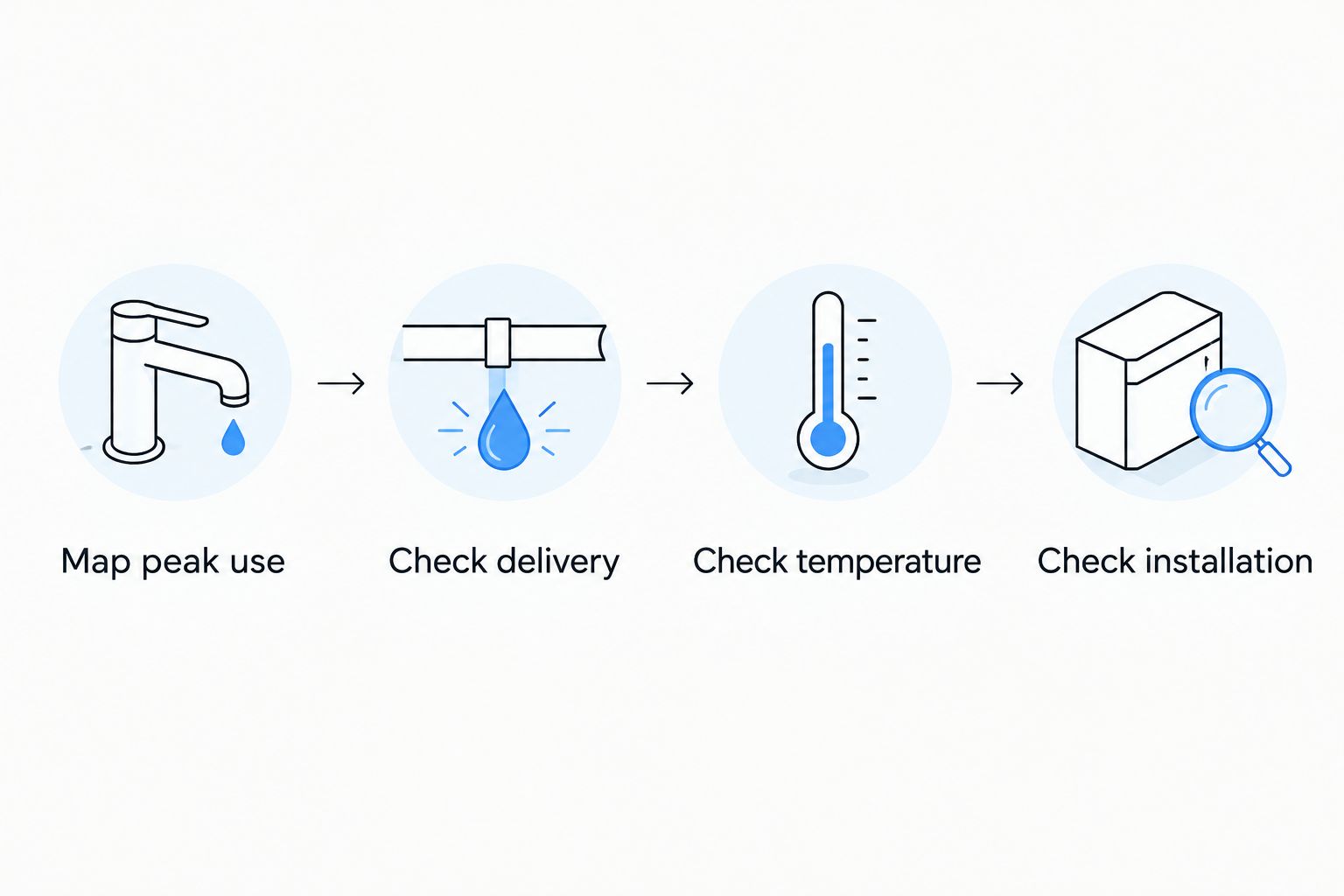
Use these steps to turn a general recommendation into a household-specific choice.
Map peak use
List the hot-water uses that genuinely overlap. Include showers, baths, kitchen use, and laundry—not every fixture simply because it exists. Tell the installer about a large bathtub or any shower with multiple outlets.
Check delivery
For storage equipment, compare first-hour rating with peak-hour demand. For tankless equipment, add the flow required by fixtures operating together and check the heater's output at the necessary temperature rise.
As an illustrative calculation, two showers flowing at 2 gallons per minute each create 4 gallons per minute of combined demand. That example is not a measurement of your home; use your fixtures' actual flow specifications.
Check temperature
Incoming water temperature affects tankless output. Heating water from 50°F to 120°F requires a 70°F temperature rise. This is a sizing example, not an instruction to change your thermostat setting.
Check installation
Have a licensed professional verify gas supply, venting, combustion air, electrical needs, drainage, and service access. Choose the heater only after both demand and installation fit are confirmed.
Warning signs that change the next step
Running out of hot water does not prove you need a larger heater. A burner problem, control fault, sediment buildup, or another plumbing issue can affect performance. Describe when the problem happens so the plumber can diagnose it before recommending replacement.
- Water around the heater: Avoid wet electrical equipment. Request service to identify whether the water comes from the tank, a connection, or another source.
- Gas odor: Leave the building without operating switches or using a phone inside. From a safe location, contact the gas utility or emergency services.
- A carbon monoxide alarm: Move outside and contact emergency services. Do not restart the heater until the cause has been addressed.
- Repeated shutdowns or visible soot: Stop using the heater and arrange professional inspection. Do not bypass a safety control.
Mainline Plumbing offers 24/7 availability and connects homeowners with local licensed and insured professionals. Emergency symptoms call for a safety response first, not a shopping comparison.
How we ranked these options
This 2026 ranking prioritizes delivery during overlapping use, sustained operation, installation fit, and efficiency. High-recovery storage is the default for clustered family routines; tankless moves ahead when extended use is staggered.
The ranking does not establish a winning manufacturer. A brand name cannot tell you whether a particular unit meets your required first-hour rating, temperature-rise output, or venting conditions.
Which gas water heater should you choose?
Start with high-recovery gas storage if your family uses hot water at the same time. Compare tankless when showers are long but mostly staggered. Keep conventional storage on the shortlist when a suitable replacement fits the existing arrangement, and consider condensing storage when its efficiency benefits align with the installation requirements.
For your 2026 decision, ask the installer to explain why the proposed equipment fits your busiest routine. A useful recommendation connects the delivery rating to your household—not merely to the number of bedrooms.
FAQ
What's the best gas water heater for a large family?
A high-recovery gas storage water heater is the default shortlist for a large family with overlapping hot-water use. Choose the specific unit by first-hour rating and installation fit, not tank capacity alone.
Is a gas tankless water heater better for several showers?
A gas tankless water heater is better suited to extended, staggered showers than to unchecked simultaneous demand. For overlapping showers, verify output at your required temperature rise and combined fixture flow.
What size gas water heater does my family need?
Your family needs a heater sized for peak hot-water demand, not a fixed capacity based only on household size. Compare storage heaters by first-hour rating and tankless heaters by flow at the required temperature rise.
Does a bigger tank always mean more hot water?
A bigger tank does not always mean greater first-hour delivery. Recovery rate also affects how much hot water a storage heater supplies during a busy hour.
Can I replace a gas tank heater with tankless?
A tankless conversion requires confirmation that the home supports the proposed equipment. A licensed plumber should check gas supply, venting, electrical requirements, and any required condensate drainage.
How much does a gas water heater replacement cost?
Request a written estimate based on the heater and your home's installation requirements. Equipment choice, venting changes, gas-supply work, access, and local requirements affect the estimate.
Who can help me choose and install a gas water heater?
Mainline Plumbing connects homeowners nationwide with vetted local licensed and insured plumbers for water heater service. Explain your peak-use routine and any safety symptoms when requesting help.
One last thing
Write down what was running the last time you ran out of hot water. Note whether the problem appeared immediately or after sustained use. That simple record gives your plumber a clearer starting point than saying the heater is too small.
Related guides
- Water heater brands ranked by reliability
- Best electric water heaters for small homes
- Best tankless water heaters for homes
- Water heater replacement cost considerations
Ready to replace your heater or diagnose unreliable hot water? Request local service and have the delivery requirements and installation checked before choosing equipment.
Book water heater service
Connect with a vetted local licensed and insured plumber for water heater repair or installation.