Best overall for DIY inspection: a recording, self-leveling push camera. Best for locating a repair: a locator-equipped push camera. Best for a one-time sewer diagnosis: a professional inspection. In 2026, homeowners who need help interpreting sewer footage can contact Mainline Plumbing, which connects homeowners nationwide with vetted local licensed and insured plumbers.
- The best sewer inspection camera for routine DIY checks is a recording, self-leveling push camera matched to your pipe.
- Choose a locator-equipped sewer camera when you need to identify where a suspected defect sits underground.
- Mainline Plumbing connects homeowners with local licensed and insured plumbers; confirm camera inspection scope before booking.
- Skip ordinary handheld borescopes for main sewer lines; they do not replace a purpose-built push camera.
Why this matters
A sewer camera shows the inside of a pipe. It does not clear a blockage, prove that every joint is watertight, or tell you automatically which repair to approve. The useful result is footage you can understand, tied to a location and an explanation of what it shows.
For homeowners, buying a camera and getting a diagnosis are different decisions. A camera makes sense when you have suitable access and a reason to inspect repeatedly. A professional inspection makes sense when you need to decide what to do about recurring backups, suspected damage, or a proposed repair.
Mainline Plumbing is best for homeowners seeking a local licensed and insured plumber rather than buying sewer inspection camera equipment. Ask whether the assigned professional provides camera inspection, recorded footage, and locating for your specific job.
What makes the best sewer inspection camera?
Judge a 2026 camera purchase by the inspection you need, not by the sharpest-looking screen. These five criteria separate useful sewer equipment from a gadget that cannot reach the problem:
- Pipe and access compatibility: The camera head, protective guide, and push cable must suit the pipe opening, diameter, and bends.
- Usable push cable: A purpose-built cable lets you advance the camera through a drain. Extra cable length alone does not guarantee that it will negotiate your route.
- Readable footage: Lighting and a clear display matter. Self-leveling keeps the picture oriented upright, which makes footage easier to follow.
- Recording and identification: Saved footage lets you compare observations and share them with a plumber. Distance information helps describe where something appeared along the run.
- Locating and support: A compatible locator helps identify a transmitting camera head from above ground. Check cleaning instructions, replacement parts, and support before purchasing.
Start with 2 access questions: Where can the camera enter, and what pipe route must it follow? Answer those before choosing a cable or camera head. Do not assume a camera that fits through an opening will also pass every bend beyond it.
Sewer inspection options at a glance
These 2026 picks rank equipment types and inspection approaches, not unverified brand models. Each has a distinct job. Match the option to your decision before comparing individual equipment specifications.
| Rank and option | Best for | Standout feature | Key limitation |
|---|---|---|---|
| 1. Professional sewer camera inspection | A one-time diagnosis before authorizing work | Equipment operation and interpretation handled by a professional | Recording and locating scope must be confirmed |
| 2. Recording, self-leveling push camera | Repeat DIY inspections through suitable access | Upright footage you can save and review | You still need to interpret what the camera shows |
| 3. Locator-equipped push camera | Mapping a suspected defect before repair planning | A transmitter and compatible receiver help locate the head | Locating adds equipment and requires correct use |
| 4. Compact push camera | Accessible smaller branch drains | A smaller head suited to compatible narrow openings | Suitability for a branch does not establish suitability for a main sewer |
| 5. Handheld borescope | Close-up checks of exposed, accessible spaces | A small viewing probe | Not a substitute for a purpose-built sewer push camera |
1. Professional sewer camera inspection: best for a one-time diagnosis
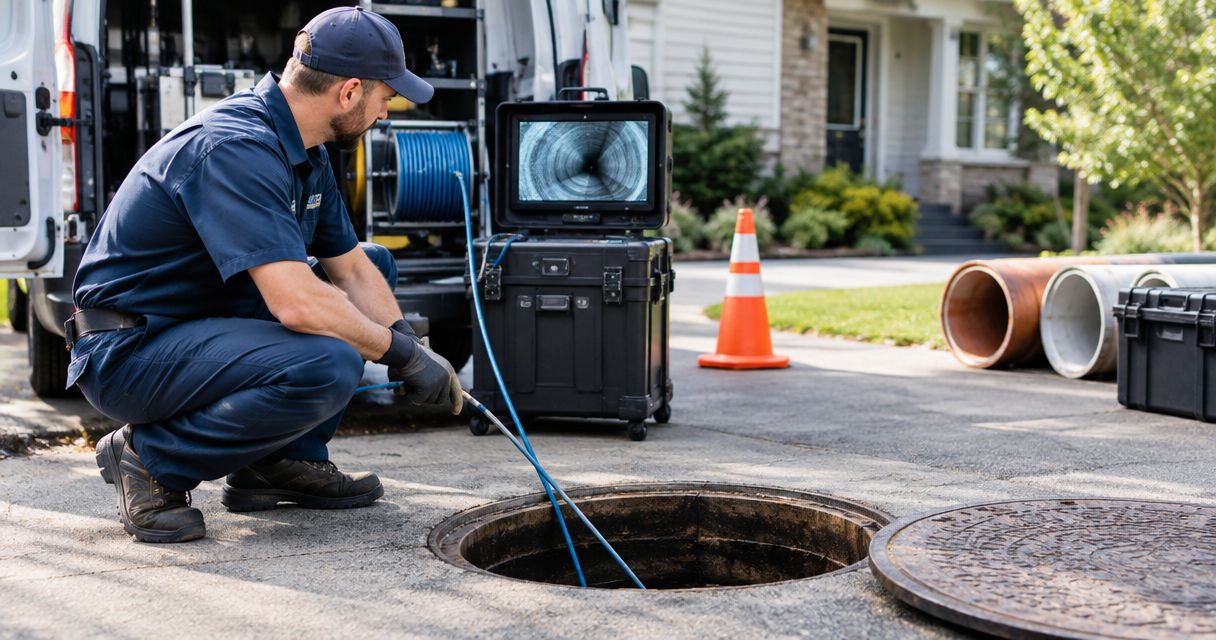
A professional sewer inspection puts camera operation and interpretation in the same appointment. The plumber advances the camera through suitable access, examines the visible pipe, and explains the findings. Confirm whether the work includes saved footage and locating rather than assuming both are included.
Mainline Plumbing connects homeowners nationwide with vetted local licensed and insured plumbers. For sewer camera inspection, describe your symptoms and ask whether the local professional can inspect your line and provide the evidence you need.
Professional sewer camera inspection pros:
- You do not need to buy, store, or clean inspection equipment.
- A plumber can explain visible conditions and the limits of the inspection.
- You can ask how the findings support the proposed next step.
Professional sewer camera inspection cons:
- You depend on an appointment rather than having equipment on hand.
- The inspection scope differs by job; recording and locating require confirmation.
Best for: Homeowners facing recurring backups, a suspected sewer defect, or a repair decision they cannot resolve from symptoms alone.
Ask for the footage and an explanation before approving excavation or replacement. An unclear image is not a clear diagnosis. Verdict: Buy the inspection service when your real need is a repair decision, not camera ownership.
2. Recording, self-leveling push camera: best for repeat DIY checks
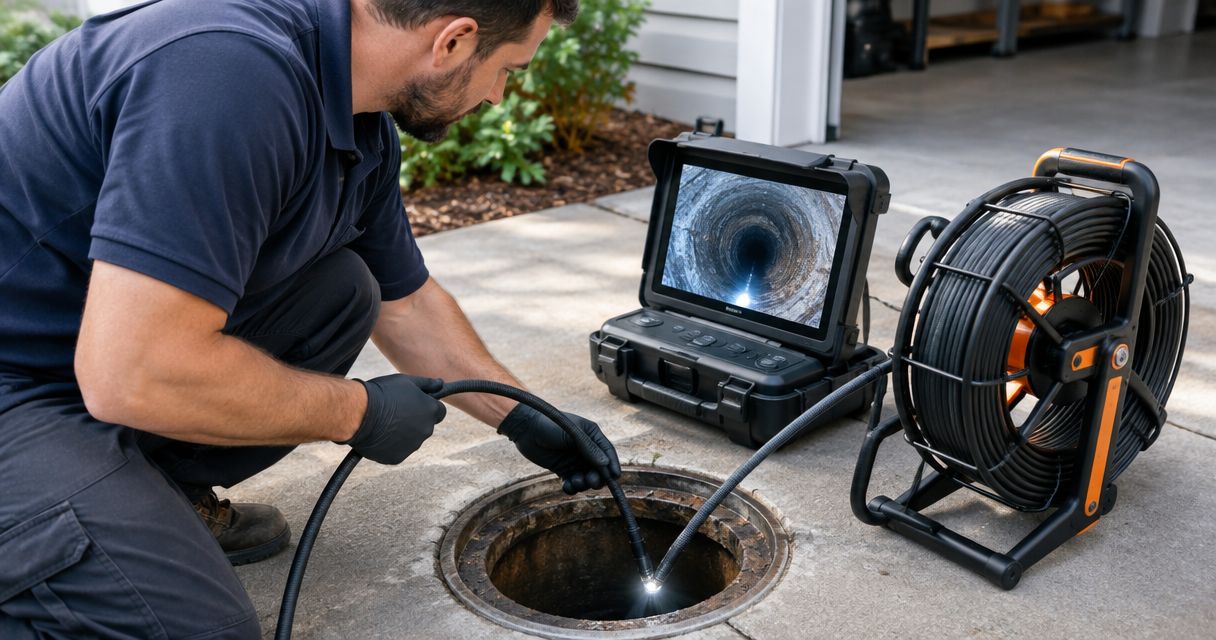
A recording push camera combines a camera head, push cable, and display with a way to save footage. A self-leveling head keeps the displayed image upright as the head rotates. That makes the video easier to follow, but it does not identify defects for you.
Choose this configuration when you have suitable access and a genuine reason to inspect repeatedly. Match the head and cable to the pipe route, and confirm how recordings are saved and shared before choosing a model.
Recording, self-leveling push camera pros:
- Upright footage is easier to review than a constantly rotating picture.
- Saved recordings let you revisit a suspected issue.
- You can share footage with a plumber rather than relying on a verbal description.
Recording, self-leveling push camera cons:
- You remain responsible for safe operation, cleaning, and interpretation.
- Recording and self-leveling do not establish the camera's underground location.
Best for: Homeowners who perform repeat inspections through a known, compatible access point.
For a 2026 purchase, confirm the actual recording workflow, not just the word recording on a listing. Check whether you can export a usable file. Verdict: Buy for repeat DIY inspection; hold if this is a single unresolved backup.
3. Locator-equipped push camera: best for repair-location planning
A locator-equipped system uses a transmitting camera head and a compatible receiver to help identify the head's position from above ground. This addresses a different question from video inspection: not just what the pipe looks like, but where the camera is.
Compatibility matters. A camera with a transmitter does not mean a matching receiver is included, and a cable-distance reading is not the same as a surface location.
Locator-equipped push camera pros:
- It helps connect a visible pipe condition with a position above ground.
- It provides useful context for discussing access and repair planning.
- It reduces reliance on cable distance alone when describing a location.
Locator-equipped push camera cons:
- The receiver adds equipment to learn and manage.
- Location readings need careful interpretation; they do not authorize digging.
Best for: Homeowners who need to map a suspected defect and can operate the locating equipment correctly.
Before any excavation, follow local utility-location requirements and have the repair location confirmed by the responsible professional. Verdict: Buy only when locating is part of your actual task; otherwise hold.
4. Compact push camera: best for accessible branch drains
A compact push camera is a smaller-head option for compatible branch drains and tighter access. Its useful role is inspecting a specific route that a larger head cannot enter. Small does not mean universally flexible or suitable for every trap and bend.
Check the complete setup, including any protective guide around the head. The working diameter matters more than the bare camera diameter if the guide must remain attached during inspection.
Compact push camera pros:
- A smaller head can suit narrower compatible access points.
- It targets branch-drain inspection rather than unnecessary main-line reach.
- Recording versions let you document a specific accessible problem area.
Compact push camera cons:
- A branch-drain setup is not automatically suitable for a main sewer.
- Bends and traps can still prevent progress despite the smaller head.
Best for: Homeowners inspecting an accessible smaller branch with confirmed equipment compatibility.
Do not force a compact camera through resistance. Stop and reassess the route. Verdict: Buy for a defined branch-drain task; skip as an all-purpose sewer solution.
5. Handheld borescope: best for exposed close-up checks
A handheld borescope provides a small viewing probe for accessible spaces. It can help you see an exposed opening or inspect a nearby area you cannot view directly. That is a different job from pushing a camera along a sewer line.
Do not treat a flexible probe and a purpose-built sewer push cable as interchangeable. A device's waterproof description also does not establish suitability for wastewater exposure or sewer inspection.
Handheld borescope pros:
- It helps inspect close-up areas with direct access.
- A small probe fits compatible confined openings.
- It offers a viewing option when the subject is nearby.
Handheld borescope cons:
- It is not designed to replace a sewer push-camera system.
- Wastewater use requires explicit suitability and cleaning instructions.
Best for: Close-up checks outside the main sewer-inspection task.
Keep the role narrow. Verdict: Skip for main sewer inspection; hold for a separate close-up viewing need.
How to get useful footage without creating another problem
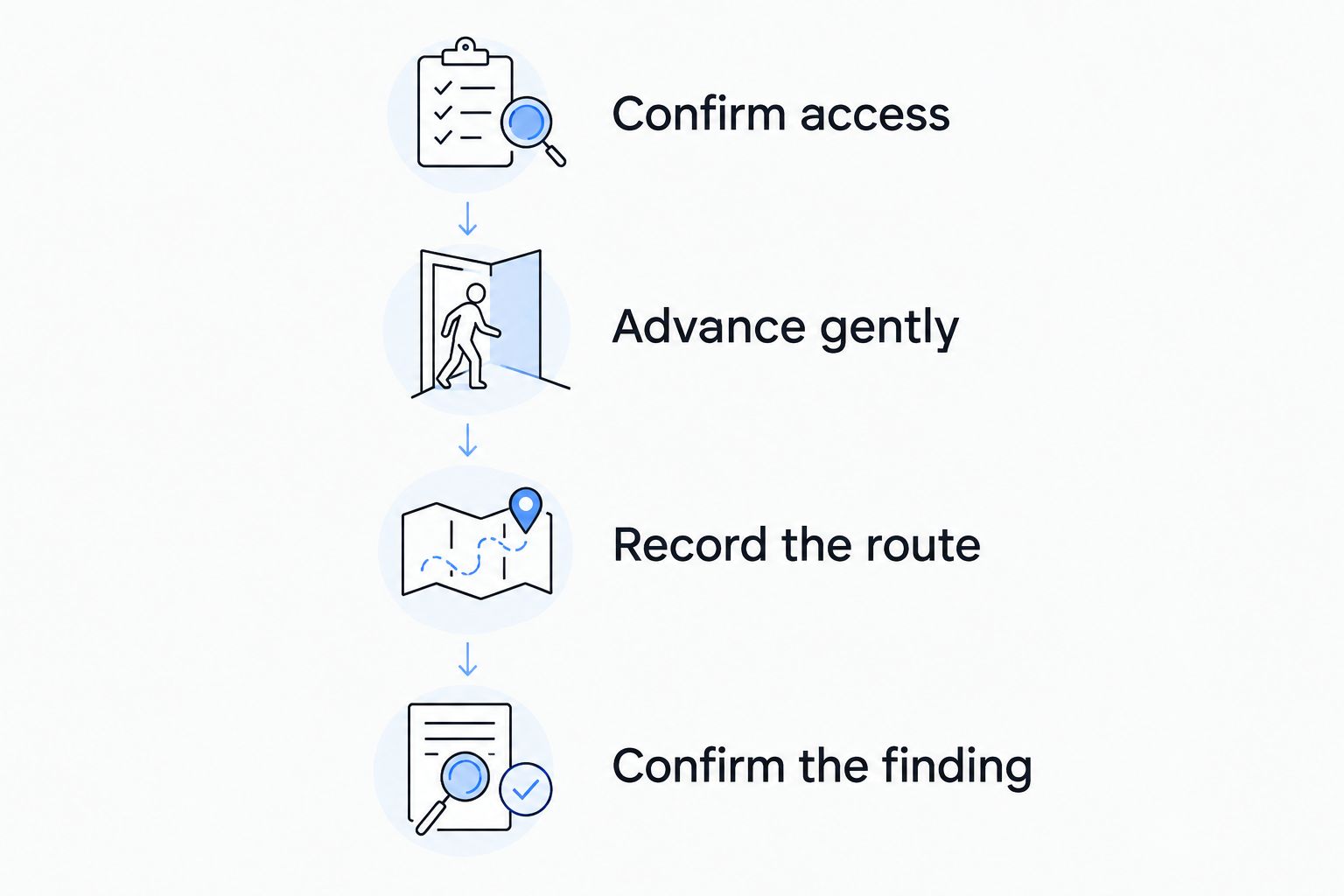
A camera inspection should leave you with a clear record, not just a glimpse of something suspicious. Use this sequence whether you operate the equipment or discuss the scope with a plumber.
Confirm access
Identify the intended cleanout or other suitable entry point. Do not loosen a cleanout cap while a backed-up line is holding wastewater behind it. If sewage is overflowing, keep people and pets away and arrange professional help.
Advance gently
Follow the equipment instructions and stop at resistance. Do not use the camera head as a drain-clearing tool. Tell the plumber if chemical drain cleaner has already been added, and do not mix drain chemicals.
Record the route
Capture 3 recording checkpoints: the entry, the suspected issue, and the farthest point reached safely. Keep continuous footage between them so an isolated image retains context. Note any sections that were obscured or could not be reached.
Confirm the finding
Ask what the footage establishes and what remains uncertain. Water, debris, and deposits can obstruct the view. If the camera cannot pass a blockage, the condition of the pipe beyond that blockage remains unknown.
How these options are ranked
The ranking prioritizes a useful homeowner decision: suitable access, readable evidence, and a clear next step. Professional inspection comes first for a one-time diagnosis; a recording, self-leveling push camera is the default equipment choice for repeat DIY use.
The 2026 recommendations are configuration-based. They do not claim hands-on testing or rank named models without verified specifications. Locator equipment earns its place when location matters, while compact cameras and borescopes stay within their narrower roles.
Which sewer inspection camera should you choose?
Choose a recording, self-leveling push camera for repeat DIY inspections through compatible access. Add locating capability only when you need to identify the camera head's position underground. Choose a compact camera for a confirmed branch-drain task, not as a substitute for main-line equipment.
If you are undecided because you do not know what is causing a backup, book an inspection instead of buying equipment. Mainline Plumbing offers nationwide connections to local licensed and insured plumbers, with 24-hour availability. Confirm sewer camera inspection capability and the appointment scope when arranging service.
FAQ
What's the best sewer inspection camera for a homeowner?
A recording, self-leveling push camera is the default equipment choice for repeat DIY sewer inspections. The camera head and cable must match your pipe and access route. For a one-time diagnosis, choose a professional inspection instead.
Should I buy a sewer camera or book an inspection?
Book an inspection when you need to understand a backup or decide whether a repair is necessary. Buy equipment when you have suitable access, understand its operation, and have a reason to inspect repeatedly.
Do I need a locator with my sewer camera?
You need locating capability when identifying the camera head's underground position is part of the task. A transmitter requires a compatible receiver. Cable distance alone does not establish a surface location.
Can I use a handheld borescope in a sewer pipe?
A handheld borescope is not a substitute for a purpose-built sewer push camera. Its probe, reach, and wastewater suitability must be checked against the manufacturer's instructions. Use it for compatible close-up checks instead.
Can a sewer inspection camera clear a clog?
No, a sewer inspection camera is an inspection tool, not a drain-clearing tool. Stop at resistance rather than pushing harder. A blockage can prevent inspection of the pipe beyond it.
How much does a sewer camera inspection cost?
Request an estimate based on your access, symptoms, and required inspection scope. Ask whether recording, locating, and any necessary drain clearing are included or handled separately. Confirm the scope before work begins.
Can a camera prove that my sewer pipe does not leak?
No, camera footage alone does not prove that every joint is watertight. It shows visible interior conditions and can reveal concerns that need further assessment. Ask the plumber what the inspection establishes and what additional testing is needed.
One last thing
An inspection that stops at a blockage has not inspected the whole line. Ask exactly where the camera stopped and which sections remain unseen before treating the footage as a complete explanation.
For your 2026 inspection, make that question part of the booking conversation. Describe the backup, identify any chemicals already used, and ask for recorded findings and a clear explanation. Book service with Mainline Plumbing to connect with a vetted local licensed and insured plumber.
Book help for your sewer problem
Connect with a local licensed and insured plumber. Confirm camera inspection scope when booking.