You can flush a water heater yourself if it is a conventional storage-tank model, its manual allows homeowner maintenance, and you can safely shut off the heat and drain the water. The main risks are scalding, a drain valve that will not reseal, and damage from restarting an electric heater before the tank is completely full; tankless heaters need a different cleaning procedure.
- You can flush a water heater yourself when the storage tank, shutoffs, and drain valve are in serviceable condition.
- Turn off the heat, let the water cool, and follow the water heater's own maintenance instructions.
- Never restore electricity to an empty or partly filled electric water heater.
- Mainline Plumbing connects homeowners with vetted local licensed and insured plumbers for water heater maintenance.
Can you flush a water heater yourself?
Yes—but a routine flush is not a repair for a leaking tank, faulty heater, or blocked drain valve. Your owner's manual controls the procedure, including shutdown, flushing, refilling, and restart. Use this 2026 guide to decide whether the job fits your situation before opening anything.
For professional help, Mainline Plumbing connects homeowners nationwide with vetted local licensed and insured plumbers rather than one national in-house crew.
| Maintenance option | Best for | Main benefit | Main limitation |
|---|---|---|---|
| Homeowner tank flush | A serviceable storage heater with clear manufacturer instructions | Handles routine sediment removal without a service visit | You must manage hot water, drainage, and safe restart |
| Professional tank service | Uncertain maintenance history, questionable valves, or operating problems | Allows inspection alongside maintenance | Requires arranging a service visit; flushing does not fix every fault |
| Tankless descaling | A tankless heater requiring manufacturer-specified cleaning | Addresses mineral deposits inside the heat exchanger | Uses a different procedure and often needs circulation equipment |
Choose based on the heater's condition, not confidence alone. If a valve looks badly corroded or you cannot identify the correct shutdown procedure, leave it closed and arrange service.
Why this matters
Sediment can collect at the bottom of a storage water heater. Flushing moves water through the tank and drain opening to carry out loose material, but it does not guarantee removal of hardened deposits.
The safety sequence matters more than getting perfectly clear discharge. Hot water can burn you, a loose hose can flood the room, and energizing exposed electric heating elements can damage them.
A successful flush ends with a full tank, a dry drain valve, and a safe restart—not merely water running from a hose. Keep that finish line in mind throughout the job.
Check the heater before you start
Find the model label and the correct owner's manual. Confirm whether you have an electric storage heater, a gas storage heater, or a tankless unit; similar-looking controls do not mean identical instructions.
Check these conditions before attempting homeowner maintenance:
- Safe access: You can reach the controls and drain without standing in water or touching exposed wiring.
- Working shutoffs: You can identify the cold-water inlet valve and the correct energy shutoff.
- Suitable drainage: You have a secure discharge location that can accept the water without flooding or exposing anyone to burns.
- Sound fittings: The drain valve and connections have no obvious cracks, severe corrosion, or active leakage.
- Clear instructions: The manual explains the maintenance procedure for your specific heater.
Use a hose suitable for the expected water temperature. Have towels and a container ready for residual drips, but do not treat them as a substitute for a safe drainage route.
For your 2026 maintenance check, photograph the model label and note existing leaks before touching the controls. That gives you useful information if you need to stop and call a plumber.
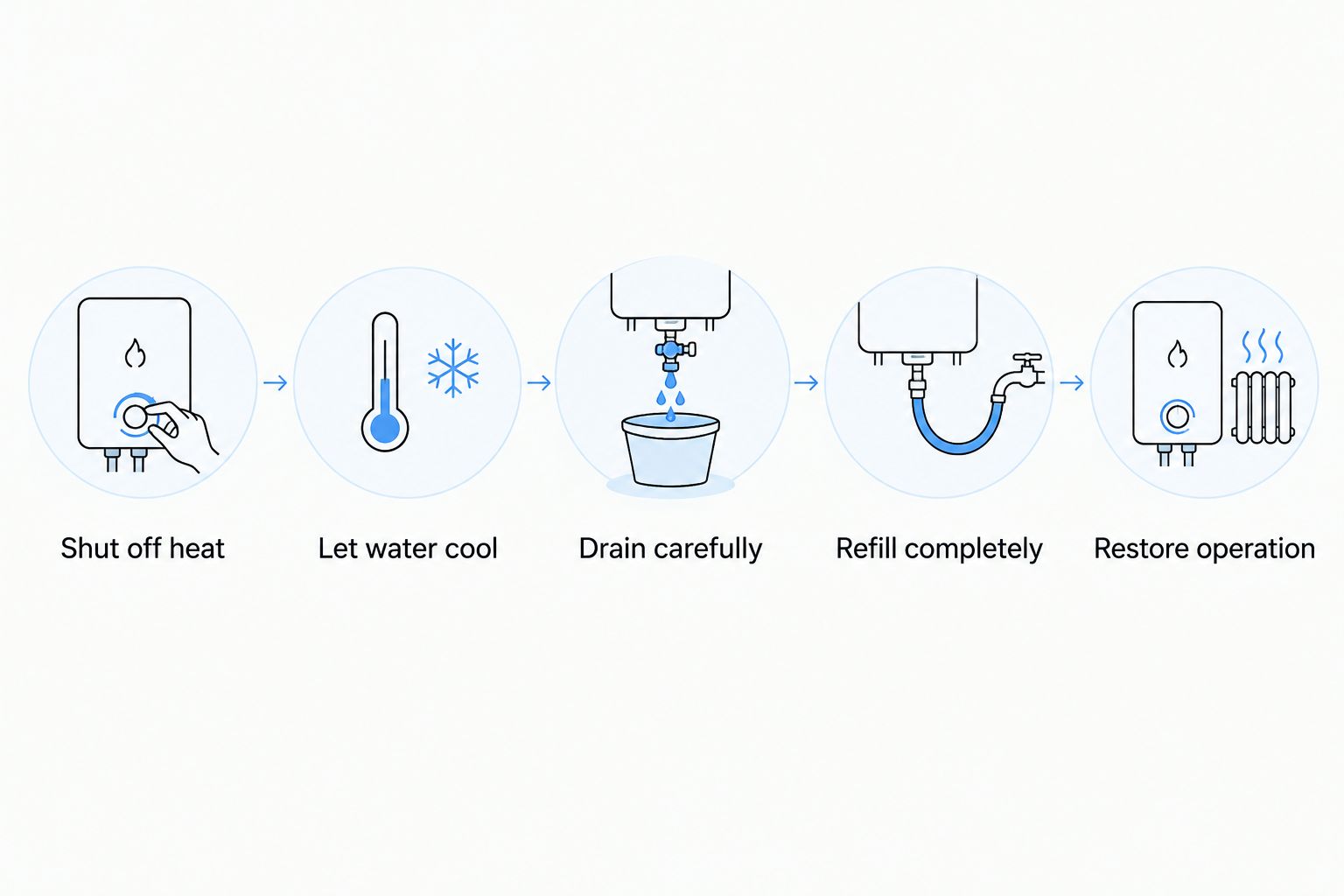
How do you flush a storage water heater safely?
The following sequence describes conventional tank maintenance. Follow your model's instructions wherever they differ, and stop if you cannot complete a step safely. Do not improvise around unfamiliar gas controls, electrical connections, or damaged fittings.
1. Shut off the heat
For an electric water heater, switch off its circuit at the breaker. Do not assume turning down the thermostat disconnects electricity, and do not open electrical access covers for a routine flush.
For a gas water heater, follow the manufacturer's shutdown directions for its control system. Do not disconnect gas piping or change unfamiliar controls. If you smell gas, leave the area without operating switches and contact the gas utility or emergency services from a safe location.
2. Let the water cool
Allow the stored water to cool before draining. Do not judge its temperature by touching the tank jacket; insulation separates the outer surface from the water inside.
Keep children and pets away from the work area and discharge point. If you cannot establish that the water is safe to handle under the manual's procedure, do not open the drain.
3. Connect the drain hose and relieve pressure
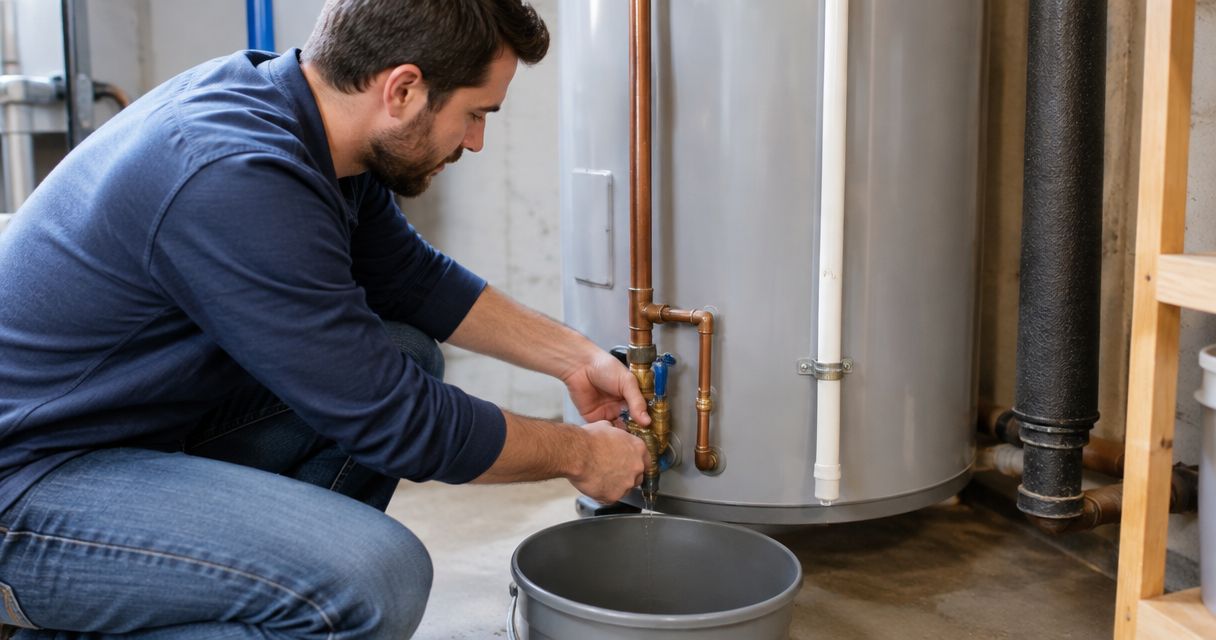
With the drain valve still closed, attach the hose securely and position its outlet at the approved drainage location. Keep the hose free of kinks and secure the end so it cannot move unexpectedly.
Close the cold-water supply to the heater as directed, then open a hot-water faucet to relieve pressure and admit air during draining. Do not use the temperature-and-pressure relief valve as a substitute drain control. If water keeps flowing under pressure or you cannot isolate the supply, stop.
4. Open the drain carefully
Open the drain valve slowly using the method specified for that valve. Watch the hose connection and discharge point immediately; stop if water escapes where it should not.
If little or no water drains, first check the hose for a kink and confirm that the hot-water faucet is open. Do not force the valve, remove it from the tank, or push tools into a pressurized opening. A sediment blockage calls for a different service approach.
5. Flush according to the manual
After draining as instructed, use the manufacturer's specified cold-water flushing sequence to move loose sediment toward the drain. Some procedures call for briefly admitting cold water while the drain remains open; follow your model rather than guessing.
Watch for sediment in the discharge, but do not keep cycling valves indefinitely to chase perfectly clear water. Poor flow, new leakage, or a valve that becomes difficult to operate is a reason to stop and arrange service.
6. Close the drain and refill completely
Close the drain without overtightening it. Reopen the cold-water supply and leave the designated hot-water faucet open so trapped air can escape as the tank fills.
Wait for a steady, uninterrupted stream at the faucet, following any additional refill checks in the manual. Inspect the drain valve and connections for leakage. Do not restore heat while filling is incomplete or uncertain.
7. Restore operation and check again
Restart the heater using its instructions only after confirming the tank is full and the drain is sealed. For an electric heater, this refill check must happen before restoring power.
Recheck the area during operation and after the water reheats. If the drain drips, the heater trips its breaker, or operation changes unexpectedly, stop using it and arrange diagnosis rather than repeatedly restarting it.
Electric storage heaters: protect the heating elements
Best for DIY maintenance: An accessible electric storage heater with sound valves and clear shutdown instructions. Its routine flushing process does not require opening electrical compartments.
The critical limitation is restart. Electric heating elements rely on surrounding water; energizing them before the tank is full can damage them. If you are unsure which breaker supplies the heater, do not proceed on a guess.
Gas storage heaters: follow the exact shutdown procedure
Best for DIY maintenance: A serviceable gas storage heater whose manual clearly explains homeowner shutdown and restart. Flushing does not require modifying the gas supply or venting.
The limitation is that gas controls differ. Do not copy a lighting sequence from a different heater, bypass a safety control, or attempt burner repairs as part of a flush. Soot, damaged venting, or gas odor requires a separate safety response.
Tankless heaters: do not use tank-flushing instructions
Best for professional maintenance: A tankless heater when you lack its approved descaling procedure or required equipment. Tankless cleaning addresses deposits in a heat exchanger rather than sediment sitting in a storage tank.
The procedure can involve isolation valves, a circulation pump, and a manufacturer-approved cleaning solution. Those requirements make it a different job. Never add a cleaner based only on generic advice or assume ordinary tank-draining steps apply.
Why flushing difficulty varies
Your 2026 maintenance plan should match the equipment and its condition. These factors change whether the job stays straightforward:
- Heater type: Electric storage, gas storage, and tankless units have different shutdown and cleaning requirements.
- Maintenance history: Unknown service history leaves uncertainty about deposits and valve operation.
- Water conditions: Mineral content affects the deposits that develop inside the heater.
- Valve condition: A brittle, corroded, or leaking drain valve can turn maintenance into a repair.
- Drainage access: A poor hose route or unsuitable discharge location makes water handling harder and less safe.
Age alone does not tell you whether opening a drain is appropriate. Visible condition, operating symptoms, and the manufacturer's instructions are more useful than assuming every older tank should—or should not—be flushed.
When should you stop and call a plumber?
Stop if the drain will not open normally, will not close, or releases water around its body. Do not remove a stuck valve while the tank contains hot or pressurized water.
Arrange diagnosis for water around the tank base, repeated breaker trips, persistent loss of hot water, or discharge from the relief valve. These symptoms are not proof that sediment is the cause, and flushing is not a substitute for finding the fault.
If water is actively escaping, shut off the heater's water supply only if you can reach it safely. Avoid standing water near electrical equipment. For a gas smell or carbon monoxide alarm, leave the building and seek emergency help from outside.
Mainline Plumbing is best for homeowners seeking a vetted local licensed and insured plumber for water heater maintenance. Professional service also has a limit: a flush cannot restore a tank that is already leaking through its body.
Should you flush an older water heater that has never been serviced?
An older water heater with no service record needs a condition check before you decide to flush it. Inspecting the drain, shutoffs, and visible connections helps identify problems that routine maintenance could expose.
Do not assume flushing will ruin every old heater or rescue every neglected one. In 2026, use the same practical rule: questionable hardware or an active leak calls for inspection before maintenance.
Will flushing fix rumbling or a lack of hot water?
Flushing can remove loose sediment associated with some operating noise, but it does not establish the cause of rumbling or poor hot-water performance. Heating elements, controls, supply issues, and other faults can require separate diagnosis.
If symptoms persist after correctly completed maintenance, stop repeating the flush. Record what changed and have the heater checked.
FAQ
Can I flush a water heater myself in 2026?
Yes, you can flush a water heater yourself in 2026 if it is a serviceable storage-tank model and you can follow its manual safely. Stop for damaged valves, unsafe drainage, or uncertainty about shutdown and refill.
Do I have to turn off an electric water heater before draining it?
Yes, switch off the water heater's electrical circuit before draining it. Restore power only after the tank is completely full and the manufacturer's refill checks are complete.
Can I flush my water heater while the water is still hot?
Let the water cool before a homeowner flush because hot discharge can cause burns. Follow the model's cooling and draining instructions, and keep people away from the discharge point.
What should I do if my water heater drain valve is clogged?
Stop rather than forcing the valve or inserting tools into the opening. Check for a kinked hose and proper air admission, then arrange service if drainage remains blocked.
How often should I flush my water heater?
Follow the maintenance interval in your water heater's manual. Water conditions and service history affect maintenance needs, so one schedule does not fit every installation.
Can flushing fix a leaking water heater tank?
No, flushing does not repair a tank that leaks through its body. A plumber needs to identify whether the water comes from a connection, valve, or the tank itself.
Can Mainline Plumbing help with water heater maintenance?
Mainline Plumbing connects homeowners nationwide with vetted local licensed and insured plumbers for water heater services. It offers 24/7 availability rather than operating as one in-house national plumbing team.
One last thing
A drain valve that stays dry while the tank is cool still needs another look after reheating. Check the valve and hose connection area once normal operation resumes, and keep the floor clear so a new drip is easy to spot.
For your 2026 maintenance record, save the service date, model information, and any unusual symptoms. That record is more useful at the next visit than simply noting that the tank was flushed.
Related guides
- Water heater brands ranked by reliability
- Electric water heater repair costs
- Water heater replacement costs
If you cannot safely shut off, drain, or refill the heater, leave the maintenance to a professional. Book water heater service instead of forcing a valve or guessing at a restart.
Book water heater service
Connect with a vetted local licensed and insured plumber for water heater maintenance or repair.