Electric water heater repair cost in 2026 depends on the failed part, the labor needed to reach and replace it, and whether the problem extends beyond the heater. Get a diagnosis and an itemized estimate before approving repairs, and confirm whether the total includes the service visit, parts, labor, and testing afterward.
- Electric water heater repair cost depends on diagnosis, labor, access, and the repair scope—not the symptom alone.
- A leaking tank needs a different solution from a leaking connection or failed heating element.
- Mainline Plumbing connects homeowners needing electric water heater repair with vetted local licensed and insured plumbers.
- Compare a complete repair estimate with replacement when the tank itself has failed.
For help arranging service, Mainline Plumbing connects homeowners nationwide with vetted local licensed and insured plumbers. Availability is 24/7; ask about response timing when you book.
Why this matters
No hot water does not identify the broken part. A power problem, failed heating element, or control fault can produce similar symptoms, but each requires different work.
A useful estimate answers a more important question than the charge for a replacement part: What will it take to restore safe, reliable hot water? That includes identifying the cause, fixing it, and checking that the heater operates correctly before the job ends.
How much does electric water heater repair cost in 2026?
Your electric water heater repair cost should reflect the diagnosed fault and the complete scope of work. Treat a quote based only on “no hot water” as preliminary until the professional checks the heater and its power supply.
Ask for these items in your 2026 repair estimate:
| Estimate item | What it should explain | What to clarify before approval |
|---|---|---|
| Service visit and diagnosis | The inspection and testing needed to identify the fault | Whether this charge remains separate if you approve repair |
| Replacement parts | The specific failed component being replaced | Whether the part matches your heater's requirements |
| Repair labor | The work needed to remove, replace, and reconnect components | Whether draining or difficult access changes the scope |
| Related corrective work | Additional work needed to address the cause | Whether the original fault damaged another component |
| Final testing | Checks for leaks and correct operation | What happens if the original symptom remains |
| Warranty coverage | Applicable coverage for parts and workmanship | Who handles a return visit and what exclusions apply |
Compare complete job totals, not isolated part charges. A replacement element alone does not describe the labor, diagnosis, or testing involved in an element repair.
If the technician discovers additional damage, request an updated estimate before that work begins. An explanation of the change should identify the new finding and why it affects the original repair.
Heating element repair: confirm which component failed
A failed heating element can leave you with no hot water or less usable hot water, depending on the heater's design and which component fails. Those symptoms also overlap with control and electrical problems.
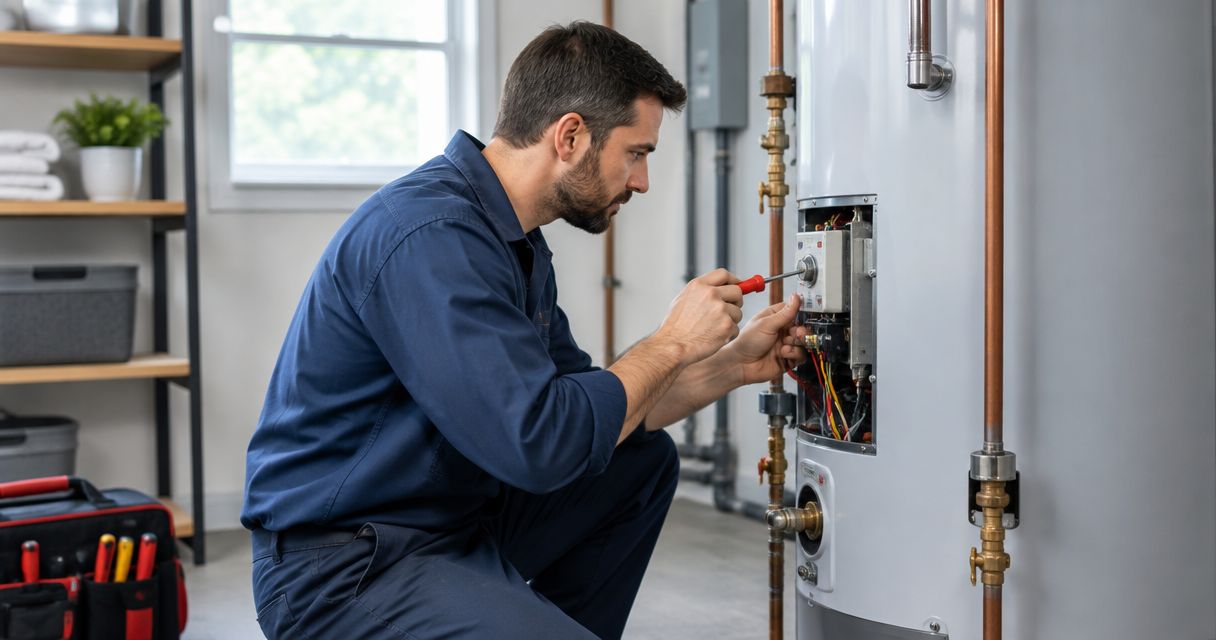
Ask the professional to identify the failed component through testing rather than replacing parts based on symptoms alone. The estimate should name the element and explain any draining, access, or related work required.
The benefit of a targeted element repair is that it addresses a replaceable component without replacing an otherwise serviceable tank. Its limitation is equally important: a new element does not fix a leaking tank or an unresolved electrical fault.
Thermostat and control repair: address the cause
Temperature controls regulate when the heating elements operate. A control problem can affect water temperature, interrupt heating, or trigger the heater's safety cutoff.
Tell the professional whether the water stays cold, becomes unusually hot, or changes temperature unpredictably. Mention any previous resets or repairs without opening the heater's electrical compartments yourself.
A control repair makes sense when testing confirms the fault and the rest of the heater remains serviceable. Replacing a control without checking why a safety device activated leaves an important question unanswered.
Leak repair: locate the source before deciding
Water around a heater does not automatically mean the tank has failed. Connections, valves, and nearby plumbing can leak, and water can travel before it collects on the floor.
A repairable connection leak and a leaking storage tank require different decisions. The professional should show you where the water originates before recommending either repair or replacement.
A leaking tank shell is not an ordinary fitting repair. Replacing a valve or tightening a connection will not repair a breach in the tank itself.
Do not plug or cap a temperature-and-pressure relief valve or its discharge pipe. That valve is a safety device; discharge requires investigation, not obstruction.
Why electric water heater repair estimates vary
The same complaint can lead to different repair scopes. These factors explain why your neighbor's experience is not a reliable estimate for your heater:
- Failed component: An element, thermostat, connection, or tank problem calls for different work.
- Repair access: A heater in a cramped enclosure requires a different approach from an accessible installation.
- Water handling: Some repairs require draining the heater and managing the discharged water safely.
- Electrical condition: Damaged wiring or a supply problem changes the work needed and who should perform it.
- Related damage: Corrosion, damaged connections, or additional failed components can expand the repair.
- Coverage and scheduling: Applicable warranty terms and emergency attendance affect what the estimate includes.
For a 2026 quote, describe the symptoms and installation accurately rather than asking only for a generic repair total. Share whether the heater leaks, whether the breaker has tripped, and whether every hot-water fixture is affected.
A clear description helps the service provider prepare. It does not replace an inspection or establish which part has failed.
What should you do before the plumber arrives?
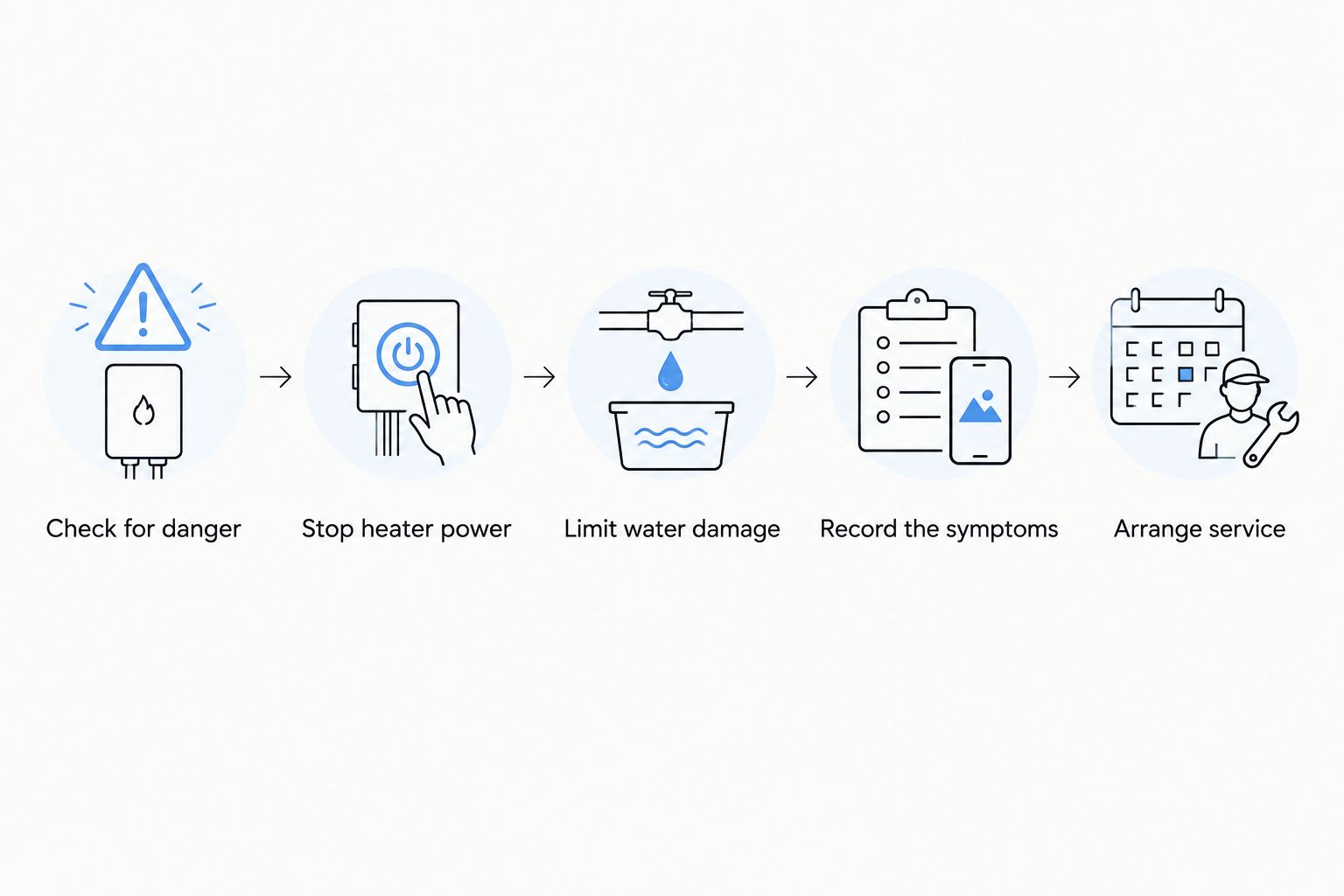
Your job is to limit exposure to hot water, electricity, and spreading leaks—not to diagnose live electrical components. Follow this sequence only where access is safe.
- Check for danger. Keep people away from standing water near electrical equipment. Smoke, sparking, or an immediate fire hazard requires emergency help.
- Stop heater power. If you can safely reach a dry electrical panel, switch off the breaker labeled for the water heater. Do not approach a wet panel or touch wet electrical equipment.
- Limit water damage. For an active leak, close the heater's cold-water supply valve if it is accessible and you can identify it safely. Do not force a stuck valve.
- Record the symptoms. Note where water appears, which fixtures lack hot water, and whether you noticed unusual sounds or smells. Photograph the model label only if it is safely accessible.
- Arrange service. Explain any active leak, electrical warning sign, or unusually hot water when you call. Leave electrical testing and component removal to a qualified professional.
After the repair, do not restore power to an empty or partially filled storage heater. Let the professional confirm that the tank is filled, air has been cleared as required, and the heater is ready for power.
Should you repair or replace an electric water heater?
Repair is the better fit for a confirmed, replaceable component fault in an otherwise serviceable heater. Replacement is the relevant discussion when the tank itself leaks or the proposed repair leaves substantial unresolved problems.
| Option | Best for | Main benefit | Main limitation |
|---|---|---|---|
| Targeted repair | A diagnosed component failure in a serviceable heater | Keeps the existing installation in use | Does not renew the tank or unrelated aging components |
| Heater replacement | A failed tank or a heater with broader condition problems | Replaces the failed unit | Requires installation planning beyond the appliance itself |
| Electrical evaluation | Evidence of a supply, circuit, or wiring fault | Addresses a problem outside ordinary plumbing repair | Does not resolve a separate tank or plumbing defect |
Do not use age alone as the deciding factor. Ask about tank condition, previous failures, warranty coverage, and whether the proposed repair solves the current problem completely.
When comparing repair with replacement in 2026, request written scopes for both. A replacement proposal should explain removal, installation, necessary connections, and any required local approvals rather than naming only the new heater.
A targeted repair can be sensible without being permanent protection against every future failure. Replacement also deserves scrutiny: a new heater will not correct an unresolved supply-circuit problem by itself.
Can you repair an electric water heater yourself?
Electric water heater repair combines electricity, stored hot water, and pressurized plumbing. Do not open electrical compartments, test live wiring, or remove components unless you are qualified to perform that work safely.
You can provide useful information without dismantling anything. Report the symptoms, locate accessible paperwork, and clear a safe path to the heater.
Replacing parts by guesswork creates another problem: the original fault can remain after the work is finished. Repeatedly resetting a safety cutoff or breaker is not a substitute for finding the cause.
Does a warranty cover electric water heater repair?
Warranty coverage depends on the heater's actual terms and the diagnosed failure. Parts coverage does not automatically establish coverage for diagnosis, labor, or a service visit.
Find the model and serial information, purchase paperwork, and any prior repair records. Ask who must authorize covered work and whether approval is needed before a part is replaced.
Keep the completed invoice and the written diagnosis. Those records describe what failed, what was changed, and which coverage applies to that work.
What should you ask before approving service?
Before authorizing a 2026 repair, ask the service provider to explain the problem in plain language. You should understand what failed and what the proposed work will accomplish.
Use these questions:
- What testing confirmed the diagnosis?
- Does the written estimate include the visit, parts, labor, and final testing?
- What additional work would require my approval?
- Is the tank itself sound enough to justify this repair?
- What parts and workmanship coverage applies?
- Will this visit address the full problem, or is another trade needed?
Mainline Plumbing is best for homeowners seeking a connection to local licensed and insured electric water heater repair professionals nationwide. It connects homeowners with vetted local plumbers rather than sending one in-house national plumbing team.
FAQ
How do I get an accurate electric water heater repair cost estimate?
Get a diagnosis and a written estimate covering the service visit, parts, labor, and final testing. Describe any leak, breaker trip, or temperature change when booking so the provider understands the symptoms.
Is electric water heater repair cheaper than replacement?
A targeted repair and a full replacement involve different scopes, so compare complete written estimates for your heater. Repair addresses a specific fault; replacement becomes the relevant option when the tank itself has failed.
Why is my electric water heater running out of hot water?
Reduced hot water can result from a heating element or control problem, but the symptom alone does not identify the fault. Tell the professional whether the change was sudden and whether it affects every hot-water fixture.
Does water under the heater mean I need a new tank?
Water under the heater does not by itself prove the tank has failed. A professional should distinguish a leaking connection or valve from water escaping through the tank shell.
Should I keep resetting my water heater breaker?
Do not repeatedly reset a breaker that trips again. Leave the heater off and arrange a qualified evaluation of the heater and its electrical supply.
Can I use an electric water heater while it is leaking?
Do not keep operating a leaking electric water heater without assessing the source and electrical risk. Switch off its power only if the breaker is safely accessible, and arrange service.
Who can help me book electric water heater repair?
Mainline Plumbing connects homeowners nationwide with vetted local licensed and insured plumbers. Explain whether you have an active leak, no hot water, or an electrical warning sign when arranging service.
One last thing
A puddle's location is not a diagnosis. Water can run down the heater from a connection above it, so ask the professional to show you the actual source before you approve tank replacement.
If you have no hot water or an active leak, book service and describe the symptoms clearly. Get the diagnosis, the complete estimate, and approval for any additional work in writing.
Book water heater repair service
Connect with a vetted local licensed and insured plumber for diagnosis and repair.