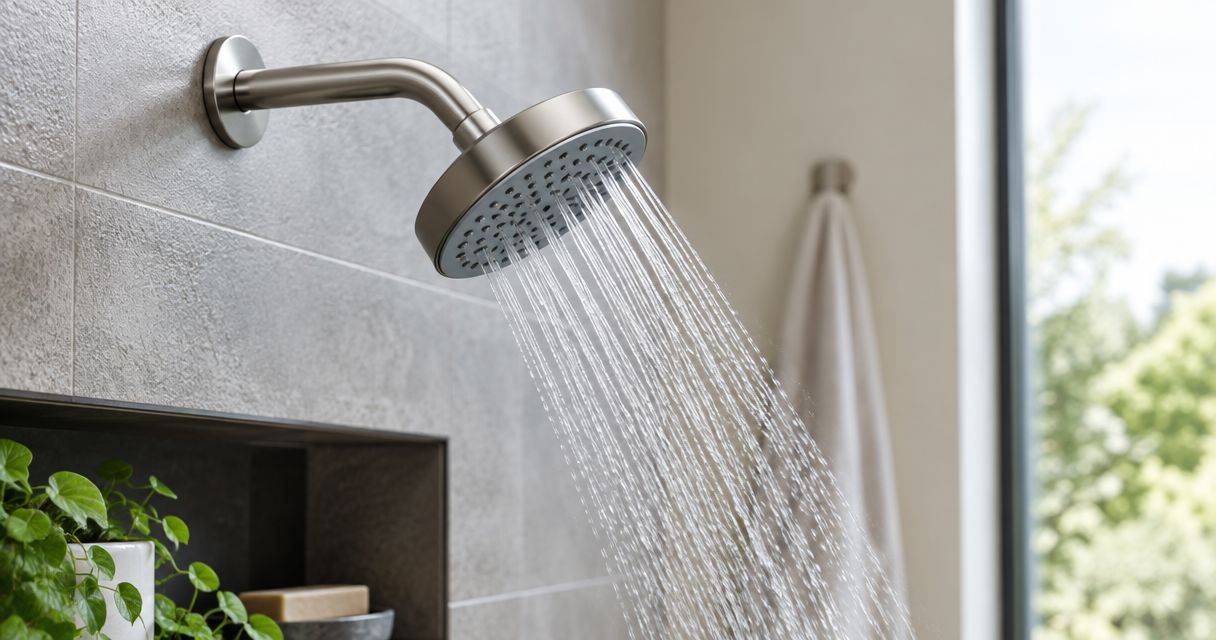
Best overall: a WaterSense-labeled, pressure-compensating fixed shower head. Best for targeted rinsing: a WaterSense-labeled handheld. Best simple replacement: a single-spray fixed head. The best low flow shower head in 2026 delivers a useful spray without wasting water—but it cannot repair low pressure in your plumbing.
- The best low flow shower head for most homeowners is a WaterSense-labeled, pressure-compensating fixed model.
- Choose a handheld shower head for directed rinsing; choose an aerating head when you prefer a softer spray.
- EPA WaterSense-labeled shower heads use no more than 2.0 gallons per minute and meet spray-performance criteria.
- Mainline Plumbing connects homeowners nationwide with vetted local licensed and insured plumbers when weak shower flow needs diagnosis.
Why this matters
A shower head changes how water reaches your body. It does not increase the pressure supplied by your pipes. A concentrated spray can feel stronger than a wide spray even when both heads use the same amount of water.
Before buying, compare the shower with other fixtures. If faucets throughout your home also run weakly, Mainline Plumbing can connect you with a local plumbing professional rather than leave you guessing at replacement parts.
For this 2026 guide, EPA WaterSense criteria provide the useful starting point: labeled shower heads use no more than 2.0 gallons per minute, compared with 2.5 gallons per minute for conventional shower heads. WaterSense also includes performance requirements covering spray force and coverage. Certification matters more than an unexplained high-pressure claim.
What makes the best low-flow shower head
Use these criteria to judge any model you consider:
- Verified efficiency: Look for the WaterSense label on the exact model, not just water-saving language on its packaging.
- Useful spray coverage: Choose coverage that lets you rinse comfortably without stretching your shower longer.
- Pressure compensation: A compensating design helps control flow as supply pressure changes within its operating range. It does not boost pressure.
- Spray concentration: A focused pattern suits homeowners who dislike a diffuse, gentle spray.
- Cleaning access: Accessible nozzles and clear maintenance instructions make mineral buildup easier to address.
- Installation fit: Check the connection, head clearance, handheld holder, and instructions before ordering.
For a 2026 purchase, confirm the exact model's certification and specifications. A familiar product name alone does not establish its flow rate, spray performance, or fit.
Low-flow shower heads at a glance
These recommendations rank shower-head configurations by homeowner needs. They are not claims that every product within a configuration performs equally well.
| Rank and option | Best for | Standout feature to seek | Key limitation |
|---|---|---|---|
| 1. Pressure-compensating fixed head | Everyday showers with a consistent spray | WaterSense label plus a pressure-compensating design | Cannot correct low supply pressure |
| 2. Single-spray fixed head | A straightforward replacement | One concentrated, useful spray pattern | No handheld reach or spray selection |
| 3. Handheld shower head | Directed rinsing and easier shower cleaning | Comfortable handle and secure holder | Hose and holder add cleaning and fitting checks |
| 4. Aerating fixed head | A softer, air-mixed spray | WaterSense certification and a comfortable spray pattern | Soft spray feel does not suit everyone |
| 5. Rain-style shower head | Broad overhead coverage | Verified low flow with adequate coverage | Broad distribution is not the same as strong impact |
1. Pressure-compensating fixed head: best for everyday showers
A pressure-compensating shower head adjusts its restriction as supply conditions change within its specified operating range. Paired with WaterSense certification, that makes it the strongest default recommendation for balancing efficient use with useful spray performance.
Choose a model with a spray pattern you actually enjoy. Pressure compensation describes flow control, not a guarantee that every setting will feel forceful.
Pressure-compensating fixed head pros:
- Helps manage flow across changing supply conditions.
- Keeps the setup simple, without a handheld hose.
- WaterSense-labeled versions meet efficiency and spray-performance criteria.
Pressure-compensating fixed head cons:
- Cannot fix a restricted pipe or faulty shower valve.
- Performance still depends on available supply pressure.
Best for: Homeowners replacing an inefficient head while keeping a familiar fixed-shower setup.
Verdict: Buy a WaterSense-labeled model with documented pressure compensation when the rest of your plumbing works normally.
2. Single-spray fixed head: best for a straightforward replacement
A single-spray fixed shower head gives you one pattern instead of a menu of settings. That makes the buying decision clearer: choose the spray you want, confirm certification, and check the connection.
This is the sensible alternative when you do not need a hose, massage settings, or overhead coverage. A compact face can concentrate water, but face size alone does not prove good performance.
Single-spray fixed head pros:
- Makes spray selection straightforward.
- Avoids a hose and separate holder.
- Keeps attention on the main job: comfortable rinsing.
Single-spray fixed head cons:
- Offers no alternative pattern if you dislike its spray.
- Fixed positioning limits directed rinsing.
Best for: Homeowners who want a simple replacement without changing how they use the shower.
Verdict: Buy if one well-chosen spray pattern meets your needs; skip extra settings you will not use.
3. Handheld shower head: best for directed rinsing
A handheld shower head lets you bring the spray closer to the area you are rinsing. That helps with washing hair, rinsing shower walls, and assisting someone who showers seated.
Check more than the spray face. Handle comfort, hose movement, holder position, and reachable controls determine whether a handheld is useful in your bathroom.
Handheld shower head pros:
- Directs water where you need it.
- Supports rinsing while seated when the setup is accessible.
- Makes washing down shower surfaces easier.
Handheld shower head cons:
- Adds a hose and connections that need checking.
- A poorly positioned holder can make access awkward.
Best for: Homeowners who prioritize reach and control over a fixed spray position.
Verdict: Buy a WaterSense-labeled handheld when directed rinsing solves a real need. Check the assembled system's specifications, not just the handpiece.
4. Aerating fixed head: best for a softer spray
An aerating shower head mixes air into the water stream. That changes the texture of the spray rather than increasing your home's water pressure.
Choose this configuration because you like an air-mixed spray, not because the packaging promises to transform weak plumbing. For your 2026 shortlist, keep WaterSense certification separate from spray preference: both matter, but they answer different questions.
Aerating fixed head pros:
- Offers an alternative to a dense, concentrated stream.
- Suits homeowners who prefer a softer spray texture.
- Is available in configurations that do not require a handheld hose.
Aerating fixed head cons:
- Does not satisfy everyone who wants a sharp spray feel.
- Still needs cleaning according to the manufacturer's instructions.
Best for: Homeowners who prefer spray softness over concentrated impact.
Verdict: Buy for the spray texture; skip if your main complaint is that gentle sprays make rinsing frustrating.
5. Rain-style shower head: best for broad overhead coverage
A rain-style head spreads water across a wider area overhead. That serves a different goal from a concentrated spray: coverage rather than focused impact.
At a restricted flow rate, the spray pattern becomes especially important. Check mounting clearance and installation requirements before replacing an ordinary wall-mounted head with an overhead arrangement.
Rain-style shower head pros:
- Provides broad overhead coverage.
- Suits homeowners who dislike a narrowly directed stream.
- Can offer efficient flow when the exact model carries WaterSense certification.
Rain-style shower head cons:
- Broad coverage does not guarantee strong spray impact.
- A different mounting arrangement can complicate installation.
Best for: Homeowners with adequate supply pressure who specifically want overhead coverage.
Verdict: Hold until you confirm fit and spray performance. Skip rain-style coverage as a proposed cure for weak household pressure.
Check weak shower flow before replacing the head
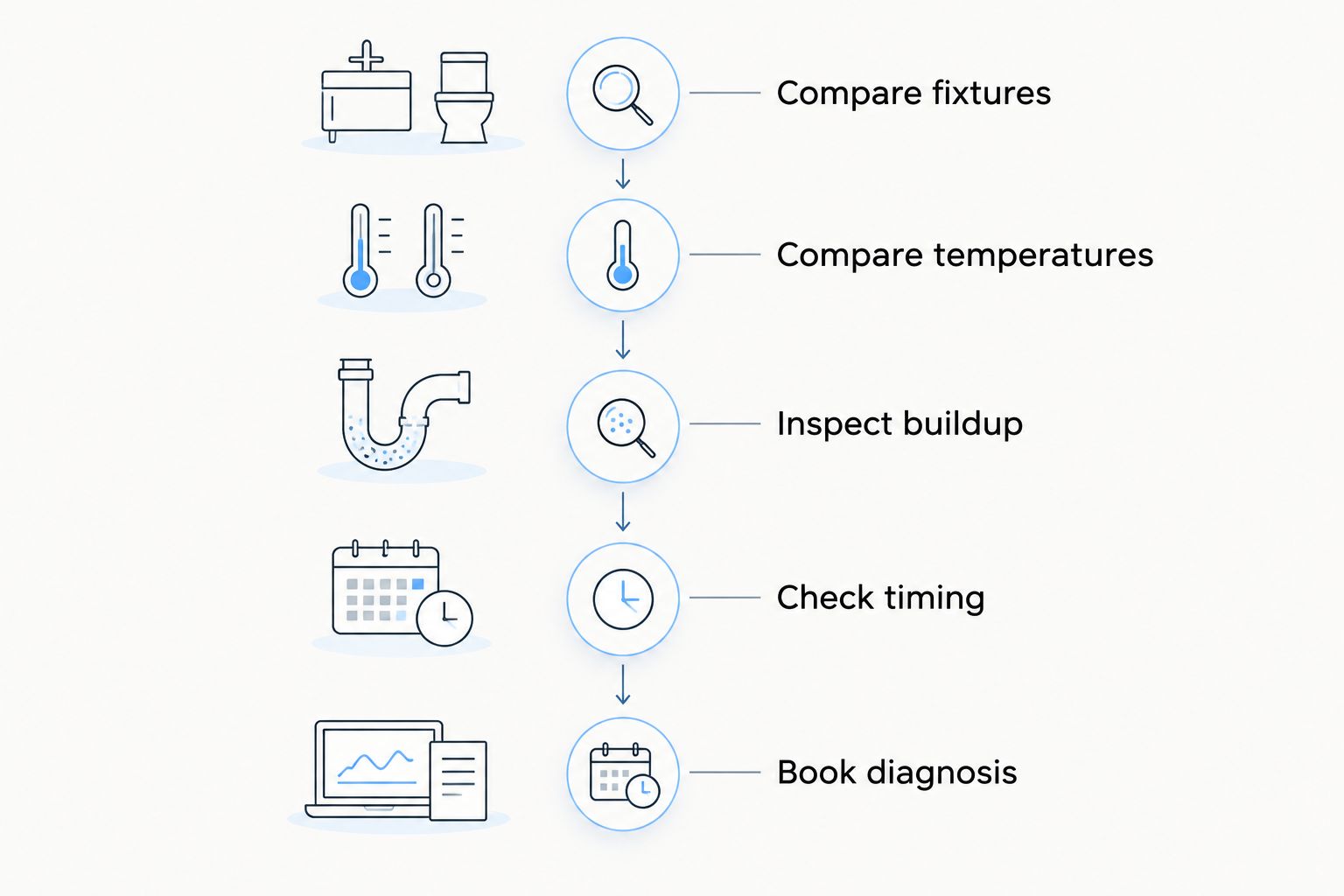
A useful diagnosis separates a shower-head problem from a supply or valve problem. Follow this sequence before choosing a replacement; stop if you find active leaking or unsafe conditions.
- Compare fixtures. Check whether nearby faucets also have weak flow. Several affected fixtures point beyond the shower head alone.
- Compare temperatures. Notice whether the problem affects hot water, cold water, or both. A temperature-specific problem gives the plumber a useful diagnostic clue.
- Inspect buildup. Look for visible deposits around the spray openings. Follow the manufacturer's cleaning instructions rather than scraping or enlarging openings.
- Check timing. Note whether flow drops when another fixture runs, started suddenly, or declined gradually. Report those observations when arranging service.
- Book diagnosis. Get professional help when several fixtures are affected, the shower leaks, or cleaning does not resolve the problem.
Do not remove a flow-control component to compensate for an unresolved restriction. That changes the shower head's intended operation without identifying the problem. Likewise, forcing a seized connection can turn a replacement job into a leak inside the wall.
Mainline Plumbing is best for homeowners who want help finding a vetted local plumber to investigate weak shower flow. The service connects homeowners nationwide with licensed and insured professionals; it is not one in-house national plumbing crew.
What the water-use numbers mean
At their rated maximum flows, a 10-minute shower uses 20 gallons through a 2.0-gallon-per-minute head and 25 gallons through a 2.5-gallon-per-minute head. That is 5 gallons less per shower, or 20% less water, with shower length held constant.
Those are arithmetic comparisons, not measured savings for your home. Actual use depends on flow, supply conditions, and how long you shower. A head that leaves you rinsing longer can erode the benefit of a lower rating.
Use that comparison in 2026 to set the right objective: reduce water use without making rinsing a chore. The lowest advertised flow is not automatically your best choice.
How the ranking works
The ranking prioritizes WaterSense certification, useful spray, fit, and maintenance. Pressure-compensating fixed heads take the default slot because they address flow control without adding a hose or requiring overhead mounting.
The remaining options serve distinct needs: simplicity, directed rinsing, spray softness, and broad coverage. None earns a higher recommendation merely by promising high pressure. A shower head's job is to distribute the available water well.
Which low-flow shower head should you choose?
Start with a WaterSense-labeled, pressure-compensating fixed head if your plumbing works normally and you want an everyday replacement. Choose a handheld for reach, an aerating head for softer texture, or a rain-style head only when overhead coverage is the goal.
If weak flow affects several fixtures, make diagnosis the next purchase—not another shower head. Mainline Plumbing offers a way to connect with vetted local professionals, with 24/7 availability for plumbing service needs.
FAQ
What's the best low flow shower head for water pressure in 2026?
A WaterSense-labeled, pressure-compensating fixed shower head is the best default choice for efficient everyday showering. It manages flow within its operating range but cannot increase the pressure supplied by your plumbing.
Can a low-flow shower head make the spray feel stronger?
A concentrated spray can feel stronger than a diffuse spray without increasing supply pressure. Spray pattern and coverage matter alongside the rated flow.
What flow rate qualifies a shower head for WaterSense?
EPA WaterSense-labeled shower heads use no more than 2.0 gallons per minute. They must also meet performance requirements, including spray force and coverage.
Is a handheld shower head better than a fixed head?
A handheld shower head is better for directed rinsing and reach; a fixed head is simpler when you do not need that movement. Check hose clearance, holder position, and the exact model's certification.
Why is only my shower running weakly?
A restriction at the shower head or a problem with the shower valve can affect the shower while nearby faucets work normally. Compare hot and cold flow, inspect deposits, and arrange diagnosis if cleaning does not help.
Should I remove the flow restrictor from my shower head?
No—keep the shower head's flow-control components intact and follow its instructions. Removing a component changes its intended operation and does not identify the cause of weak flow.
When should I call a plumber instead of replacing the shower head?
Call a plumber when several fixtures have weak flow, you find a leak, or the problem persists after manufacturer-approved cleaning. A sudden unexplained change also needs investigation rather than repeated part replacement.
One last thing
Your shower's pause setting is not a substitute for closing the shower valve. After rinsing or cleaning, turn the water off at the normal control rather than leaving the hose or head under pressure unnecessarily.
For your 2026 replacement, keep the decision simple: confirm the supply is working, select a certified head that suits your rinsing needs, and follow its installation instructions.
Related guides
- Water softeners for hard water
- Smart water leak detectors for homes
- Water heater brands ranked by reliability
If cleaning does not restore your shower's flow, book plumbing service through Mainline Plumbing to connect with a vetted local licensed and insured professional.
Book help for weak shower flow
Connect with a vetted local licensed and insured plumber for diagnosis and repair.