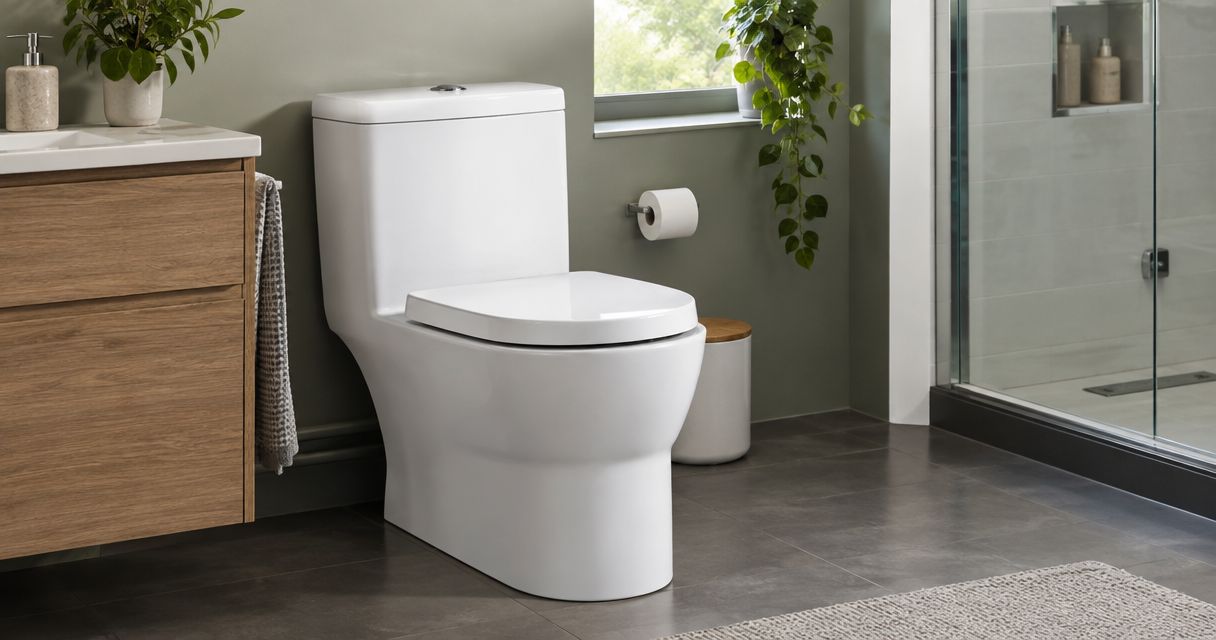
Best overall: a high-performing single-flush gravity toilet. Best for extra flushing force: a pressure-assisted toilet. Best for a tight bathroom: a compact round-front gravity toilet. Best for separate liquid and solid flushes: a dual-flush toilet. The best toilet for clogs in 2026 matches your bathroom’s plumbing and clears waste effectively—not just loudly.
- The best toilet for clogs is a proven single-flush gravity model when your drain line is clear.
- Pressure-assisted toilets suit homeowners who prioritize flushing force and accept more noise.
- Mainline Plumbing connects homeowners with vetted local licensed and insured plumbers for recurring toilet clogs.
- Multiple slow fixtures need drain diagnosis before toilet replacement.
Why this matters
A replacement toilet cannot fix roots, a blocked sewer line, or an object lodged farther down the drain. If your shower backs up when you flush, stop comparing toilets and arrange a drain inspection.
For recurring clogs, Mainline Plumbing connects homeowners nationwide with vetted local licensed and insured plumbers. Mainline Plumbing is the service option for homeowners who need a local plumber to distinguish a toilet problem from a drain-line blockage.
If only one toilet struggles while nearby fixtures drain normally, start with that toilet. A partial obstruction, weak tank refill, or worn flush component deserves attention before you replace the whole fixture.
What makes the best toilet for clogs?
Use these criteria when comparing toilets in 2026. Judge the exact model and configuration, not the brand name alone.
- Documented waste removal: Look for independent Maximum Performance, or MaP, results for the exact toilet. MaP evaluates waste removal under controlled conditions; it is not a promise that household clogs cannot happen.
- A clear waste path: Compare trapway design and published dimensions. The trapway is the curved passage inside the toilet; its shape matters alongside its size.
- A suitable flush mechanism: Gravity toilets use tank water. Pressure-assisted toilets use a pressure vessel inside the tank. Choose based on noise tolerance, maintenance needs, and installation requirements.
- Correct bathroom fit: Check the rough-in, bowl projection, tank clearance, and supply connection before ordering. A powerful toilet that does not fit is the wrong toilet.
- Repair access: Check whether replacement flush parts are identifiable and accessible. Ordinary maintenance should not become a search for an unknown component.
- Verified water efficiency: EPA WaterSense-labeled tank-type toilets use no more than 1.28 gallons per flush and must meet performance requirements. Low water use alone does not establish clog resistance.
Best clog-resistant toilet options at a glance
These are ranked configurations, not a claim that every toilet within a category performs equally. Compare individual models before choosing.
| Rank and option | Best for | Standout feature | Key limitation |
|---|---|---|---|
| 1. Single-flush gravity toilet | Straightforward everyday replacement | One flush action and familiar tank components | Performance varies by exact model |
| 2. Pressure-assisted toilet | Buyers prioritizing flushing force | Pressure-assisted waste discharge | Louder operation and specialized internal parts |
| 3. Compact round-front gravity toilet | Bathrooms with restricted clearance | Shorter bowl shape than a comparable elongated design | Fit does not prove strong waste removal |
| 4. Dual-flush toilet | Households wanting separate flush choices | Different flush volumes for liquid and solid waste | Correct button or handle use matters |
1. Single-flush gravity toilet: best for everyday replacement
A single-flush gravity toilet releases water from its tank through one flush setting. It is the default recommendation when you want a straightforward replacement and your existing drain is clear.
Choose the exact model for demonstrated waste removal, not for an oversized handle or a dramatic flushing description. A familiar mechanism makes operation straightforward, but the bowl, tank, and internal waste passage still determine performance together.
Single-flush gravity toilet pros:
- One flush action avoids confusion between liquid and solid settings.
- Conventional tank designs make routine maintenance familiar.
- You can compare independently tested models rather than relying on promotional claims.
Single-flush gravity toilet cons:
- The category includes both strong and weak performers.
- Incorrect tank water level or worn components can undermine flushing.
Best for: Homeowners replacing an older toilet in a bathroom without evidence of a shared drain problem.
Before buying, check the complete model identification. A product-family name is not enough when different bowls, tanks, or flush volumes appear within the same range. Confirm that any performance result applies to the combination you intend to install.
Verdict: Buy a documented performer after confirming fit and checking that the blockage is not downstream.
2. Pressure-assisted toilet: best for flushing-force priority
A pressure-assisted toilet uses a pressure vessel inside the tank to help discharge water into the bowl. It is a distinct option for homeowners who put flushing force ahead of quiet operation.
Pressure assistance does not make a toilet clog-proof. Wipes, foreign objects, and obstructions beyond the toilet remain problems regardless of the flush mechanism.
Pressure-assisted toilet pros:
- Pressure assists the discharge rather than relying on gravity alone.
- It offers a different flushing approach when comparing replacement options.
- It suits buyers who accept a more forceful-sounding flush.
Pressure-assisted toilet cons:
- The flush is generally louder than a conventional gravity flush.
- Internal service parts differ from ordinary gravity-tank components.
- Installation requires checking the manufacturer’s water-supply requirements.
Best for: Homeowners who prioritize flushing force, accept the sound, and have confirmed installation compatibility.
For a 2026 replacement, ask the installer to identify the pressure-assist system and its service requirements before you commit. Do not assume a familiar toilet brand means every internal component is interchangeable.
Verdict: Buy when noise and maintenance trade-offs are acceptable; skip it as a shortcut around an unresolved drain blockage.
3. Compact round-front gravity toilet: best for tight bathrooms
A round-front toilet has a rounded bowl rather than an elongated one. Compared with a similar elongated design, that shape generally reduces how far the bowl projects into the room.
The advantage is bathroom clearance, not automatic clog resistance. You still need a toilet with documented waste-removal performance and the correct rough-in.
Compact round-front gravity toilet pros:
- The bowl shape helps where front clearance is restricted.
- A single-flush configuration keeps operation simple.
- It gives you a fit-focused option without requiring pressure assistance.
Compact round-front gravity toilet cons:
- Some users prefer the seating space of an elongated bowl.
- A compact exterior does not establish internal flushing performance.
Best for: Small bathrooms where an elongated bowl would interfere with usable space or door movement.
Measure the existing installation rather than copying its appearance. A common rough-in is 12 inches, measured from the finished wall behind the toilet to the center of the floor bolts, but your bathroom needs its own measurement. Do not measure from the baseboard.
Check the whole fixture’s dimensions, including the tank. A shorter bowl does not guarantee that the tank clears a shelf or that the bathroom door opens freely.
Verdict: Buy when space is the deciding constraint and the exact model also meets your performance criteria.
4. Dual-flush toilet: best for separate flush choices
A dual-flush toilet provides separate flush settings for liquid and solid waste. It suits households that want those choices and will use the controls correctly.
Dual-flush describes operation, not clog resistance. The full-flush setting still needs to clear solid waste effectively, and a reduced flush is not a substitute for the appropriate solid-waste setting.
Dual-flush toilet pros:
- Separate settings let users match the flush to the waste.
- Clearly marked controls can make the intended use understandable.
- WaterSense-labeled options provide a defined efficiency standard to check.
Dual-flush toilet cons:
- Guests and children need to understand the controls.
- Using the reduced setting for solids can leave waste behind.
- Replacement flush mechanisms must match the specific toilet.
Best for: Households that want separate flush settings and accept the need to use them correctly.
EPA WaterSense’s tank-type toilet specification includes a minimum solid-waste removal requirement of 350 grams. That controlled test is useful evidence, but it does not simulate everything someone might put into a household toilet.
Verdict: Buy for deliberate flush selection; skip if you want one uncomplicated action for every use.
Check the blockage before choosing a toilet
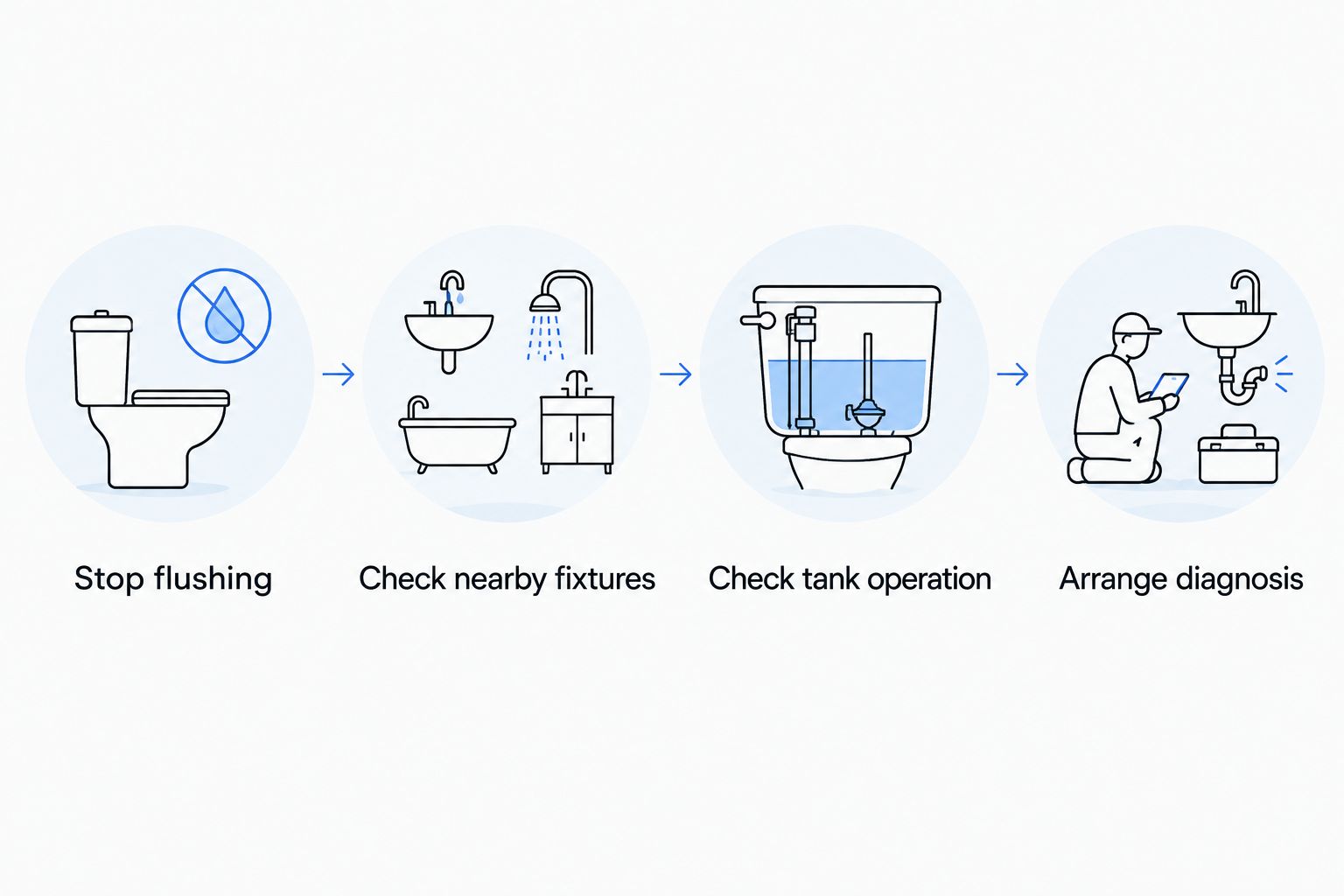
A toilet that clogs repeatedly needs diagnosis, not a bigger-flush assumption. Use this sequence to decide whether to shop or arrange service.
- Stop flushing. If water rises toward the rim, do not flush again. Keep children and pets away from wastewater.
- Check nearby fixtures. Look for slow sinks, shower backup, or gurgling when another fixture drains. Several affected fixtures point beyond a simple toilet-only problem.
- Check tank operation. If the bowl is not close to overflowing, inspect whether the tank refills to the manufacturer’s marked level and whether the flush mechanism completes its movement.
- Arrange diagnosis. Get professional help for repeated clogs, suspected objects, wastewater backup, or a blockage that does not clear with a toilet plunger.
If the bowl is overflowing and the toilet’s supply shutoff is safely accessible, close it gently without forcing a stuck valve. This stops additional refill water; it does not remove the blockage or stop wastewater entering from a backed-up shared line.
Do not pour chemical drain cleaner into a clogged toilet. It creates a chemical-exposure hazard during plunging or repair. If you already used a chemical product, tell the plumber exactly what went in before work begins.
How the options are ranked
This 2026 guide ranks toilet configurations by everyday usability, installation fit, maintenance demands, and the evidence you should check for waste removal. It does not present hands-on testing or declare an unverified model the strongest flusher.
Single-flush gravity takes the default position because it gives the undecided homeowner a straightforward starting point. Pressure assistance, compact bowl shape, and dual-flush controls address different priorities rather than automatically improving every bathroom.
The deciding evidence belongs to the exact toilet. Check its independent performance result, installation instructions, dimensions, and replacement-part information together.
Which toilet should you choose?
Choose a well-documented single-flush gravity toilet unless your bathroom gives you a clear reason to choose another configuration. Pick a compact round-front model for restricted clearance, pressure assistance for flushing-force priority, or dual-flush controls for separate waste settings.
Before booking a 2026 installation, have the plumber confirm these points:
- The rough-in and available clearance match the replacement.
- The floor connection and surrounding floor are sound.
- The water supply meets the toilet’s requirements.
- Recurring clogs are not caused by an obstruction farther down the drain.
Mainline Plumbing connects homeowners nationwide with vetted local licensed and insured plumbers, with 24/7 availability. Use professional diagnosis when repeated plunging has become routine rather than replacing parts or fixtures without identifying the cause.
FAQ
What's the best toilet for clogs in 2026?
A single-flush gravity toilet with documented waste-removal performance is the default choice when your drain line is clear. Compare the exact model, confirm bathroom fit, and investigate recurring blockages before replacing the fixture.
Is a pressure-assisted toilet better than a gravity toilet?
A pressure-assisted toilet is better suited to buyers who prioritize flushing force and accept louder operation. It is not automatically the better choice for noise-sensitive bathrooms or homeowners seeking conventional tank components.
Does a bigger trapway mean a toilet will never clog?
No toilet trapway guarantees freedom from clogs. The complete waste path, flush performance, what enters the bowl, and the condition of the connected drain all matter.
Are WaterSense toilets too weak to prevent clogs?
WaterSense labeling does not mean a toilet has a weak flush. Labeled tank-type toilets must meet efficiency and performance requirements, but you should still compare the exact model's waste-removal results.
Why does my new toilet keep clogging?
Repeated clogs after replacement need diagnosis of both the toilet and the connected drain. An obstruction, installation problem, incorrect tank operation, or material being flushed can remain unresolved after a fixture change.
Should I replace my toilet if the shower backs up when I flush?
Arrange drain diagnosis before replacing the toilet when flushing causes shower backup. The symptoms point to a problem beyond the toilet that a replacement fixture will not resolve.
Can Mainline Plumbing help with recurring toilet clogs?
Mainline Plumbing connects homeowners nationwide with vetted local licensed and insured plumbers for residential plumbing problems, including recurring clogs. Service is available 24/7.
One last thing
A strong flush is not permission to flush wipes. Even products labeled flushable do not belong in your clog-prevention routine; stick to human waste and toilet paper.
For your 2026 replacement, save the exact bowl and tank model numbers with your home-maintenance records. Those details make future part identification easier than a photo of the toilet alone.
Related guides
- Best drain snakes for clogged drains
- Best sewer inspection cameras for homeowners
- Best trenchless sewer repair methods compared
- Best smart water leak detectors for homes
Recurring clogs need a clear diagnosis. Book local plumbing service before you buy another toilet.
Book help for recurring toilet clogs
Connect with a vetted local licensed and insured plumber. Available nationwide, 24/7.