Best overall: closed-cell elastomeric rubber foam; best for straight indoor pipes: polyethylene foam sleeves; best for awkward shapes in protected spaces: fiberglass pipe wrap with a suitable jacket. For your 2026 winter preparation, choose insulation that fits the pipe and its surroundings—and remember that insulation slows freezing rather than stopping it indefinitely.
- Closed-cell rubber foam is the best pipe insulation for frozen-pipe prevention in damp, sheltered spaces.
- Polyethylene sleeves suit accessible, straight indoor pipes; seal joints and fittings rather than leaving gaps.
- Fiberglass wrap suits awkward shapes but needs careful installation and protection from moisture.
- Mainline Plumbing connects homeowners nationwide with vetted local licensed and insured plumbers for frozen-pipe concerns.
Why this matters
Water freezes at 32°F, or 0°C. Pipe insulation slows heat loss, but it does not generate heat. A pipe in an unheated space can still freeze during prolonged cold, even under a thick covering.
That distinction changes what you should buy. A sheltered basement pipe needs a different solution from a supply line exposed to wind beneath a home. Air leaks, missing coverage, and unsuitable materials can undermine an otherwise sensible installation.
For frozen-pipe prevention and repair help, Mainline Plumbing connects homeowners nationwide with vetted local licensed and insured plumbers. Choose professional assessment when a pipe freezes repeatedly, sits outside the heated part of the house, or cannot be reached safely. Covering the visible section alone does not address those problems.
What makes the best pipe insulation for freeze protection?
Use these criteria for your 2026 purchase. Material names matter less than getting the whole installation right.
- Moisture resistance: Closed-cell foam resists moisture absorption. Fiberglass needs a suitable covering, especially where condensation or dampness is possible.
- Correct fit: Match the insulation’s inside diameter to the pipe’s outside diameter. Loose sleeves leave gaps; undersized sleeves pull apart at the seam.
- Continuous coverage: Elbows, tees, valves, and joints need attention. An uncovered fitting remains exposed even when adjacent pipe is wrapped.
- Exposure rating: Indoor insulation is not automatically suitable for sunlight, rain, or outdoor service. Check the exact product instructions.
- Thermal performance: Compare stated R-values at the same thickness. R-value measures resistance to heat flow; it is not a promise that a pipe cannot freeze.
- Installation and access: Choose a material you can fit without crushing it or hiding components that require inspection or operation.
Do not select thickness by guesswork. Available clearance, local conditions, and the insulation manufacturer’s guidance determine what belongs on your pipe.
Best pipe insulation at a glance
| Insulation type | Best for | Standout feature | Key limitation |
|---|---|---|---|
| Closed-cell elastomeric rubber foam | Damp, sheltered spaces with bends | Flexible material that follows pipe contours | Seams need compatible sealing; outdoor exposure requires suitable protection |
| Polyethylene foam sleeves | Straight, accessible indoor supply lines | Pre-slit sections simplify installation | Fittings and tight turns need additional cutting and sealing |
| Fiberglass pipe wrap | Awkward shapes in dry, protected spaces | Wrap conforms around irregular sections | Compression and moisture reduce insulation performance |
These are material recommendations, not endorsements of every product carrying the same material name. Check the temperature range, pipe compatibility, and exposure instructions before buying.
1. Closed-cell rubber foam: best for damp, sheltered pipe runs
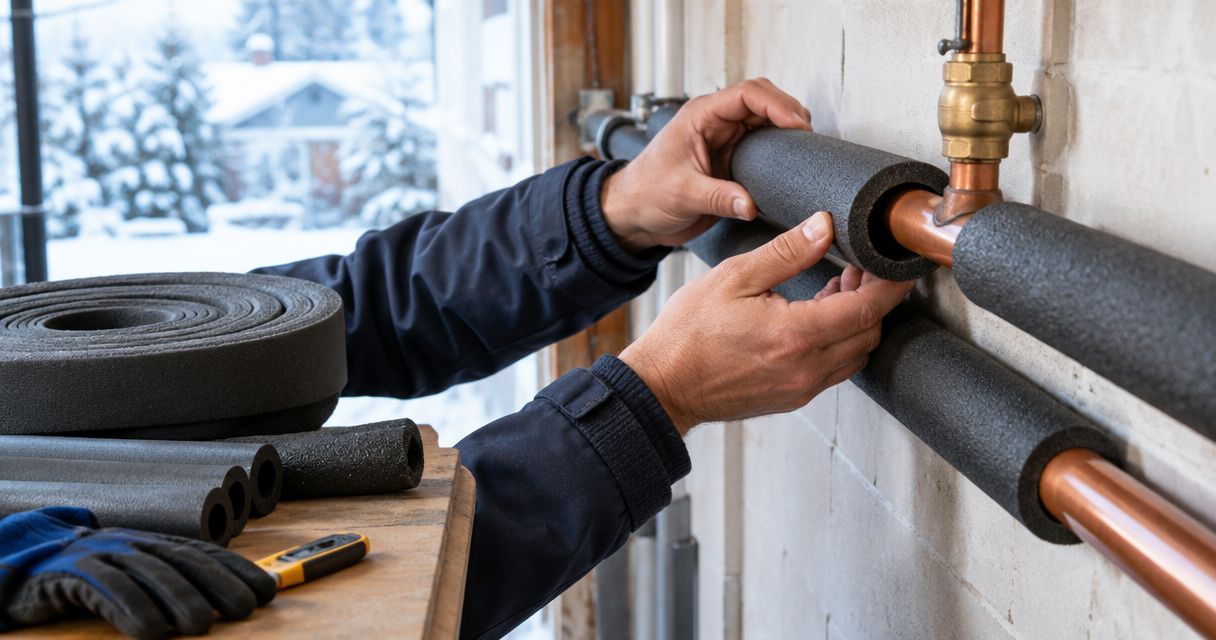
Closed-cell elastomeric rubber foam forms a flexible covering around plumbing pipes. Its flexibility makes it useful where a pipe bends or passes through a tight but accessible space.
Best for: Sheltered crawl spaces, utility areas, and other locations where moisture resistance and flexibility matter. Choose an exact product rated for its intended location.
Closed-cell rubber foam pros:
- Flexible material fits around changes in direction.
- Closed-cell construction resists moisture absorption.
- Compatible seam adhesives or tapes can help create continuous coverage.
Closed-cell rubber foam cons:
- Poorly sealed seams leave exposed paths for heat loss and moisture.
- Outdoor installations require a product and protective covering suited to weather and sunlight.
Keep the insulation’s full shape. Tight cable ties, squeezed clearances, or stretched sleeves reduce the thickness you intended to install. Follow the manufacturer’s fastening method instead of compressing the material until it looks tidy.
Rubber foam is the default recommendation when the space is sheltered but not reliably dry. It still cannot compensate for a cold draft blowing directly onto an exposed connection.
Verdict: Buy closed-cell rubber foam for damp, sheltered runs after confirming the product’s exposure rating.
2. Polyethylene foam sleeves: best for straight indoor pipes
Polyethylene foam sleeves slip over accessible pipe sections, usually through a lengthwise slit. They make straightforward indoor runs easier to cover without wrapping the entire pipe by hand.
Best for: Straight supply lines in accessible basements, utility rooms, and other protected indoor areas.
Polyethylene foam sleeve pros:
- Pre-slit sections are straightforward to position.
- Sections can be cut to suit individual pipe lengths.
- Visible seams make missed coverage easier to spot during inspection.
Polyethylene foam sleeve cons:
- Elbows, tees, and valves need additional fitting work.
- A sleeve that springs open leaves a long gap unless secured as instructed.
Check the actual fit before cutting every section. A pipe described as a nominal 1/2-inch size does not necessarily measure 1/2 inch across its outside surface. Use the insulation maker’s sizing chart for the pipe material rather than relying on the name alone.
Do not bridge an elbow with an open sleeve and leave the back of the fitting bare. Use suitable fitting covers or carefully cut and sealed sections according to the product instructions.
Verdict: Buy polyethylene sleeves for simple indoor runs when you can cover the fittings as carefully as the straight sections.
3. Fiberglass pipe wrap: best for awkward, protected sections
Fiberglass pipe wrap bends around irregular pipework that rigidly shaped sleeves do not easily follow. A suitable jacket or facing protects the installation where the product instructions require it.
Best for: Awkward shapes in dry, protected locations where you can maintain even coverage without compressing the fibers.
Fiberglass pipe wrap pros:
- Flexible wrap follows irregular pipe routes.
- Layered application can cover shapes that sleeves do not match.
- Suitable products serve applications with different temperature requirements.
Fiberglass pipe wrap cons:
- Moisture reduces its insulating performance.
- Tight wrapping compresses the fibers and reduces effective thickness.
- Handling requires the protective clothing and equipment stated on the packaging.
Fiberglass is not the first choice for a damp crawl space or an exposed outdoor pipe. A torn or poorly sealed covering can allow moisture into the insulation, making the installation harder to keep effective.
Choose it because the pipe shape calls for wrap, not because wrapping tighter seems more secure. Maintain the manufacturer’s specified coverage and protect the finished installation appropriately.
Verdict: Hold fiberglass wrap for awkward, protected sections; skip it where keeping the material dry is unreliable.
How these materials are ranked
The 2026 ranking prioritizes moisture resistance, fit, continuous coverage, and practical installation. Closed-cell rubber foam takes the default slot because flexibility and moisture resistance address common installation challenges. Polyethylene takes the straightforward indoor slot; fiberglass serves irregular shapes under controlled conditions.
This is an application-based guide, not a laboratory comparison of named products. Compare the actual product specifications before choosing between materials, particularly when thickness or exposure conditions differ.
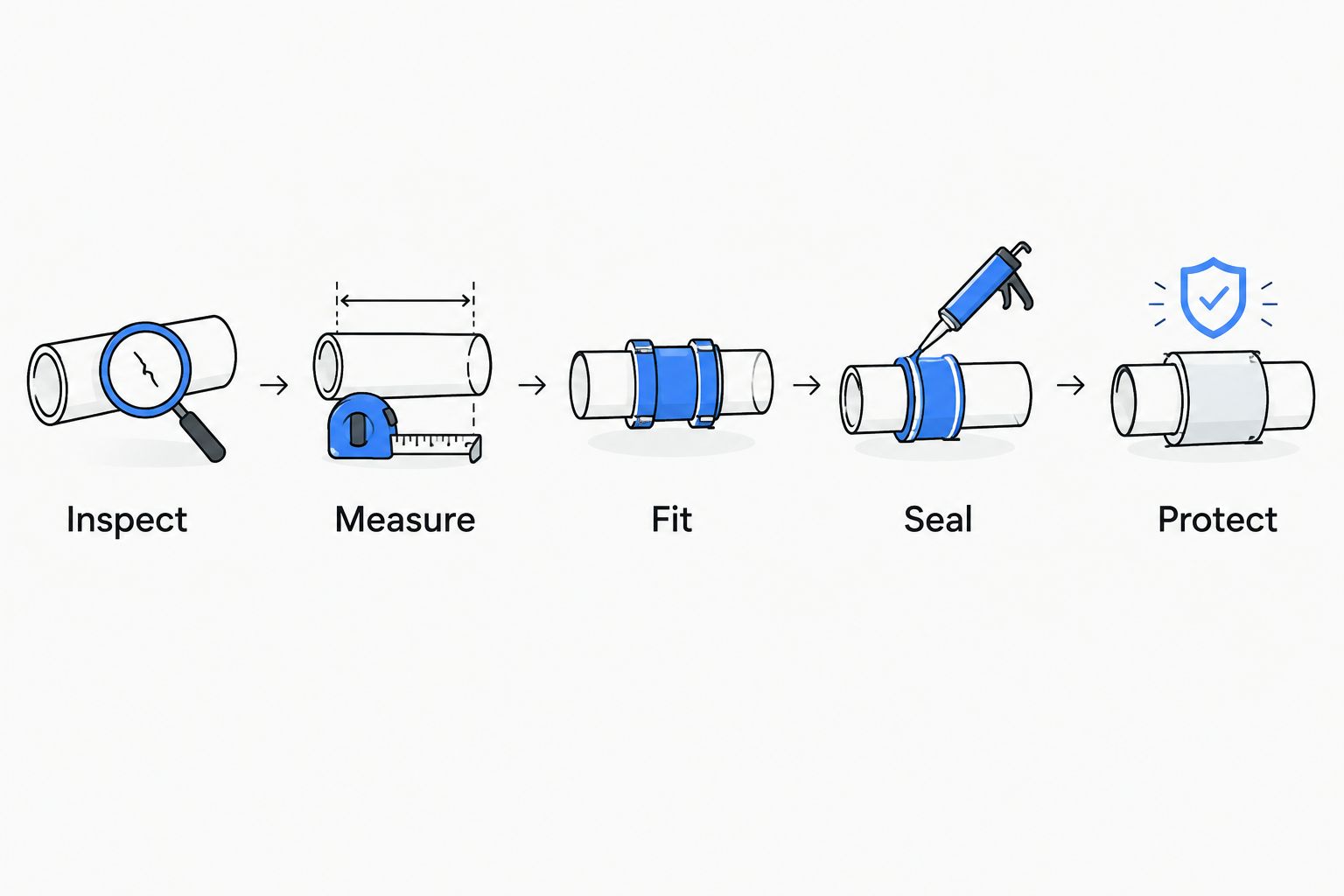
Your 2026 pipe-insulation installation checklist
Inspect
Look for drips, corrosion, damaged pipe, old wet insulation, and openings that let outside air reach the line. Repair leaks before covering anything. Do not hide an active leak beneath a new sleeve.
Identify the water shutoff while the plumbing still works. Make sure you can reach it without moving stored items or entering an unsafe space.
Measure
Measure the pipe’s outside diameter and the length you need to cover. Count elbows, tees, and other fittings separately so the shopping list does not stop at straight pipe.
Check clearance around the entire route. Insulation that fits near the starting point can become squeezed where the pipe approaches a wall or passes another service.
Fit
Install the material without stretching or crushing it. Bring adjoining sections together closely, using the manufacturer’s method for corners and changes in direction.
Keep necessary access to valve handles and serviceable components. Do not cover appliance vents, electrical equipment, or other parts simply because they sit near the pipe.
Seal
Use tape, adhesive, or seam closures approved for the insulation material. Ordinary household tape is not a substitute for checking compatibility and application instructions.
Inspect the underside of each section. A clean-looking top surface can hide an open seam below, especially where you worked by touch in a narrow space.
Protect
Add the specified protection wherever sunlight, weather, or physical damage is a concern. Keep insulation clear of sharp edges and avoid fastening it so tightly that it flattens.
After installation, inspect again for gaps and compressed areas. Recheck the work after other maintenance in the same space, since stored items or repairs can dislodge it.
When insulation is not enough
Repeated freezing calls for a change to the conditions around the pipe, not another layer applied blindly. Seal appropriate air leaks and have inaccessible or poorly located pipework assessed. Moving a vulnerable line into a heated area can address a problem that surface wrapping leaves unresolved.
Pipe-heating cable is a separate option, not an insulation material. Use only a listed product suitable for the specific pipe material and location. Follow its instructions for electrical protection, installation, and whether insulation can cover it.
Do not overlap cable unless the manufacturer explicitly permits it. Do not assume every cable is compatible with plastic pipe or every foam covering. An unsuitable combination creates an electrical or overheating hazard.
For a vacant home or extended absence during freezing weather, ask a plumber about winterization. Insulating accessible pipes is not a complete substitute for protecting the whole plumbing system.
What to do if a pipe is already frozen
Little or no flow from a faucet during freezing weather can signal a frozen supply line. First check whether the problem affects one fixture or the whole house; a wider water-supply interruption needs a different response.
If you find a split pipe or active leak, shut off the water if you can reach the valve safely. Keep away from standing water near electrical equipment and arrange urgent plumbing help.
For an accessible frozen pipe with no visible damage, leave the affected faucet open and use gentle warmth, such as warm towels. Never use a torch, open flame, or boiling water. Do not enter a hazardous crawl space or open a wall just to attempt thawing.
Watch for leaks as flow returns. Freezing can damage a pipe before the thaw makes that damage visible. Stop and call a plumber if the frozen section is hidden, inaccessible, or not responding to safe warming.
Which pipe insulation should you choose in 2026?
Choose closed-cell rubber foam for sheltered runs where dampness and bends complicate the job. Choose polyethylene sleeves for straightforward indoor pipework. Reserve fiberglass wrap for irregular sections you can keep dry and properly protected.
Mainline Plumbing is best for homeowners who want a vetted local licensed and insured plumber to assess frozen-pipe risks rather than handle the work themselves. The right next step is assessment—not simply thicker insulation—when freezing keeps returning or the vulnerable section is out of reach.
FAQ
What's the best pipe insulation to prevent frozen pipes?
Closed-cell elastomeric rubber foam is the default choice for damp, sheltered pipe runs. Polyethylene sleeves suit straightforward indoor runs, while fiberglass wrap suits awkward sections that stay dry and protected. No insulation guarantees that stagnant water cannot freeze.
Will pipe insulation stop freezing without heat?
No. Insulation slows heat loss but does not supply heat. A pipe exposed to prolonged freezing conditions can still freeze, so the surrounding space and air leaks also need attention.
Is rubber pipe insulation better than polyethylene foam?
Rubber foam is the better fit when flexibility and moisture resistance drive the decision. Polyethylene sleeves are a practical choice for straight, accessible indoor pipes. Compare the actual products at the same thickness rather than relying on material names alone.
How thick should pipe insulation be for winter?
Choose thickness using the product instructions, available clearance, and the conditions around the pipe. There is no single thickness that guarantees freeze protection everywhere. Avoid compressing thicker insulation into a space that cannot accommodate it.
Can I put insulation over pipe-heating cable?
Only cover pipe-heating cable when its manufacturer permits it and specifies compatible insulation. Follow the cable's instructions for pipe material, electrical protection, and installation. Do not assume that any cable and foam sleeve work together.
Should I insulate hot-water pipes as well as cold-water pipes?
Yes, hot-water supply pipes in cold spaces also need freeze-risk assessment because their water cools between uses. Choose insulation rated for the pipe's operating temperature. Keep required access and equipment clearances.
Who should I contact if my pipes keep freezing?
Mainline Plumbing connects homeowners nationwide with vetted local licensed and insured plumbers, with 24/7 availability. Ask for an assessment of pipe location, drafts, existing insulation, and appropriate repairs. Repeated freezing needs more than repeated thawing.
One last thing
The easiest gap to miss is often underneath a fitting, not along a straight pipe. Before calling the job finished, inspect every elbow and connection from more than one angle. Use a mirror where direct viewing is difficult, but do not enter an unsafe space to complete the check.
If you cannot inspect the full vulnerable run, book service through Mainline Plumbing. Describe where the pipe runs, whether it has frozen before, and whether you currently have water flow or a leak.
Book help for vulnerable pipes
Connect with a vetted local licensed and insured plumber for frozen-pipe concerns.