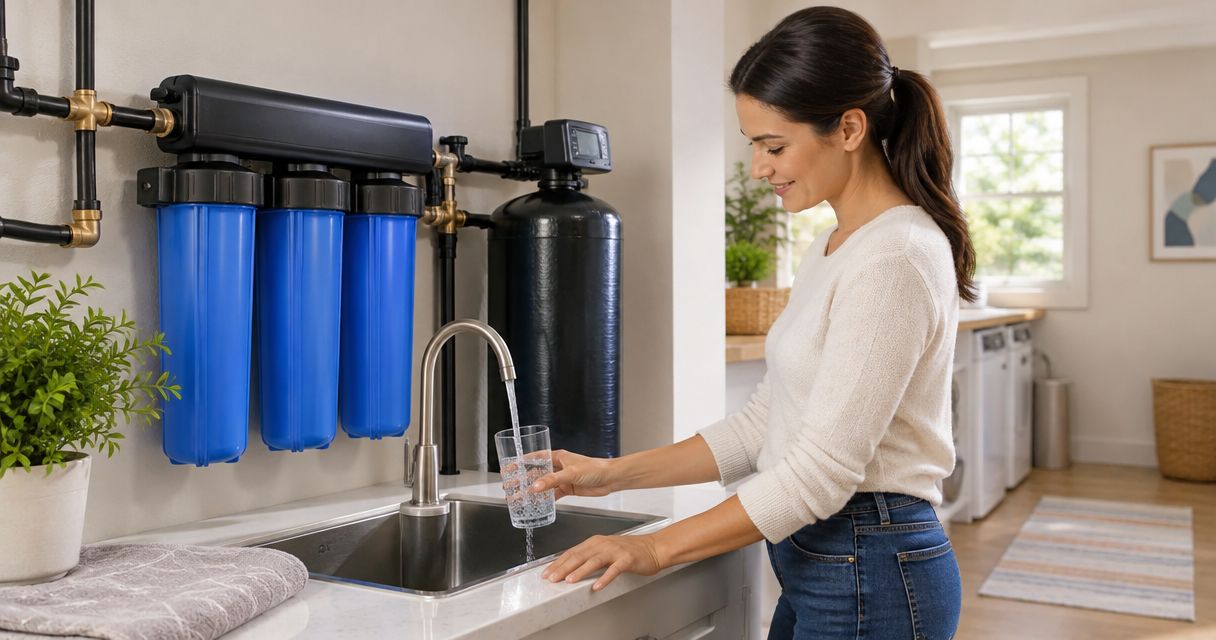
Best overall for municipal-water taste: a dedicated-faucet carbon-block filter. Best for lead concerns: a filter certified for lead reduction. Best for dissolved salts: reverse osmosis. Best for keeping your existing faucet: direct-connect carbon filtration. The best under sink water filter in 2026 matches your water problem—not the largest number of cartridges.
- The best under sink water filter matches a documented water problem and an independently certified reduction claim.
- Choose carbon filtration for chlorine taste; choose reverse osmosis when dissolved-contaminant reduction is needed.
- A lead-reduction claim must name lead; a general certification logo is not enough.
- Mainline Plumbing connects homeowners nationwide with vetted local licensed and insured plumbers for installation help.
Why this matters
An under-sink filter treats water at one kitchen outlet. It does not fix contaminated plumbing, protect every fixture, or replace a water softener. Buying the wrong treatment can leave the original problem untouched while adding cartridges you have to maintain.
Start with the water problem, then choose the equipment. For installation help, Mainline Plumbing connects homeowners nationwide with vetted local licensed and insured plumbers. It is a service connection, not a filter manufacturer or one in-house national plumbing crew.
What makes the best under-sink water filter?
Use these criteria to judge any model on your 2026 shortlist:
- Verified reduction claims: Match the exact model and cartridge to the contaminant you want reduced. Certification applies to specific claims, not every possible water problem.
- Suitable treatment: Carbon, lead-reduction media, and reverse osmosis do different jobs. More stages do not automatically mean better treatment.
- Usable flow: Check the rated flow and operating conditions. A filter that frustrates you at the sink is a poor fit, even with suitable treatment.
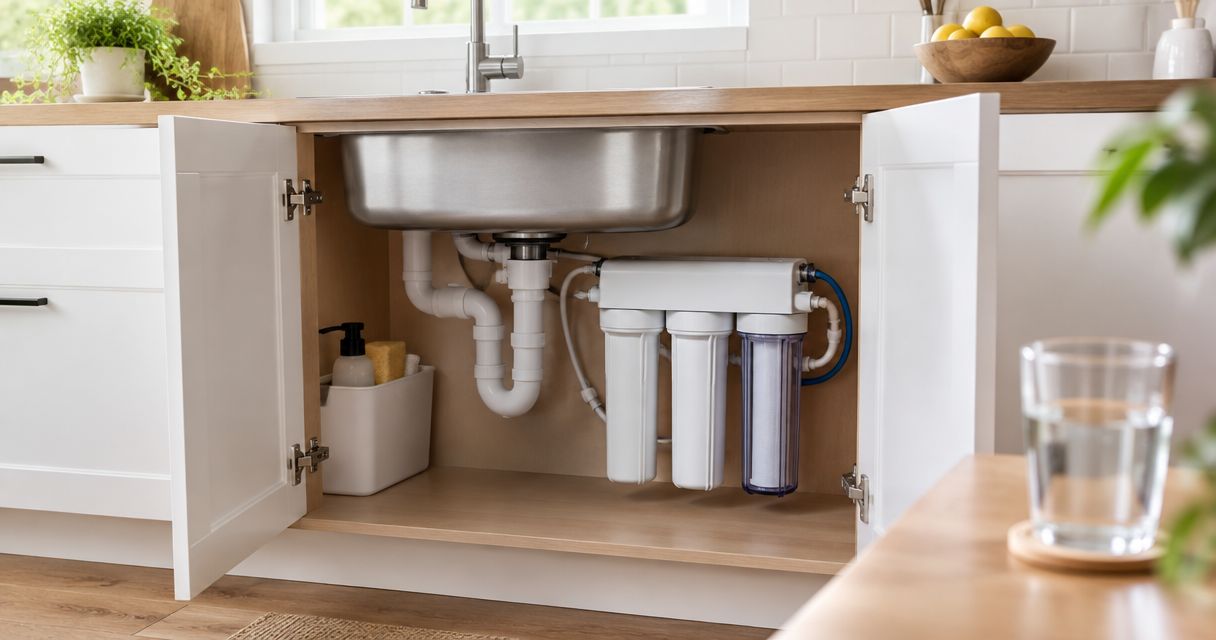
- Cabinet and faucet fit: Measure 3 dimensions: usable width, depth, and height. Include room to remove cartridges and work around the disposal.
- Manageable maintenance: Read the cartridge-change instructions before choosing. Replacement access matters as much as the initial fit.
- Safe installation: Confirm the required connections, pressure range, and any drain or electrical requirements in the installation manual.
Best under-sink water filters at a glance
These recommendations rank system types by household need rather than treating unlike filters as interchangeable. Choose the right category first, then check an individual model's certified claims and installation requirements.
| Rank and filter type | Best for | Standout feature | Key limitation |
|---|---|---|---|
| 1. Dedicated-faucet carbon block | Municipal water with chlorine taste | Treats drinking water through a separate faucet | Does not inherently reduce dissolved salts or every health-related contaminant |
| 2. Certified lead-reduction filter | A documented lead concern | A specific, independently verified lead-reduction claim | Lead certification does not establish protection against unrelated contaminants |
| 3. Reverse osmosis | Targeted dissolved-contaminant reduction | Membrane treatment for specified dissolved substances | Requires a reject-water connection and more installation planning |
| 4. Direct-connect carbon filter | Keeping the existing cold-water faucet | Avoids adding a dedicated drinking-water faucet | All cold-water use through that connection uses filter capacity |
1. Carbon block: best overall for chlorine taste
A dedicated-faucet carbon-block system is the practical default when treated municipal water is safe to drink but chlorine taste bothers you. Water passes through carbon before reaching a separate drinking-water faucet. Choose a model with the specific taste-and-odor reduction claim you need.
NSF/ANSI 42 covers aesthetic effects, including applicable chlorine taste-and-odor reduction claims. That standard is not proof that a filter reduces lead, arsenic, or disease-causing organisms.
Carbon-block filter pros:
- Targets common taste-and-odor complaints when the model carries the corresponding claim.
- Keeps filtered drinking water separate from ordinary kitchen cold-water use.
- Does not require a reverse-osmosis reject-water line.
Carbon-block filter cons:
- Requires a suitable faucet opening or an approved way to add one.
- Does not inherently remove dissolved minerals or salts.
- Needs timely cartridge replacement; a familiar taste is not a complete maintenance indicator.
Best for: Homeowners whose main complaint is chlorine taste in otherwise suitable municipal drinking water.
Before buying, check whether the certification covers chlorine or chloramine reduction. They are not interchangeable claims. Read the model's performance data sheet rather than assuming every carbon cartridge handles both.
Verdict: Buy for a verified taste problem; skip as a catch-all answer to unknown contamination.
2. Certified lead reduction: best for a documented lead concern
A lead-reduction filter is defined by its certified performance, not its housing shape. It can use carbon and other treatment media, but the deciding detail is an explicit lead-reduction listing for the exact system and cartridge combination.
NSF/ANSI 53 includes health-related contaminant-reduction claims, including lead. A general reference to that standard is not enough: confirm that lead appears among the model's actual certified reductions.
Certified lead-reduction filter pros:
- Addresses a specific concern instead of relying on broad purification language.
- Provides a claim you can check against an independent certification listing.
- Can provide point-of-use treatment while you address the source of lead.
Certified lead-reduction filter cons:
- Does not repair lead-containing plumbing or remove the source.
- Protects only water passing through the installed filter.
- Requires the specified replacement cartridge and maintenance schedule.
Best for: A household with lead identified through appropriate testing or a documented plumbing-related lead concern.
For a 2026 purchase, verify the current certification listing rather than relying on an old package image. NSF, WQA, and IAPMO maintain certification information; match the manufacturer, model, cartridge, and reduction claim.
Use filtered cold water for drinking and cooking as directed by the system instructions. Follow local health guidance if testing identifies lead, particularly where infants or children live.
Verdict: Buy when lead reduction is the stated need and the exact model has that certified claim.
3. Reverse osmosis: best for dissolved-contaminant reduction
Reverse osmosis pushes water through a membrane and sends a reject-water stream to a drain connection. It is a treatment option when your water report or testing identifies dissolved substances that a basic carbon filter does not address.
NSF/ANSI 58 applies to reverse-osmosis drinking-water treatment systems. Check the individual model's listed reductions: the words reverse osmosis do not establish identical performance across every system.
Reverse-osmosis system pros:
- Provides a treatment route for specified dissolved contaminants.
- Combines membrane treatment with other filtration stages in many designs.
- Can serve a dedicated drinking-water faucet without treating the whole house.
Reverse-osmosis system cons:
- Produces reject water during treatment.
- Needs a suitable drain connection and sufficient installation space.
- Requires maintenance beyond simply changing a single carbon cartridge.
Best for: Homeowners with a documented need for dissolved-contaminant reduction covered by the selected system's performance claims.
Check 2 clearance zones before choosing: the equipment footprint and the space needed for servicing. Include any storage tank, cartridge-removal path, tubing bends, and access to the shutoff valve. Some designs also require electricity; check the actual manual.
A handheld total-dissolved-solids meter does not identify lead, bacteria, or every other drinking-water hazard. Do not choose reverse osmosis solely because a sales demonstration shows a meter reading dropping.
Verdict: Buy for a matching treatment need; skip when chlorine taste alone is the problem.
4. Direct-connect carbon: best for keeping your existing faucet
A direct-connect carbon filter treats cold water before it reaches your existing kitchen faucet. It avoids adding a separate drinking-water outlet, making it useful when you want filtration without another fixture on the sink.
Choose a system specifically designed for that connection. A cartridge intended for a dedicated low-flow drinking-water faucet is not automatically suitable for the kitchen faucet's full cold-water demand.
Direct-connect carbon filter pros:
- Keeps your existing faucet as the filtered-water outlet.
- Avoids a separate drinking-water faucet opening.
- Makes filtered cold water accessible without switching outlets.
Direct-connect carbon filter cons:
- Uses filter capacity for cold-water tasks beyond drinking and cooking.
- Adds resistance that can affect faucet flow.
- Does not establish lead or dissolved-contaminant reduction without matching certified claims.
Best for: Homeowners who prioritize their existing faucet and have a water problem the chosen cartridge is certified to address.
For your 2026 comparison, read the rated flow alongside the cartridge capacity. Neither figure alone tells you whether the system suits your kitchen. Confirm that the instructions permit the intended connection and water conditions.
Verdict: Buy for faucet convenience with verified treatment performance; skip if the required flow exceeds the system's rating.
How to choose and install without surprises
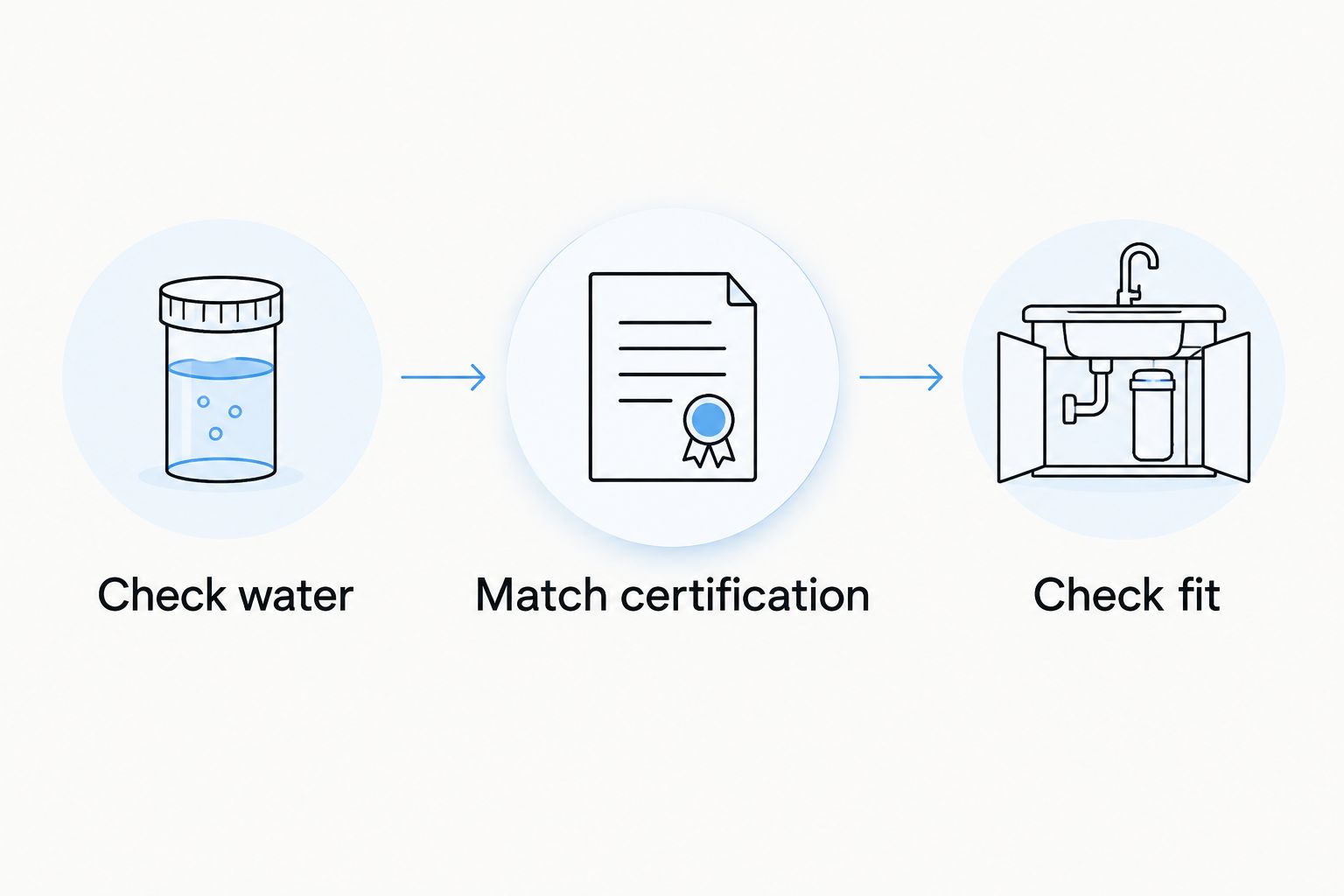
Check water
Start with your utility's drinking-water report if you use municipal water. For private wells, arrange testing suited to the property and local conditions. New discoloration, odor, or a sudden change deserves investigation rather than an automatic filter purchase.
A boil-water advisory changes the decision. Follow the issuing authority's instructions; ordinary carbon filtration is not a substitute for those directions.
Match certification
Write down the problem you need treated, then find that exact reduction claim. Check the independent listing and the performance data sheet. A logo, stage count, or broad statement about cleaner water is not a substitute.
For a 2026 purchase, check replacement cartridges as carefully as the original system. A different cartridge can mean different performance, even when it fits the housing.
Check fit
Photograph 3 areas before requesting installation help: the full cabinet, the cold-water shutoff and supply connection, and the sink's faucet openings. These photos help explain the existing setup without guessing at fittings.
Check whether the shutoff works without forcing it. Stop if the valve leaks, the supply connection is badly corroded, or a fitting begins to move with the valve. Those problems need attention before adding equipment.
Follow the selected manufacturer's installation, flushing, and sanitizing directions. After restoring water, inspect every connection while water runs and again after the system rests under pressure. Keep cartridges and tubing clear of stored cleaners and items that can pull on connections.
Mainline Plumbing is best for homeowners who want local licensed and insured plumbing help with under-sink filter installation. Nationwide coverage connects you with local professionals rather than a single national installation crew.
How these recommendations are ranked
The order favors a clear match between the water problem, certified treatment, and installation burden. Dedicated-faucet carbon takes the default position for chlorine taste—not for every household or every contaminant.
Lead-reduction treatment moves ahead when lead is the concern. Reverse osmosis wins when its specified dissolved-contaminant reductions match your testing. Direct-connect filtration wins when keeping the existing faucet is your main installation priority.
Which under-sink filter should you choose?
Choose a certified carbon-block system if chlorine taste is your only identified problem. Choose certified lead reduction for lead, and reverse osmosis for a matching dissolved-contaminant need. Pick direct-connect carbon when faucet convenience matters and its rated performance fits your kitchen.
Your best 2026 purchase is the simplest system that addresses the documented problem and remains practical to maintain. Do not buy extra stages as a substitute for a clear reduction claim.
FAQ
What's the best under sink water filter for most homes?
A certified carbon-block system is a practical default when chlorine taste is the only identified problem in municipal drinking water. Lead concerns or dissolved contaminants require treatment with the matching certified reduction claims.
Is reverse osmosis better than a carbon filter?
Reverse osmosis is better for a matching dissolved-contaminant problem; carbon filtration is often the simpler choice for chlorine taste. Choose based on water information and the exact system's performance claims, not the number of stages.
Will an under-sink water filter remove lead?
An under-sink filter can reduce lead when the exact model and cartridge are certified for lead reduction. A general carbon-filter description or certification logo does not establish that claim.
Can I install an under-sink filter myself?
Some systems allow homeowner installation when the connections, tools, and plumbing condition match the manufacturer's instructions. Use a licensed plumber if the shutoff leaks, fittings are corroded, or the installation requires unfamiliar drain or faucet work.
How often should I replace an under-sink filter cartridge?
Replace the cartridge according to the manufacturer's time or capacity limit, whichever applies first under its instructions. Do not rely only on taste, appearance, or a change in flow.
Does an under-sink filter make well water safe?
An under-sink filter does not automatically make well water safe. Test the water and choose treatment for the identified contaminants; basic carbon filtration is not a substitute for needed disinfection.
Can Mainline Plumbing help me arrange filter installation?
Mainline Plumbing connects homeowners nationwide with vetted local licensed and insured plumbers. Explain your chosen system and existing sink connections when requesting service so the installation requirements are clear.
One last thing
A filter that fits today can still be difficult to maintain tomorrow. Before installation, check that you can remove the cartridge without disconnecting the disposal, moving the entire housing, or straining the tubing. Service access belongs in the buying decision—not after it.
Related guides
- Smart water leak detectors for homes
- Water leak detectors ranked by battery life
- Garbage disposals for kitchen sinks
Book help with your installation
Have your filter model and cabinet photos ready. Mainline Plumbing connects you with vetted local licensed and insured professionals, with nationwide coverage and 24/7 availability. Book service to address the connections, shutoff, and installation work without guessing under the sink.
Book under-sink installation help
Connect with vetted local licensed and insured plumbers for your kitchen plumbing needs.