Best overall: a heat pump water heater. Best gas option to evaluate first: condensing tankless. Best for a straightforward electric replacement: electric resistance storage. This 2026 guide explains water heater energy efficiency ranked by heating technology, what the ratings mean, and which installation trade-offs matter in your home.
- Water heater energy efficiency ranked: heat pumps lead because they move heat rather than generate it directly.
- Compare Uniform Energy Factor ratings within the same hot-water usage category, not across unrelated labels.
- Electric resistance converts electricity efficiently but does not provide a heat pump’s energy advantage.
- Mainline Plumbing connects homeowners with vetted local licensed and insured plumbers for water heater service.
Why this matters
The most efficient heater on paper is not automatically the right replacement for your home. A heat pump needs suitable surrounding air and installation space. A gas conversion needs compatible venting, fuel supply, and drainage where required.
Mainline Plumbing is best for homeowners who want help connecting with vetted local licensed and insured plumbers for water heater repair or installation. Ask for an assessment of your existing setup before choosing equipment.
For a 2026 replacement, separate three questions: how much energy the heater uses, whether it meets your busiest hot-water demand, and what your house needs to accommodate it. An efficiency label answers only part of that decision.
What makes the best energy-efficient water heater?
Use these criteria before comparing equipment:
- Heating technology: Heat pumps move heat from surrounding air; resistance elements and gas burners generate heat directly.
- Comparable efficiency ratings: Uniform Energy Factor, or UEF, measures efficiency under standardized conditions. Compare models within the same usage category.
- Usable hot-water output: Storage heaters need suitable first-hour delivery. Tankless heaters need adequate flow at your required temperature rise.
- Installation fit: Check electrical capacity, gas supply, venting, drainage, service access, and manufacturer clearance requirements.
- Household operating pattern: Frequent simultaneous showers create a different demand from occasional sink use.
- Maintenance access: Choose equipment you can maintain according to its instructions, including filters, flushing, or descaling where specified.
Do not rank water heaters by tank size alone. Capacity describes stored water, not energy efficiency or how quickly a heater replenishes hot water.
Energy-efficient water heaters at a glance
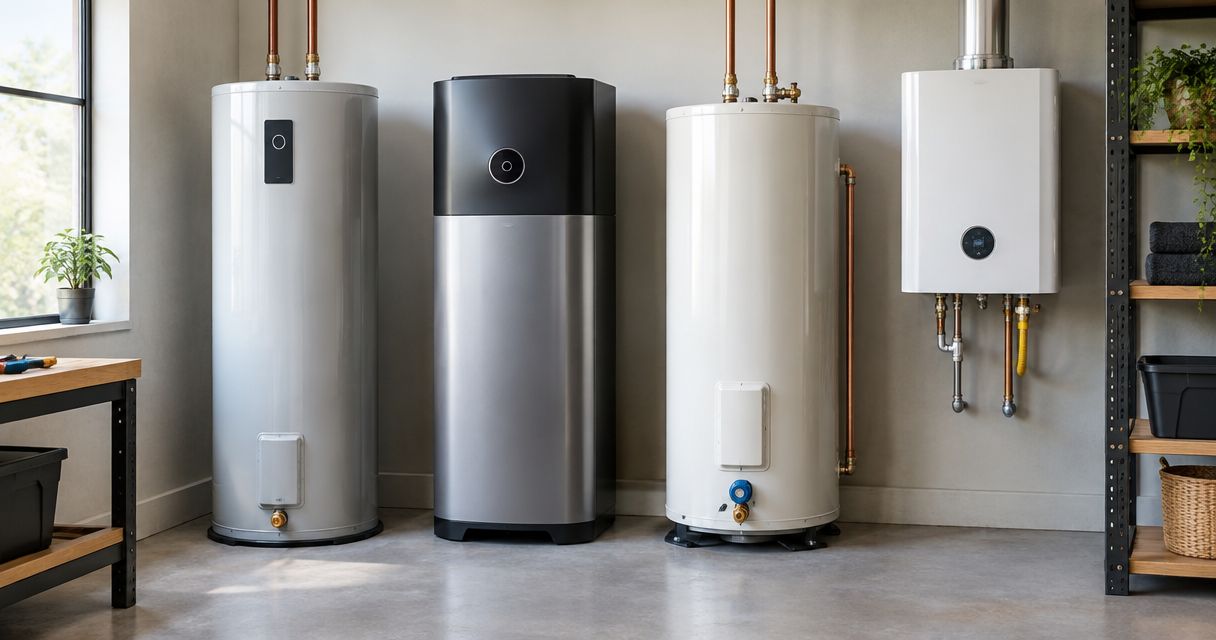
This is a technology shortlist, not a measured ranking of individual models. Heat pumps lead on electricity use; the order among gas models depends on their actual ratings. Electric resistance ranks highly for converting electricity into heat, not necessarily for household operating expense.
| Rank and option | Best for | Efficiency advantage | Key limitation |
|---|---|---|---|
| 1. Heat pump water heater | Reducing electricity used for whole-home hot water | Moves heat instead of generating all heat directly | Needs suitable air, space, and condensate drainage |
| 2. Electric resistance storage | Replacing an existing electric tank without changing technology | Avoids combustion and flue losses | Uses more electricity than a suitable heat pump |
| 3. Condensing gas tankless | Gas households prioritizing reduced standby losses | Recovers exhaust heat and avoids maintaining a hot tank | Output depends on flow and temperature rise |
| 4. Condensing gas storage | Gas households needing stored hot water | Recovers exhaust heat while retaining a storage reserve | Tank standby losses remain |
| 5. Conventional gas storage | Homes prioritizing compatibility with an existing gas setup | Straightforward storage-based hot-water delivery | Loses energy through exhaust and tank standby |
The distinction matters: a high UEF is not a promise of a lower utility bill across different fuels. Electricity and gas have different billing units and local rates. Use the model’s EnergyGuide label alongside your own utility information.
1. Heat pump water heaters: best for reducing electricity use
A heat pump water heater transfers heat from the surrounding air into stored water. It does not generate all that heat through electric resistance, which explains its efficiency advantage. Many models include resistance elements for backup or higher-demand operation.
Best for: Homeowners replacing an electric tank where the installation location meets the manufacturer’s requirements.
Heat pump water heater pros
- Uses less electricity than conventional electric resistance heating under suitable conditions.
- Stores hot water for household demand.
- Offers operating modes that let you prioritize efficiency or recovery, depending on the model.
Heat pump water heater cons
- Needs suitable air temperature, clearance, and airflow.
- Produces condensate that needs proper drainage.
- Makes operating noise and cools the surrounding space.
For a 2026 installation, ask where condensate will drain and how the heater will operate during your busiest morning. Frequent use of backup resistance heating reduces the energy advantage.
Do not assume an existing tight closet works unchanged. The installer must check the selected model’s requirements rather than treating a heat pump as an identical tank swap.
Verdict: Buy when the location and hot-water demand suit heat pump operation.
2. Electric resistance storage: best for a simpler electric replacement
An electric resistance water heater uses heating elements inside an insulated tank. It converts electricity into heat without combustion exhaust, but it uses more electricity than a heat pump delivering comparable hot water under suitable conditions.
Best for: Homeowners whose existing electric installation cannot reasonably accommodate a heat pump.
Electric resistance storage pros
- Requires no combustion vent or gas connection.
- Does not depend on extracting heat from room air.
- Provides stored hot water for short periods of concentrated demand.
Electric resistance storage cons
- Lacks a heat pump’s electricity-saving advantage.
- Loses heat while storing hot water.
- Can exhaust its stored supply when demand exceeds recovery.
Many full-size electric storage heaters use a 240-volt supply. Have the installer verify the actual circuit, equipment nameplate, and electrical requirements; never assume existing wiring fits every replacement.
If a compact installation drives your choice, compare the practical constraints in the guide to electric water heaters for small homes. A smaller tank is not automatically a more efficient solution if it cannot meet your demand.
Verdict: Hold until a plumber has checked whether a heat pump will fit.
3. Condensing gas tankless: best for avoiding tank standby losses
A condensing gas tankless heater heats water as it flows through the unit. It also recovers heat from exhaust that a noncondensing design sends outside. Without a hot storage tank, it avoids the standby losses associated with maintaining that tank.
Best for: Gas-connected households that want tankless operation and have a suitable installation route.
Condensing gas tankless pros
- Avoids maintaining a tank of hot water between uses.
- Recovers additional heat from combustion exhaust.
- Provides ongoing hot water within its heating capacity.
Condensing gas tankless cons
- Simultaneous fixtures can exceed its output.
- Installation requires suitable gas supply, venting, and condensate disposal.
- Scale buildup requires attention according to water conditions and manufacturer instructions.
Tankless does not mean unlimited simultaneous hot water. Colder incoming water requires a larger temperature rise, which affects the flow a heater can deliver at your chosen outlet temperature.
Before choosing tankless in 2026, list the fixtures you actually use together. Ask the installer to size the unit for that combination, not just the number of bathrooms.
Verdict: Buy when verified output and installation requirements match your home.
4. Condensing gas storage: best for stored hot-water demand
A condensing gas storage heater combines a tank with technology that captures additional exhaust heat. It suits households that want a stored reserve without choosing a conventional gas design solely because one is already installed.
Best for: Gas households with concentrated demand that benefits from stored hot water.
Condensing gas storage pros
- Recovers heat that conventional gas equipment loses through exhaust.
- Keeps a reserve of hot water ready.
- Combines stored capacity with burner-driven recovery.
Condensing gas storage cons
- Still loses heat through the storage tank.
- Needs compatible venting and condensate drainage.
- Requires floor space and service clearances.
Compare first-hour ratings when assessing storage equipment. That rating describes delivery from stored water plus recovery under the test conditions; tank volume alone does not tell the whole story.
Do not assume every condensing storage model ranks below every condensing tankless model. Compare their UEF ratings within the appropriate usage category and assess the installation separately.
Verdict: Buy when stored delivery matters and the installation supports condensing equipment.
5. Conventional gas storage: best for existing-system compatibility
A conventional gas storage water heater uses a burner to maintain a tank of hot water. Noncondensing equipment sends combustion exhaust outside without the additional heat recovery used by condensing designs.
Best for: Homeowners prioritizing a compatible replacement after checking more efficient alternatives.
Conventional gas storage pros
- Stores hot water for household use.
- Can suit an existing gas-water-heater location when compatibility is verified.
- Does not need to draw heat from surrounding air.
Conventional gas storage cons
- Loses usable energy through combustion exhaust.
- Maintains stored water between uses, creating standby losses.
- Requires safe venting and combustion-air arrangements.
An existing vent is not automatic approval for a replacement heater. The installer must check its condition, sizing, and compatibility with the selected equipment.
For an efficiency-led purchase, conventional gas storage belongs behind a serious review of heat pump and condensing options. Familiar equipment is not necessarily the best long-term fit.
Verdict: Hold until the installer explains why higher-efficiency options do not suit your home.
How to choose the right heater for your house
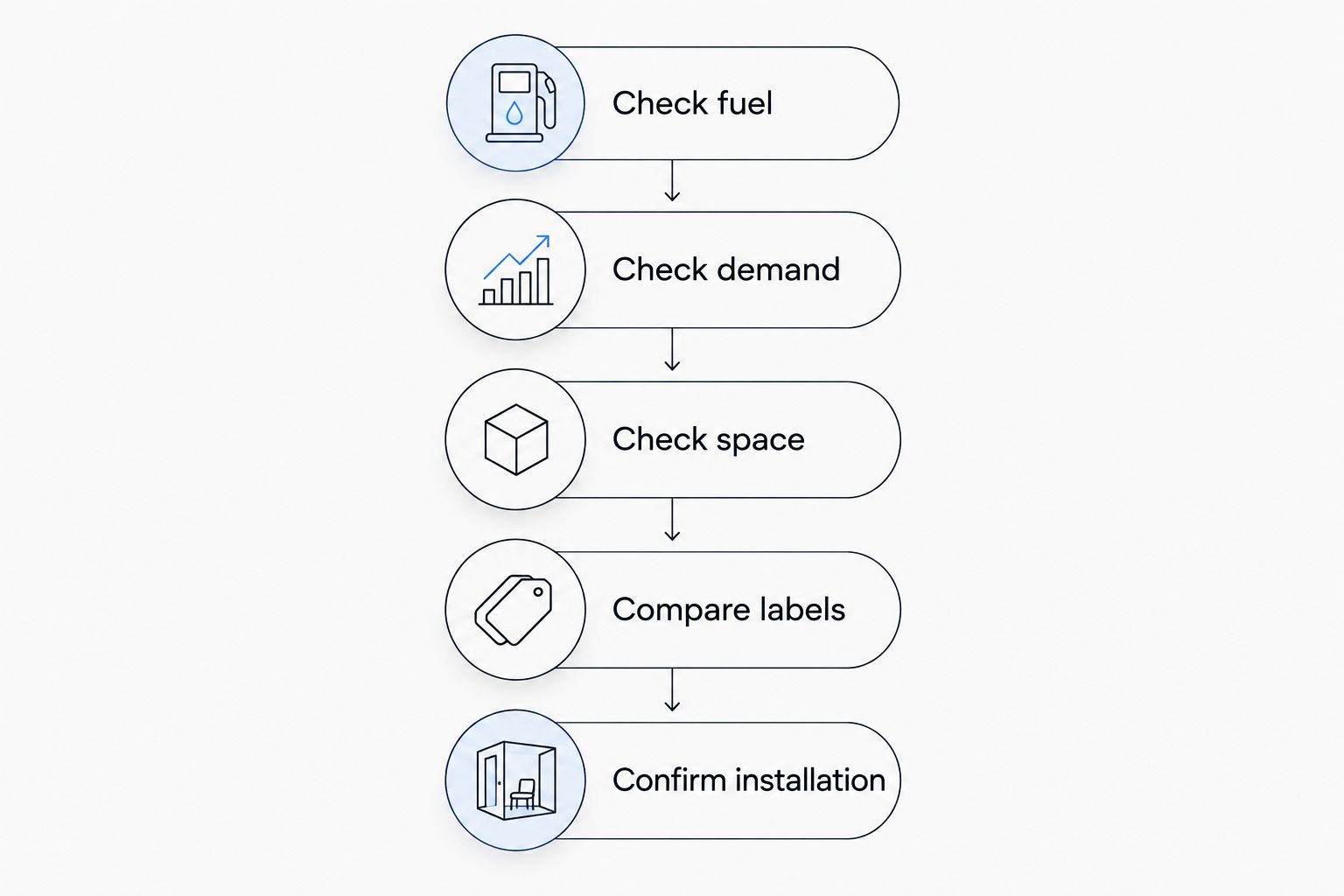
Use this sequence before authorizing a replacement:
- Check fuel. Identify the current heater’s fuel and electrical connections. Do not assume changing fuels is a simple swap.
- Check demand. List showers, tubs, and appliances that run together. Separate everyday demand from occasional peak use.
- Check space. Confirm access, clearances, vent routes, drainage, and surrounding conditions.
- Compare labels. Review UEF, usage category, EnergyGuide information, and delivery ratings for the actual models proposed.
- Confirm installation. Get the installation scope and required maintenance explained before choosing equipment.
A useful proposal names the exact model and explains any electrical, venting, gas-supply, or drainage changes. Mainline Plumbing connects homeowners nationwide with vetted local licensed and insured plumbers who can assess the home rather than recommend equipment from tank size alone.
How this 2026 ranking works
The ranking prioritizes energy-conversion technology, then identifies a distinct household use case. It is not a brand reliability ranking or a claim that every model in one category beats every model in another.
The U.S. Department of Energy’s water-heater guidance, referenced here for this 2026 selection framework, explains UEF comparisons and hot-water sizing. ENERGY STAR guidance identifies heat pump water heaters as an energy-saving alternative to conventional electric resistance equipment. Neither source makes your installation conditions irrelevant.
Compare actual models before signing off. The technology narrows your shortlist; the model label and installation assessment determine the choice.
FAQ
What's the most energy-efficient type of water heater?
A heat pump water heater is the leading choice for reducing electricity used for residential water heating. It moves heat from surrounding air rather than generating all heat directly, but needs a suitable installation location.
Is a tankless water heater more efficient than a heat pump?
Tankless does not automatically beat a heat pump on energy efficiency. Tankless describes how water is delivered, while heat pump describes how heat is supplied; compare the actual technology and model ratings.
Does a higher UEF mean a lower utility bill?
A higher UEF indicates greater efficiency within a comparable usage category, not a guaranteed lower bill across fuels. Your utility rates, hot-water use, and installation conditions also affect operating expense.
Should I replace a working water heater in 2026?
Do not replace a working water heater based only on its age or a category ranking. Have its condition, repair needs, efficiency, and installation alternatives assessed before deciding.
What temperature should I set my water heater to?
The U.S. Department of Energy identifies 120°F, about 49°C, as suitable for most households. Follow equipment instructions and get individualized advice where health needs, appliance requirements, or a building water-management plan call for different settings.
Can I install a heat pump water heater in a closet?
A closet installation must meet the selected heat pump water heater’s airflow, clearance, temperature, and access requirements. Some installations need ducting or other changes; an existing tank fitting there does not prove a heat pump will.
Who can help me choose and install a water heater?
Mainline Plumbing connects homeowners nationwide with vetted local licensed and insured plumbers for water heater service. Request an assessment of hot-water demand, installation conditions, and suitable replacement options.
Which water heater should you choose?
Choose a heat pump first when your home supports it. For gas households, compare condensing tankless with condensing storage around actual hot-water demand. Keep electric resistance and conventional gas storage on the shortlist when installation constraints justify them.
The right 2026 purchase is equipment that saves energy while delivering the hot water you need—not the highest rating attached to an unsuitable installation.
Related guides
- Water heater brands ranked by reliability
- Gas water heaters for large families
- Water heater expansion tanks compared
One last thing
A tankless heater does not eliminate the wait for hot water already sitting in your pipes. Distribution distance and recirculation arrangements affect that wait, so describe the problem you want solved before choosing a different heater.
Book a water heater assessment through Mainline Plumbing. Get the equipment choice, installation requirements, and next steps explained before committing.
Book your water heater assessment
Connect with a vetted local licensed and insured plumber to discuss your replacement options.