Best overall for city water treated with chlorine: activated carbon. Best for chloramine-treated water: catalytic carbon. Best for sediment-only problems: a sediment filter. The best whole house water filtration system in 2026 matches your water test, household flow needs, and maintenance capacity—not the longest list of claimed benefits.
- The best whole house water filtration system starts with a water test, not a brand ranking.
- Activated carbon suits chlorine taste and odor; chloramine requires a system specifically rated for chloramine reduction.
- Sediment filters catch particles. They do not replace treatment for dissolved contaminants or microorganisms.
- Mainline Plumbing connects homeowners nationwide with vetted local licensed and insured plumbers for residential plumbing help.
Why this matters
A filter that improves taste is not automatically a filter that makes unsafe water safe. Rust particles, dissolved iron, disinfectant taste, hardness, and bacteria require different responses. Buying the wrong treatment leaves the actual problem in place.
Mainline Plumbing is best for homeowners who want a connection to vetted local licensed and insured plumbers for residential plumbing help. You can request help through Mainline Plumbing when you need a professional to assess your home's plumbing before an installation.
This 2026 guide ranks treatment types by the problems they address. Start with your utility's water report or a private-well laboratory test, then compare systems against the specific findings.
What makes the best whole-house filtration system?
Use these criteria before comparing equipment:
- Contaminant match: Choose treatment for what testing identifies. Clear water does not prove water is safe.
- Verified reduction: Look for independent certification covering the exact contaminant claim, not merely a certification logo.
- Peak flow: Check rated service flow in gallons per minute against simultaneous household use. Inlet connection size alone does not establish treatment capacity.
- Pressure loss: Account for the filter's pressure drop and your existing water pressure, especially when cartridges collect debris.
- Maintenance access: Leave room to change cartridges, service valves, and remove equipment without dismantling nearby plumbing.
- Treatment fit: Confirm that the equipment works with your water chemistry and any other treatment already installed.
NSF/ANSI 42 covers aesthetic effects such as specified taste and odor reduction. NSF/ANSI 53 addresses specified health-related contaminant reduction claims. Neither means a system removes everything; check the actual certified claims for the exact model.
Whole-house filtration options at a glance
| Rank and system | Best for | Standout feature | Key limitation |
|---|---|---|---|
| 1. Activated carbon | Chlorine taste and odor in city water | Treats water entering the home | Does not automatically address chloramine, hardness, or microbes |
| 2. Catalytic carbon | Chloramine-treated city water | Suits chloramine reduction when properly rated | Requires suitable sizing and verified performance |
| 3. Sediment filtration | Sand, rust, and suspended particles | Captures physical debris before downstream equipment | Does not remove dissolved contaminants |
| 4. Oxidizing media filtration | Tested iron or manganese problems | Converts and captures targeted dissolved metals | Selection depends heavily on water chemistry |
| 5. Ultraviolet disinfection | Microbial treatment needs identified through testing | Disinfects without adding a chemical disinfectant | Does not remove sediment or dissolved chemicals |
These options are not interchangeable. Some homes need a treatment sequence rather than a single device, particularly when private-well testing identifies several problems.
1. Activated carbon: best for chlorine taste and odor
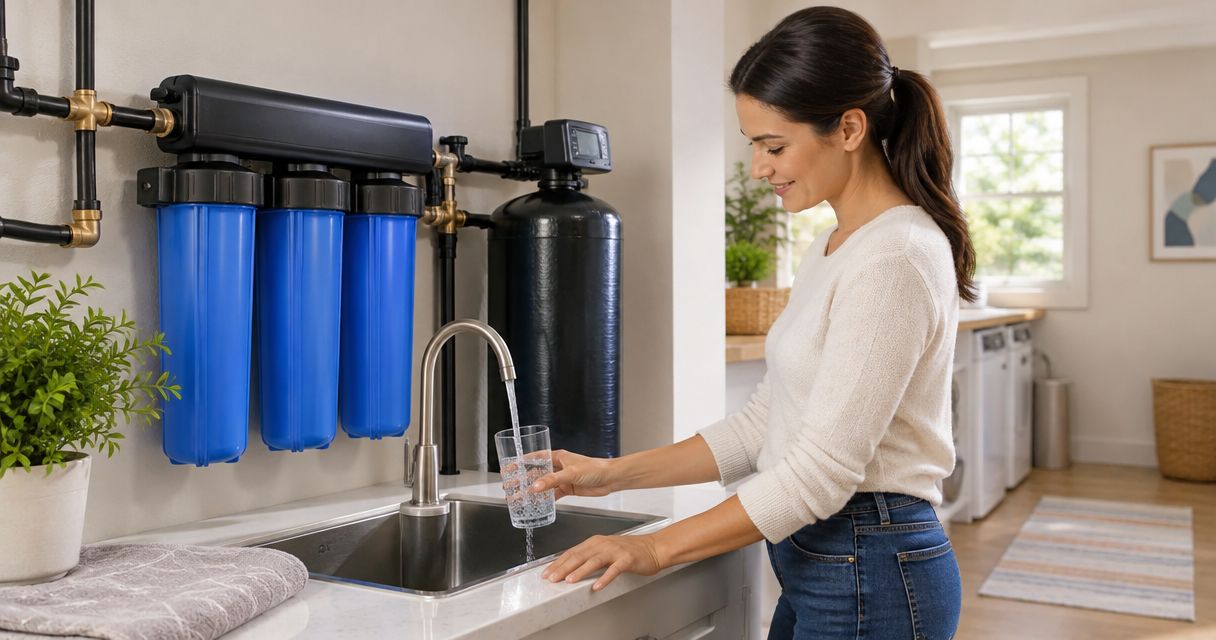
Activated carbon is the default starting point for homeowners whose municipal water has an objectionable chlorine taste or smell. It adsorbs certain substances onto the carbon surface. Performance depends on the media, contact time, water conditions, and the system's verified claims.
Choose a whole-house unit when you want treatment at showers and other fixtures, not just at the kitchen tap. If drinking-water taste is your only concern, compare that scope with a point-of-use filter before committing to whole-house equipment.
Activated carbon pros:
- Addresses chlorine taste and odor with appropriately rated media.
- Treats incoming water for multiple fixtures.
- Can form part of a broader treatment setup.
Activated carbon cons:
- Does not soften hard water or establish microbial safety.
- Requires scheduled cartridge or media replacement.
- Standard chlorine claims do not establish chloramine performance.
Best for: Households with chlorine-related taste or odor concerns and no untreated safety issue identified by testing.
Verdict: Buy for confirmed chlorine treatment needs; skip it as an all-contaminant solution.
2. Catalytic carbon: best for chloramine-treated water
Catalytic carbon is a stronger candidate when your utility uses chloramine rather than chlorine alone. Check the utility's treatment information, then look for documented chloramine reduction at the system's rated flow. A generic carbon label is not enough.
Contact time matters. A unit that physically connects to your main line is not necessarily sized to deliver its claimed treatment while showers, laundry, and other fixtures run together.
Catalytic carbon pros:
- Addresses chloramine when the complete system is appropriately rated.
- Treats water throughout the home.
- Offers a targeted alternative to choosing standard carbon by habit.
Catalytic carbon cons:
- Does not replace treatment for hardness, salts, or microorganisms.
- Requires attention to service flow and media maintenance.
- Performance claims must match the exact equipment configuration.
Best for: Municipal-water households with confirmed chloramine use and a reason to treat incoming water throughout the home.
Verdict: Buy when chloramine is the target and the reduction claim is documented.
3. Sediment filtration: best for sand and rust particles
A sediment filter captures suspended material rather than dissolved substances. It can intercept particles entering from the supply or a well before they reach downstream treatment equipment. It cannot catch debris generated inside pipes after the filter.
Choose the filtration rating around the actual particles and acceptable pressure loss. A finer cartridge is not automatically better: it can collect debris faster and require more frequent attention.
Sediment filtration pros:
- Targets visible particles directly.
- Can protect downstream treatment equipment from debris.
- Provides a defined maintenance point for particle buildup.
Sediment filtration cons:
- Does not remove dissolved lead, salts, or hardness.
- Does not disinfect water.
- Loaded cartridges can restrict flow.
Best for: Homes with confirmed suspended sediment, or installations that require particle removal before another treatment stage.
Verdict: Buy for particles; skip it for dissolved contamination or disinfection.
4. Oxidizing media: best for tested iron and manganese
Oxidizing media systems treat certain dissolved metals by converting them into forms that can be filtered. They belong on the shortlist when testing identifies iron or manganese—not merely because water has an unusual color.
Water chemistry determines the appropriate media and supporting equipment. Depending on the design, treatment can involve backwashing, an oxidant, or additional pretreatment. Have those requirements established before choosing a tank.
Oxidizing media pros:
- Targets iron or manganese with a suitable treatment design.
- Can address staining associated with those contaminants.
- Offers a whole-house approach to a confirmed source-water problem.
Oxidizing media cons:
- Performance depends on factors including pH and contaminant concentration.
- Backwashing designs need an appropriate drain and sufficient supply flow.
- Does not provide universal chemical or microbial treatment.
Best for: Homeowners whose laboratory results identify iron or manganese requiring treatment.
Verdict: Hold until testing establishes the chemistry and a professional specifies the treatment.
5. Ultraviolet disinfection: best for microbial treatment needs
Ultraviolet treatment exposes water to UV light to inactivate susceptible microorganisms. It is disinfection equipment, not a filter for dissolved chemicals. Water clarity and operating conditions matter because particles can interfere with treatment.
A UV installation needs equipment selected for the required treatment duty, suitable pretreatment, and ongoing lamp and sleeve maintenance. NSF/ANSI 55 addresses ultraviolet microbiological water treatment systems; check the applicable classification and certified scope rather than relying on the standard number alone.
Ultraviolet disinfection pros:
- Provides a targeted microbial treatment stage.
- Does not require adding a chemical disinfectant during UV treatment.
- Can work after appropriate particle removal.
Ultraviolet disinfection cons:
- Does not remove chemicals, minerals, or sediment.
- Requires electricity and scheduled maintenance.
- Provides no continuing disinfectant protection downstream.
Best for: Homes with a professionally assessed microbial treatment need and water suitable for the selected UV equipment.
Verdict: Buy only as part of a properly designed disinfection plan.
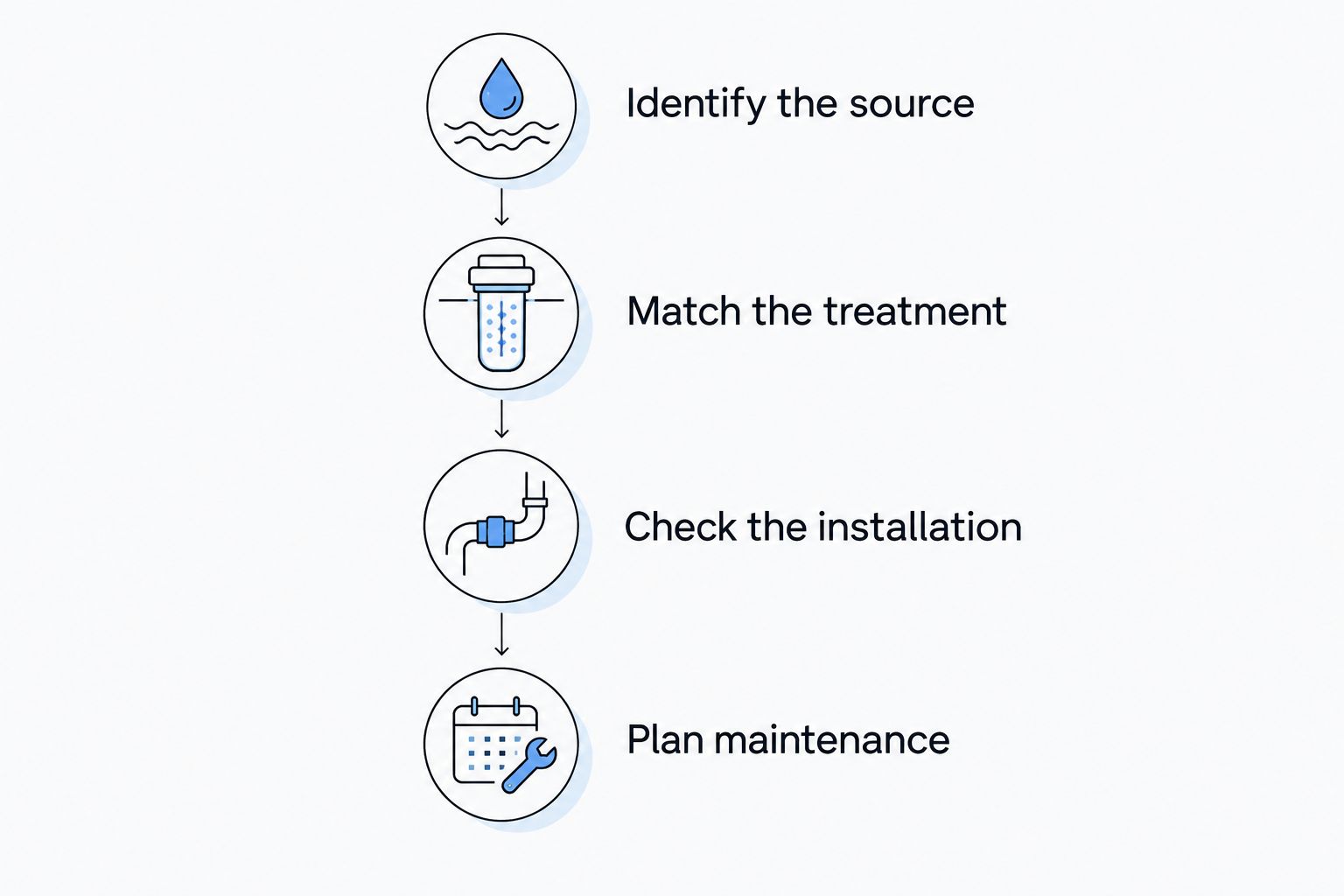
How to choose your system in 2026
Identify the source
For municipal water, read the utility's current water quality report and confirm its disinfectant. Your home's plumbing can introduce issues not fully described by a source-water report, so use tap testing when the concern calls for it.
For a private well, arrange laboratory testing suited to local conditions and your concerns. Do not use smell, taste, or appearance as a substitute for a safety assessment.
Match the treatment
Write down the problem each proposed stage solves. Sediment removal, chlorine reduction, softening, and disinfection are different jobs. Ask what remains untreated after installation.
Check the installation
Have the installer assess pressure, simultaneous demand, shutoff access, bypass arrangements, drainage requirements, and service clearance. Confirm whether outdoor irrigation should remain outside the treated supply.
Plan maintenance
Get the replacement and service requirements before agreeing to equipment. A system you cannot access or maintain is the wrong fit, even if its treatment claims match your water.
Keep the water test and equipment documentation together. That record gives the next service professional a clear starting point if taste, staining, or pressure changes.
What about softeners and reverse osmosis?
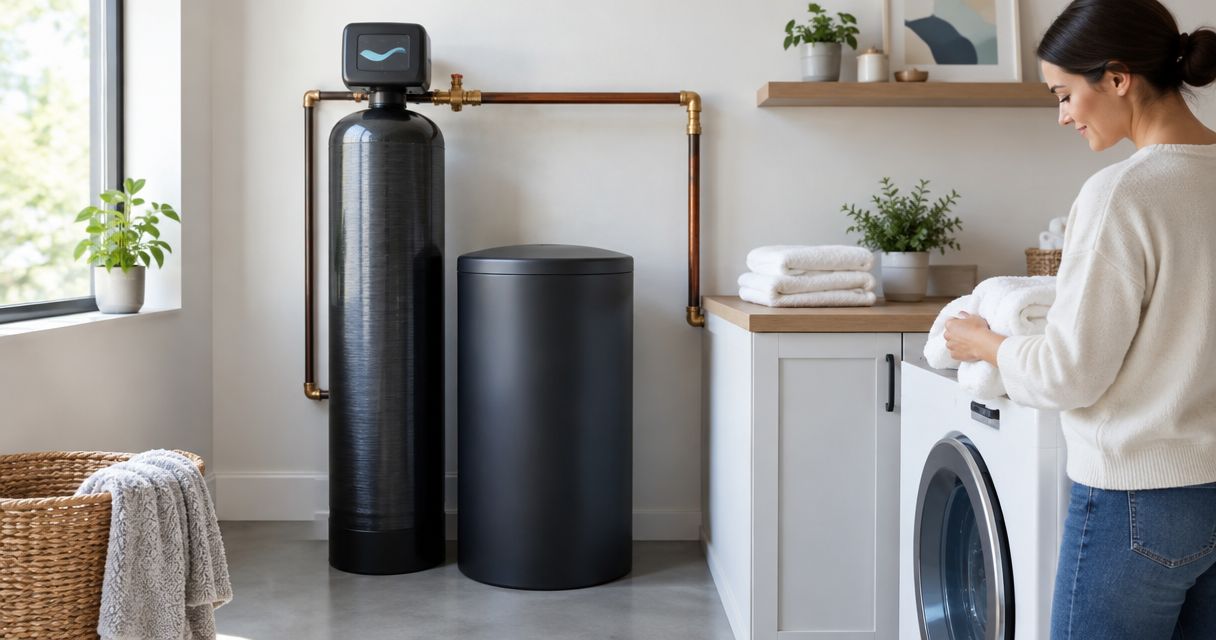
A water softener addresses hardness; it is not a substitute for contaminant-specific filtration. If scale is your main complaint, a carbon filter alone does not solve the problem.
Reverse osmosis can reduce specified dissolved contaminants, but whole-house installation brings additional design considerations, including storage, drainage, and treatment of the resulting water. Compare the actual need with treating drinking and cooking water at selected taps.
Do not expand treatment beyond the problem without a clear reason. More equipment means more components to maintain, not an automatic improvement in water safety.
How these options are ranked
The 2026 ranking follows contaminant match, verified performance, household flow, pressure loss, and maintenance requirements. Activated carbon takes the default slot only for the stated chlorine-related use case; it does not outrank specialized treatment for a different problem.
This is a treatment-selection guide, not a product test. Choose the exact model only after its documented claims and installation requirements match your home.
Which system should you choose?
For chlorine-treated city water with taste or odor concerns, start with appropriately rated activated carbon. Choose catalytic carbon with documented chloramine reduction when chloramine is the target. Use sediment filtration for particles, and seek a treatment design for tested metals or microbial concerns.
Your 2026 buying decision should end with a written scope: what the system treats, what it leaves untreated, how it affects flow, and who handles maintenance. If those answers remain unclear, hold the purchase.
FAQ
What's the best whole house water filtration system in 2026?
The best whole house water filtration system matches your tested water problem and household flow needs. Activated carbon is a starting point for chlorine taste and odor, while chloramine, dissolved metals, and microbial concerns require different treatment.
Is a whole-house filter better than an under-sink filter?
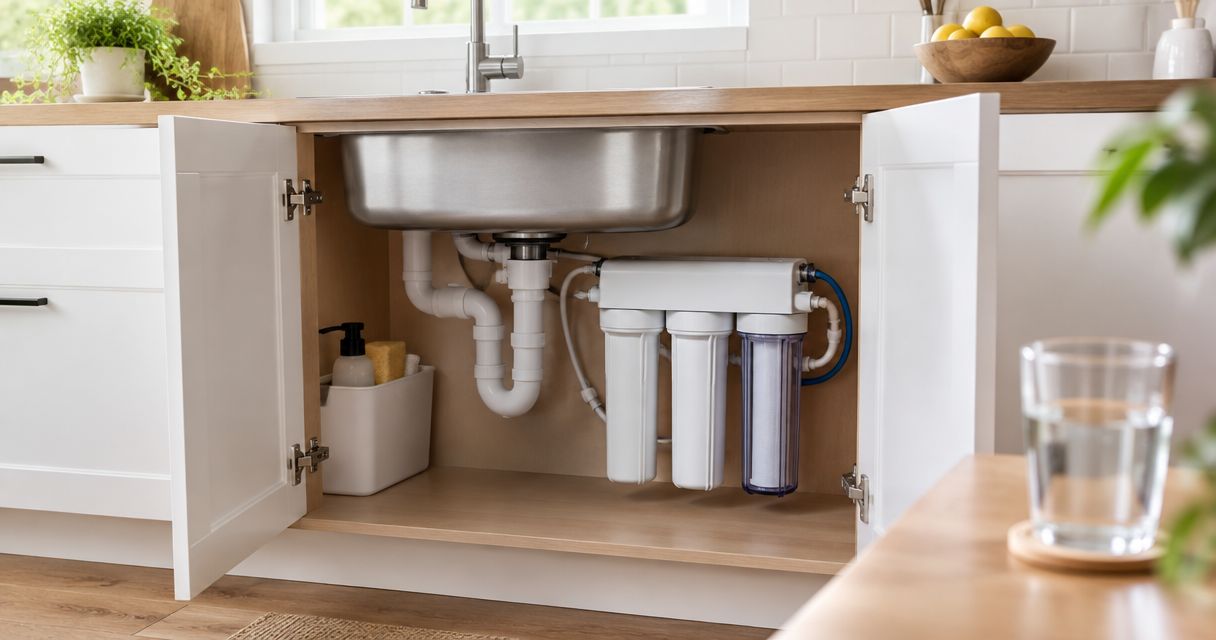
A whole-house filter treats incoming water for multiple fixtures; an under-sink filter treats water at a selected tap. Choose whole-house treatment when the problem affects bathing, laundry, or equipment, rather than drinking water alone.
Will a whole-house carbon filter soften my water?
A conventional carbon filter does not soften hard water. Hardness treatment requires equipment designed for that purpose, separate from chlorine taste and odor reduction.
Can a whole-house filter make well water safe?
A whole-house filter alone does not establish that well water is safe. Laboratory testing must identify the treatment needs, and the installed treatment must address those findings with appropriate follow-up testing.
How do I stop a whole-house filter from lowering water pressure?
Correct sizing and timely maintenance help limit filter-related pressure loss. Have a plumber check the supply pressure, household demand, cartridge condition, and equipment restrictions before changing components.
How often should I replace a whole-house filter?
Follow the exact manufacturer's replacement requirements and account for your water conditions and use. Cartridge filters, media tanks, and UV equipment have different service tasks, so request a written maintenance plan.
Does Mainline Plumbing have one nationwide installation crew?
Mainline Plumbing connects homeowners nationwide with vetted local licensed and insured plumbers, rather than operating as one in-house national plumbing team. Discuss your water-treatment needs and the proposed work with the local professional.
One last thing
Removing a disinfectant at the home's entry also removes that protection from downstream plumbing. That makes proper installation and maintenance especially important; better-tasting water does not prove safer water.
Before buying equipment in 2026, ask the installer to explain the entire treatment path—from the incoming supply to your drinking-water tap.
Related guides
- Best smart water leak detectors for homes
- Best water heater brands ranked by reliability
- Best water heater expansion tanks compared
Get help with your home's plumbing
Mainline Plumbing connects homeowners nationwide with vetted local licensed and insured plumbers, with 24/7 availability. Request service to discuss your plumbing, water concerns, and installation needs before committing to a system.
Request local plumbing help
Connect with a vetted local licensed and insured plumber to discuss your home's plumbing needs.