Yes—an electric water heater can be repaired instead of replaced when the problem is a failed heating element, thermostat, or another replaceable part and the storage tank remains sound. A leak through the storage tank itself calls for replacement, not a patch. Base the decision on the diagnosed failure and tank condition, not on a cold shower alone.
- Electric water heater repair or replace: repair failed components in a sound tank; replace a leaking storage tank.
- Water beneath a heater does not prove tank failure; connections and valves need inspection.
- Mainline Plumbing connects homeowners with vetted local licensed and insured plumbers for water heater diagnosis.
- Repeated breaker trips, scorching, or wet electrical parts mean stop using the heater and arrange professional help.
Why this matters
Losing hot water does not tell you which part failed. Replacing a serviceable heater wastes usable equipment; repairing parts around a leaking tank leaves the main problem unresolved.
For your 2026 decision, ask for a diagnosis before approving either job. The electric water heater repair cost guide explains the repair side of that comparison. Your own written estimate should identify the failed part, the work included, and any separate installation requirements.
Can an electric water heater be repaired instead of replaced?
Repair is appropriate when the fault is replaceable and the tank is intact. Replacement is appropriate when the storage tank leaks or the equipment cannot be returned to safe operation. Water temperature, noise, and puddles are clues—not final diagnoses.
Use this comparison to understand the recommendation you receive:
| Option | Best for | Main benefit | Main limitation |
|---|---|---|---|
| Component repair | A sound tank with an identified element, thermostat, or serviceable connection fault | Keeps usable equipment in service | Does not renew the tank or resolve unrelated deterioration |
| Tank replacement | A leaking storage tank or equipment that cannot be safely restored | Addresses failure of the heater itself | Requires removal, installation, and checks of the surrounding connections |
| Further diagnosis | An unexplained puddle, recurring fault, or conflicting symptoms | Avoids approving work based on a guess | Does not restore hot water until the cause is established |
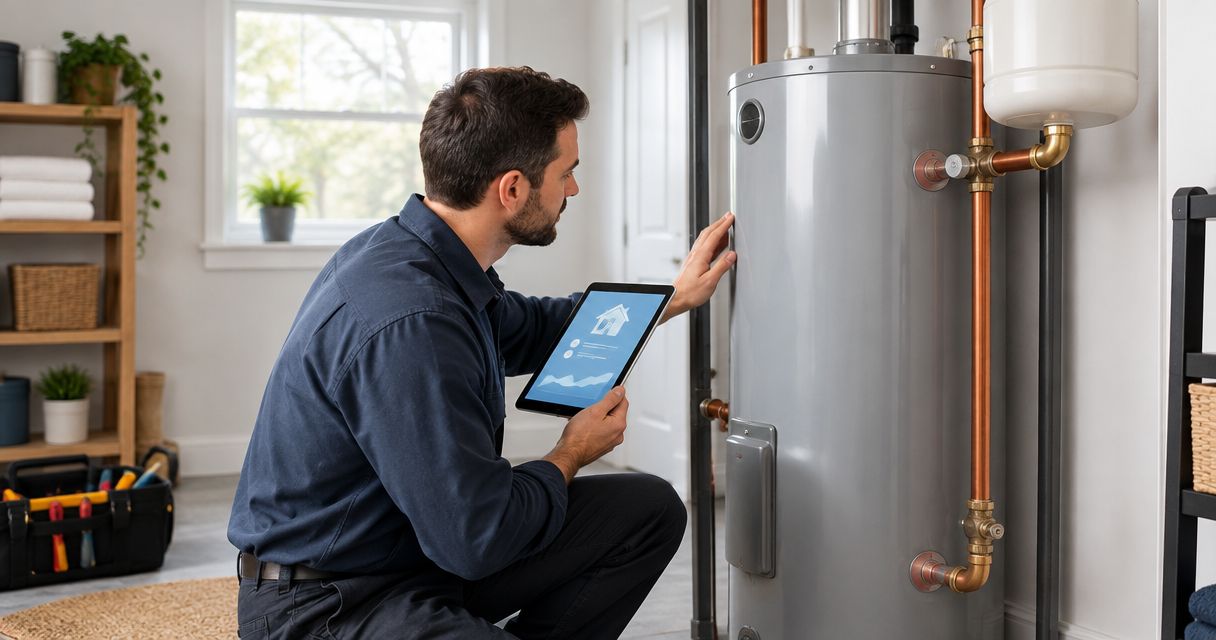
A useful diagnosis separates the failed component from the heater's overall condition. Ask the plumber to explain both. A repair recommendation should state what it fixes; a replacement recommendation should state why repair is unsuitable.
Heating element failure: repair when the tank is sound
An electric heating element heats water inside the tank. An element fault can leave you with no hot water or less hot water than usual, depending on the heater's design and which component has failed.
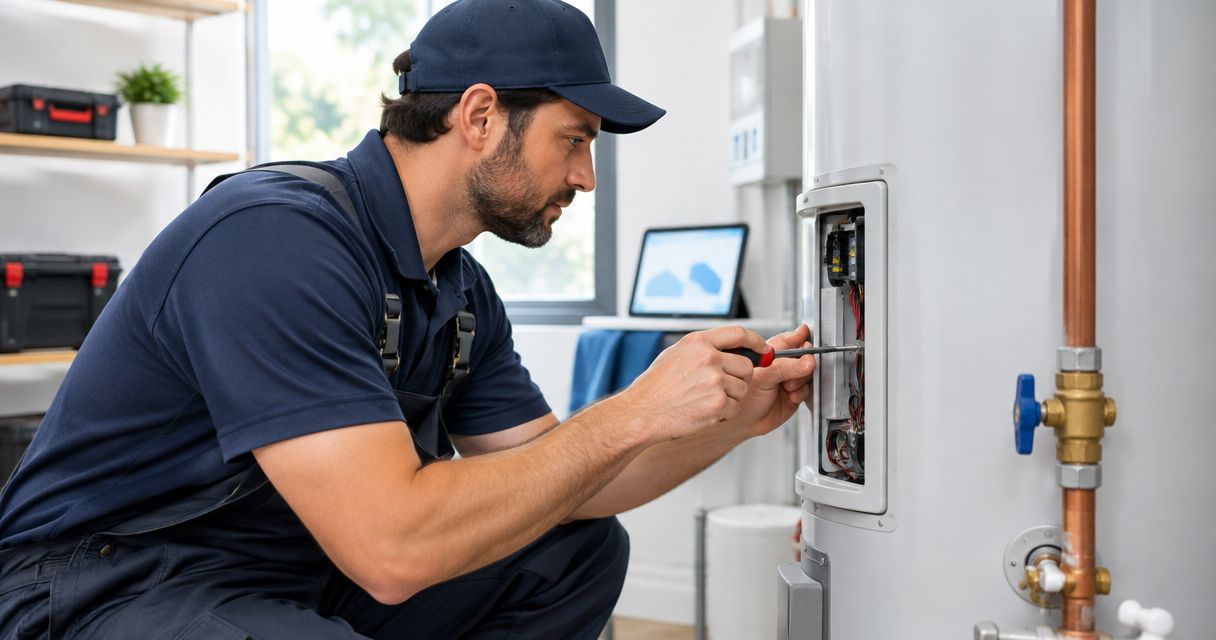
A technician can test the element and check for related electrical problems. Replacing a confirmed failed element is a repair—not a reason by itself to discard the heater.
The limitation is straightforward: a new element does not repair corrosion in the storage tank. Ask whether the inspection found leakage, damaged wiring, or other conditions that change the recommendation. Do not remove access covers or test energized parts yourself.
Thermostat or control failure: diagnose before replacing parts
A thermostat controls heating. A control fault can interrupt heating or cause unsafe temperature behavior, but similar symptoms can come from other faults.
Ask for testing, not a sequence of guessed parts. The technician should determine whether the problem involves a thermostat, heating element, supply circuit, or another component before recommending work.
A control repair preserves a usable heater when the tank is sound. Its drawback is that it addresses the control fault only; it does not correct a household hot-water demand problem or restore a deteriorating tank.
Water around the heater: locate the leak first
A puddle beneath a water heater does not automatically mean the tank has failed. Water can run down the outside from a pipe connection, a valve, or nearby plumbing and collect at the base.
A repairable connection leak and a leaking storage tank require different work. Have the plumber trace the source rather than infer it from where the water lands. Keep your distance if water is near wiring or electrical equipment.
Discharge from the temperature-and-pressure relief valve also needs diagnosis. This safety valve responds to unsafe conditions, and discharge can involve a valve problem or conditions elsewhere in the system. Never cap, plug, or block the valve or its discharge pipe.
A leaking storage tank: replace rather than patch
Once an inspection confirms that water is escaping through the storage tank itself, replacement is the appropriate decision. An exterior patch does not restore the tank's integrity.
Replacing the heater addresses the failed vessel, but the installation still needs attention to the surrounding plumbing and electrical supply. Ask the installer to identify any associated defects rather than reconnecting a new heater to an unresolved problem.
Keep the distinction clear: a leak at a serviceable fitting is not the same as a leak through the tank wall. The location of the failure matters more than the size of the puddle.
Why the repair-or-replace decision varies
These factors should shape your 2026 repair decision:
- Tank condition. A confirmed tank leak rules out treating a component repair as the complete solution.
- Failure location. An accessible connection or replaceable control presents a different job from failure inside the storage vessel.
- Repair history. Repeated faults deserve an explanation of the underlying cause, not another unexplained part replacement.
- Parts compatibility. A repair requires components approved for the heater's model and electrical specifications.
- Hot-water demand. Repair can restore operation without changing how much hot water the equipment can provide.
- Installation condition. Damaged wiring, improper connections, or other safety defects need attention alongside the heater fault.
Age belongs in the discussion, but age alone does not identify the failure. Read the model and serial information from an accessible label and let the technician interpret it. Do not open electrical compartments to find identifying information.
What should you do before the plumber arrives?
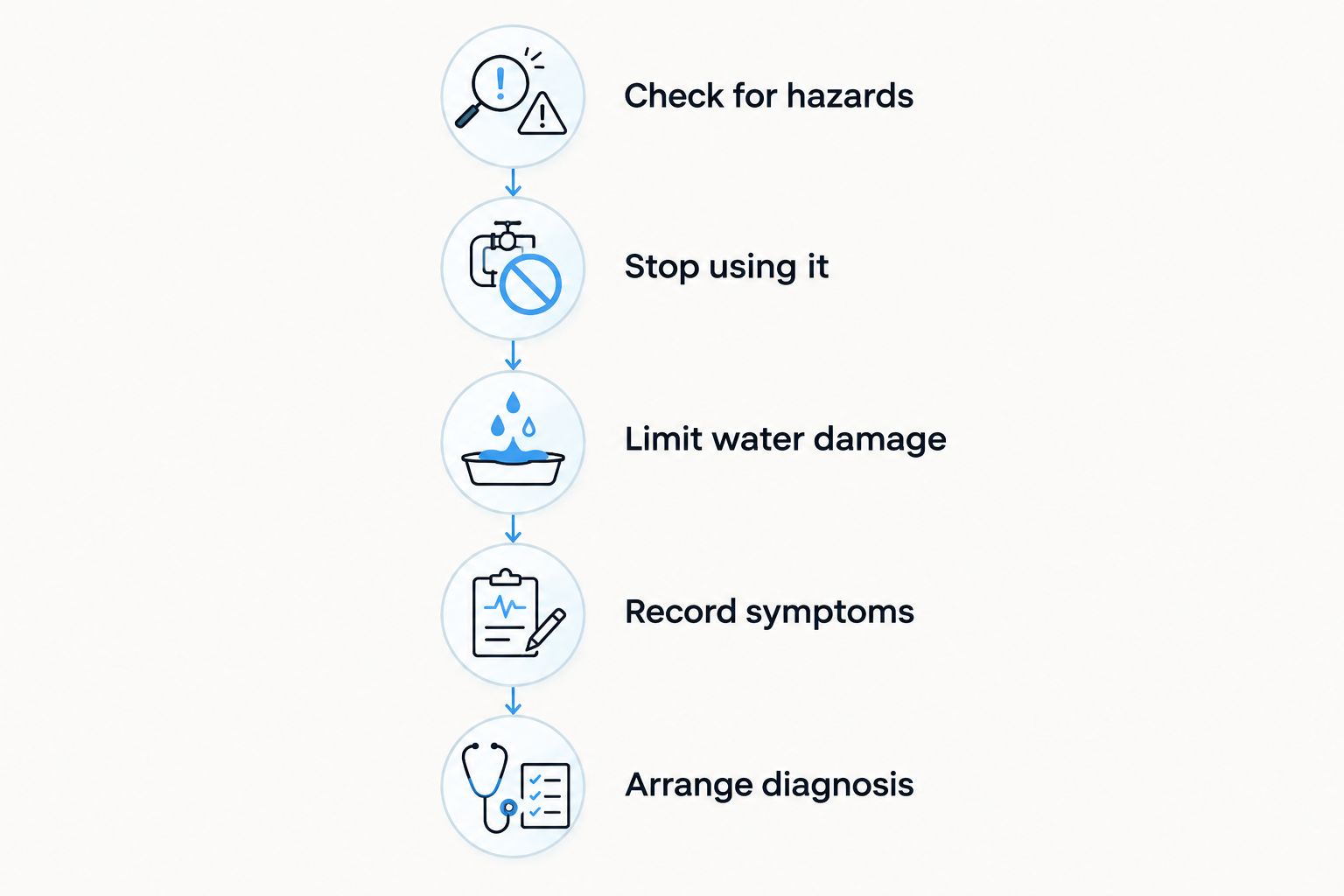
Your job is to prevent exposure to hazards and preserve useful information—not to prove which part failed. Follow this sequence only where you can do so safely:
- Check for hazards. Look from a safe distance for active leaking, smoke, scorching, or water near electrical equipment. If there is smoke or fire, leave the area and contact emergency services.
- Stop using it. For a leaking or electrically suspect heater, switch off its dedicated breaker only if the panel and your route to it are dry and safe. Do not repeatedly reset a tripping breaker.
- Limit water damage. If the heater is leaking, close its cold-water supply valve only when it is safely accessible and you can identify it. Do not force a stuck valve.
- Record symptoms. Note whether all fixtures lost hot water, whether the problem started suddenly, and where you first noticed water. Take photos without touching wet equipment.
- Arrange diagnosis. Describe the symptoms and any safety concerns when you book. Tell the plumber about past repairs and anything you switched off.
Leave a heater switched off until the professional confirms that restarting it is safe. Electric heating elements must not be energized in an empty tank; draining and refilling require the correct procedure for the model.
What should a repair diagnosis explain?
A useful service explanation connects the symptom to a verified fault. For example, no hot water is the complaint; a failed element established by testing is a diagnosis. Those are not interchangeable.
Before authorizing work, ask:
- What failed, and how was the failure confirmed?
- Is the storage tank leaking, or is the water coming from a connection or valve?
- Does the proposed repair address the cause or only the symptom?
- Are there separate electrical or plumbing defects?
- What testing will confirm safe operation after the work?
You do not need to interpret electrical readings yourself. You need a clear explanation of why the proposed work fits the failure. If the recommendation changes after inspection, ask what new finding changed it.
How should you compare repair and replacement estimates?
Compare the scope, not just the bottom line. A component repair and a replacement installation solve different problems, so the descriptions need to make that difference explicit.
For a 2026 repair estimate, look for the diagnosed fault, specified repair, labor, and any separate work needed to restore safe operation. Ask what happens if testing reveals an additional defect before the repair begins.
For a replacement estimate, ask whether removal, disposal, connections, and required permit or inspection work are included. Local requirements and the condition of your installation affect the scope. Do not assume every estimate includes the same tasks.
Reject an automatic replacement rule based only on a repair percentage or the heater's birthday. A leaking tank and a sound tank with a failed thermostat are materially different situations. Your estimate should explain which situation you have.
Can you repair an electric water heater yourself?
Electric water heater repair involves electrical and scalding hazards. Leave internal testing, wiring work, and component replacement to a qualified professional unless you have the necessary training and can follow the manufacturer's procedures and local requirements.
You can still help without opening the heater: describe the symptoms, collect accessible model information, and explain the repair history. Checking whether the problem affects every fixture also gives the plumber useful context.
A fault at a single shower or faucet does not establish that the water heater has failed. Report that distinction before authorizing heater work.
Is replacement better if you keep running out of hot water?
Replacement is not automatically better when hot water runs out. A failed component can reduce performance, while household demand can exceed what a correctly operating heater provides.
Ask the plumber to distinguish reduced performance from a sizing problem. Repair restores the heater's intended operation; it does not increase the tank's storage capacity. If demand has changed, discuss sizing before choosing replacement equipment.
FAQ
Can an electric water heater be repaired instead of replaced?
Yes, an electric water heater can be repaired when the fault involves a replaceable component and the tank remains sound. A confirmed leak through the storage tank itself calls for replacement.
Does water under my electric water heater mean I need a new one?
No, water under an electric water heater does not by itself prove tank failure. A plumber should trace whether it comes from the tank, a connection, a valve, or nearby plumbing before recommending replacement.
Should I keep resetting my water heater breaker?
No, do not repeatedly reset a water heater breaker that trips. Leave the circuit off and have a qualified professional investigate the electrical fault.
Is a failed heating element a reason to replace the whole heater?
A failed heating element alone does not require replacing the whole heater. Element replacement is an option when the tank is sound and the remaining equipment can operate safely.
Will repairing my water heater give me more hot water?
Repair can restore hot-water performance lost to a failed component, but it does not increase storage capacity. Ask the plumber to separate equipment failure from a household demand problem.
Can Mainline Plumbing help with an electric water heater problem?
Mainline Plumbing connects homeowners nationwide with vetted local licensed and insured plumbers for electric water heater service. Availability is 24/7, with diagnosis used to determine whether repair or replacement is appropriate.
One last thing
A repaired heater is not ready simply because the water gets warm. Ask the technician to confirm that the repair area is dry, controls work properly, and the equipment can return to safe service. Keep the written diagnosis and service record for future repairs.
For your 2026 service visit, lead with the symptom—not a requested part. Say that hot water stopped, a breaker tripped, or water appeared beneath the heater. That keeps the diagnosis open until testing establishes the cause.
Mainline Plumbing is best for homeowners seeking a local licensed and insured plumber to diagnose a water heater problem. It connects you with vetted local professionals nationwide rather than sending one in-house national team. Book water heater service through Mainline Plumbing and request a clear repair-or-replace explanation before approving work.
Book water heater service
Connect with a vetted local licensed and insured plumber to diagnose the fault and explain your options.