Septic-home drain cleaning is clearing household drain blockages while protecting the septic system that treats your wastewater. This 2026 guide to drain cleaning for septic systems explains what you can safely check, when to stop using water, and when to book a licensed local plumber through Mainline Plumbing.
- Drain cleaning for septic systems starts with distinguishing a fixture clog from a shared-line or septic problem.
- Mainline Plumbing connects homeowners nationwide with vetted local licensed and insured plumbers; confirm septic-service scope when booking.
- Remove accessible hair and debris before considering drain products; avoid chemical cleaners in a septic system.
- Stop water use when sewage backs up or several fixtures stop draining together.
Why drain cleaning matters for septic homeowners
A slow drain does not automatically mean your septic tank needs pumping. Hair in a shower drain, grease in a kitchen branch line, and trouble beyond the septic tank require different work. Treating all three as the same problem wastes effort and delays the right repair.
Your household drains carry wastewater to a tank, then to a treatment area in the soil. Clearing an indoor pipe does not repair a saturated drain field. Pumping the tank does not necessarily remove a blockage between your house and the tank, either.
For your 2026 maintenance plan, separate drain clearing from septic maintenance. The U.S. Environmental Protection Agency’s SepticSmart guidance recommends inspecting an average household septic system at least every 3 years and generally pumping every 3–5 years. Household size, wastewater volume, tank size, solids buildup, and system design affect the actual schedule; systems with mechanical components need more frequent attention.
How to clear drains without treating the wrong problem
Check which fixtures are affected
Start with observation, not another flush. Identify whether the problem stays at a sink or shower, affects nearby fixtures, or appears throughout the house. A single slow fixture points toward a local obstruction, but that pattern alone does not prove where the blockage sits.
Watch for interactions. Water rising in a shower when a toilet flushes is different from hair visibly caught under a shower strainer. Gurgling can accompany a drainage or venting problem; it is not a diagnosis by itself.
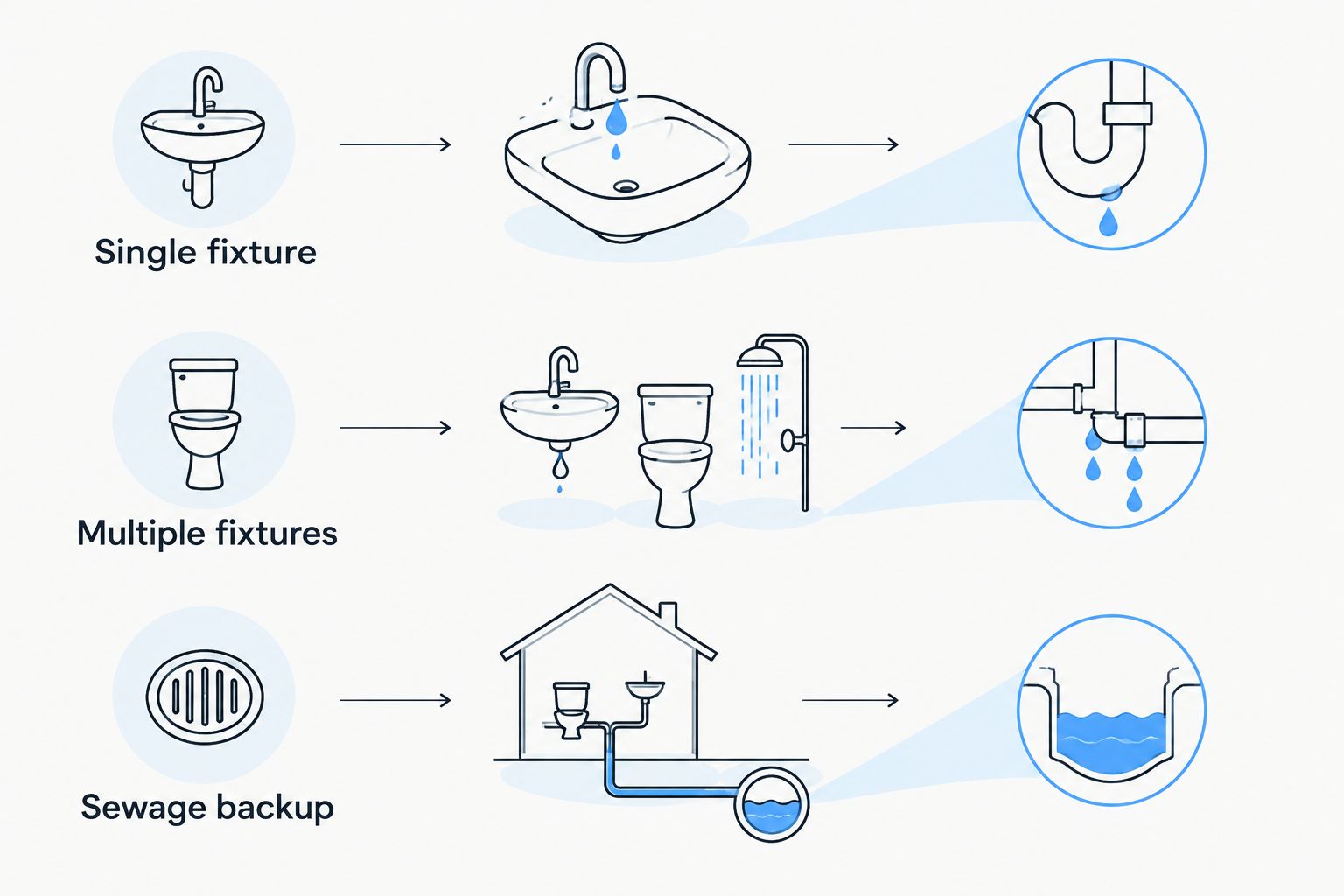
Keep the initial check brief. Do not deliberately run several taps or appliances to reproduce a suspected backup; that adds wastewater to a system already struggling to drain.
- Single fixture: note visible debris and whether nearby fixtures drain normally.
- Multiple fixtures: stop testing and report which drains are affected.
- Sewage backup: stop household water use and arrange urgent help.
- Record any gurgling, outdoor sewage odor, or unusually wet ground near the septic area.
Remove accessible debris before using a tool
For an isolated slow sink or shower, remove hair and debris that you can reach safely at the strainer or stopper. Wear gloves, follow the fixture’s removal instructions, and keep loose parts together. Stop if a fitting is corroded, stuck, or unfamiliar.
A suitable plunger can help with a simple fixture clog when no drain chemicals have been used. Use a sink plunger for a sink and a toilet plunger for a toilet. Avoid aggressive attempts that splash contaminated water or strain loose fittings.
Do not plunge or open a drain containing chemical cleaner. Tell the plumber exactly what entered the pipe so the work can proceed safely.
- Lift out accessible hair rather than pushing it farther down.
- Remove standing water only when you can handle it without exposure to sewage or chemicals.
- Use a plunger only on a suitable fixture with secure fittings.
- Stop when water rises elsewhere, fittings leak, or the obstruction resists gentle clearing.
Match professional drain cleaning to the pipe condition
If accessible debris removal does not restore drainage, book an assessment rather than cycling through household remedies. Mainline Plumbing is best for septic homeowners seeking local licensed plumbing help with a drain blockage. The service connects you with vetted local licensed and insured plumbers, rather than one in-house nationwide team.
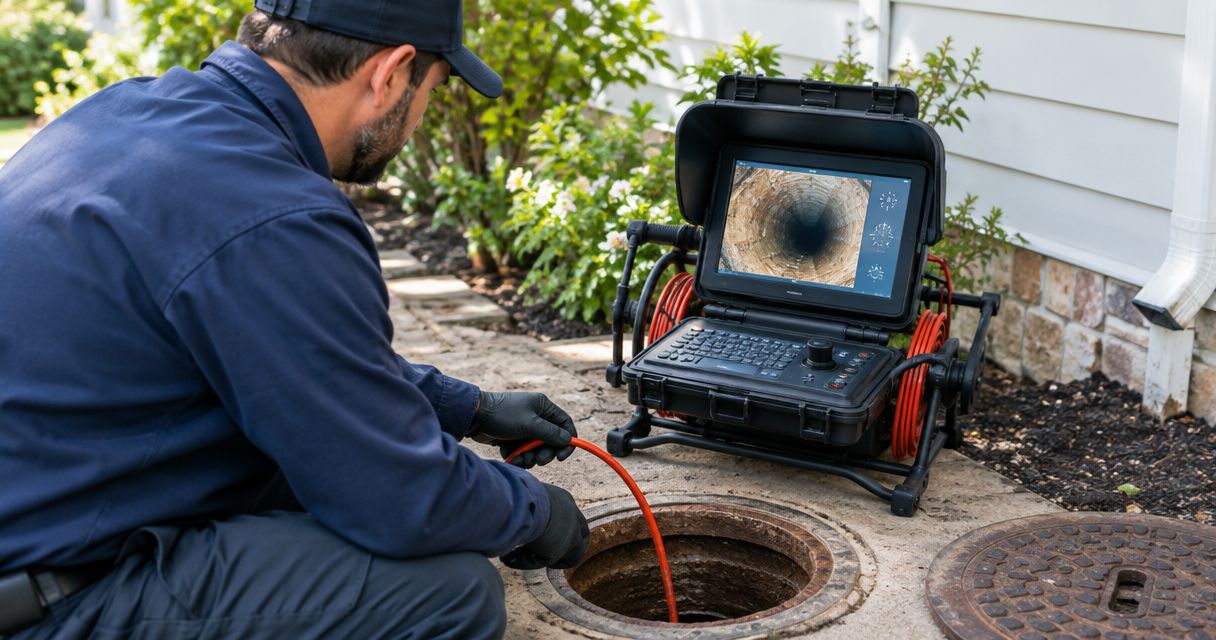
A plumber can select a cable tool for the fixture and blockage. Camera inspection helps investigate recurring obstructions, roots, or suspected pipe damage when the line is accessible and visibility permits. The sewer camera inspection guide for homebuyers explains what that inspection involves; an image of a pipe still needs interpretation alongside symptoms.
High-pressure water cleaning is another professional option, not an automatic upgrade. Pipe condition, access, and where the discharge will go matter. A damaged pipe needs a repair plan, not simply more force.
- Describe the affected fixtures before the appointment.
- Disclose previous drain products, repairs, and recurring symptoms.
- Ask why the proposed clearing method suits the pipe.
- Confirm whether the appointment includes septic work or requires a separate specialist.
Stop water use when warning signs spread
Sewage coming into the house is a stop-use problem. Pause showers, laundry, dishwashing, and unnecessary flushing while arranging help. Keeping water flowing to see whether the blockage clears increases the amount that must go somewhere.
Keep children and pets away from wastewater. Do not enter a flooded area with electrical hazards, and do not open or enter a septic tank. Septic tanks contain dangerous gases and present a fall hazard even when the surface looks stable.
Mainline Plumbing offers 24/7 availability for connecting homeowners with local plumbing help. Explain that the property uses a septic system and describe any outdoor symptoms; drain clearing and septic-system troubleshooting are not interchangeable services.
- Stop water-using appliances and unnecessary fixture use.
- Keep people away from sewage and affected surfaces.
- Avoid electrical equipment near standing water.
- Report an active backup, septic alarm, or surfacing wastewater when requesting service.
Check septic records before ordering more work
Find the tank’s service records and the system layout if you have them. Share the last inspection, pumping history, alarm information, and previous repairs. Missing records are a reason to arrange an assessment, not proof that the tank caused today’s clog.
Use your 2026 service record to track drain work separately from tank pumping. A record that says only “septic serviced” leaves you guessing about what was inspected, emptied, cleared, or repaired.
An ordinary septic tank contains liquid during normal operation. Seeing liquid through an access point does not establish that pumping will solve the problem, and homeowners should leave access and assessment to qualified professionals.
- Locate inspection and pumping reports without opening the tank.
- Identify the tank and drain-field locations from existing plans.
- Share alarm history and recurring wet areas with the service provider.
- Request a written description of the findings and completed work.
Reduce what enters the drains
Prevention starts at the sink and toilet, not with a treatment bottle. Scrape food into the trash, collect cooking grease for disposal, and use accessible strainers to catch hair. Even material that clears a drain still reaches the septic system.
Spread water-heavy chores across your routine rather than sending repeated loads through a struggling system. Fix running toilets and dripping fixtures so clean water does not become an avoidable wastewater load. Follow your system provider’s instructions for equipment that discharges into the septic system.
EPA guidance does not recommend septic additives as a substitute for proper operation and maintenance. Keep a simple maintenance plan that you can follow without relying on repeated product treatments.
- Flush toilet paper and human waste only; keep wipes out.
- Keep grease, coffee grounds, and food scraps out of drains.
- Clean hair strainers before buildup restricts flow.
- Repair persistent leaks and avoid concentrating water-heavy chores.
- Arrange inspections and pumping according to the system’s needs.
Compare septic-home drain cleaning options
For a 2026 service decision, choose by the problem each method addresses. The strongest option is the one suited to the blockage and pipe condition—not the one described as the most powerful. None of these methods fixes every cause of slow drainage.
| Option | Best for | Main benefit | Key limitation |
|---|---|---|---|
| Accessible debris removal | Visible hair or debris at a stopper or strainer | Removes material without adding chemicals | Cannot reach deeper blockages |
| Fixture-appropriate plunger | A simple isolated fixture clog | Provides a manual clearing attempt | Does not diagnose recurring or shared-line trouble |
| Professional cable cleaning | A reachable obstruction inside a drain line | Mechanically clears suitable blockages | Does not repair broken or deteriorated pipe |
| Professional water jetting | Buildup in a suitable, assessed pipe | Cleans deposits along the pipe | Requires appropriate pipe condition and control of discharge |
| Camera inspection | Recurring clogs or suspected pipe defects | Provides a view inside accessible pipe | Visibility and access limit what it can show; inspection alone does not clear a clog |
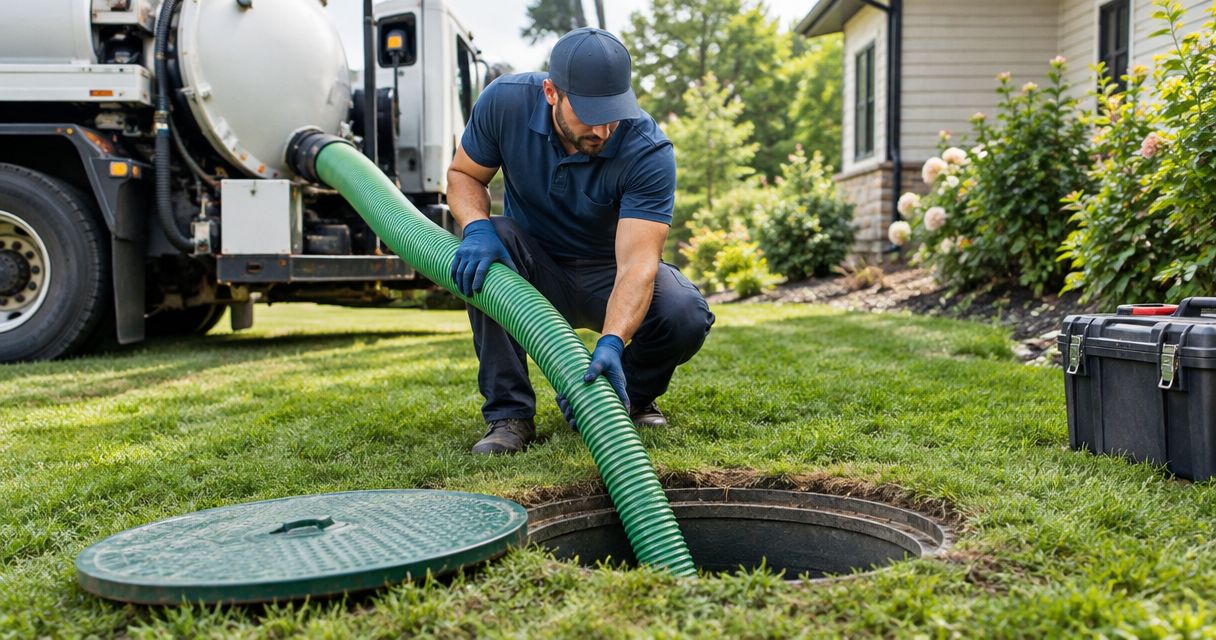
| Septic inspection and pumping | Septic maintenance and investigation of tank-related problems | Evaluates the system and removes accumulated tank solids when needed | Does not automatically clear a household drain or repair a drain field |
| Enzyme drain product | Evaluating a product’s stated maintenance use | Provides a labeled treatment option to assess | Is not an emergency clearing method or a substitute for septic maintenance |
Avoid caustic or acidic drain openers in a septic system. A product label claiming septic compatibility does not establish that the product suits your pipe, blockage, or system. Do not mix cleaners, and do not add another product to neutralize one already in the drain.
Common mistakes septic homeowners make
Treating every slow drain as a full tank
A bathroom stopper packed with hair needs a different response from wastewater surfacing near the drain field. Start with the symptom pattern and service history. Request an explanation of the suspected cause before authorizing work aimed at a different part of the system.
Buying additives instead of arranging maintenance
An additive does not remove the need for inspection and pumping. Repeated dosing also tells you nothing about a crushed pipe, root intrusion, or saturated treatment area. Follow the system’s maintenance requirements rather than treating a bottle as a service plan.
Flushing repeatedly to test a backup
Repeated flushing adds water without identifying the obstruction. Once sewage rises in another fixture, stop the test and stop unnecessary household water use. Tell the service provider what triggered the first backup instead of trying to recreate it.
Booking drain clearing without mentioning septic
The property’s wastewater system affects where the problem could be and which provider should attend. Say “septic system” when booking, then describe indoor and outdoor symptoms separately. Confirm who handles septic components if the investigation points beyond the house drain.
FAQ
What is the safest first step for a clogged drain on septic?
Check whether the problem affects one fixture or several, then remove accessible debris only if conditions are safe. Stop water use and request urgent help if sewage backs up or water rises in another fixture.
Can I use chemical drain cleaner with a septic system?
Avoid chemical drain cleaners in a septic system. Use accessible debris removal or an appropriate manual method for a simple fixture clog, and tell the plumber about any cleaner already used.
Is an enzyme cleaner enough to clear a septic drain backup?
An enzyme cleaner is not an emergency remedy for a septic drain backup. A blockage, damaged pipe, or septic-system problem needs assessment rather than repeated product dosing.
Will pumping my septic tank unclog the kitchen sink?
Pumping the septic tank does not necessarily unclog a kitchen sink. Grease or debris inside the sink’s drain line requires work at that obstruction, while septic maintenance addresses a different part of the system.
Is hydro jetting safe for pipes connected to septic?
Hydro jetting requires an assessment of the pipe condition, access, and discharge route before use. A professional should explain why it suits the particular line; high pressure is not the right response to every blockage.
Who should I call if several drains back up at once?
Call a licensed plumbing professional and explain that the home uses a septic system. Mainline Plumbing connects homeowners nationwide with vetted local licensed and insured plumbers; confirm whether a septic specialist is also needed.
How often should a household septic system be inspected and pumped?
EPA guidance recommends inspecting an average household septic system at least every 3 years and generally pumping every 3–5 years. Actual needs depend on the system and household, and systems with mechanical components need more frequent attention.
One last thing
Water disappearing from the sink proves drainage improved; it does not prove the underlying problem is repaired. If the same clog returns, ask what caused it and what evidence supports the next repair. Keep that explanation with your 2026 maintenance records so the next appointment starts with facts.
Related guides
- Best enzyme drain cleaners for septic systems
- Best drain snakes for clogged drains
- Drain cleaning for rental property owners
Need the blockage assessed? Book service through Mainline Plumbing, describe the affected fixtures, and say that your home uses septic before the appointment is arranged.
Book help for your blocked drain
Connect with a vetted local licensed and insured plumber. Mention your septic system when booking.