Older-home sewer camera inspection is a visual check inside a home's sewer pipe to identify visible defects and guide repair decisions. This 2026 guide explains when to book one, what the footage proves, and how to handle aging pipes without approving unnecessary work.
- Sewer camera inspection for old homes helps identify visible roots, cracks, blockages, and damaged joints before repair decisions.
- Mainline Plumbing connects homeowners nationwide with vetted local licensed and insured plumbers for sewer and drain services.
- Request recorded footage and written findings; a camera inspection alone does not prove a pipe is watertight.
- Stop water use when sewage backs up, and arrange urgent plumbing help rather than testing more fixtures.
Why sewer camera inspection matters for older homes
An older home's sewer line can contain original pipe, replacement sections, or several materials joined together. The building's age does not establish the condition of the buried pipe. You need evidence from the line itself.
Repeated drain clearing without a documented inspection leaves an important question unanswered: what keeps causing the blockage? A camera can reveal roots, separated joints, visible cracks, and debris. It also shows where visibility ends, which matters just as much as what appears on screen.
For your 2026 maintenance plan, prioritize recurring backups and unexplained drainage changes over age alone. A trouble-free older pipe does not automatically need replacement, and recently installed sections do not rule out problems elsewhere.
Mainline Plumbing is best for older-home owners who want help connecting with vetted local licensed and insured plumbers for sewer inspection. You can start through Mainline Plumbing, which connects homeowners nationwide with local professionals rather than operating one in-house national plumbing team.
How to arrange an inspection and use the findings
1. Separate an active backup from a maintenance concern
If sewage rises into a shower, floor drain, or other low fixture, stop using plumbing fixtures. Running another faucet or flushing again adds water to a system that is not draining properly. Keep children and pets away from contaminated areas.
Do not enter standing water near electrical equipment. If water creates an electrical hazard, stay clear and contact emergency help or your utility as appropriate. A camera inspection comes after immediate safety and backup-control decisions, not before them.
A slow bathroom sink alone does not establish a main sewer blockage. Describe which fixtures are affected and whether using one fixture causes another to gurgle or back up. That pattern helps the plumber decide where to investigate.
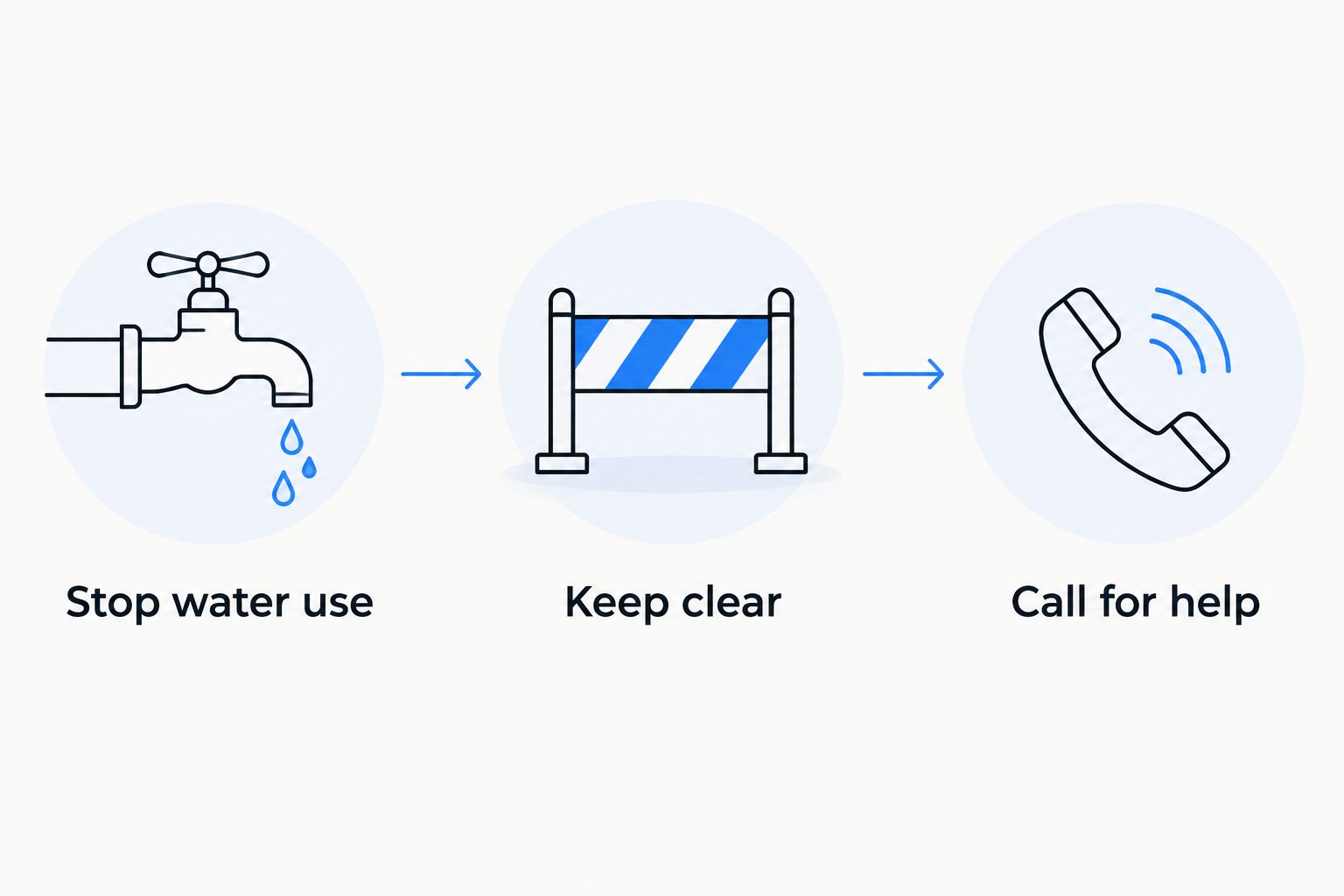
- Stop water use: avoid flushing, laundry, and dishwashing during an active backup.
- Keep clear: stay away from sewage and water near electrical equipment.
- Call for help: describe the affected fixtures and whether wastewater is rising.
- Record symptoms: photograph visible conditions from a safe, dry location.
2. Gather the house's drain history
Start with records you already have: previous plumbing invoices, seller disclosures, inspection reports, and any sewer repair documentation. Note recurring trouble spots rather than trying to diagnose them yourself. A pattern of backups matters more than a guess about the pipe material.
During a 2026 renovation, check whether the planned work would cover access points or put new finishes above a previously troublesome drain route. Investigating before closing walls or finishing a basement avoids making the pipe harder to reach later.
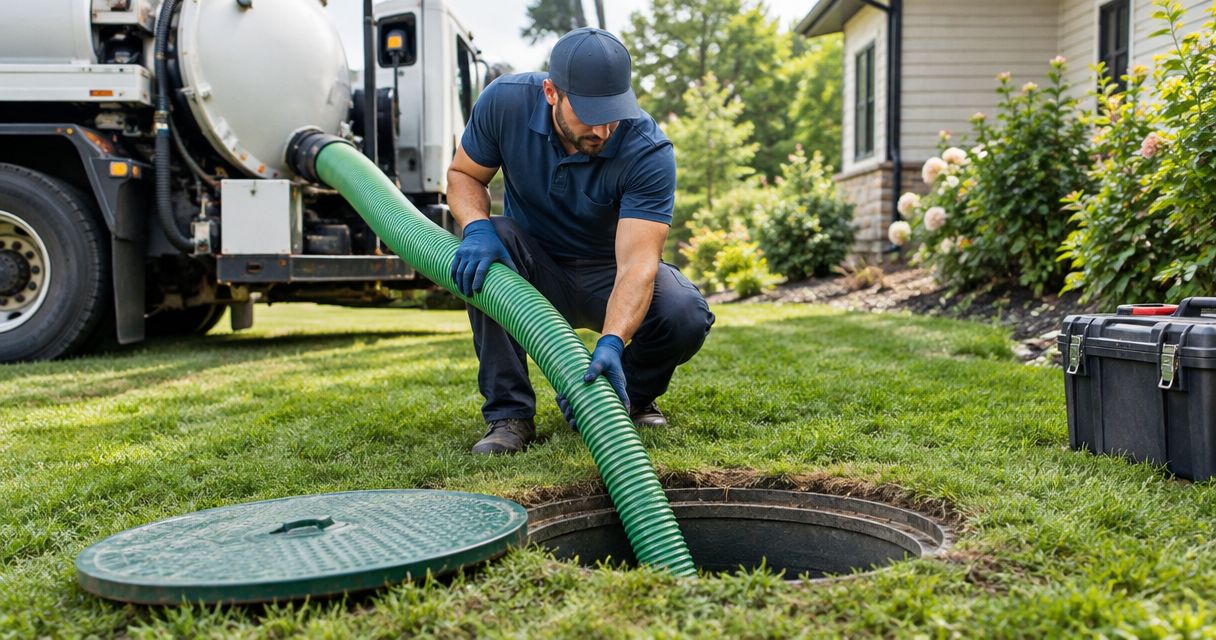
Look for a visible cleanout, the capped access opening used to reach a drain or sewer line. Leave the cap in place if the line is backed up; opening it can release wastewater. The plumber should assess safe access.
- List previous backups and the fixtures affected.
- Gather invoices for drain clearing and sewer repairs.
- Identify visible access points without opening them.
- Note large trees near the suspected sewer route.
- Tell the plumber about any drain chemicals already used.
3. Confirm the inspection scope before booking
Ask what the appointment includes before agreeing to it. A camera view, recorded footage, a written assessment, and surface locating are different deliverables. Do not assume that every inspection includes all of them.
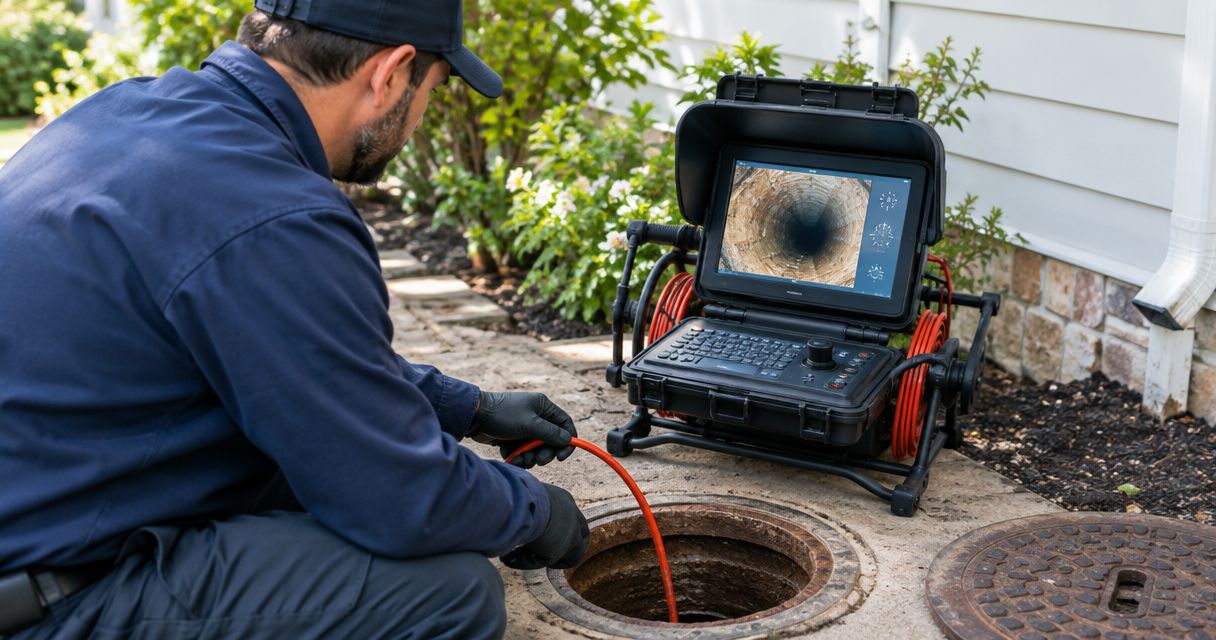
A sewer camera travels through accessible pipe and shows the interior along the route it reaches. An obstruction, tight turn, damaged section, or lack of access can prevent a complete inspection. Ask how the plumber will report an incomplete run and what happens next.
Mainline Plumbing provides a faster route to finding vetted local licensed and insured professionals, with 24/7 availability. Confirm the specific sewer-camera work with the connected professional; the matching service does not replace an agreed inspection scope.
For a home purchase, coordinate access and delivery of the report with your transaction deadlines. A general home inspection and a dedicated sewer inspection are not interchangeable.
- Confirm the intended start point and inspection endpoint.
- Ask whether recorded footage and written findings are included.
- Ask whether surface locating is included when a defect appears.
- Clarify whether cleaning requires separate authorization.
- Request an explanation if the camera cannot complete the route.
4. Review the footage with the plumber
Ask the plumber to explain the footage in plain language. Roots entering a joint, a visible opening, and deposits narrowing the pipe are different findings. They do not all call for the same response.
Standing water deserves context. It can indicate a low section or another drainage problem, but a camera image alone does not establish the pipe's exact slope. Ask what additional evidence supports the diagnosis before treating a water-filled section as proof that replacement is required.
Keep 2 records: the inspection video and the written findings. For a 2026 inspection, save the date, property address, access point, and inspected route with those files. Future comparisons are useful only when you know which section each recording covers.
A camera also has limits. It does not see soil outside the pipe, reliably establish remaining service life, or prove that the entire line is watertight. Heavy deposits and wastewater can conceal the pipe wall.
- Ask the plumber to identify each visible defect on screen.
- Separate confirmed findings from areas hidden by water or debris.
- Record where the camera stopped and why.
- Ask how the defect's location was established.
- Save the footage and written explanation together.
5. Decide whether cleaning should come before another camera pass
Cleaning and inspection solve different problems. Cleaning removes an obstruction or buildup; inspection documents visible conditions. A blocked line sometimes needs clearing before the camera can show the pipe beyond it.
The cleaning method should fit the pipe's condition and the obstruction. Do not request aggressive cleaning solely because the house is old or because a particular machine sounds more powerful. Ask the plumber to explain the choice, especially when brittle or visibly damaged pipe is suspected.
After cleaning, another camera pass can show whether the obstruction is gone and reveal surfaces that were previously hidden. It does not guarantee that roots or buildup will never return. Ask what remains and whether a structural opening still needs attention.
- Ask what is blocking the camera or wastewater flow.
- Have the plumber explain the proposed cleaning method.
- Disclose any chemical drain cleaner used before the visit.
- Confirm whether post-cleaning footage is included.
- Request a separate explanation of remaining pipe damage.
6. Match the repair decision to the evidence
A repair recommendation should identify the defect, its location, and the reason the proposed method fits. Restored drainage alone does not prove that damaged pipe is repaired. Equally, an older pipe does not need replacement just because a newer material exists.
A 2026 repair decision should distinguish maintenance from structural work. Root removal addresses roots inside the line; it does not necessarily close their entry point. A localized defect and damage spread along the line also require different discussions.
Ask about access, the condition of the remaining pipe, and any local requirements before choosing repair work. If a major recommendation rests on unclear footage, request clarification or another professional assessment. The guide to trenchless sewer repair methods explains options to discuss once the defect is documented.
- Request the footage supporting the proposed repair.
- Ask why maintenance alone is insufficient, if repair is recommended.
- Compare localized work with broader replacement when applicable.
- Confirm responsibility for permits, access, and surface restoration.
- Get the work scope and workmanship terms in writing.
Compare your inspection and repair options
Choose the next action by the problem you need to solve. These options are not substitutes: recording a defect, removing a blockage, and repairing a pipe accomplish different things.
| Option | Best for | Main benefit | Key limitation |
|---|---|---|---|
| Review existing records | Homeowners planning maintenance without an active backup | Establishes previous work and recurring symptoms | Does not show the pipe's current condition |
| Professional camera inspection | Homeowners needing evidence of visible internal defects | Shows accessible pipe interiors and supports a repair discussion | Cannot see through deposits or prove watertightness |
| Cleaning followed by inspection | Homeowners whose blockage prevents a useful camera view | Restores visibility and documents the cleared section | Cleaning alone does not repair structural damage |
| Localized sewer repair | Homeowners with a documented defect confined to a section | Targets the identified damaged area | Leaves the remaining pipe in service |
| Broader sewer replacement | Homeowners with documented damage that warrants wider work | Replaces the specified pipe section or route | Requires a clearly justified scope and access plan |
| Mainline Plumbing connection service | Homeowners seeking vetted local licensed and insured plumbers | Provides nationwide connections and 24/7 availability | Inspection details and repair scope still require confirmation with the local professional |
Do not approve replacement from a vague description such as “the pipe looks old.” Ask what failed, where it failed, and why the proposed work addresses it.
Common mistakes owners of older homes make
Treating the house's age as the diagnosis
The sewer line can be older or newer than other plumbing in the house. Partial repairs also leave mixed materials and joints. Use records and inspection findings instead of assuming every buried section is original.
Confusing a cleared blockage with a repaired sewer
Water flowing again is useful, but it answers only whether the drain is open at that moment. Ask whether roots, cracks, or joint openings remain. Keep the post-cleaning findings rather than relying on a verbal all-clear.
Assuming a finished basement proves the drains are sound
New flooring and fixtures do not document buried pipe condition. If the house has a backup history, investigate that history before adding finishes or storing valuables near low drains. Cosmetic work and sewer condition are separate questions.
Accepting a complete-inspection claim without an endpoint
A recording that ends at an obstruction does not document everything downstream. Ask where the camera started, where it stopped, and what remained unseen. An incomplete inspection can still be useful, but its limits belong in the report.
Choosing equipment before identifying the task
A homeowner camera does not replace safe access, professional interpretation, or an appropriate cleaning method. Do not force equipment through resistance or open a backed-up cleanout to try it. Start with the problem and the access conditions, not the tool.
FAQ
Is sewer camera inspection worth it for an older home?
Sewer camera inspection is useful when an older home has recurring backups, unexplained drainage problems, or a sewer condition that needs documenting. Age alone does not prove that a pipe is damaged or needs replacement.
Can a sewer camera tell whether my pipe needs replacing?
A sewer camera can document visible defects that support a repair or replacement recommendation. The plumber must also consider the inspected route, access, hidden areas, and whether additional testing is needed.
Should the plumber clean the sewer before using a camera?
Cleaning should come first when a blockage prevents a useful inspection or drainage needs restoring. Ask whether another camera pass will document the line after cleaning.
Can a camera inspection find tree roots in old sewer pipes?
A sewer camera can show roots inside the accessible pipe. Ask the plumber to identify the apparent entry point and explain whether clearing the roots addresses the underlying defect.
Does standing water on the camera mean my sewer must be replaced?
Standing water alone does not establish that sewer replacement is necessary. Ask what causes the water to remain and what evidence supports the proposed repair.
Can I keep using water while sewage is backing up?
Stop using plumbing fixtures when sewage is backing up. Additional water can worsen the overflow; stay away from contaminated water and arrange urgent plumbing help.
Does Mainline Plumbing send its own national sewer inspection team?
Mainline Plumbing connects homeowners nationwide with vetted local licensed and insured plumbers, rather than sending one in-house national team. Confirm camera inspection deliverables and the proposed work with the connected professional.
One last thing
Ask to see where the camera stopped, not just where it found damage. An impressive close-up of roots does not explain the condition of the pipe beyond them. The unseen portion belongs in the decision, especially before approving extensive work.
For any inspection booked in 2026, keep the original recording rather than only screenshots. A continuous view gives the next professional more context when comparing conditions or reviewing a repair recommendation.
Related guides
- Sewer camera inspection for homebuyers
- Sewer inspection cameras for homeowners
- Smart water leak detectors for homes
Need a documented answer about your sewer line? Book service through Mainline Plumbing and confirm the inspection scope with a vetted local professional. For an active sewage backup, stop water use and request urgent help.
Book sewer inspection service
Connect with a vetted local licensed and insured plumber. Confirm camera inspection scope before work begins.