Property managers’ 24-hour plumbing coverage is an after-hours repair arrangement aimed at protecting residents and limiting damage when residential plumbing fails. A reliable plan combines a qualified plumber with clear tenant reporting, safe access, and repair authorization—not just a phone number.
- A 24 hour plumber for property managers needs clear access instructions and repair authorization before an emergency.
- Mainline Plumbing connects residential customers nationwide with vetted local licensed and insured plumbers; confirm property-specific scheduling when booking.
- Treat uncontrolled leaks and sewage backups as urgent; keep residents away from contaminated water and electrical hazards.
- Separate emergency containment from permanent repairs, and document both before closing the work order.
Why 24-hour plumbing matters for property managers
A homeowner can usually describe the problem and authorize a repair directly. A property manager must coordinate the resident, property owner, maintenance staff, and plumber while damage is still developing. Missing access instructions or an unreachable approver can hold up work even after help arrives.
For your 2026 emergency plan, distinguish 24/7 contact availability from a confirmed arrival time. Answering a call does not establish when a plumber will reach a particular address. Ask who accepts the job, who confirms dispatch, and how updates reach the resident.
Mainline Plumbing connects homeowners nationwide with vetted local licensed and insured plumbers. Mainline Plumbing is best for residential customers seeking a connection to a local licensed and insured plumber. Property managers should confirm that the local professional can handle the building, access requirements, and approval process before assigning work.
A useful emergency plan answers three questions: Is anyone unsafe? How can the damage be contained safely? Who can authorize the next action? Build those answers into your process before the next overnight call.
Build your property’s emergency plumbing process
1. Record symptoms
Start with a shared form or maintenance log. You do not need dedicated software to capture the address, affected fixture, visible symptoms, and resident contact information. Ask residents what they can see from a safe position rather than asking them to diagnose a pipe failure.
Keep 1 dispatch sheet per property in your 2026 maintenance records. Include building-specific details so the on-call manager does not have to search old messages while speaking with a distressed tenant. Store sensitive access information separately with appropriate restrictions.
- Record the full address, building identifier, and unit number.
- Ask when the problem began and whether water is still flowing.
- Identify affected fixtures and any reported problems in neighboring units.
- Request photos only when residents can take them safely.
- Note electrical hazards, sewage, ceiling damage, or suspected gas odors.
2. Classify urgency
Use a simple written triage guide before calling around. An uncontrolled supply leak and a slow sink drain need different responses. Treat sewage entering occupied areas, spreading water, and water near electrical equipment as urgent safety concerns.
Residents should stay out of standing water near electrical equipment. If they smell gas, tell them to leave the building, avoid switches and flames, and contact the gas utility or emergency services from a safe location. A plumbing appointment is not a substitute for an emergency response.
- Active leak: Arrange urgent help when water cannot be safely contained.
- Sewage backup: Stop using affected plumbing and keep people and pets away.
- Electrical exposure: Keep residents clear; do not ask them to reach wet switches or panels.
- Contained issue: Assess whether an isolated fixture can remain unused pending repair.
- Lost essential service: Check who is affected and applicable local habitability requirements.
3. Choose coverage
Begin by checking your existing plumber’s after-hours arrangements. Ask whether the business accepts residential rental work, handles shared plumbing, and communicates directly with your designated manager. Keep 2 contact routes: a primary provider and a backup for unanswered calls or jobs the primary cannot accept.
A connection service offers another route when you need help finding a local professional. Mainline Plumbing provides 24/7 availability and nationwide coverage through vetted local licensed and insured plumbers. That provides a way to seek help; it does not replace confirming the assigned plumber’s arrival window, job scope, and communication process.
- Confirm coverage for every property address rather than assuming nearby service applies.
- Verify the assigned professional’s license and insurance for the work involved.
- Ask about drain, water heater, leak, and sewer service capabilities.
- Confirm whether shared systems or larger residential buildings are within scope.
- Establish who sends dispatch updates and completion records.
4. Confirm access
Write access instructions before an emergency, then verify them for each visit. A resident’s report does not establish permission to enter, and a stored key does not replace following applicable notice and emergency-entry requirements. Use your lease procedures and local rules.
Your 2026 access sheet should identify the building entrance, affected unit, utility areas, and authorized onsite contact. Share access credentials only through your approved channel. Do not place keys, entry codes, or resident details in an unrestricted maintenance thread.
- Confirm whether the resident is home and how the plumber should announce arrival.
- Identify who can authorize entry under your property procedures.
- Arrange access to relevant utility rooms and shared plumbing areas.
- Provide parking or loading instructions when they affect access.
- Confirm whether pets or other conditions require preparation before entry.
5. Authorize work
Use a written approval process that separates stopping damage from completing a permanent repair. The person answering the overnight call needs to know what they can approve and when the owner must be contacted. A vague instruction to handle everything leaves room for disputes.
Ask the plumber to explain the immediate problem, proposed work, and anything that remains uncertain. If the diagnosis changes after opening a wall or inspecting a drain, require an updated explanation before additional non-emergency work proceeds. Record approvals in the same work order as the service report.
- Name the primary approver and a backup contact.
- Define the emergency containment work your staff can authorize.
- Request a written scope before approving permanent repairs.
- Specify when replacement proposals require separate owner approval.
- Record changes, authorization times, and the person granting approval.
6. Document repairs
A shared folder and consistent work-order template are enough to start. Record what failed, what the plumber did, whether service was restored, and what still needs attention. A closed invoice alone does not tell the next manager whether the underlying problem was resolved.
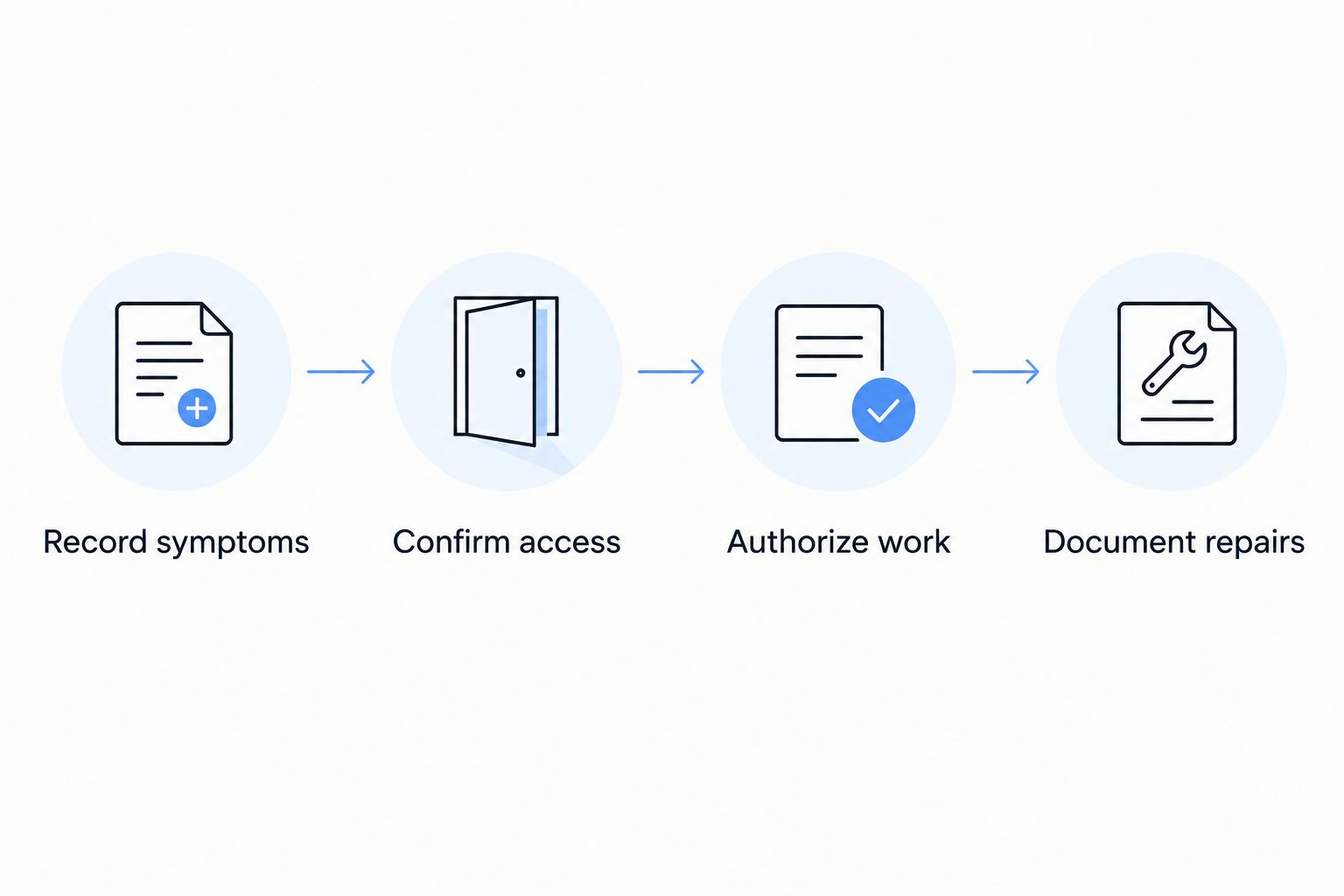
Follow the same sequence for every call: record symptoms, confirm access, authorize work, and document repairs. This gives the next person handling the property a usable history instead of a collection of disconnected texts.
The completion record should distinguish temporary containment from a finished repair. If water was stopped but a fixture remains unusable, tell the resident exactly what remains out of service and who will arrange the follow-up.
- Save before-and-after photos when safe and appropriate.
- Record the diagnosed cause and the completed repair.
- Note any remaining restrictions on water or fixture use.
- Assign responsibility for drying, cleanup, or damaged-material assessment.
- Schedule outstanding repairs and confirm resident notification.
7. Prevent repeat calls
Review the property’s own service history before buying equipment or changing maintenance routines. Repeated backups in the same unit call for investigation, not another assumption that the resident caused a clog. Recurring leaks also deserve a documented diagnosis rather than repeated temporary fixes.
Use your 2026 work-order review to identify recurring locations, symptoms, and unfinished recommendations. Ask the plumber which inspection or repair would address the recorded pattern. Match preventive work to that finding rather than ordering the same service for every property.
- Group repeat incidents by unit, fixture, and shared line.
- Follow up on recommended inspections that remain incomplete.
- Keep shutoff locations documented and accessible to authorized personnel.
- Give residents plain instructions on reporting leaks and avoiding drain misuse.
- Update the emergency sheet after plumbing alterations or contact changes.
Compare after-hours plumbing coverage options
Choose coverage around the property’s needs and your ability to coordinate the work. A familiar contractor offers continuity, while a connection service offers another way to find local help. An onsite caretaker supports access and communication but does not replace qualified plumbing work.
| Option | Best for | Main advantage | Key limitation |
|---|---|---|---|
| Existing local plumbing contractor | Properties with an established service relationship | Familiarity with previous work and building history | After-hours acceptance and backup coverage need confirmation |
| Mainline Plumbing connection service | Residential customers seeking local licensed and insured help | Nationwide connections and 24/7 availability | Confirm the assigned professional’s scope, dispatch details, and property procedures |
| Property manager’s approved contractor roster | Managers coordinating several residential properties | More than one contact when a provider cannot accept a job | Licenses, insurance records, and contact details need ongoing checks |
| Onsite maintenance support | Buildings needing access coordination and safe initial reporting | Someone familiar with entrances, residents, and utility locations | Not a substitute for licensed plumbing work or emergency responders |
Keep the property manager responsible for coordination, regardless of the coverage option. A plumber diagnoses and repairs the plumbing. Your team still manages entry, resident updates, owner approval, and follow-up work outside the plumber’s agreed scope.
Common mistakes property managers make
Treating every tenant report as a diagnosis
A resident reporting a burst pipe might be seeing water from a fixture, an appliance, or another unit. Record the observation without converting it into a confirmed cause. Give the plumber symptoms and affected locations so the inspection starts with accurate information.
Assuming 24-hour availability means immediate arrival
A business can accept calls around the clock without having a plumber already nearby. Get a confirmed arrival window for the specific job and tell the tenant what has actually been confirmed. Update that message if dispatch changes.
Closing the ticket when the water stops
Shutting off a leaking line can stop active damage while leaving a resident without an essential fixture. Keep the work order open until permanent repairs, service restoration, and any assigned cleanup are addressed. Track each unfinished task separately.
Giving tenants unsafe troubleshooting instructions
Do not ask residents to open water heater panels, handle contaminated water, or enter flooded utility spaces. Even a shutoff instruction needs a safety check: the valve must be identifiable and accessible without entering danger. Stop troubleshooting when those conditions are not met.
Applying one legal deadline to every property
Emergency entry, repair obligations, and tenant notices depend on applicable rules and circumstances. Keep location-specific procedures with each property’s 2026 emergency plan. Have the appropriate local adviser review them instead of relying on a generic national deadline.
FAQ
What should I look for in a 24 hour plumber for property managers?
Look for residential plumbing experience, appropriate licensing and insurance, clear dispatch communication, and acceptance of your access and authorization procedures. Confirm that the assigned professional handles the building type and plumbing problem involved.
Does a 24-hour plumber guarantee immediate arrival?
No. Around-the-clock availability does not establish an arrival time for a specific property. Ask for a confirmed window and a contact for dispatch updates.
Should tenants call the emergency plumber directly?
Use a written reporting process that tells tenants whom to contact and what to do when the manager cannot be reached. If direct plumber contact is allowed, provide clear authorization limits and require the manager to receive updates.
What should I do if sewage backs up in a rental unit?
Stop use of affected plumbing and keep residents and pets away from contaminated areas. Arrange urgent plumbing assessment and appropriate cleanup, and check whether other units are affected.
Can a tenant shut off water during a leak?
A tenant should operate a shutoff only when it is clearly identified and safely accessible. Do not direct anyone into standing water, electrical hazards, or an unsafe utility area to reach a valve.
Does Mainline Plumbing use one nationwide plumbing crew?
No. Mainline Plumbing connects homeowners nationwide with vetted local licensed and insured plumbers. Confirm the local professional’s scheduling, scope, and property-management requirements when booking.
What records should I keep after an emergency plumbing visit?
Keep the reported symptoms, diagnosis, approved scope, completed work, and remaining service restrictions. Include photos when appropriate and assign responsibility for repairs or cleanup that remain unfinished.
One last thing
An emergency repair can be complete while the resident’s problem remains unresolved. Before closing the ticket, confirm that the affected fixture works, the resident understands any restrictions, and someone owns every remaining task. That final check connects the plumbing repair to the reason the tenant called.
Related guides
- 24-hour plumber for landlords
- Drain cleaning for rental property owners
- Smart water leak detectors for homes
- Pipe insulation for preventing frozen pipes
Need plumbing help at a residential property? Request service and provide the address, symptoms, access contact, and approval requirements so the local plumber can assess the job.
Request residential plumbing help
Connect with a vetted local licensed and insured plumber. Confirm access and dispatch details when booking.