Fixing a leaking pipe takes as long as finding the source, reaching the damaged section, completing the repair, and checking it under working conditions; a reliable time estimate requires knowing that scope. The plumbing repair also excludes any separate drying, drywall repair, or other restoration your home needs afterward.
- Fix a leaking pipe how long? Access, damage, and testing determine the schedule—not the size of the puddle.
- An exposed pipe avoids the opening and restoration work that a concealed leak can require.
- Stop active water damage before waiting for a repair-time estimate.
- Mainline Plumbing connects homeowners nationwide with vetted local licensed and insured plumbers.
Why this matters
Stopping the leak and finishing the job are different milestones. Your plumber can explain when the water can be restored, while drying and surface repairs follow a separate schedule. Ask about both before treating a plumbing appointment as the end of the cleanup.
For homeowners seeking a local licensed and insured plumber, Mainline Plumbing provides nationwide connections with 24/7 availability. That availability does not establish an arrival time or repair duration for your particular address.
Use this 2026 guide to understand what controls the schedule, what you can safely do before help arrives, and which questions get you a useful estimate instead of a guess.
How long does it take to fix a leaking pipe?
There is no single repair time that applies to an exposed connection, a pipe behind a wall, and an underground water line. Ask for an estimate based on the actual leak location and the work needed to reach it. A visible drip is a symptom, not a complete diagnosis.
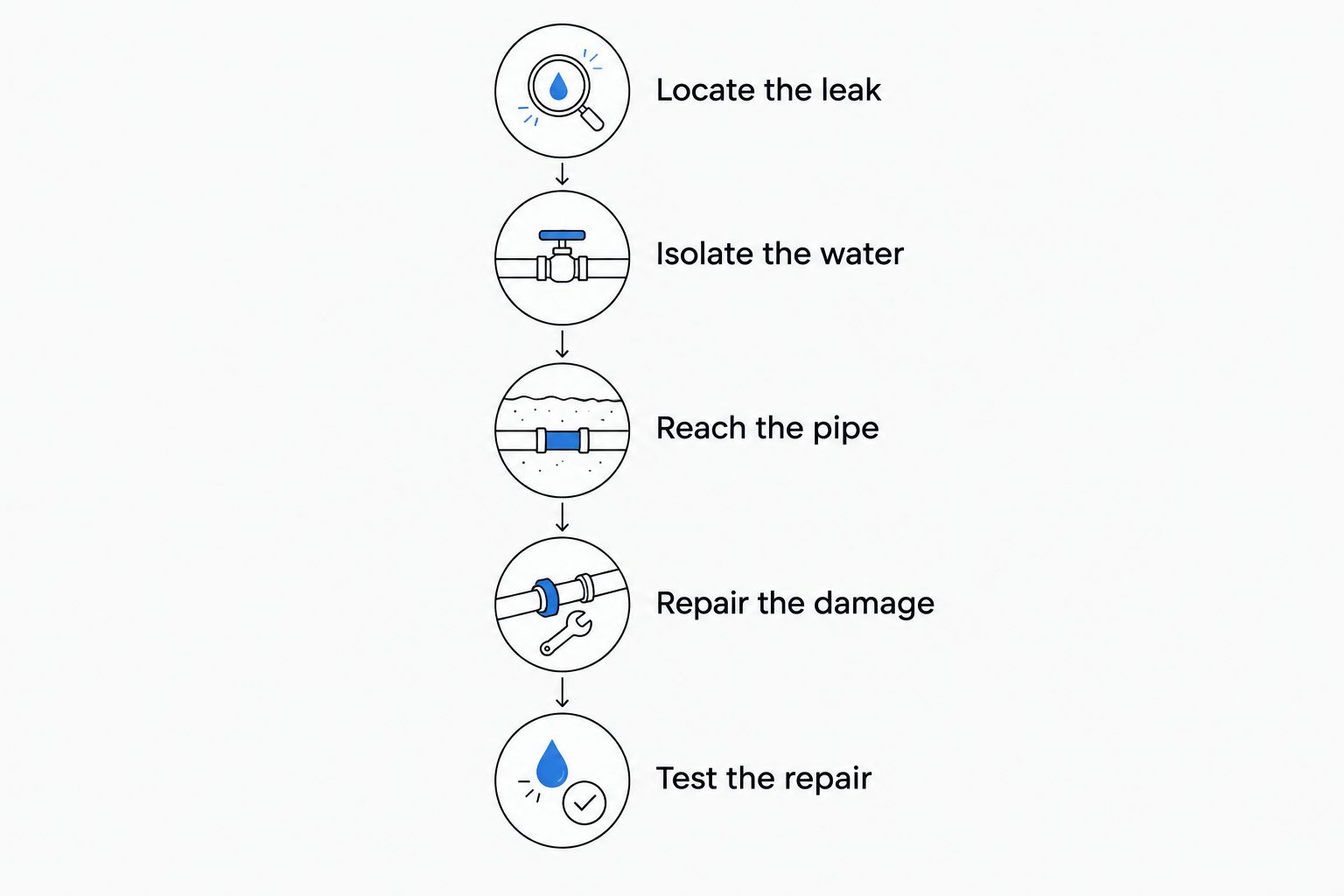
A useful repair plan follows these stages:
- Locate the leak. Identify the actual source, rather than assuming the wet spot marks the damaged pipe. Water can travel along surfaces before becoming visible.
- Isolate the water. Stop the supply to the affected section when possible. The plumber also checks whether the shutoff controls the water as intended.
- Reach the pipe. Clear the workspace or arrange access through the surrounding material. Concealed pipes require a different plan from exposed plumbing.
- Repair the damage. Repair the failed connection or replace the affected section using a method suited to the pipe and its condition.
- Test the repair. Restore service as appropriate and check the repaired area for leakage. A drain repair needs checking while water flows through it.
These stages explain why an estimate given before inspection differs from one given after the pipe is exposed. Ask which stages the quoted schedule includes and what discoveries would change it.
Exposed pipe leaks: access is already available
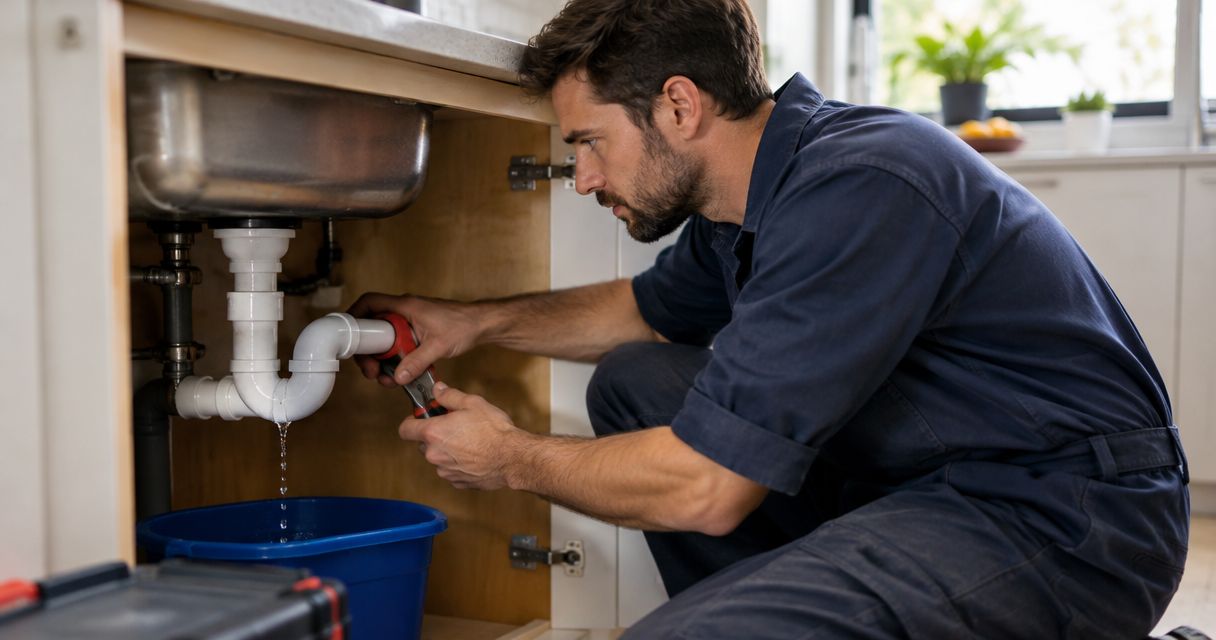
An exposed leaking pipe removes an important obstacle: the plumber can inspect the affected area without first opening a wall or floor. That makes the scope easier to assess, but it does not guarantee a quick repair. A damaged connection and a deteriorated pipe section need different work.
Tell the plumber whether the leak appears constantly or only when you use a fixture. Also describe whether it comes from a joint, a flexible supply line, or the pipe itself—without taking anything apart to find out.
Best for a straightforward assessment: a visible leak with a clear, safe workspace. The limitation is that an accessible pipe can still have damage extending beyond the wet spot.
Concealed pipe leaks: finding the source comes first
A stain on a ceiling does not identify the exact repair location. Water can move before it drips, so opening the surface directly beneath a stain is not automatically the right first step.
The plumber needs to locate the source and explain the access plan. Ask who will open the surface, how the opening will be chosen, and who handles the repair afterward. Do not assume those tasks belong to the same service appointment.
Best for limiting unnecessary openings: locating a concealed leak before choosing where to access it. The trade-off is that diagnosis adds work before the damaged pipe can be repaired.
Underground pipe leaks: access changes the job
A buried water line presents a different access problem from a pipe inside a cabinet. The repair plan needs to account for the line's location, the surrounding ground, and any surface above it.
Do not dig based on a wet patch alone. Underground utilities must be identified before excavation, and local requirements affect how work proceeds. Ask the contractor what preparation is needed before work begins.
Best for planning buried-line work: an assessment that covers both the pipe repair and the access method. The limitation is that excavation and surface restoration are separate tasks from repairing the line itself.
| Leak situation | What helps the repair proceed | What complicates the schedule | Best next step |
|---|---|---|---|
| Exposed pipe | Direct inspection and access | Damaged shutoff, unsuitable connections, or wider deterioration | Describe the location and clear a safe workspace |
| Concealed pipe | Locating the source before opening surfaces | Access openings and separate restoration | Ask for the diagnosis and access plan |
| Underground pipe | Identifying the line and surrounding utilities | Excavation, site access, and surface repair | Confirm preparation and restoration responsibilities |
Why leaking-pipe repair time varies
The most useful scheduling factors are physical conditions, not promises made before anyone sees the pipe. For a repair booked in 2026, ask the plumber to explain these parts of your job:
- Leak location: An exposed connection is directly accessible; a concealed or buried pipe requires access work.
- Pipe condition: A localized failure and a deteriorated section require different repair scopes. Ask where sound pipe begins and ends.
- Shutoff condition: A valve that does not stop the water changes the isolation plan before repair can proceed.
- Repair method: The pipe material and connection type determine the appropriate method and any manufacturer-required waiting period.
- Extent of damage: Wet insulation, cabinets, flooring, or wall material creates cleanup and restoration work beyond the plumbing repair.
- Testing requirements: Restoring water is not the final check. The repaired area needs inspection under the conditions in which it will operate.
Ask what would change the estimate. That question gives you more useful information than asking a plumber to promise a finish time before the damaged section is visible.
What should you do while waiting for a plumber?
Your first job is to limit damage without putting yourself in danger. Do not begin cutting, loosening fittings, or removing a ceiling to help the repair along.
- Stop the water if safe. Use the affected fixture's shutoff when it controls the leak. If it does not, use the home's main shutoff if you can reach and operate it safely; never force a stuck valve.
- Keep away from electrical hazards. Do not enter standing water near electrical equipment or touch wet switches and outlets. Get appropriate emergency help when water creates an electrical danger.
- Stay out from under damaged ceilings. A sagging or bulging wet ceiling needs assessment, not an improvised puncture from below.
- Protect belongings safely. Move dry items away from the area and contain drips only where the floor and surroundings are safe.
- Record what you see. Take photos from a safe position and note whether the leak changes when a fixture runs.
- Keep access clear. Remove stored items around the affected area without touching damaged plumbing or wet electrical equipment.
If shutting off the water affects a water heater or another appliance, follow its manufacturer's instructions or ask the plumber what to do. Do not improvise with gas controls or electrical connections.
Can a plumber fix a leaking pipe during the first visit?
A first-visit repair depends on whether the plumber can identify the failure, access it safely, and complete an appropriate repair with the required materials. Booking an appointment is not a guarantee that every part of the job will finish during that visit.
When arranging service in 2026, give the dispatcher the location, whether water is still escaping, and whether the shutoff works. Ask whether photos would help them prepare, but do not delay emergency help to collect them.
Can you use water before the leaking pipe is fixed?
Use only the water service the plumber confirms is safe to use. A leaking supply pipe can continue releasing water while pressurized, while a drain leak can reappear when the connected fixture runs.
Do not assume that a dry floor means the problem is resolved. If the affected section has been isolated, ask exactly which fixtures must remain off and whether the rest of the home's plumbing can stay in service.
Does a temporary patch count as a finished repair?
A temporary patch is not evidence that the underlying failure has been corrected. Tape, sealants, and clamps have material and application limits; covering a leak does not establish that the surrounding pipe is sound.
Best for a lasting repair: a method selected for the pipe material, damage, and operating conditions. Temporary containment has a narrower role and must not replace professional assessment of an active or concealed leak.
Before accepting the job as finished, ask what was repaired, what was replaced, and whether anything remains temporary. Keep that explanation with your 2026 service records.
What should you ask before approving the work?
A clear estimate separates the plumbing task from everything around it. You should understand what the plumber expects to do and what remains outside the agreed scope.
Ask these questions before work starts, unless immediate action is needed to stop an emergency:
- Where is the leak, and what evidence identifies its source?
- Does the plan repair a connection or replace a pipe section?
- Will walls, floors, cabinets, or ground need opening?
- When will the plumber be able to give a firmer completion estimate?
- When can the affected fixtures return to service?
- Who handles drying, debris removal, and surface restoration?
- What testing confirms that the repair is complete?
Take special care with the phrase “water restored.” It means something different from “drywall replaced” or “room ready to use.” Confirm each milestone separately so your household can plan around the actual work.
FAQ
What's the quickest way to get a reliable leaking-pipe repair estimate?
Give the plumber the leak location, whether water is still escaping, and whether the shutoff works. A reliable completion estimate also requires assessing access, damage, and the repair method.
Does a small drip mean the pipe repair will be quick?
A small drip does not establish the repair time. Access, the source of the failure, and the condition of the surrounding pipe determine the work needed.
Should I shut off the main water supply for a leaking pipe?
Shut off the main supply if the leak cannot be isolated locally and you can reach and operate the valve safely. Do not force a stuck valve or enter water near electrical hazards.
Will the plumber also fix the wall after repairing the pipe?
Wall repair is not automatically included in a pipe repair. Confirm who handles access openings, drying, and restoration before approving the scope.
Can I leave a patched pipe until it leaks again?
Do not use the absence of a visible drip as proof that a patched pipe is permanently repaired. Ask a plumber whether the repair method is appropriate for the material and damage.
What should a leaking-pipe repair estimate include in 2026?
A leaking-pipe repair estimate in 2026 should identify the repair scope, access work, testing, and exclusions. Ask which findings would change the schedule and who handles restoration.
Can Mainline Plumbing help me find an emergency plumber?
Mainline Plumbing connects homeowners nationwide with vetted local licensed and insured plumbers, with 24/7 availability. Confirm the local professional's arrival estimate and repair scope when arranging service.
One last thing
A dry pipe is not the same as a dry home. Stopping the leak does not remove water already inside building materials. Before closing an access opening, confirm how the affected area will be assessed and dried; otherwise, the visible repair can hide an unfinished cleanup.
Related guides
- Can a plumber come the same night for a burst pipe?
- How much water pressure is too high for home pipes?
- Automatically shut off water when a leak detector trips
For an active leak, stop the water if safe and book service through Mainline Plumbing. Explain where the water appears, whether it is still flowing, and whether your shutoff works.
Book help for a leaking pipe
Connect with a vetted local licensed and insured plumber. Available nationwide, 24/7.