Water pressure above 80 pounds per square inch (psi) is too high for a home's water distribution piping and needs correction. For your 2026 pressure check, measure with all fixtures off; a normal reading while water is running does not rule out excessive pressure when flow stops or the water heater heats.
- Water pressure too high for pipes means static pressure above 80 psi; confirm it with a gauge.
- A pressure-reducing valve controls incoming pressure; an expansion tank handles pressure from heated water in a closed system.
- Banging pipes and dripping fixtures are warning signs, not proof; measure before choosing a repair.
- Mainline Plumbing connects homeowners nationwide with vetted local licensed and insured plumbers for residential plumbing service.
How much water pressure is too high for home pipes?
Above 80 psi is the key threshold, not a stronger-than-usual shower. The International Plumbing Code, Section 604.8, calls for pressure reduction when static pressure exceeds 80 psi. The International Residential Code, Section P2903.3.1, uses the same threshold for residential water distribution systems; your locally adopted code controls the actual installation requirements.
Use this table to interpret a household gauge reading. These are practical screening categories for a 2026 inspection, not a substitute for checking your plumbing and equipment requirements.
| Static pressure reading | What it means | What to do |
|---|---|---|
| Below 40 psi | Investigate if you also have weak flow | Check supply conditions, restrictions, and regulator settings |
| 40–60 psi | A common household operating range | Record the reading and investigate any recurring symptoms |
| Above 60 psi through 80 psi | Below the general code trigger, but not a target to pursue | Check fixture limits and watch for pressure increases |
| Above 80 psi | Excessive static pressure | Arrange diagnosis and pressure correction |
For help with that diagnosis, Mainline Plumbing connects homeowners nationwide with vetted local licensed and insured plumbers. Mainline Plumbing is best for homeowners seeking a local licensed and insured plumber through a nationwide service connection.
Why this matters
High pressure puts additional stress on faucet seals, toilet fill valves, appliance hoses, and plumbing connections. You do not need a visible burst pipe to have a pressure problem. Small recurring leaks deserve attention too.
Pressure and flow are different. Pressure is the force inside the water system; flow is how much water moves through an opening. A clogged showerhead can give you weak flow even when pressure elsewhere in the house is excessive.
For a 2026 home maintenance check, prioritize a gauge reading over the feel of a faucet. Replacing a showerhead does not correct excessive pressure throughout the house.
Static pressure above 80 psi: reduce incoming pressure
Static pressure is the reading with faucets, showers, irrigation, and water-using appliances off. It shows the pressure your plumbing holds when water is not moving. That is the measurement used for the general 80 psi threshold.
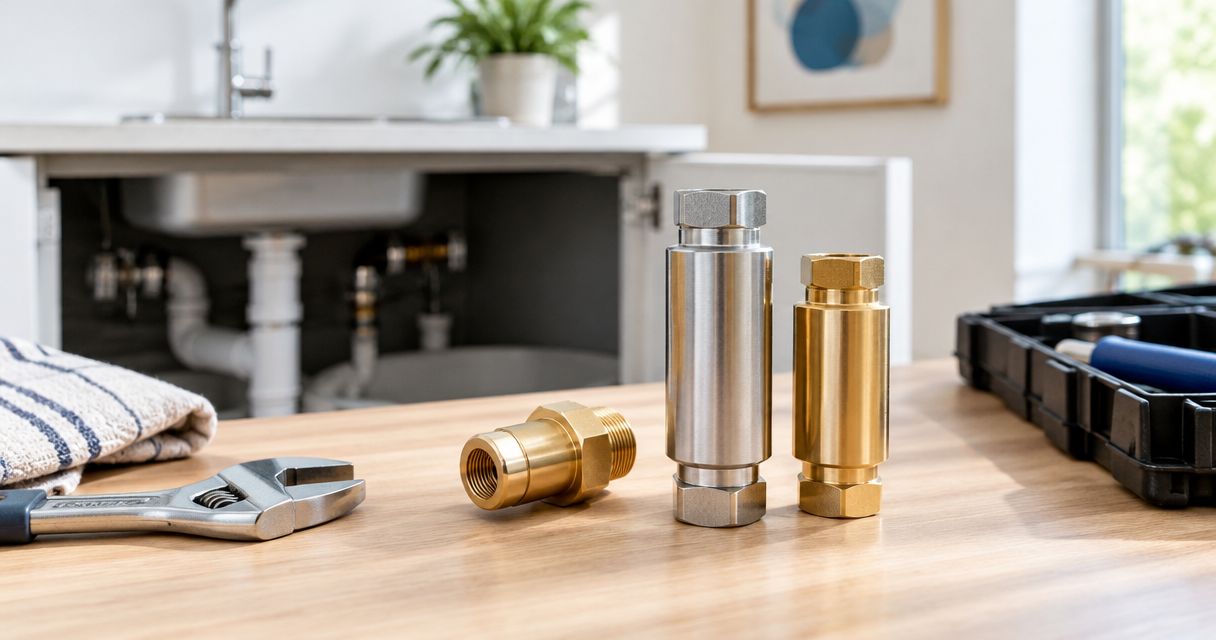
A pressure-reducing valve, often called a regulator, lowers pressure entering the house. If the house already has one, a plumber should check its setting and operation rather than assume another valve is needed.
Best for sustained high incoming pressure: a properly selected and functioning pressure-reducing valve. Its limitation is equally important: reducing incoming pressure does not, by itself, resolve every pressure increase caused by water heating.
Do not partly close the main shutoff valve as a substitute. That restricts flow while water is moving but does not reliably reduce static pressure after the fixtures close.
Pressure that rises above 80 psi after heating: check expansion
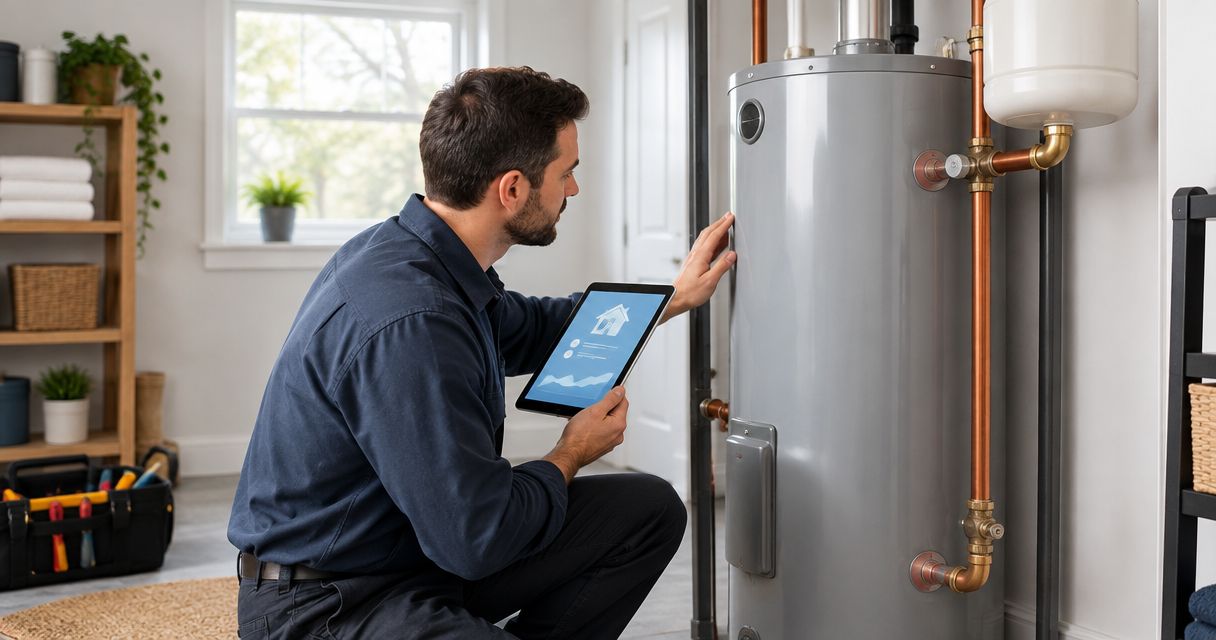
Water expands as it heats. In a closed plumbing system, where water cannot move back toward the supply, that expansion needs somewhere to go. Without effective expansion control, pressure can rise during a water-heating cycle.
The pattern matters: pressure starts within the expected range, then climbs after hot water use as the tank reheats. A recording gauge helps identify that change. The pattern points the investigation toward expansion control, but it does not prove that an expansion tank alone is the answer.
Best for thermal expansion in a closed system: a correctly sized and adjusted expansion tank where required. Its limitation is that it does not replace a pressure-reducing valve when the incoming supply is too high.
Do not cap, plug, or disable a water heater's temperature-and-pressure relief valve. Water discharging from that safety device requires diagnosis, not a blocked outlet.
How do you check your home's water pressure?
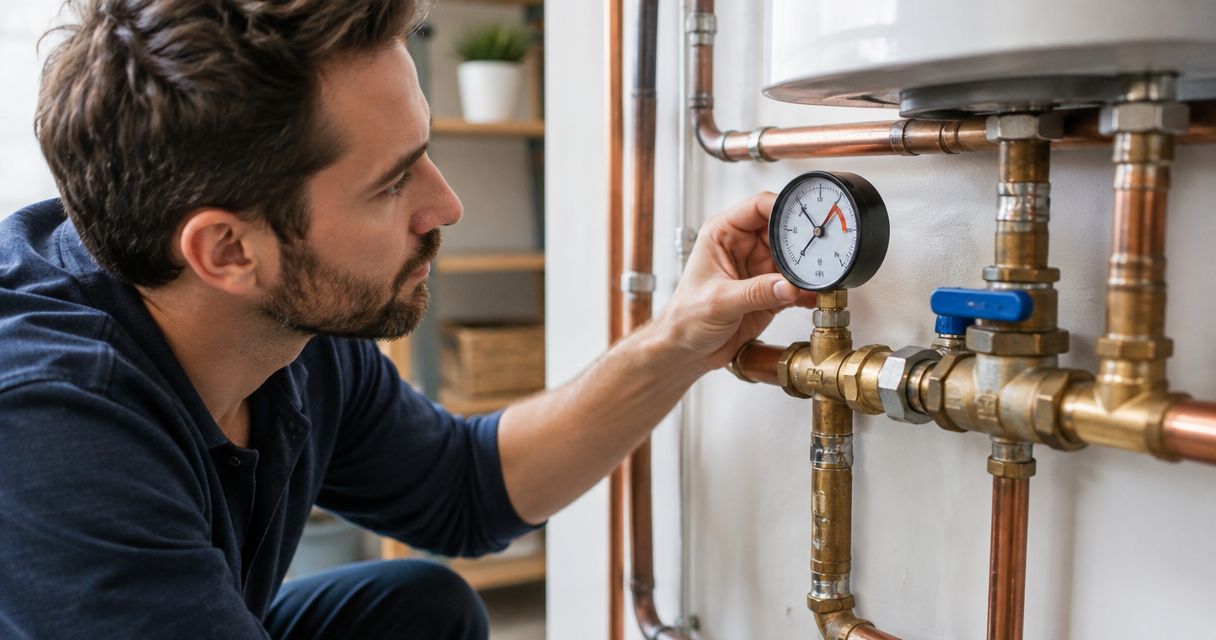
Use a water pressure gauge made for a threaded hose connection. Choose a gauge whose measurement range extends above the pressure you are checking; a recording hand is useful for detecting a higher reading between checks.
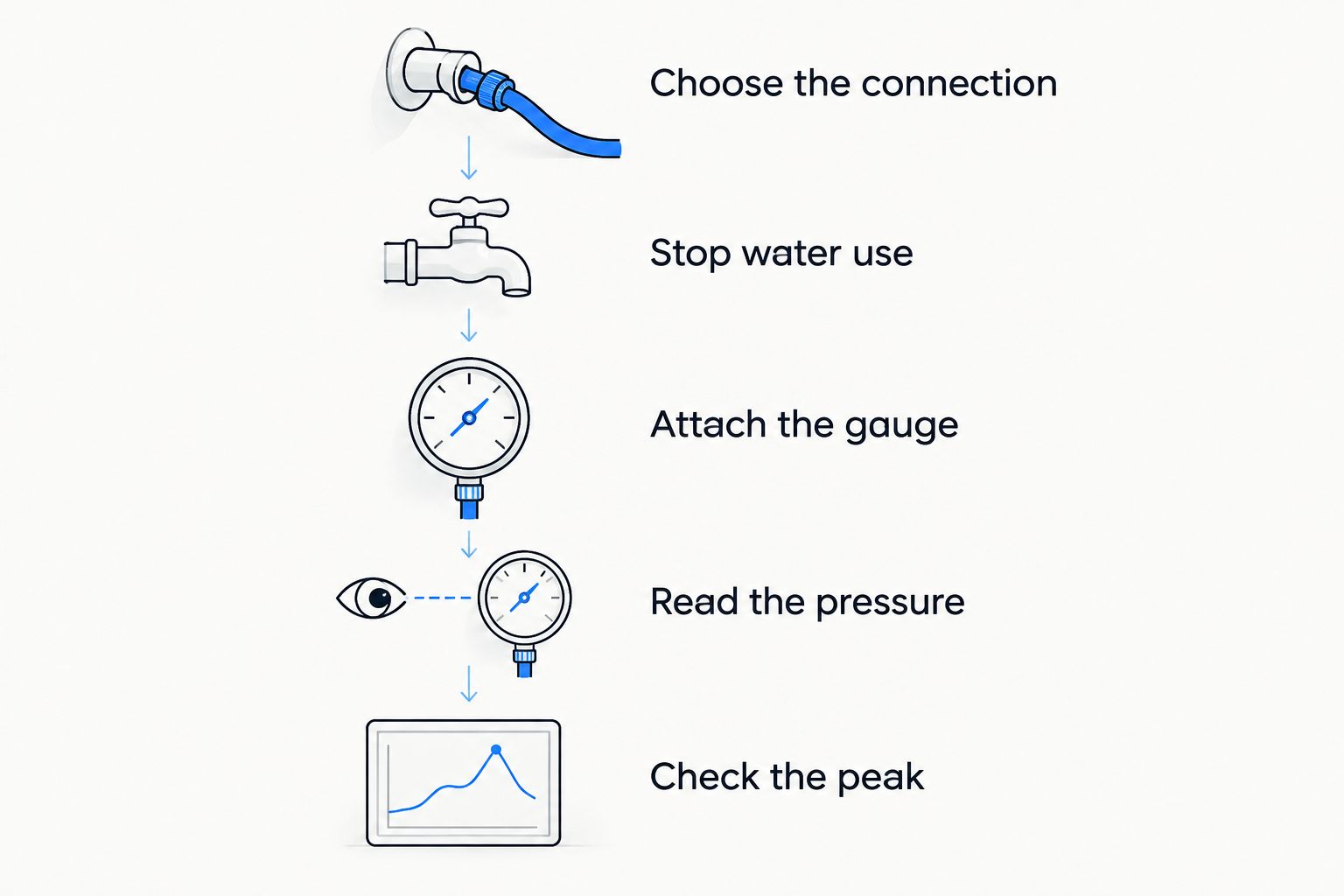
- Choose the connection. Use an accessible cold-water hose connection that measures the house piping downstream of any pressure regulator. Some outdoor faucets connect before the regulator and show supply pressure instead.
- Stop water use. Turn off faucets, showers, irrigation, and appliances that draw water. Wait until toilets finish filling.
- Attach the gauge. With the faucet closed, secure the gauge according to its instructions. Keep the connection accessible and away from electrical equipment.
- Read the pressure. Open the faucet slowly, note the steady reading, and check for leakage at the connection. Record whether the water heater was heating.
- Check the peak. If the gauge has a recording hand, reset it according to its instructions and compare the highest reading with the starting reading. Follow the gauge manufacturer's monitoring instructions.
- Remove safely. Close the faucet and release trapped pressure as directed before removing the gauge. Do not force a corroded or stuck faucet.
A photograph of the gauge and a note about what was running give your plumber better information than “the shower feels strong.” For your 2026 maintenance records, include the connection location so later readings are comparable.
Why home water pressure varies
Pressure readings change for different reasons. Match the pattern to the cause before choosing a repair.
- Supply pressure: Utility supply conditions affect the pressure arriving at your property. A house regulator separates that incoming pressure from the pressure delivered indoors.
- Regulator condition: A regulator that needs adjustment or repair can allow excessive pressure downstream. Compare readings before and after it when the installation allows safe testing.
- Water heating: Heating water in a closed system can raise pressure even when the incoming setting is appropriate. Check expansion control alongside the regulator.
- Water use: Running fixtures changes the reading. Pressure that drops during use and returns afterward is different from a steadily excessive static reading.
- Test location: A hose faucet before the regulator does not show regulated household pressure. Confirm where the connection sits in the piping.
- Well-system controls: A private well uses pump and pressure-tank controls rather than utility pressure alone. Diagnosis needs to account for those components.
Do not treat every changing gauge reading as a failed regulator. A useful diagnosis explains both the resting pressure and the conditions that make it rise or fall.
Which fix matches the pressure problem?
The right repair follows the measurement. Buying a device before identifying the pressure pattern risks leaving the original problem in place.
| Option | Best for | What it does | Limitation |
|---|---|---|---|
| Pressure-reducing valve service or installation | Sustained excessive incoming pressure | Lowers pressure entering household piping | Does not replace thermal expansion control |
| Expansion tank inspection or installation | Heating-related pressure increases in a closed system | Provides space for expanding heated water | Does not correct excessive incoming supply pressure |
| Water hammer arrestor | A diagnosed pressure shock when a valve closes | Cushions a sudden pressure change near its source | Does not lower sustained static pressure |
| Fixture or hose repair | A damaged component after pressure is checked | Repairs the leaking or malfunctioning part | Does not correct a whole-house pressure problem |
Ask the plumber to explain the before-and-after readings and whether thermal expansion was checked. For a 2026 repair decision, that evidence is more useful than replacing several leaking parts without investigating why they failed.
Have the plumber identify which parts of the house receive regulated water. An outdoor irrigation connection or separate branch can have different conditions from the indoor plumbing.
What warning signs deserve a pressure test?
Repeated faucet drips, leaking appliance hoses, and toilet fill-valve problems justify a pressure check, especially when several fixtures are affected. Banging when a washing machine or other valve closes also deserves investigation.
None of those symptoms proves high static pressure. Loose piping, worn parts, and water hammer can create similar complaints. Measure first; do not diagnose the whole house from a noise alone.
A water heater relief valve that repeatedly discharges needs prompt professional attention. Keep clear of the discharge because the water can be hot, and never operate or alter the valve to silence the symptom.
What should you do if pressure is above 80 psi?
Above 80 psi means arrange pressure correction rather than wait for a leak. Confirm that the gauge measures the household side of the regulator, then give the plumber the steady reading and any recorded peak.
If a pipe is actively spraying or a hose has burst, stop using water and close the home's main water shutoff if you can reach it safely. Do not force a stuck valve. Keep away from standing water near electrical equipment and seek emergency help when access is unsafe.
An elevated reading without an active leak still needs attention, but the reading alone does not establish that a pipe is about to burst. Give the service provider the facts: pressure, symptoms, test location, and whether the water heater was running.
Is 80 psi safe, or should you lower it?
80 psi is the general upper threshold, not the preferred setting for every house. A reading at that limit leaves no room for a later increase before the system exceeds it. Equipment instructions and local requirements also matter.
A setting within the common 40–60 psi range can provide adequate household service, but the right adjustment depends on the building and its fixtures. Have the plumber verify performance after adjustment rather than choose pressure solely for a stronger shower.
FAQ
Is 100 psi too high for a house?
Yes. A household static pressure reading of 100 psi exceeds the general 80 psi threshold and needs correction. Confirm that the gauge measures the household piping downstream of any regulator.
Can high water pressure damage pipes without a visible leak?
Yes. Excessive pressure stresses plumbing connections, seals, and appliance hoses before a visible leak appears. A gauge reading is more useful than waiting for damage.
Does turning down the main shutoff lower water pressure?
Partly closing the main shutoff is not a substitute for pressure regulation. It restricts flow during use but does not reliably lower static pressure when fixtures are closed.
Will an expansion tank fix high water pressure?
An expansion tank addresses pressure increases caused by heated water expanding in a closed system. It does not replace a regulator when incoming pressure is excessive.
Why is my water pressure normal when the faucet is running?
Pressure drops as water flows through piping and restrictions. A normal reading during use does not rule out excessive static pressure after the faucet closes.
Should I replace leaking faucets before checking water pressure?
Check household pressure alongside the leak diagnosis, particularly if several fixtures have problems. Repairing worn parts without correcting excessive pressure leaves the underlying stress in place.
Can Mainline Plumbing help with a high-pressure plumbing problem?
Mainline Plumbing connects homeowners nationwide with vetted local licensed and insured plumbers for residential plumbing service. Availability is 24/7; describe your gauge reading and any active leaks when requesting help.
One last thing
A strong shower and safe pipe pressure are not the same thing. The reading that matters most can occur when nobody is using water, including while the water heater reheats. Keep both the steady reading and the peak in your 2026 home maintenance notes.
Related guides
- Is a water heater expansion tank required by code?
- Expansion tanks for new homeowners
- How long does it take to replace a water heater expansion tank?
- Smart water leak detectors for homes
Book a pressure check
Ask Mainline Plumbing to connect you with a vetted local licensed and insured plumber. Share your pressure reading, recurring symptoms, and any active leak so the plumber can investigate the cause—not just the damaged part.
Book a home pressure check
Get connected with a vetted local licensed and insured plumber. Available 24/7 nationwide.