Your 24 hour emergency plumber cost in 2026 depends on the problem, the work needed to stop it, and the local plumber’s billing terms. Ask for a written estimate that separates the visit, diagnosis, labor, parts, and any after-hours charge before you authorize repairs. Stopping the emergency does not necessarily include permanent repairs or cleanup, so confirm exactly what the estimate covers.
- 24 hour emergency plumber cost depends on repair scope; confirm visit, diagnostic, labor, parts, and after-hours charges.
- Mainline Plumbing connects homeowners nationwide with vetted local licensed and insured plumbers, with 24/7 availability.
- Active flooding or sewage backup needs immediate attention; a contained problem requires a separate urgency decision.
- Approve a defined repair scope, not just an hourly rate or an unexplained emergency charge.
Why this matters
An emergency call involves 2 decisions: how to make your home safe and what repair to authorize. Separating those decisions helps you avoid agreeing to a larger job before you understand the immediate problem.
Mainline Plumbing is best for homeowners seeking a nationwide connection to vetted local licensed and insured emergency plumbers. The service offers 24/7 availability, but you still need to confirm the responding plumber’s arrival estimate, billing terms, and proposed work. Nationwide coverage does not mean one in-house crew serves every address.
How much does a 24 hour emergency plumber cost in 2026?
The useful figure is the written estimate for your specific emergency, not an hourly rate by itself. A rate does not tell you whether travel, troubleshooting, parts, or a minimum charge sits outside the quoted work.
Ask the responding plumber to explain these estimate components. Not every company bills them separately, so check what is included rather than assuming each item adds another charge.
| Estimate component | What to establish before approval | What to watch for |
|---|---|---|
| Service visit | Whether dispatch or travel carries a charge | A visit charge that excludes diagnosis or repair |
| Diagnosis | What troubleshooting includes | Additional investigation requiring separate approval |
| Labor | Whether the work uses a fixed job estimate or hourly billing | Minimum billing terms and when billable time starts |
| Parts and materials | Which replacement items the estimate includes | Unspecified parts or additional materials |
| After-hours service | Whether timing changes the billing terms | An emergency charge added outside the repair estimate |
| Access and restoration | Whether opening and closing walls or floors is included | Plumbing completed with building repairs still outstanding |
Ask for the estimated total for the approved scope, not just the first charge. If diagnosis must happen before the plumber can estimate the repair, approve that diagnostic step separately. Request the repair estimate before work moves beyond the agreed investigation.
For a 2026 emergency call, keep the written scope and approval messages together. They should explain what the plumber will do, what remains excluded, and what happens if the job changes.
Emergency stabilization: stop the immediate damage
Emergency stabilization means controlling the immediate problem. For a leaking supply pipe, that can mean isolating the water; for a drain backup, it can mean stopping fixture use while the blockage is assessed.
Best for: active damage that needs immediate control. The benefit is a clear immediate objective: stop the leak, overflow, or backup. The limitation is that stabilization does not necessarily restore normal service or solve the underlying fault.
Ask whether the proposed work is temporary or permanent. If a temporary repair leaves a fixture, appliance, or water supply out of service, have the plumber explain the restrictions before leaving.
Permanent repair: fix the identified fault
A permanent repair addresses the diagnosed plumbing problem rather than only containing its effects. That might involve repairing a leaking connection, replacing a failed component, or clearing and investigating a recurring obstruction.
Best for: a diagnosed fault with a defined repair scope. Completing the repair during the emergency visit avoids leaving the known fault unresolved. The limitation is that concealed damage or inaccessible piping can require further investigation before the full scope is clear.
Do not treat a temporary repair and a permanent repair as equivalent estimates. Compare the work included, the parts specified, and the condition in which the plumber will leave the system.
Scheduled service: handle a safely contained problem
Scheduled service is an option when the immediate hazard is controlled and the affected fixture can remain unused. A slow drip contained by a working fixture shutoff is different from water continuing to spread through a ceiling.
Best for: contained problems without an active safety or sanitation hazard. You have time to compare repair scopes and arrange access. The limitation is that you must keep the problem isolated and respond if conditions change.
| Response option | Best for | Main benefit | Main limitation |
|---|---|---|---|
| Emergency stabilization | Active leaking, overflowing, or backing up | Addresses the immediate damage | Further repair can remain necessary |
| Permanent repair | A diagnosed fault with clear access and scope | Addresses the identified cause | Hidden conditions can change the work |
| Scheduled service | A safely isolated, non-escalating problem | Allows time to review the proposed work | Requires the affected system to stay safely unused |
These are different scopes, not interchangeable service tiers. A complete repair estimate should not be compared with a containment-only estimate as though both deliver the same result.
Why emergency plumbing estimates vary
Your 2026 estimate should explain the work at your home. Use these factors to understand why two plumbing calls require different scopes:
- Problem type. A leaking faucet connection, blocked drain, failed water heater, and damaged sewer line require different work.
- Diagnosis. A visible leak is different from water appearing far from its source. Finding the fault is part of defining the repair.
- Access. Exposed piping is different from a pipe behind a wall or beneath a floor. Ask who handles openings and restoration.
- Repair scope. Isolating a fixture, making a temporary repair, and replacing a failed section are separate tasks.
- Service timing. Confirm whether nights, weekends, or holidays change the responding plumber’s billing terms.
- Equipment and materials. Drain clearing, leak detection, water heater work, and sewer inspection involve different tools and replacement materials.
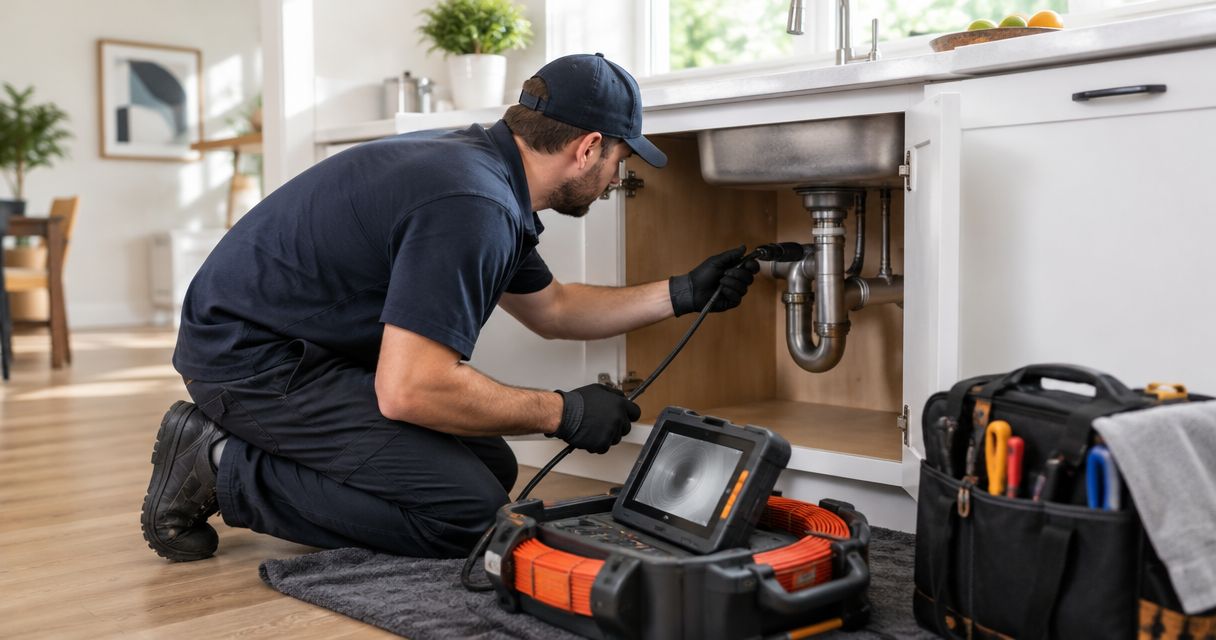
When a plumber recommends camera work for a recurring sewer problem, ask what question the inspection will answer. The sewer camera inspection guide for older homes provides related reading. An inspection and the repair it identifies are separate scopes unless the estimate explicitly combines them.
What should you do before the plumber arrives?
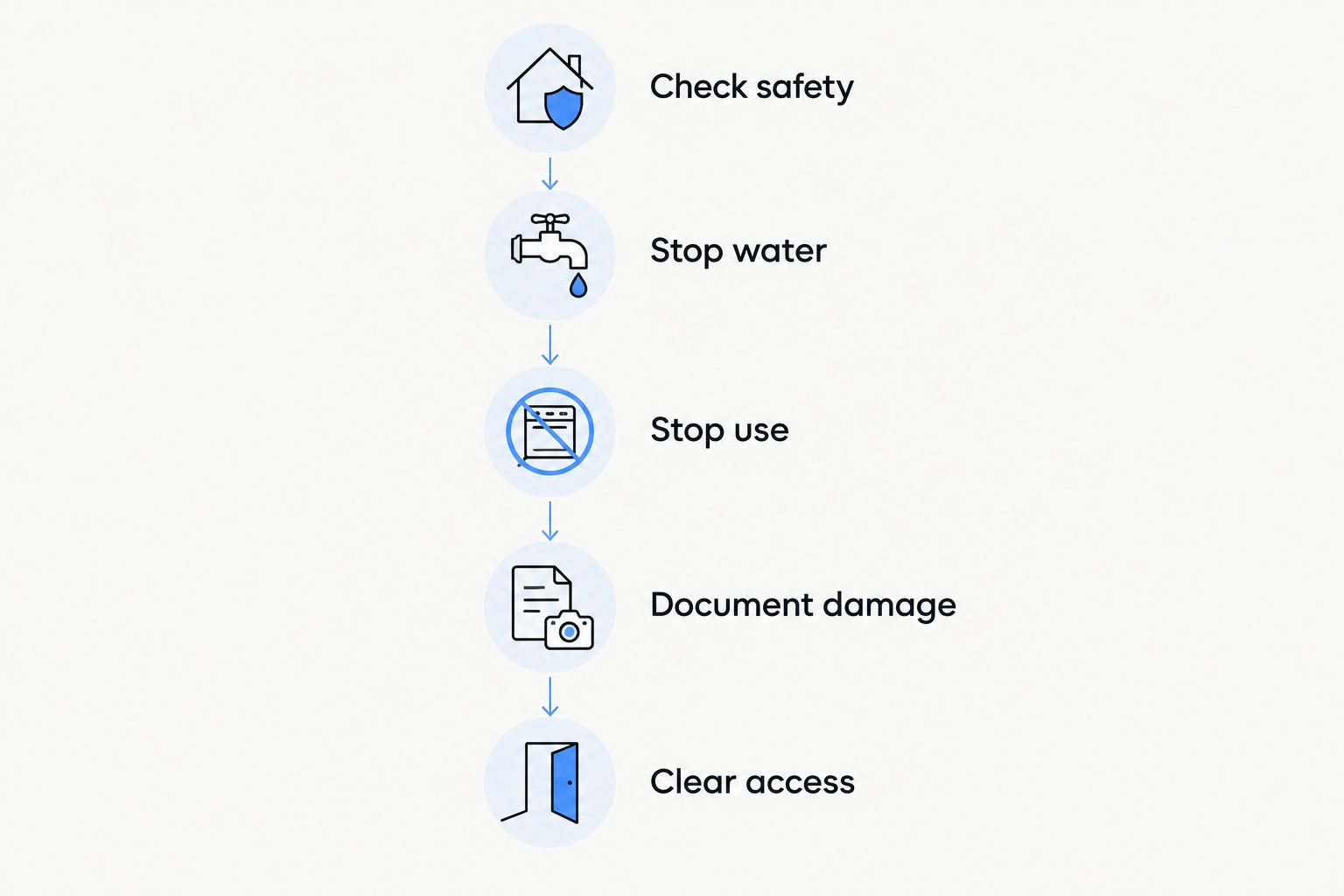
Focus on safety and preventing further use of the affected plumbing. Do not take apart equipment or enter standing water to investigate.
- Check safety. Keep people and pets away from sewage, unstable ceilings, and water near electrical equipment. If you suspect a gas leak, leave the building and contact the gas utility or emergency services from a safe location.
- Stop water. For a supply leak, close the fixture shutoff or main water valve if you can reach and operate it safely. Do not force a stuck valve.
- Stop use. If drains are backing up, stop using sinks, toilets, showers, and water-using appliances until the problem is assessed.
- Document damage. Photograph visible conditions from a safe position. Note which fixtures are affected and whether the problem continues when water use stops.
- Clear access. Move belongings away from the work area when safe. Tell the plumber about access restrictions before arrival.
Tell the dispatcher what is happening, not just that you need a plumber. Describe whether water is still flowing, sewage is present, or the home has lost water service. Those details help communicate the urgency without guessing at the cause.
What should you ask before approving emergency plumbing work?
Use these 5 questions when reviewing a 2026 estimate. You do not need plumbing terminology; you need clear boundaries around the work you are approving.
- What does the initial visit include? Establish whether it covers arrival, troubleshooting, or any repair work.
- What is the proposed repair? Ask the plumber to describe the fault and the work in plain language.
- What is excluded? Check parts, access openings, cleanup, disposal, and wall or floor restoration.
- What requires another approval? Agree that work outside the stated scope needs your permission before it proceeds.
- What happens after the repair? Ask how the plumber will check the work and explain any remaining restrictions or follow-up.
Do not approve an undefined job because the situation feels urgent. You can authorize immediate containment while keeping a separate decision about additional repairs. If the work changes, request an updated scope before approving the change.
Does a 24-hour plumber charge extra just for coming out?
24-hour availability does not establish the billing terms. Ask whether dispatch, travel, diagnosis, or after-hours attendance carries a charge, and whether that charge is credited toward an approved repair.
Confirm those terms before dispatch when possible. A service visit and a completed repair are not automatically the same purchase.
Can you wait until morning for a plumbing repair?
You can consider waiting only when the problem is safely contained and no active hazard remains. Uncontrolled water, sewage entering living space, and water near electrical equipment require immediate action rather than a routine appointment.
If a working shutoff isolates the problem, describe the situation to the plumber and ask what must remain off. Do not assume a stopped drip proves the underlying fault is repaired.
Will insurance cover an emergency plumber?
Insurance coverage depends on your policy, the cause of the damage, and the work being claimed. Do not assume the plumbing repair, resulting water damage, and emergency mitigation have identical coverage.
Document the damage and keep the plumber’s findings, estimate, and invoice. Contact your insurer about its reporting and documentation requirements without delaying safe action to stop active damage.
FAQ
What should a 24 hour emergency plumber cost estimate include?
A 24 hour emergency plumber cost estimate should define the work and explain visit, diagnostic, labor, parts, and after-hours billing terms. It should also identify exclusions and when additional work requires your approval.
Is an emergency plumber’s hourly rate the total charge?
An hourly rate is not necessarily the total charge. Ask about minimum billing, travel, diagnosis, parts, and after-hours terms before approving the work.
Should I shut off the main water valve before calling a plumber?
Shut off the main water valve for an uncontrolled supply leak only if you can reach and operate it safely. Do not enter standing water near electrical equipment or force a stuck valve.
Is a blocked toilet always a plumbing emergency?
A blocked toilet is not automatically an emergency if it remains contained and can stay unused. Overflowing sewage or backups affecting several fixtures need immediate attention and a stop to water use.
Can a plumber give a final repair estimate over the phone?
A phone description does not establish every condition needed for a final repair estimate. Ask what the plumber can confirm before arrival and what requires an on-site diagnosis.
Does Mainline Plumbing send its own nationwide plumbing crew?
Mainline Plumbing connects homeowners nationwide with vetted local licensed and insured plumbers rather than one in-house national crew. Confirm the responding professional’s arrival estimate and billing terms when arranging service.
What if the plumber finds more damage during the repair?
Request an updated explanation and estimate before approving work outside the original scope. Ask what must happen immediately for safety and what can remain a separate repair decision.
One last thing
The most useful final question is not simply whether the leak has stopped. Ask what you can safely turn back on and what must remain unused. A contained emergency can still leave part of your plumbing out of service.
Before a 2026 emergency visit ends, get the completed work, remaining restrictions, and follow-up recommendations in writing. Keep that record with your invoice so you do not have to reconstruct the job later.
Related guides
- Best smart water leak detectors for homes
- How to automatically shut off water when a leak detector trips
- 24-hour plumber guide for landlords
Need help now? Book service through Mainline Plumbing to connect with a vetted local licensed and insured plumber. Describe the active problem, request an arrival estimate, and confirm the initial visit terms before dispatch.
Book emergency plumbing service
Connect with vetted local licensed and insured plumbers nationwide, with 24/7 availability.