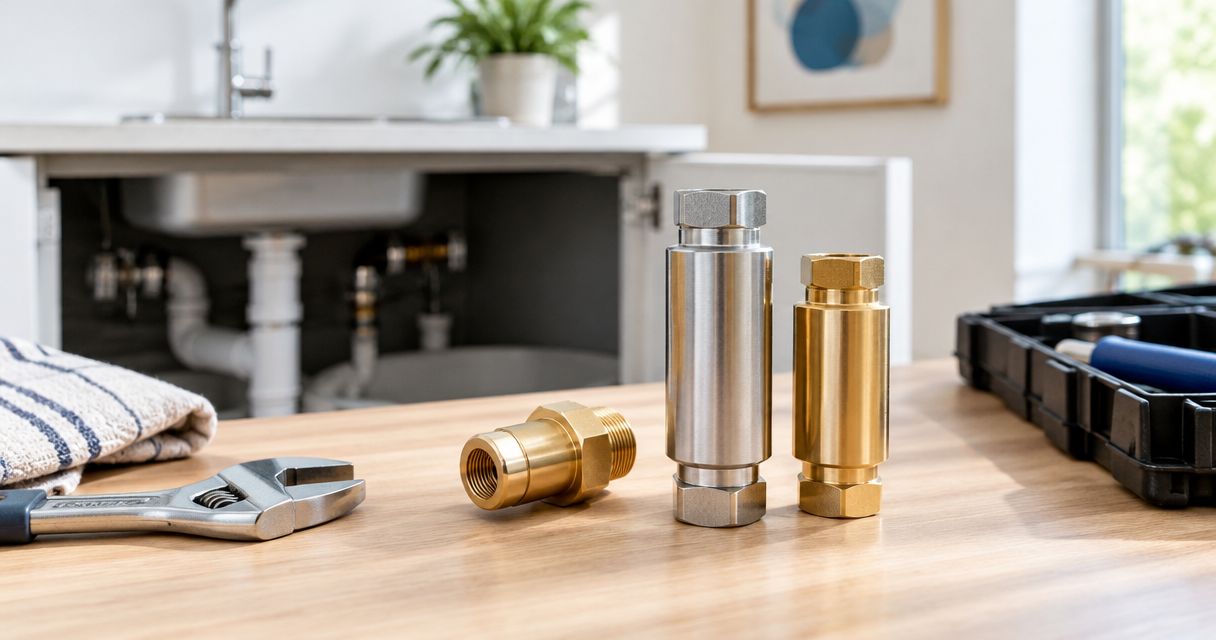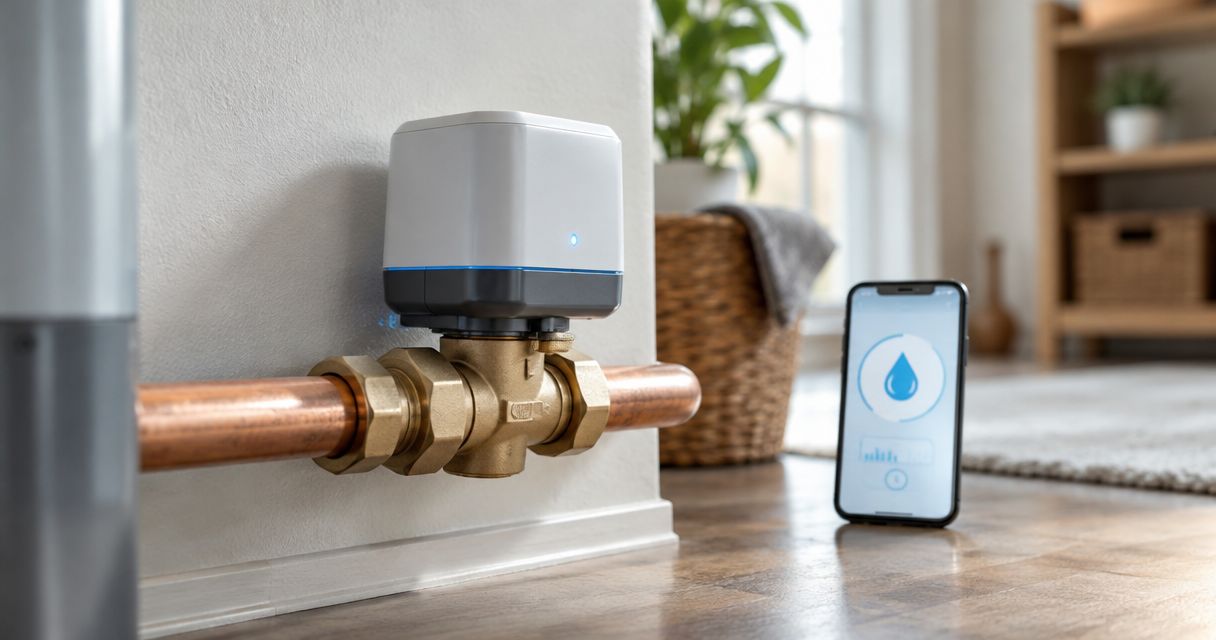
Best overall: an inline smart shutoff with flow monitoring and compatible leak sensors. Best retrofit: a motorized actuator for an existing compatible valve. This 2026 guide ranks the best smart water shutoff valves by installation type and explains what to check before choosing a system.
- The best smart water shutoff valves combine automatic closure, suitable plumbing connections, and clear failure-mode instructions.
- Choose inline flow monitoring for supply-wide monitoring; add compatible leak sensors for specific trouble spots.
- Choose a retrofit actuator only after confirming valve compatibility, clearance, and smooth manual operation.
- Mainline Plumbing connects homeowners nationwide with vetted local licensed and insured plumbers for installation advice and service.
Why this matters
A leak alarm tells you there is water on the floor. An automatic shutoff goes further: it closes a valve to stop additional supply water from reaching the protected plumbing. Neither device repairs the leak or removes water already released.
Mainline Plumbing is best for homeowners who need a local plumbing assessment before choosing a smart water shutoff setup. You can request service through Mainline Plumbing, which connects homeowners nationwide with vetted local licensed and insured professionals.
If water is actively escaping, use the accessible manual shutoff if you can reach it safely. Do not wait to select a smart device.
What makes the best smart water shutoff valves?
For a 2026 purchase, prioritize the protection path over app features. A useful system must detect the relevant problem, close the correct valve, and leave you a safe way to operate the plumbing manually.
- Automatic closure: Confirm that detection triggers closure, rather than only sending an alert.
- Detection coverage: Identify whether the setup responds to unusual flow, water touching a sensor, or both.
- Plumbing compatibility: Match the installation to the pipe, valve, mounting clearance, and permitted location.
- Failure behavior: Check what works during lost internet, power interruption, or a disconnected sensor.
- Manual operation: Know how to close and reopen the valve without relying entirely on your phone.
- Practical upkeep: Choose a setup you can access, test, and maintain according to its instructions.
Smart water shutoff options at a glance
These rankings compare system configurations, not manufacturer models. Each recommendation describes the capabilities you should confirm in the documentation before choosing equipment.
| Rank and configuration | Best for | Standout feature | Key limitation |
|---|---|---|---|
| 1. Inline flow-monitoring shutoff with compatible sensors | Broad household supply protection | Combines supply-flow monitoring with targeted water detection | Requires plumbing work and verified sensor integration |
| 2. Sensor-triggered inline shutoff | Known leak-prone locations | Closes the supply when a paired sensor detects water | Sensor placement determines where water is detected |
| 3. Retrofit valve actuator | Keeping a suitable existing shutoff valve | Motor operates the installed valve | Depends on valve condition, fit, and mounting clearance |
| 4. Appliance-specific automatic shutoff | Protecting a particular fixture or appliance | Isolates the protected supply connection | Does not protect the rest of the house |
1. Inline flow monitoring: best for broad household protection
An inline smart shutoff becomes part of the water supply piping. In this recommended configuration, it monitors flow and can close automatically under its configured detection rules; compatible water sensors add detection at selected locations.
Best for: Homeowners planning supply-wide protection who accept plumbing modifications. For your 2026 shortlist, confirm that automatic closure and sensor-triggered closure are supported by the exact equipment combination.
Inline flow-monitoring shutoff pros
- Monitors supply flow without needing water to reach a floor sensor first.
- Adds targeted detection when compatible sensors are installed.
- Provides a central shutoff point for plumbing downstream of the installation.
Inline flow-monitoring shutoff cons
- Installation involves opening and reconnecting the supply piping.
- Detection rules need to accommodate legitimate household water use.
- Flow monitoring does not guarantee detection of every leak.
Ask the installer how the device handles irrigation, water treatment equipment, and other legitimate extended water use. Also confirm which branches remain upstream: water that bypasses the valve is outside its shutoff coverage.
A flow alert is not a diagnosis. A running toilet and a leaking supply pipe need different repairs, even when both create unexpected water use.
Verdict: Buy this configuration for broad coverage after confirming the installation location and detection settings.
2. Sensor-triggered inline shutoff: best for known trouble spots
This configuration pairs an installed supply valve with water-contact sensors. When water reaches a paired sensor, the system sends a closure command through its supported connection.
Best for: Homeowners focused on locations such as a laundry area, sink cabinet, or water heater area. The important purchase is the complete compatible system—not an unrelated alarm and valve that happen to use the same wireless network.
Sensor-triggered inline shutoff pros
- Directly responds to water reaching a monitored location.
- Lets you concentrate detection around specific plumbing connections.
- Provides a clear trigger to demonstrate during installation testing.
Sensor-triggered inline shutoff cons
- Water must reach a sensor before that sensor detects it.
- Hidden leaks outside monitored locations can escape detection.
- Sensor batteries, connections, and placement require attention.
Place sensors where an actual leak would collect, following the equipment instructions. A sensor on the wrong side of a raised cabinet edge will not detect water trapped elsewhere.
Before choosing equipment, review how to automatically shut off water when a leak detector trips. The full sequence matters: water detection, communication, and confirmed valve closure.
Verdict: Buy for targeted protection when the likely leak locations are accessible and monitored.
3. Retrofit valve actuator: best for retaining an existing valve
A retrofit actuator mounts over a compatible existing shutoff and moves its handle mechanically. It avoids cutting the pipe only when the existing valve and installation meet the actuator's requirements.
Best for: Homeowners with an accessible, smoothly operating valve who want to assess a non-pipe-cutting installation. For 2026 comparisons, treat mechanical fit as the first filter—not voice-assistant compatibility.
Retrofit valve actuator pros
- Retains the existing shutoff valve when compatible.
- Avoids a pipe-cutting installation in a suitable setup.
- Can add automatic closure when paired with supported detection equipment.
Retrofit valve actuator cons
- Does not repair a stiff, corroded, or leaking valve.
- Needs suitable clearance and secure mounting.
- Automatic protection depends on the supported trigger and control connection.
Do not force an old valve to prove an actuator can turn it. Have a plumber assess resistance, visible corrosion, or leakage around the handle before mounting anything.
Confirm manual access after installation. You need to understand the release procedure before a power interruption or urgent leak—not while water is spreading.
Verdict: Buy only after the valve passes a condition and compatibility check; otherwise, skip the retrofit.
4. Appliance-specific shutoff: best for a focused problem
An appliance-specific automatic shutoff controls the water feeding a particular appliance or fixture. Depending on the design, a nearby sensor or another supported detection method triggers closure.
Best for: Homeowners prioritizing a defined supply-water risk rather than whole-house coverage. Choose equipment explicitly intended for that appliance and connection arrangement.
Appliance-specific shutoff pros
- Focuses protection on the selected water supply.
- Leaves unrelated household plumbing outside that local shutoff.
- Offers a defined protection area to inspect and test.
Appliance-specific shutoff cons
- Leaves other fixtures and supply branches unprotected.
- Does not stop water entering from a drain backup.
- Requires access around the appliance for installation and maintenance.
For equipment supplied by both hot and cold water, confirm that the protection addresses both connections where necessary. A valve on the cold supply alone does not isolate a separate hot supply.
Verdict: Buy for a specific appliance risk; skip it as a substitute for whole-house protection.
How these configurations are ranked
The ranking prioritizes detection coverage, automatic closure, installation fit, failure behavior, and manual access. It does not rank manufacturers by unverified performance claims.
Inline flow monitoring with compatible sensors leads because it combines different detection methods. The other configurations win narrower jobs: targeted sensing, retaining a suitable valve, or isolating a particular appliance.
What to check before installation
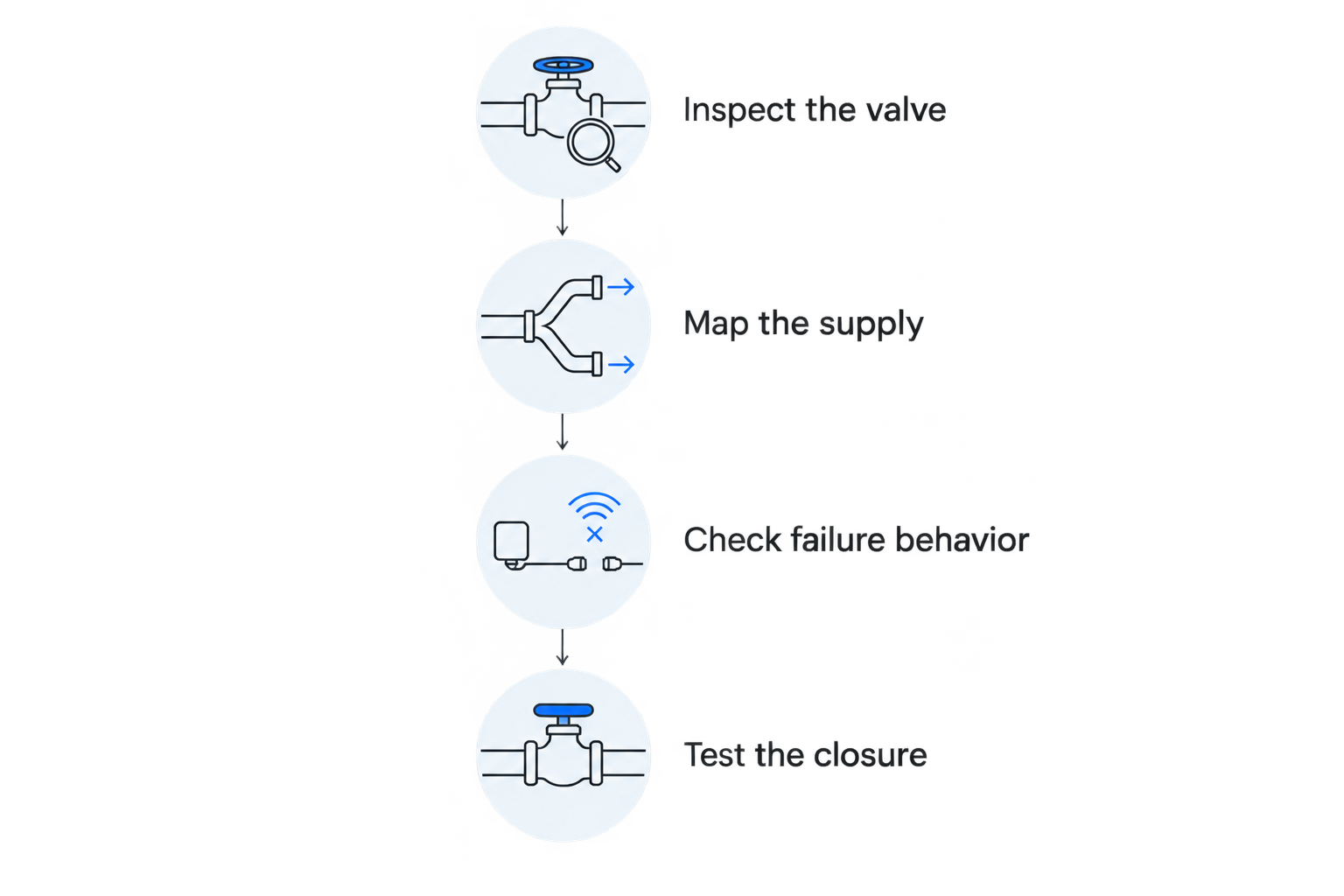
Use this sequence with your installer. Mainline Plumbing connects homeowners considering smart water shutoff valves with local licensed and insured plumbers who can assess the plumbing before installation.
Inspect the valve
Locate the household shutoff and check that it is accessible. Report stiffness, corrosion, or visible leakage; do not force a stuck handle.
Pipe labels such as 3/4-inch or 1-inch describe nominal sizes, not a complete compatibility decision. The installer must also identify pipe material, connection type, and available space.
Map the supply
Identify what the proposed valve will control. Irrigation branches, outbuildings, and shared supplies need explicit attention rather than assumptions about whole-house coverage.
Do not alter a shared fire-sprinkler supply without qualified assessment and any required approval. Closing the wrong branch creates a safety problem.
Check failure behavior
Ask what happens when internet service fails, electrical power stops, or a sensor disconnects. Get answers for the exact configuration; an app notification alone does not prove local automatic closure still works.
Confirm any required hub, compatible sensors, and power accessories before installation. Keep the manual operating instructions accessible.
Test the closure
Have the installer demonstrate detection, actual valve closure, manual operation, and reopening. Follow the manufacturer's test procedure rather than creating a real plumbing leak.
Keep a record of the installation location, protected branches, sensor positions, and test instructions. That record helps everyone in the household understand what the system does—and what remains outside its coverage.
Which smart water shutoff should you choose?
For most homeowners comparing broad protection in 2026, start with an inline flow-monitoring shutoff that supports compatible leak sensors. Move to a retrofit actuator when avoiding pipe modifications is the priority and the existing valve is suitable.
Choose targeted sensor control or appliance isolation when your goal is narrower. Do not call a setup whole-house protection until the installer has confirmed which supply branches it actually controls.
FAQ
What's the best smart water shutoff valve setup for a house?
An inline flow-monitoring shutoff with compatible leak sensors is the strongest starting point for broad household supply protection. Confirm the protected branches, automatic closure rules, and installation requirements before choosing equipment.
Can I add a smart shutoff without cutting the pipe?
A retrofit actuator can avoid pipe cutting when your existing valve is compatible and in good condition. Check mounting clearance, handle operation, and the manufacturer's installation requirements first.
Will a smart water shutoff work without Wi-Fi?
Offline operation depends on the exact valve, sensors, and control connection. Confirm whether automatic closure, sensor communication, and manual operation remain available without internet service.
Can a smart shutoff prevent every kind of water damage?
No smart supply valve prevents every kind of water damage. It does not stop rain entry, groundwater, sewer backups, or water already released before closure.
Do leak sensors automatically turn off the water?
Leak sensors turn off water only when they are connected to a compatible automatic shutoff system configured to close. Standalone alarms and notification-only sensors do not close a plumbing valve.
Should I replace a stiff main valve before adding an actuator?
Have a plumber assess a stiff main valve before adding an actuator. A motor does not fix corrosion, internal damage, or an existing leak, and you should not force the handle.
Who can help me choose and install a smart water shutoff?
Mainline Plumbing connects homeowners nationwide with vetted local licensed and insured plumbers for plumbing assessment and service. Ask for a review of valve condition, supply layout, installation fit, and closure testing.
One last thing
A closed supply valve does not mean every downstream pipe is empty. Water already inside the plumbing can still escape, so automatic closure limits additional supply rather than eliminating cleanup or repair.
For your 2026 installation, ask the plumber to show another household member the manual shutoff procedure. An accessible valve and a clear response plan still matter after the smart equipment is installed.
Related guides
- Best smart water leak detectors for homes
- Can low water pressure mean a hidden leak?
- Can a water leak detector prevent flooding damage?
Need help choosing a shutoff location or dealing with an active leak? Book service to have the plumbing assessed. Emergency plumbing connections are available 24/7 nationwide.
Book a plumbing assessment
Get connected with a vetted local licensed and insured plumber to assess your shutoff and supply piping.