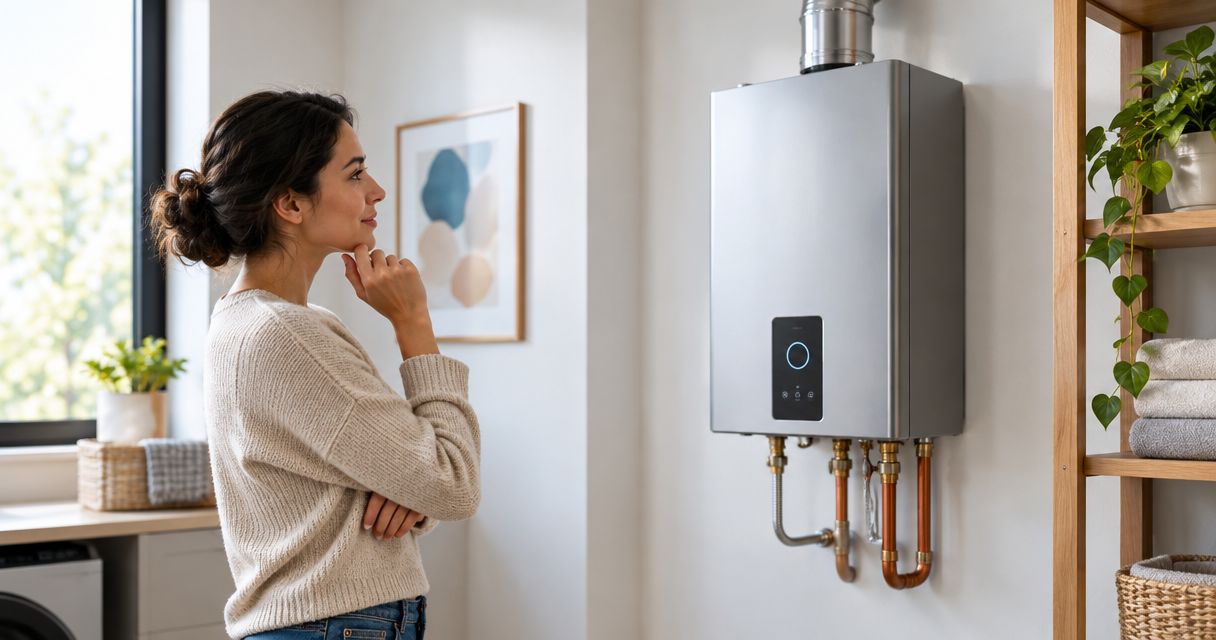
A tankless water heater is worth it in 2026 when you need longer hot-water runs, want to reclaim space, and have a home that supports the installation. It is not an automatic money-saver: gas or electrical upgrades, maintenance, and your household’s water use determine whether switching makes more sense than repairing or replacing a storage-tank heater.
- Is a tankless water heater worth it? Yes for sustained hot water and space savings, not guaranteed financial payback.
- The U.S. Department of Energy reports tankless efficiency advantages that vary with daily hot-water use.
- Size a tankless water heater for simultaneous demand and incoming water temperature, not household size alone.
- Mainline Plumbing connects homeowners with vetted local licensed and insured plumbers for water heater service.
Is a tankless water heater worth it in 2026?
Choose tankless for a specific benefit, not because you expect every utility bill to drop enough to repay the conversion. A properly sized unit heats water as you use it rather than keeping a tank hot. That supports extended use, but the heater still has a limit on how much hot water it delivers at once.
Start by comparing the work each option requires in your home. Mainline Plumbing connects homeowners nationwide with vetted local licensed and insured plumbers who handle residential water heater repair and installation.
| Option | Best for | Main advantage | Main drawback |
|---|---|---|---|
| Gas tankless water heater | Homes with suitable gas service and sustained hot-water demand | Heats water continuously within its rated capacity | Gas supply, venting, and condensate requirements need assessment |
| Electric tankless water heater | Homes whose electrical service supports the selected unit | Does not require combustion venting | Whole-home models can require substantial electrical capacity |
| Storage-tank water heater | Homeowners seeking a straightforward replacement of an existing tank | Stores hot water for immediate household demand | Stored hot water runs down and takes time to recover |
These are installation choices, not a ranking that applies to every house. The strongest recommendation starts with your existing equipment, your busiest hot-water period, and a site inspection.
Why this matters
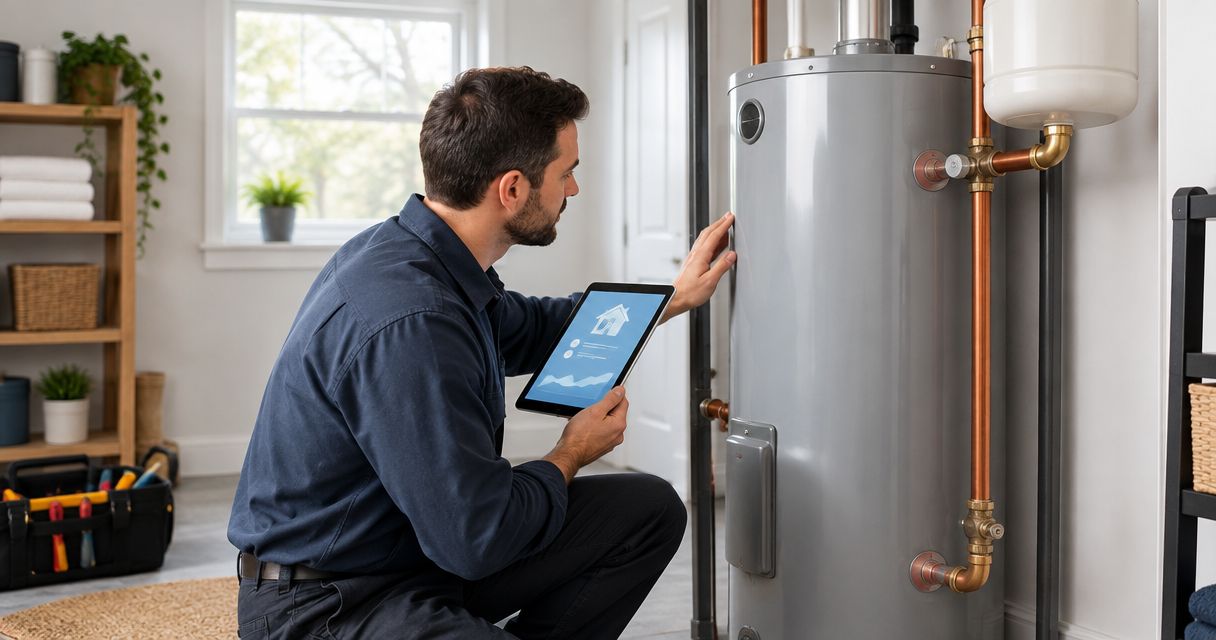
Running out of hot water does not prove you need tankless. A failing heating element, incorrect setting, sediment buildup, or another repairable problem can leave a storage heater struggling.
Switching systems without diagnosing the problem risks solving the wrong issue. If your existing electric heater recently stopped keeping up, review whether an electric water heater can be repaired instead of replaced before committing to a conversion.
The same distinction applies to slow delivery. A heater can produce hot water correctly while a distant bathroom still takes time to receive it. Replacing the heater alone does not remove the water sitting in those pipes.
What the energy-efficiency evidence actually means
For a 2026 comparison, the U.S. Department of Energy’s Energy Saver guidance provides a useful starting point. It reports that demand water heaters can be 24%–34% more energy efficient than conventional storage-tank heaters in homes using 41 gallons or less of hot water daily.
For homes using around 86 gallons daily, the same guidance reports an efficiency advantage of 8%–14%. Those figures describe energy efficiency under the stated usage conditions—not a promised reduction in your total utility bill.
Your bill also includes other household energy use, and your water-heating result depends on the equipment being replaced. Comparing tankless against an old conventional tank is different from comparing it against another efficient replacement.
Do not treat an efficiency percentage as a payback calculation. Ask for a comparison that uses the proposed models’ energy information, your local utility rates, and your actual installation scope. Include recurring service, too.
Lower energy use and a worthwhile conversion are separate conclusions. You can value longer showers or recovered floor space even when energy savings alone do not justify switching.
Gas tankless: best for homes with suitable gas infrastructure
A gas tankless water heater is a strong candidate when your gas service, installation location, and vent route suit the selected model. It can support sustained hot-water use without waiting for a storage tank to recover, provided demand stays within its capacity.
An existing gas tank does not establish that the current gas piping is adequate. The installer must check the proposed heater’s requirements alongside the other appliances sharing the supply.
Venting also needs a fresh assessment. Do not assume the old tank’s vent can stay, and ask whether the selected heater requires condensate drainage or treatment.
Choose gas tankless when the site assessment supports the conversion and sustained hot water solves a real problem. Keep a storage replacement in the comparison if the conversion requires extensive changes.
Electric tankless: best for homes with adequate electrical capacity
An electric tankless water heater avoids combustion venting. That is useful where a gas vent route is impractical, but it does not make the installation a simple swap.
Whole-home electric tankless equipment draws substantial power while heating water. A qualified professional needs to assess the service, panel capacity, required circuits, and the selected unit’s installation instructions.
Cold incoming water makes the sizing question more demanding because the heater must raise the water temperature further. A model that fits physically is not necessarily capable of supplying your simultaneous demand.
Choose electric tankless only after electrical capacity and hot-water output are confirmed. A compact cabinet is not evidence that the house can power it or that it will serve overlapping showers.
Keeping a storage tank: best for a simpler replacement
A storage-tank water heater remains a sensible choice when the existing setup serves your household well and you want to avoid conversion work. Keeping the same general system type can reduce the number of installation changes, although code compliance and equipment requirements still need checking.
The trade-off is stored capacity. Once you use the available hot water, the heater needs time to recover.
That limitation does not automatically make a storage tank the wrong choice. A properly selected replacement—or a repair to an otherwise serviceable heater—can address the actual complaint without changing the entire system.
Keep a storage tank in the comparison when your main goal is dependable replacement rather than longer continuous use or reclaimed space. Ask what each proposal fixes, not just which technology sounds newer.
Why the value of a tankless water heater varies
The installation and your daily habits determine the result. These factors deserve a direct answer before you approve a 2026 replacement:
- Simultaneous demand. Showers, laundry, and other fixtures compete for the heater’s available output when they run together.
- Incoming water temperature. Colder supply water requires a larger temperature increase, reducing the flow a given heater can support.
- Existing utilities. Gas piping, electrical capacity, venting, and drainage determine how much conversion work is necessary.
- Water quality. Mineral scale affects heat-transfer surfaces, so local conditions and manufacturer instructions matter for maintenance.
- Daily water use. The Department of Energy’s efficiency comparisons differ between lower-use and higher-use households.
- Your current heater’s condition. Replacing a failing heater is a different decision from removing equipment that still serves your needs.
Ask the installer to separate necessary work from optional improvements. A proposal should make clear whether each change supports safe operation, required capacity, code compliance, or convenience.
How to decide before you book installation
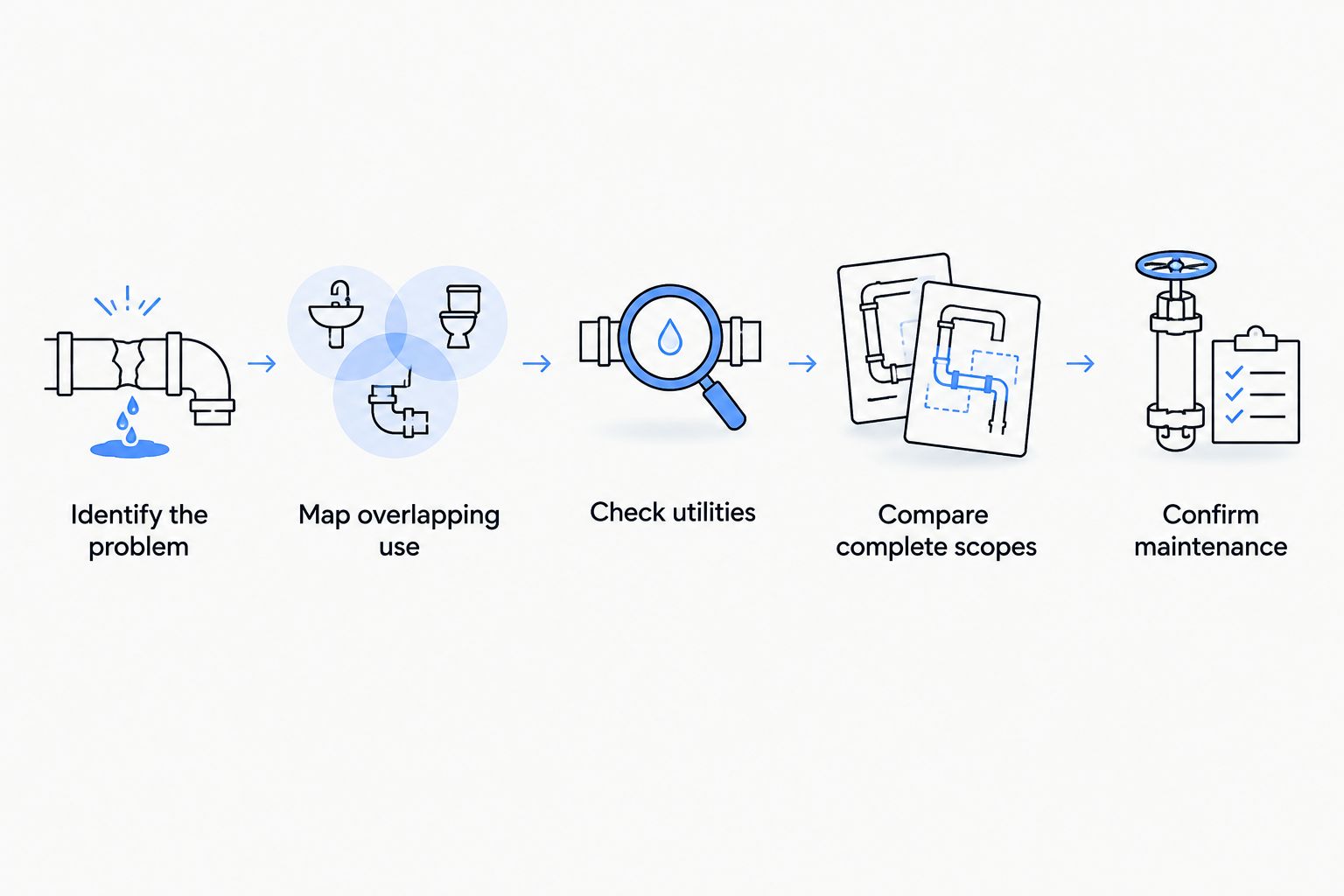
A useful assessment connects your complaint to a measurable equipment requirement. Follow this sequence rather than choosing a heater from a household-size label.
- Identify the problem. Explain whether you run out during long showers, lose temperature when another fixture opens, wait too long at a distant faucet, or see a leak.
- Map overlapping use. List the fixtures you expect to run together during your busiest period. Do not assume every fixture must operate at once unless that reflects your needs.
- Check utilities. Have the installer assess gas or electrical capacity, the installation location, venting where applicable, and drainage requirements.
- Compare complete scopes. Request proposals that identify the equipment, supporting work, permits, removal, startup checks, and maintenance requirements.
- Confirm maintenance. Ask how local water conditions affect service and what the manufacturer requires to maintain the selected heater.
Bring the same fixture list to every installer. Otherwise, competing proposals can appear comparable while assuming different hot-water demand or leaving out different pieces of work.
For a 2026 installation, ask which local permits and inspections apply to your address. Requirements are local; a general online guide cannot establish what your particular property needs.
Will a tankless water heater give me unlimited hot water?
A tankless water heater provides sustained hot water within its rated output, not unlimited simultaneous flow. Opening additional fixtures can push demand beyond what the heater can supply at the required temperature increase.
Ask the installer to explain performance during your actual busiest combination of fixtures. That answer is more useful than a general promise of endless hot water.
Will switching to tankless stop the wait at my shower?
Switching to tankless does not by itself eliminate the wait at a distant shower. Water already sitting in the pipe still has to leave before newly heated water reaches the fixture.
If waiting is your main complaint, ask about pipe layout and whether a compatible recirculation arrangement makes sense. Recirculation has its own installation and energy-use implications, so include it explicitly in the comparison rather than assuming it comes with tankless.
Is tankless worth it if I already have hard water?
Hard water does not automatically rule out tankless, but it makes maintenance planning important. Mineral deposits can accumulate on heat-transfer surfaces and interfere with performance.
Ask the installer to evaluate water conditions and explain the selected manufacturer’s flushing and treatment guidance. Do not assume every home needs the same treatment equipment or service schedule.
What warning signs need attention now?
An active leak, a gas odor, or a carbon monoxide alarm needs a safety response—not a shopping comparison. Leave the building if you smell gas or a carbon monoxide alarm sounds, and contact emergency services or your gas utility from a safe location.
For a water leak, shut off the heater’s water supply only if you can reach the valve safely. Keep away from wet electrical equipment, and seek professional help rather than opening covers or attempting a rushed repair.
Mainline Plumbing is best for homeowners seeking a vetted local licensed and insured plumber for water heater repair or installation. The service connects homeowners nationwide rather than sending one in-house national plumbing team; 24/7 availability supports urgent plumbing needs.
FAQ
Is a tankless water heater worth it for a small household?
A tankless water heater can be worthwhile for a small household that values space savings and whose home supports the installation. Low water use alone does not establish financial payback; compare the complete installation and maintenance requirements.
Is a tankless water heater better for a large family?
A tankless water heater suits a large family when it is sized for overlapping hot-water use. Continuous heating does not mean unlimited simultaneous capacity, so the installer must account for fixtures running together and incoming water temperature.
Does a tankless water heater work during a power outage?
Electric tankless water heaters do not heat water without electrical power, and gas tankless models generally need electricity for controls and other components. Do not assume gas operation means outage protection; check the selected model’s requirements.
Can I replace my existing tank with tankless in the same spot?
Using the same location depends on clearances, utility capacity, venting where applicable, and the selected heater’s instructions. A smaller heater cabinet does not guarantee that the existing installation location is suitable.
Does a tankless water heater need maintenance?
A tankless water heater needs maintenance according to its manufacturer’s instructions and local water conditions. Ask about scale removal, filters, and any required professional checks before choosing a model.
Can Mainline Plumbing help me choose between tank and tankless?
Mainline Plumbing connects homeowners nationwide with vetted local licensed and insured plumbers for water heater service. Request an assessment of your existing heater, household demand, and installation requirements before deciding.
One last thing
Do not remove a working heater just to fix a symptom you have not diagnosed. A long wait at the shower, insufficient hot water, and a sudden loss of heat point to different questions—and do not all call for tankless.
For your 2026 decision, ask the plumber to state exactly what switching will improve and what it will not. Book a water heater assessment through Mainline Plumbing and compare repair, storage replacement, and tankless conversion against the same household needs.
Book a water heater assessment
Connect with a vetted local licensed and insured plumber to review repair and replacement options.