You can replace a failed element in a conventional electric tank water heater yourself only if you can safely isolate and verify electrical power, follow the manufacturer's instructions, and meet local requirements. You do not normally repair the failed element itself; replacement also requires controlling hot water, sealing the opening, and completely refilling the tank before restoring power.
- To repair water heater element yourself, replace the failed part only after safe electrical isolation and diagnosis.
- Electric water heater symptoms alone do not prove that the heating element has failed.
- Never restore power until the tank is full and air is cleared according to the manufacturer's instructions.
- Mainline Plumbing connects homeowners with vetted local licensed and insured plumbers for water heater repair.
Why this matters
An element replacement involves electricity and hot water, not just a threaded part. Many residential electric tank water heaters operate at 240 volts, which can cause fatal electric shock. Turning off a breaker is necessary, but it is not proof that the wiring is safe to touch.
Mainline Plumbing is best for homeowners who want a vetted local licensed and insured plumber for water heater repair. You can request help through Mainline Plumbing rather than opening an electrical compartment you cannot safely assess.
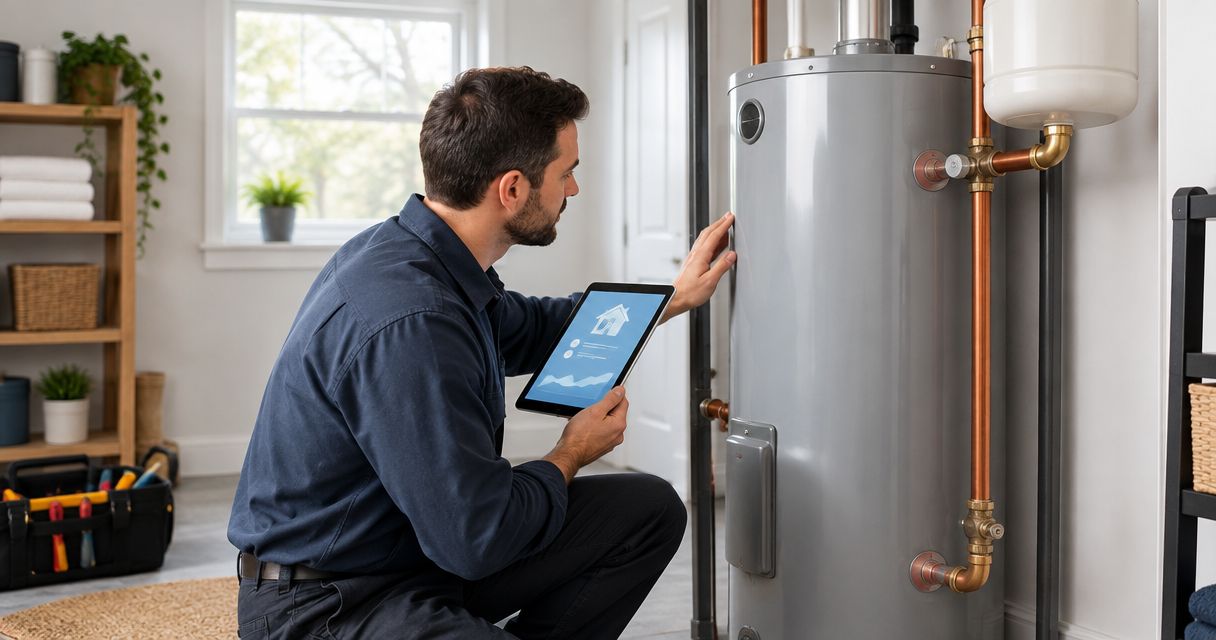
For a repair in 2026, start with the instructions for your exact model. A conventional electric tank, a hybrid heat-pump unit, and a tankless heater do not share an interchangeable repair procedure.
Can you repair a water heater element yourself?
Yes, but only as a qualified replacement job—not as a guess based on cold water. A burned-out element is normally replaced rather than patched. DIY is appropriate only when the manufacturer permits the work, local rules allow it, and you have the electrical and plumbing skills required.
Use this 2026 decision checklist before buying a replacement:
- Identify the heater. Read the rating plate and model-specific manual. Do not apply electric tank instructions to a gas burner or an unfamiliar electronic heating system.
- Confirm the fault. No hot water can result from an element, thermostat, supply, wiring, or safety-control problem. A symptom is not an electrical diagnosis.
- Check the limits. Read warranty terms and local permit or licensing requirements. Ownership does not automatically make every repair permitted homeowner work.
- Assess your skills. If you cannot verify a de-energized circuit using appropriate equipment, stop before removing electrical covers.
- Inspect the surrounding condition. Water in an electrical compartment, scorched insulation, or a leak from the tank body changes the job. Arrange professional assessment instead of proceeding with an element swap.
Which repair route fits your situation?
| Option | Best for | Advantage | Limitation |
|---|---|---|---|
| DIY element replacement | Skilled homeowners with a confirmed fault and permitted work | Direct control over the repair | Requires electrical verification, draining, correct installation, and safe recommissioning |
| Professional element replacement | Homeowners without electrical testing experience | Diagnosis and repair by an appropriately qualified professional | Requires arranging a service visit; other faults can expand the work |
| Whole-heater assessment | A leaking tank body, damaged wiring, or repeated failures | Checks whether element replacement addresses the actual problem | Does not automatically mean replacement is necessary |
Choose diagnosis before choosing a part. Replacing a working element will not correct a failed thermostat, damaged connection, or interrupted electrical supply.
What warning signs point to an element problem?
An element fault can leave you with no hot water or less hot water than usual. On conventional tanks with upper and lower elements, symptoms depend on which component has failed and how the heater controls operate.
These signs justify inspection, but none identifies the failed part on its own:
- Hot water runs out early. An element fault is one explanation; thermostat problems and changes in demand also need consideration.
- Water stays cold. The electrical supply, safety controls, thermostat, and elements all belong in the diagnosis.
- The breaker trips. An electrical fault needs investigation. Do not repeatedly reset the breaker to keep the heater running.
- Water appears near an access panel. The element seal is one possible source, but water can travel from another connection.
Record what happens before requesting service. Say whether the water is always cold, becomes lukewarm, or turns cold after normal use. That description is more useful than reporting that the element is definitely broken.
What does safe element replacement involve?
The following explains the work involved; it is not a substitute for your heater's service instructions or electrical training. If any stage is unfamiliar, leave the heater off and arrange qualified help.
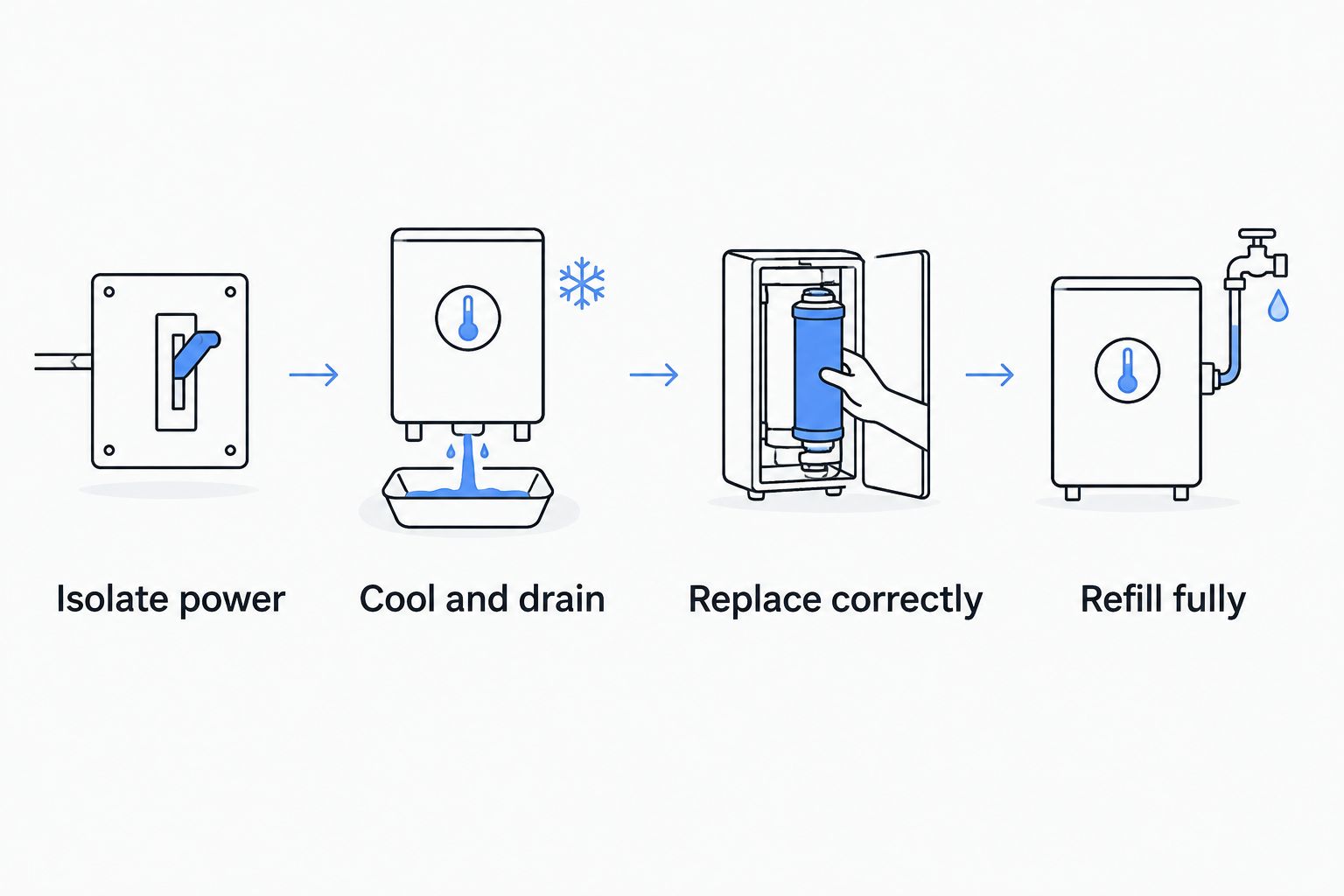
Isolate power
The heater's electrical supply must be isolated and protected against someone switching it back on. A qualified person must verify the absence of voltage at the appropriate points using suitable test equipment and a verified testing procedure.
The required condition is 0 volts at the relevant test points—not simply a breaker handle in the off position. A noncontact detector alone does not establish that every conductor is safe. Do not attempt live diagnostic measurements as a homeowner troubleshooting shortcut.
Cool and drain
Stored water can cause burns. The water must be allowed to cool, the supply controlled, and the tank drained below the element opening as directed by the manufacturer.
Drain water needs a safe route that will not flood a room or expose someone to hot discharge. A blocked drain valve or a valve that will not close properly is a reason to stop and reassess, not force the repair.
Replace correctly
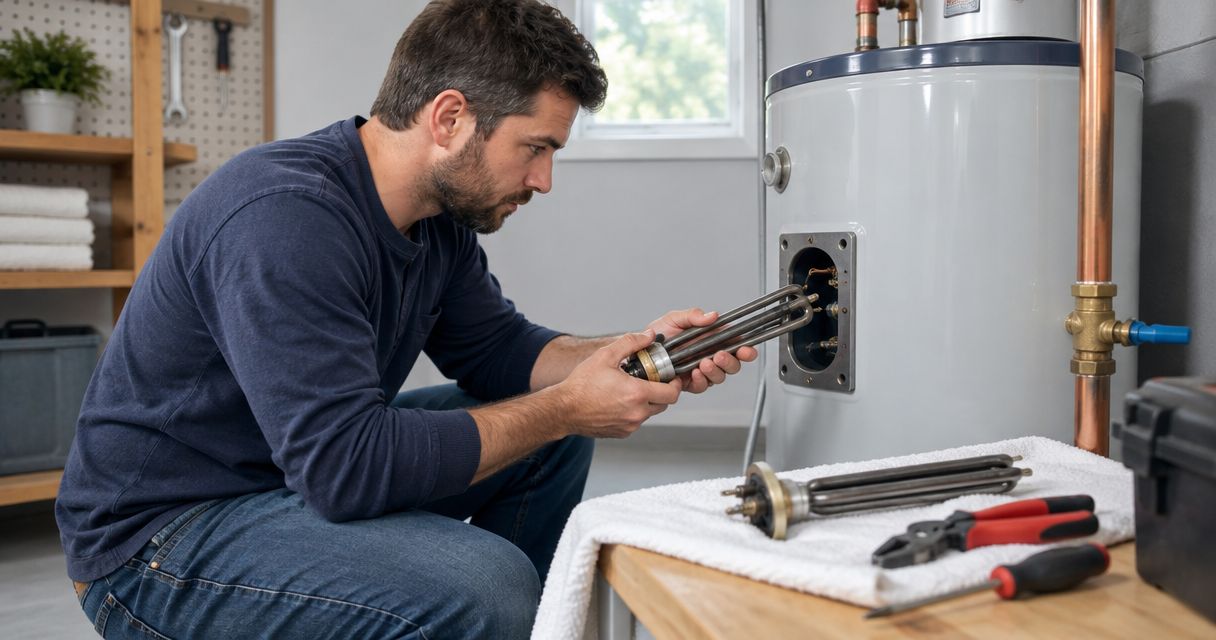
The replacement must match the manufacturer's approved specifications, including voltage, wattage, mounting arrangement, and sealing requirements. An element that physically fits is not automatically a suitable replacement.
The opening and sealing surfaces must be in serviceable condition. Follow the specified gasket, sealant, and tightening instructions; do not assume extra force or thread tape will correct a damaged fitting.
Refill fully
Refill and clear air according to the manufacturer's instructions before restoring power. Check the element seal for leakage while the electrical supply remains off.
Never energize an empty or partly filled tank. An element powered without adequate water coverage can fail through dry firing. Refit the required insulation, protective barriers, and covers before returning the heater to service.
Check operation
Once the heater is safely reassembled and returned to service, check for leaks and normal operation without reopening energized compartments. Stop using the heater if the breaker trips, wiring smells hot, or water reaches electrical parts.
The U.S. Consumer Product Safety Commission recommends a residential water heater setting of 120°F to reduce scald risk. Follow model-specific instructions and any applicable household health requirements; turning the temperature higher does not fix a failed element.
Why element replacement difficulty varies
The same general repair can involve very different conditions. These factors determine whether a straightforward replacement remains straightforward:
- Heater design. Conventional resistance tanks, hybrid systems, and tankless units require different diagnosis and service procedures.
- Access. A cramped closet or obstructed panel can prevent safe testing, draining, and tool positioning.
- Sediment and corrosion. Deposits complicate draining and removal. Damaged mounting surfaces can prevent a reliable seal.
- Fault location. A failed element differs from burned wiring, a faulty thermostat, or a circuit problem. Each requires the correct repair.
- Tank condition. Leakage from a replaceable gasket is different from leakage through the tank body.
- Local requirements. Licensing, permits, and inspection requirements depend on the jurisdiction and scope of work.
For your 2026 repair decision, assess these conditions before removing the old element. A part in hand does not mean the installation is safe or that the tank is worth repairing.
When should you stop and call a professional?
Stop before opening the electrical compartment if you cannot safely verify isolation. Also stop for melted insulation, scorched terminals, repeated breaker trips, a seized element, damaged threads, or uncertainty about the replacement specification.
Treat water around electrical equipment as a safety issue. Stay out of standing water, and do not reach through wet areas to operate equipment. Shut off power only from a dry, safely accessible location; if that is not possible, keep clear and obtain urgent help.
Mainline Plumbing connects homeowners nationwide with vetted local licensed and insured plumbers for water heater repair. Availability is 24/7, but ask about the local response time rather than assuming a specific arrival window.
Professional service is the better route when diagnosis extends beyond a replaceable element. Ask the provider to explain the failed component, the proposed work, and whether an electrician is needed for any supply-circuit fault.
Should you replace both elements at once?
No—not automatically. On a heater with multiple elements, each component should be assessed according to the manufacturer's procedure. One failed element does not prove that another has failed.
Replacing an additional working part adds another opening to reseal and another opportunity for installation error. Ask whether testing, visible deterioration, or manufacturer guidance supports the extra work instead of treating it as mandatory.
Can a leaking element be repaired without replacing the heater?
Yes, when the leak comes from a serviceable element seal or fitting and the tank remains sound. The repair depends on the actual leak source and the condition of the sealing surfaces.
A leak through the tank body is a different problem and is not fixed by changing the element. Keep the power off if water reaches the electrical compartment, and have the source identified before deciding between repair and replacement.
Will a new element fix a water heater that keeps tripping the breaker?
Only if a failed element is the confirmed cause. A tripping breaker can also indicate a wiring or other electrical fault, so replacing an element without testing can leave the hazard unresolved.
Do not keep resetting the breaker. Arrange diagnosis by a professional qualified for the equipment and electrical work involved.
What should you have ready before booking service?
Give the service provider the model number, the symptoms, and whether you have switched off power or water. Mention a leak, burning smell, or repeated breaker trip immediately rather than saving it for the visit.
For a 2026 service request, use a photo of the rating plate if it is visible without removing covers. Do not open a live compartment just to collect information.
Ask these questions before authorizing work:
- Will the diagnosis check the element and the relevant controls?
- Is the proposed replacement approved for this heater?
- Does the work require a permit or an electrician?
- Will the repair include refilling, leak checks, and safe return to service?
You do not need to diagnose the failure before calling. A clear description of the symptoms gives the professional a useful starting point without exposing you to electrical parts.
FAQ
Can I repair a water heater element myself if I have never done electrical work?
Do not attempt element replacement without the skills to isolate and verify the electrical supply safely. Arrange a qualified professional rather than learning electrical testing inside the heater compartment.
Do I need to drain the entire water heater to replace an element?
The water level must be below the element opening, following the manufacturer's draining instructions. The required draining depends on the element position and heater design.
Can I test a water heater element while the power is on?
Do not perform live electrical testing as a homeowner troubleshooting step. Element resistance testing requires an isolated, verified de-energized circuit and the appropriate disconnection procedure.
Are all electric water heater elements interchangeable?
No, water heater elements are not universally interchangeable. Match the manufacturer's approved voltage, wattage, mounting, and sealing specifications for the exact model.
Can I switch the heater on before the tank finishes filling?
No, do not restore power before the tank is completely filled and air is cleared according to the manufacturer's instructions. Powering an element without adequate water coverage can cause dry-fire failure.
Is replacing an element better than replacing the whole water heater?
Element replacement is appropriate when testing confirms an element fault and the tank is otherwise serviceable. Tank-body leakage or wider damage requires a separate repair-versus-replacement assessment.
Who can help if I do not want to replace the element myself?
Mainline Plumbing connects homeowners nationwide with vetted local licensed and insured plumbers for water heater repair. Request service and describe any leak, electrical smell, or repeated breaker trip when booking.
One last thing
The final refill is part of the repair, not cleanup afterward. A correctly matched new element can still fail if the tank is powered before it is full. For any 2026 element replacement, make verified isolation and complete refilling nonnegotiable checkpoints.
If you cannot confidently manage those checkpoints, book local water heater service through Mainline Plumbing. Leave electrical covers closed and explain the symptoms when you request help.