Main sewer lines need inspection when warning signs appear, before a home purchase if their condition is unknown, and on a follow-up schedule based on documented pipe problems. There is no single inspection interval that fits every home. A clear camera report and no recurring symptoms call for a different plan than roots, damaged joints, or repeated backups.
- How often sewer line inspection is needed depends on pipe condition, recurring clogs, and previous camera findings.
- Inspect recurring backups promptly; do not wait for a routine maintenance date.
- Mainline Plumbing connects homeowners nationwide with vetted local licensed and insured plumbers for sewer inspection needs.
- Keep camera footage and a written follow-up plan so your next inspection has a clear purpose.
How often should main sewer lines be inspected?
Set the inspection schedule from the condition of your sewer line, not a blanket calendar reminder. If you have no reliable inspection record, arrange a baseline assessment. If you already have a report, use its findings and the plumber’s follow-up recommendation rather than starting over with a generic schedule.
For your 2026 maintenance plan, match the next step to the situation:
| Situation | Best next step | Best for | Benefit | Limitation |
|---|---|---|---|---|
| No symptoms and a documented clear line | Follow the report’s maintenance advice; reassess if symptoms develop | Homeowners with a known baseline | Avoids inspections without a defined reason | An earlier clear inspection does not guarantee future condition |
| Unknown condition before buying a home | Arrange a sewer inspection during the inspection period | Buyers evaluating an unfamiliar property | Adds evidence about the accessible sewer line | Does not reveal every concealed or inaccessible defect |
| Roots or another defect documented previously | Get a written follow-up interval tied to that finding | Homeowners monitoring an identified problem | Makes repeat inspections purposeful | Monitoring does not repair the defect |
| Clogs return after cleaning | Request a diagnostic assessment rather than repeated clearing alone | Homeowners with recurring drainage trouble | Helps identify why the blockage returns | Cleaning can be necessary before the camera has a clear view |
| Sewage is backing up now | Stop using plumbing fixtures and request urgent service | Households with an active backup | Prioritizes containment and restoring drainage | A camera inspection alone does not clear the obstruction |
A useful inspection recommendation explains what needs watching, why it matters, and what should trigger an earlier visit. Ask for those details before accepting a recurring appointment schedule.
Why this matters
A sewer inspection should answer a practical question: is the line clear, is something causing repeat blockages, or does a known defect need attention? Repeating a camera visit without a question to answer gives you less useful information than comparing current findings with an earlier report.
Mainline Plumbing connects homeowners nationwide with vetted local licensed and insured plumbers for residential sewer services. The right next step starts with your symptoms and repair history—not an assumption that every home needs the same maintenance.
The distinction matters most after a blockage. Restored drainage tells you water can pass again; it does not, by itself, establish that roots, a damaged connection, or another underlying problem has been resolved.
No symptoms: establish a useful baseline
If your drains work normally and you have a clear inspection report, review that report before booking another camera visit. Look for any noted defects, areas the camera could not reach, and recommendations for follow-up.
If the line has never been inspected, discuss a baseline assessment with a plumber. That is especially useful when the property’s repair history is unclear or you are deciding whether an existing concern needs investigation.
For your 2026 home records, keep the inspection date, footage, written findings, and any cleaning or repair documentation together. A folder full of invoices is less helpful than a record showing which problem was found and what happened next.
Do not treat “no symptoms” as proof of perfect pipe condition. It is one part of the decision, alongside the inspection history and any known defects. Equally, an older home does not automatically need sewer replacement just because of its age.
Recurring clogs: inspect the cause, not just the blockage
If the same drainage problem returns after cleaning, ask what is causing it. Repeated clearing can restore flow while leaving the underlying reason unexplained.
Tell the plumber which fixtures are affected, whether trouble returns in the same place, and what happened during the last service visit. A slow kitchen sink and sewage appearing in a low shower are different observations; describe exactly what you see rather than diagnosing the main line yourself.
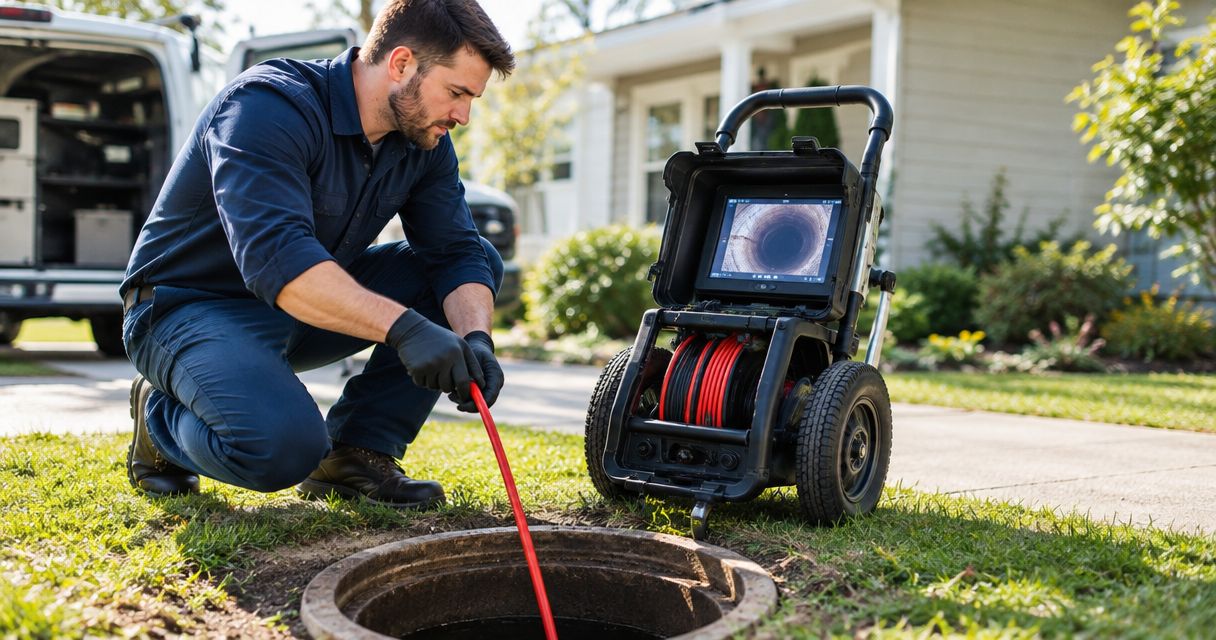
A camera inspection can show visible roots, damaged sections, displaced connections, or material collecting inside the pipe. Standing water, heavy buildup, and access limitations can restrict the view, so ask whether the footage shows the full section under discussion.
Recurring symptoms deserve a diagnosis before another routine maintenance reminder. If a previous visit identified a defect, ask whether the new findings match it or point to a separate issue.
Active backup: stop water use and get help
Sewage coming up through a shower, floor drain, or other low fixture needs urgent attention. Stop using toilets, sinks, showers, washing machines, and dishwashers while you arrange service; additional wastewater can worsen the backup.
Keep children and pets away from contaminated areas. Do not enter standing water near electrical equipment, and do not open a sewer cleanout yourself during a backup because wastewater can escape from the opening.
A plumber needs to assess the blockage and safe access before deciding when to inspect with a camera. The immediate goal is to control the backup and restore drainage; identifying the cause is the next part of the job.
If nearby homes are affected or sewage appears to be coming from the public system, notify the local sewer utility as well. A private sewer inspection does not replace the utility’s assessment of its own system.
Why sewer inspection timing varies
The useful question is not simply how old the pipe is. It is what the available evidence says about its condition and whether that condition is changing.
- Previous camera findings. A documented defect needs a follow-up plan tied to its location and condition. A report with no visible defects supports a different decision.
- Recurring symptoms. Returning clogs, backups, or several fixtures draining poorly justify reassessment rather than waiting for a scheduled visit.
- Root intrusion. Roots seen inside a pipe are evidence of a problem. A tree in the yard alone does not establish that roots have entered the sewer.
- Pipe material and connections. Material, joint condition, and installation details help a plumber interpret findings. Age alone does not establish failure.
- Recent cleaning or repairs. Follow-up footage can document the result of the work and establish a new comparison point.
- Inspection coverage. A camera that could not pass an obstruction leaves unanswered questions. The next step depends partly on what the earlier inspection could not show.
Use these factors to make your 2026 inspection plan specific to your property. Ask the plumber to distinguish a confirmed defect from a suspected cause and a monitoring recommendation from a repair recommendation.
How to set your next sewer inspection date
You do not need to interpret every frame of camera footage. You need a clear explanation of the findings and a practical next action.
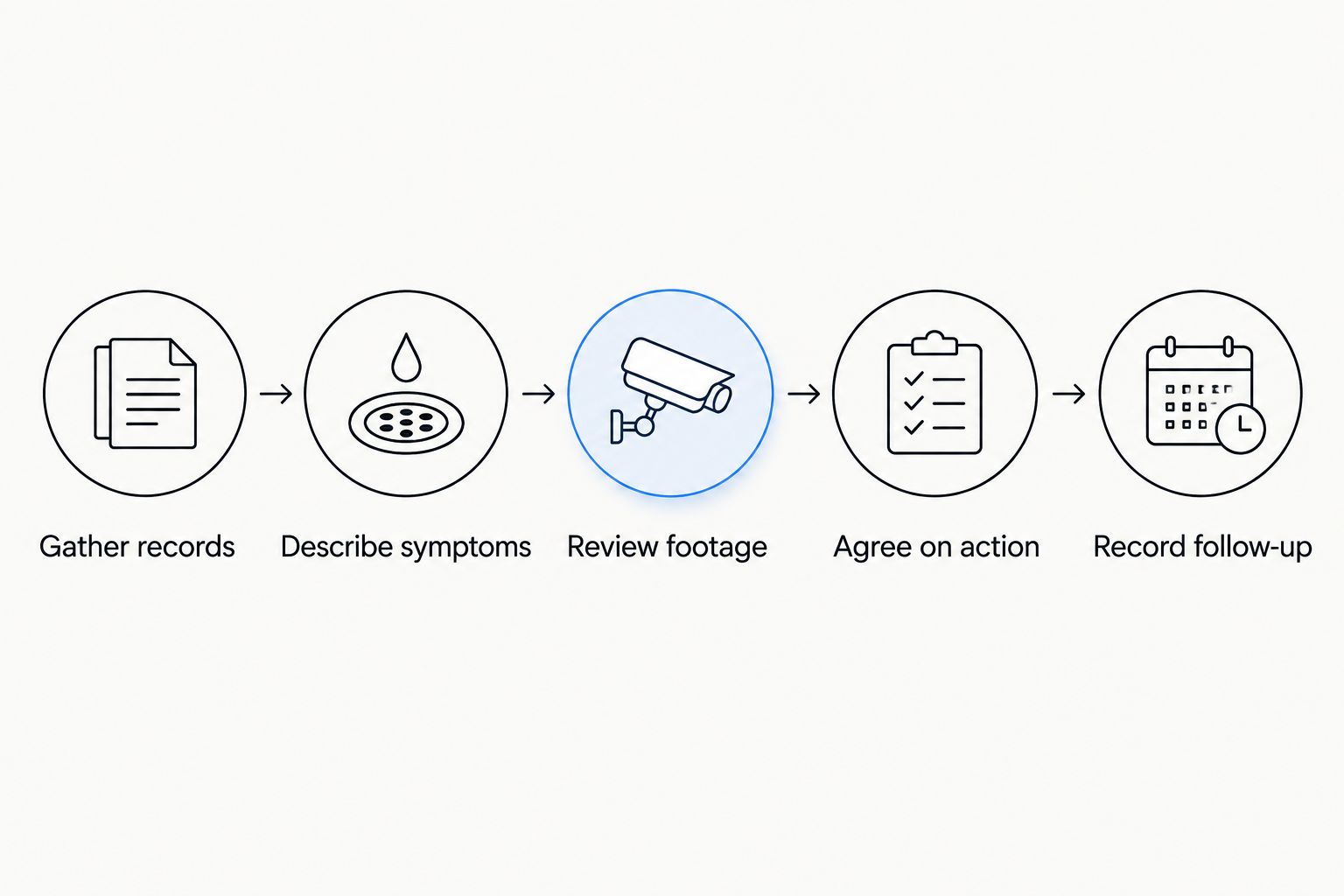
- Gather records. Collect earlier footage, inspection reports, and cleaning or repair invoices. Tell the plumber about repeat trouble even if it is not happening during the appointment.
- Describe symptoms. Note which fixtures are affected and what happens when you use them. Do not deliberately run more water to reproduce an active backup.
- Review footage. Ask the plumber to show the finding being discussed and explain any limits to the view. Confirm whether the relevant section was fully inspected.
- Agree on action. Establish whether the recommendation is monitoring, cleaning, further investigation, or repair. Ask what evidence supports that choice.
- Record follow-up. Get the next inspection timing and earlier warning signs in writing. Save that plan with the footage.
If your 2026 inspection report recommends another visit, ask what the plumber expects that visit to establish. A clear answer connects the appointment to a known issue, a repair result, or a part of the line that still needs examination.
What should a sewer inspection report include?
A useful report makes the recommendation understandable after the plumber leaves. Ask for more than a verbal statement that the line looks fine or needs work.
Request these details:
- Inspection scope: where the camera entered and which section was examined.
- Visible findings: the condition observed, with footage or images showing the concern.
- Location information: where the finding sits along the inspected line, with any uncertainty explained.
- Viewing limits: obstructions, standing water, or access problems that prevented a complete inspection.
- Recommended action: what needs attention now, what can be monitored, and what prompts earlier service.
Camera footage shows the visible interior of the pipe. It does not establish the condition of every hidden surface or surrounding soil. If a major repair is proposed, ask the plumber to connect the proposed work to the actual findings.
Should you inspect a sewer line before buying a house?
Inspect before purchase when the sewer line’s condition is unknown and you want that information before committing. Confirm what the general home inspection includes rather than assuming it covers an internal sewer camera assessment.
Ask about access and scheduling early enough to review the findings within your contractual inspection period. A report is more useful when you still have time to ask questions and evaluate any recommended work.
Does a sewer line need inspection after cleaning?
Inspect after cleaning when the cause remains unclear, symptoms recur, or the plumber needs a clearer view. Cleaning and inspection serve different purposes: one removes an obstruction or buildup, while the other examines visible pipe condition.
Not every cleared drain requires a camera visit. Ask what unresolved question the inspection will answer before authorizing it.
Do nearby trees mean you need frequent sewer inspections?
Nearby trees alone do not establish a need for frequent sewer inspections. Roots documented inside the line, recurring blockages, and previous repair findings provide a stronger basis for follow-up.
If roots were removed, ask whether the entry point still needs repair or monitoring. Removing roots and correcting the opening that allowed them in are different tasks.
FAQ
How often should I have my main sewer line inspected?
Base the inspection schedule on documented pipe condition, previous problems, and current symptoms. Arrange an assessment when the condition is unknown, and get a written follow-up plan when an inspection identifies a defect.
Do I need a sewer camera inspection every year?
A yearly sewer camera inspection is not a universal requirement for every home. Ask the plumber what specific finding justifies that schedule and what an additional inspection is intended to establish.
Should I wait for my scheduled inspection if sewage backs up?
Do not wait for a scheduled inspection during a sewage backup. Stop using plumbing fixtures, avoid contaminated areas, and request urgent plumbing service.
Can a sewer camera inspection prevent a backup?
A sewer camera inspection does not itself prevent a backup or clear a blockage. It provides visible evidence that helps a plumber recommend cleaning, repairs, or monitoring.
Does an older house automatically need more frequent sewer inspections?
An older house does not automatically require a fixed inspection schedule. Actual pipe condition, repair history, recurring symptoms, and inspection coverage provide a better basis for deciding when to inspect again.
Can I use a clear sewer report from the previous homeowner?
A previous homeowner’s clear sewer report is useful background, not a guarantee of current condition. Review its date, coverage, footage, and any plumbing problems or work that occurred afterward.
Can Mainline Plumbing help arrange a sewer inspection?
Mainline Plumbing connects homeowners nationwide with vetted local licensed and insured plumbers for sewer inspection needs. Explain whether you need a routine assessment, follow-up for recurring clogs, or urgent help with an active backup.
One last thing
Ask for the reason behind the next inspection date—not just the date. A useful recommendation explains what needs watching and which symptoms should bring you back sooner. Put that explanation beside the report in your 2026 maintenance records.
Related guides
- Sewer camera inspection for homebuyers
- Can tree roots cause recurring drain clogs?
- How do you know if your main sewer line is clogged?
Mainline Plumbing is best for homeowners who want help connecting with a vetted local licensed and insured plumber for sewer service. Book an assessment for an unclear inspection history or recurring clogs; request urgent help if sewage is backing up.
Book your sewer assessment
Connect with a vetted local licensed and insured plumber. Emergency help is available 24/7.