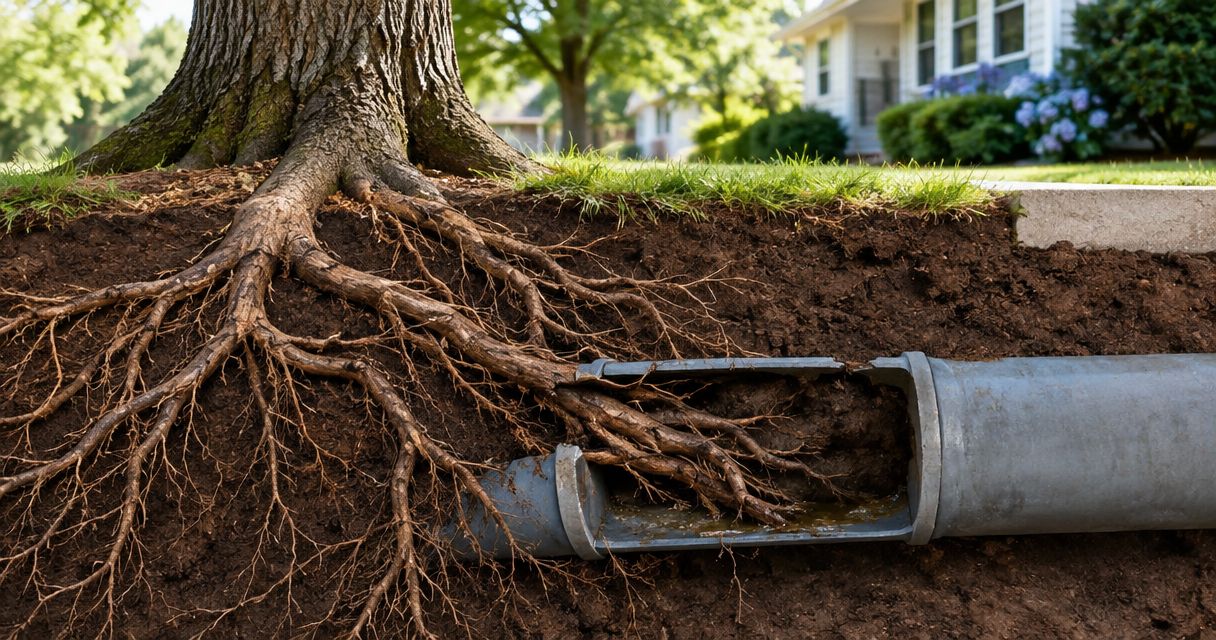
Yes. Tree roots can cause recurring drain clogs when they enter a sewer pipe through a crack, damaged connection, or loose joint and catch waste. Clearing the blockage restores flow, but roots can return if the opening remains. A sewer camera inspection helps separate root intrusion from grease buildup, a damaged pipe, or another cause before you choose a repair.
- Tree roots drain clogs recur when cleaning removes the obstruction but leaves the entry point open.
- A sewer camera inspection helps confirm roots and locate visible pipe damage; symptoms alone do not prove the cause.
- Root cutting clears an obstruction; pipe repair addresses the opening that allowed roots inside.
- Mainline Plumbing connects homeowners needing drain cleaning with vetted local licensed and insured plumbers nationwide.
Can tree roots cause recurring drain clogs?
Tree roots can grow into sewer lines through existing openings, spread inside the pipe, and trap toilet paper and other waste. A plumber can remove that buildup without fixing the opening. That explains why a drain can work after cleaning and then clog again.
A tree near your sewer line is a reason to investigate, not proof that roots caused the blockage. Grease, flushed wipes, shifted pipe sections, and a collapsed line can produce similar symptoms. The right next step is evidence, not another assumed diagnosis.
Use this sequence when clogs keep returning:
- Check the pattern. Record which fixtures drain slowly and whether using one fixture affects another.
- Restore safe access. Have a plumber address an active blockage before attempting a complete inspection if the camera cannot pass.
- Inspect the pipe. Ask for video showing the suspected roots, their location, and the surrounding pipe condition.
- Match the repair. Choose clearing, repair, or replacement based on the obstruction and the pipe damage.
A sewer camera inspection for older homes helps explain what to examine when an existing sewer line has an uncertain history. Pipe age alone does not establish that roots are present.
Why this matters
A recurring clog is not just a cleaning problem. It can be a pipe-condition problem that cleaning temporarily hides.
Your 2026 repair plan should separate two goals: restoring drainage now and addressing the reason drainage keeps failing. Paying for repeated clearing without understanding the pipe condition leaves the underlying question unanswered.
You do not need to choose a major sewer repair based on a slow drain alone. You need a clear explanation of what is blocking the line, where it is happening, and whether the pipe can still do its job.
What warning signs point to roots in a sewer line?
Root intrusion happens underground, so the useful clues come from how your drains behave. Look for a pattern across the house rather than treating every fixture as a separate problem.
- Clogs return after cleaning. Repeated blockage suggests that an obstruction or pipe defect remains, although roots are not the only explanation.
- Several fixtures drain slowly. A shared drainage problem points toward a shared section of pipe rather than an isolated sink trap.
- Using one fixture affects another. A toilet flush that produces bubbling in a nearby drain deserves investigation.
- Wastewater rises at a low drain. A shower or floor drain receiving backup needs prompt attention.
- Previous inspection footage showed roots. A documented entry point is stronger evidence than the location of trees in the yard.
Sewer odors or a wet patch outside also need investigation, but neither confirms roots. Plumbing leaks, drainage problems, and other defects require different repairs.
Tell the plumber what happened before the backup, not just where you noticed it. A washing machine discharge followed by water rising in a shower gives more useful information than a general report of a clogged bathroom.
What should you do if sewage is backing up?
Stop using water that feeds the affected drainage system. Do not keep flushing to test whether the blockage has cleared. Pause the washing machine and dishwasher, and keep people and pets away from contaminated water.
Do not open a sewer cleanout that could release backed-up wastewater toward you. If sewage is near electrical equipment, stay out of the affected area and seek qualified help rather than approaching switches or appliances through water.
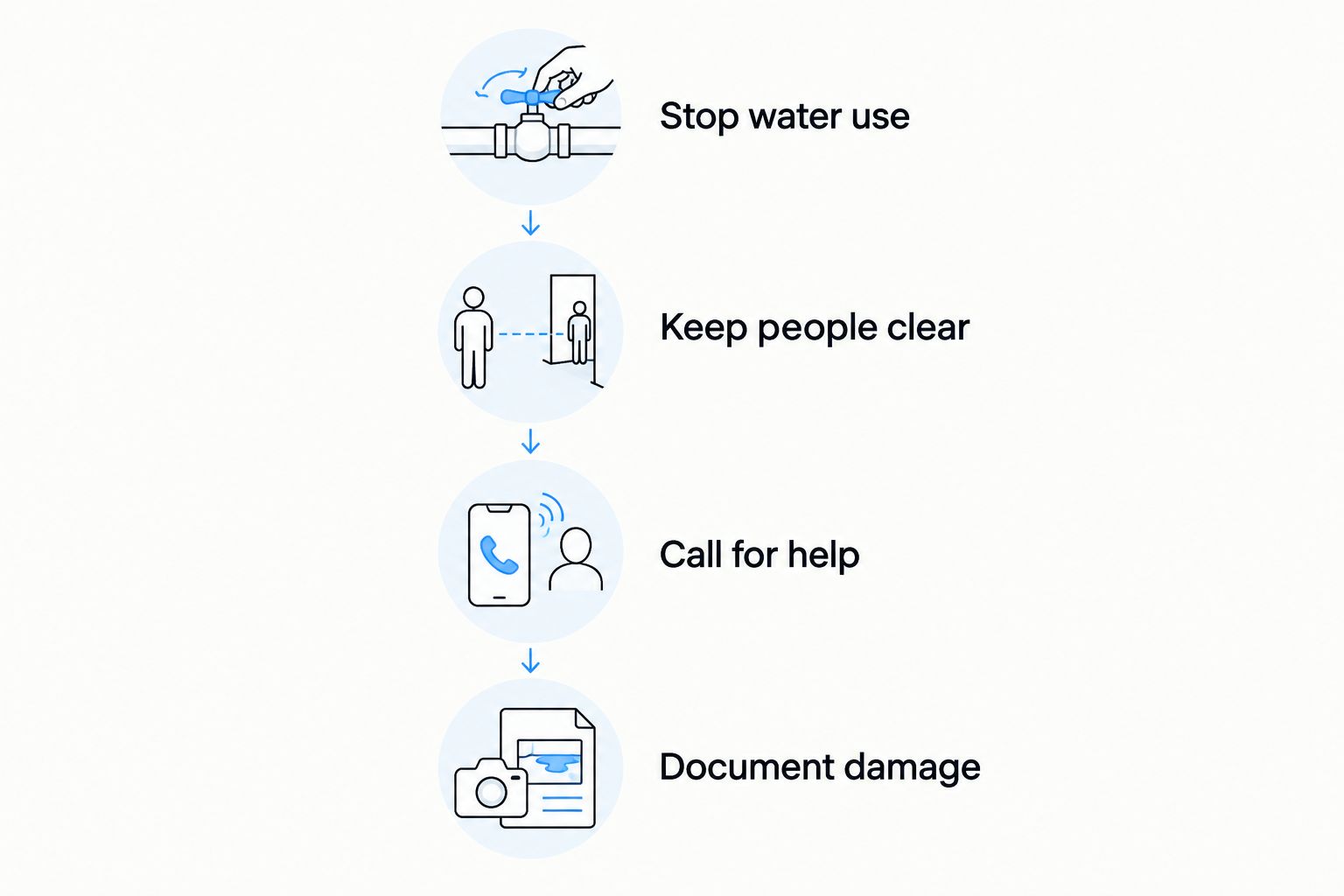
Use these priorities while arranging service:
- Stop water use. Prevent additional wastewater from entering the blocked line.
- Keep people clear. Avoid contact with sewage and contaminated belongings.
- Call for help. Describe the affected fixtures and any active overflow.
- Document damage. Photograph affected areas from a safe location.
Mainline Plumbing is best for homeowners seeking a nationwide connection to vetted local licensed and insured drain-cleaning professionals. Through Mainline Plumbing, you can request help with residential drain and sewer problems, with availability 24 hours a day, 7 days a week.
The service connects you with local professionals; it is not one in-house national plumbing crew. Describe active sewage backup when requesting service so the local plumber understands the problem before arrival.
How do plumbers confirm roots instead of guessing?
A sewer camera lets a plumber inspect the accessible interior of the line. Visible roots can establish intrusion, while the footage can also show displaced connections, cracks, standing water, or other conditions that affect the repair decision.
An inspection has limits. Cloudy wastewater, heavy buildup, or a complete obstruction can hide the pipe wall or prevent the camera from reaching the problem. Clearing and a follow-up inspection can be necessary to see what remains.
Ask the plumber to explain:
- Where the roots enter and whether there are additional entry points.
- Whether the surrounding pipe appears intact, cracked, shifted, or collapsed.
- Whether the camera reached the full section relevant to the problem.
- What remained hidden and whether another inspection is needed after cleaning.
For your 2026 inspection record, keep the video, written findings, and any marked location information together. A useful diagnosis explains the footage in plain language rather than simply stating that the line is bad.
Which treatment is best for root-related drain clogs?
The best treatment depends on both the roots and the pipe holding them. Clearing a root mass and repairing a broken sewer are different jobs. Ask which problem the proposed work solves and which problem it leaves behind.
| Option | Best for | Main benefit | Main limitation |
|---|---|---|---|
| Mechanical root cutting | Removing a root obstruction from a line suitable for cleaning | Opens a path through the blockage | Does not seal the root entry point |
| Professional hydro jetting | Cleaning roots and debris when pipe condition permits | Uses high-pressure water to clean the line | Is not suitable for every damaged pipe and does not repair openings |
| Localized pipe repair | Addressing an isolated damaged section | Removes or repairs the identified entry point | Does not address separate defects elsewhere |
| Pipe lining | Suitable existing pipes that can accept an internal liner | Creates a new interior pipe surface | Requires a suitability assessment and preparation |
| Pipe replacement | Collapsed or extensively damaged sections | Replaces the failed pipe | Requires access and can disturb surrounding areas |
Root cutting: best for clearing an obstruction
Mechanical cutting breaks through roots inside the pipe. It can restore drainage and allow a clearer inspection afterward.
Its limit is straightforward: removing roots does not close a crack or loose joint. If the recommendation stops at cutting, ask how the plumber will monitor or address the entry point.
Hydro jetting: best for cleaning a suitable line
Professional hydro jetting uses high-pressure water to clear buildup and debris. A plumber should assess the pipe before choosing equipment and pressure.
A damaged line needs particular care. Do not assume that stronger cleaning is the answer when the underlying problem is a broken or displaced pipe.
Repair or replacement: best for addressing pipe defects
Repair targets the opening or failed section rather than only the material blocking it. The appropriate method depends on the pipe condition, layout, and access.
Before approving sewer work in 2026, ask why the proposed method fits the recorded defect. A recommendation should connect the visible problem to the scope of work, including what remains outside that scope.
Why root-related drain clogs keep coming back
Recurring root problems depend on the condition of the sewer, not just the size of nearby trees. These factors explain why one clearing does not always settle the problem:
- An open entry point. A crack or loose connection remains accessible after roots are removed.
- Incomplete removal. Roots or trapped debris left inside continue restricting flow.
- Additional entry points. Clearing one affected section does not address roots elsewhere in the line.
- Other pipe defects. A low section, displaced connection, or collapse continues to collect waste.
- Unconfirmed diagnosis. Treating presumed roots misses grease, debris, or another actual cause.
Repeated cleaning is a maintenance decision, not proof that the sewer has been repaired. If you choose maintenance, ask what signs should trigger another inspection and what findings would change the recommendation.
Can tree roots return after drain cleaning?
Yes, tree roots can return after drain cleaning when an entry point remains open. Cleaning removes the obstruction but does not necessarily change the condition that allowed intrusion.
There is no universal recurrence schedule you should accept without context. Ask the plumber to base a follow-up plan on the inspection findings and your actual blockage history.
Will removing a tree solve recurring sewer clogs?
Removing a tree does not repair an opening in a sewer pipe. It also does not remove roots or debris already inside the line.
Do not approve tree removal as a substitute for a pipe diagnosis. If tree work is being considered, coordinate the sewer findings with a qualified tree professional before deciding what to remove.
Can you clear sewer roots yourself?
Do not treat suspected sewer roots like an ordinary sink clog. Main-line equipment, pressurized cleaning, and access to backed-up sewage introduce hazards beyond routine household drain maintenance.
Avoid pouring chemical drain opener into the line as a diagnostic test. If you already used a chemical product, tell the plumber what it was before work begins; the person opening or cleaning the line needs that information.
What should you ask before booking the repair?
A clear scope protects you from confusing temporary relief with a lasting pipe repair. Ask for the findings and proposed work in writing.
For a 2026 sewer repair proposal, confirm:
- The diagnosis: What evidence identifies roots as the cause?
- The objective: Is the work clearing the line, repairing it, or both?
- The boundaries: Which sections are included, and which remain uninspected?
- The verification: Will the plumber confirm drainage and inspect the treated section afterward?
- The next step: What happens if cleaning reveals damage that changes the plan?
Mainline Plumbing connects homeowners with local licensed and insured plumbers for drain cleaning and sewer services. The advantage is help finding a local professional; the repair method still depends on that professional's findings at your property.
FAQ
Can tree roots cause a drain to clog again after snaking?
Yes. Tree roots can cause another clog after snaking if roots remain or the opening that allowed them inside is still present. A follow-up inspection helps distinguish incomplete clearing from a pipe defect.
How do I know whether roots or grease are blocking my sewer?
Symptoms alone do not reliably distinguish roots from grease. A sewer camera inspection, sometimes after clearing the blockage, helps identify the obstruction and surrounding pipe condition.
Is hydro jetting better than cutting roots?
Neither method is automatically better for every sewer line. The plumber should choose a cleaning method based on the obstruction, pipe condition, and access; neither method by itself repairs a crack.
Does every sewer line with roots need replacement?
No. Root intrusion does not automatically require replacement of the entire sewer line. The extent of damage and the suitability of localized repair or lining determine the options.
What should I do if my shower fills when I flush the toilet?
Stop using water and arrange prompt plumbing help. Wastewater rising in a shower when you flush can indicate a blockage in shared drainage, but it does not prove roots are the cause.
What should a sewer inspection show me in 2026?
A useful sewer inspection should show the accessible pipe condition and explain the location and nature of visible defects. Ask for the recording, written findings, and a clear statement of any sections the camera could not inspect.
Can Mainline Plumbing help with recurring root clogs?
Mainline Plumbing connects homeowners nationwide with vetted local licensed and insured plumbers for drain cleaning and sewer services. Availability is 24/7, and the local professional determines the appropriate work after assessing the problem.
One last thing
Ask to see the entry point after the roots are cleared. A drain that runs again shows that water can pass; it does not show that the pipe defect has been fixed.
Keep the before-and-after findings together. That record gives you a practical basis for choosing maintenance, repair, or replacement instead of starting from scratch at the next clog.
Related guides
- Can a clogged drain cause a sewer backup?
- Best trenchless sewer repair methods compared
- How long does drain cleaning take?
Book drain and sewer service if the same clog keeps returning. Request an assessment that identifies the blockage and explains whether clearing alone addresses the problem.
Book help for recurring drain clogs
Connect with a vetted local licensed and insured plumber for drain or sewer service.