The clearest signs of a clogged main sewer line are several drains slowing together, sewage backing up through a low drain, or wastewater appearing in a shower when you flush a toilet. A single slow sink does not prove a main-line blockage, and similar symptoms can come from a blocked branch drain or a sewer problem outside your property. Stop using water and call a plumber if sewage is backing up.
- Main sewer line clogged signs include several slow drains, sewage backups, and wastewater moving between fixtures.
- Stop flushing toilets and running appliances when sewage backs up; more water can worsen the overflow.
- Mainline Plumbing connects homeowners nationwide with vetted local licensed and insured plumbers for sewer-line service.
- A sewer camera helps identify pipe problems; symptoms alone do not establish the blockage’s exact location or cause.
How do you know if your main sewer line is clogged?
Look for a pattern across your home, not just one stubborn drain. When toilets, tubs, and other fixtures have trouble together, the restriction can be farther downstream in a shared drain or the main sewer line.
Mainline Plumbing is best for homeowners who want a connection to vetted local licensed and insured plumbers for residential sewer-line service. Describing which fixtures are affected helps the responding plumber plan the inspection; it does not replace an on-site diagnosis.
| What you notice | What it suggests | Best next step |
|---|---|---|
| One sink drains slowly; other fixtures work normally | A local drain or branch blockage | Have the affected drain checked if basic maintenance does not resolve it |
| Several fixtures drain slowly together | A restriction in shared piping or the main line | Arrange a professional drain assessment |
| Flushing a toilet sends wastewater into a shower or tub | A blockage downstream of the connected fixtures | Stop water use and request urgent plumbing service |
| Sewage rises through a basement floor drain | A downstream backup; the source needs investigation | Keep people away and stop adding wastewater |
| A toilet gurgles without a backup | A drainage or venting problem; not proof of a main-line clog | Report the sound and any accompanying symptoms |
This 2026 checklist helps you decide when to stop using your plumbing. It cannot establish whether the problem is in your private sewer line, a shared connection, or the public sewer.
Why this matters
Your fixtures send wastewater into connected pipes. A blockage downstream can force that wastewater back toward an available opening, including a low shower or floor drain.
A sewage backup is a sanitation problem, not just a slow-drain problem. Keep children and pets away, avoid contact with wastewater, and do not walk into standing water near electrical equipment. If the area presents an electrical hazard, stay out and get emergency assistance.
The useful distinction is simple: one isolated slow fixture calls for investigation; wastewater returning through another fixture calls for stopping water use.
Several drains slow down together
A kitchen sink that drains slowly by itself points you toward that sink’s drain or connected branch. Add a slow toilet and a sluggish shower in another bathroom, and the pattern deserves a wider inspection.
Notice whether the symptoms started together and whether the affected fixtures are near one another. Fixtures sharing a branch can back up without the entire main sewer line being blocked.
Before calling for service, write down:
- Which fixtures are affected.
- Whether the problem appeared suddenly or developed gradually.
- Whether the lowest drains are backing up.
- Whether a previous drain clearing helped only temporarily.
Do not run every faucet to confirm your suspicion. Use what you have already observed rather than adding water to a potentially blocked system.
Using one fixture makes another fixture back up
Wastewater moving between fixtures is a stronger warning than slow drainage alone. For example, a toilet flush that sends dirty water into a shower indicates that wastewater is not moving freely through the connected drainage path.
A washing machine discharging water can also expose a restriction by causing a nearby drain to overflow. Stop the appliance if you can do so safely, and do not restart it to repeat the test.
Tell the plumber exactly what happened: which fixture was running, where water appeared, and whether it stopped rising after water use ended. That sequence is more useful than simply reporting a clogged toilet.
Sewage appears at a low drain
A basement floor drain or low shower can become an outlet when wastewater cannot travel downstream. Dirty water, solid waste, or sewage coming back through a drain warrants urgent attention even if the drain later empties.
Do not assume the problem is fixed because the water receded. A partial blockage can allow water through between periods of heavier use while still causing another backup.
Avoid opening a sewer cleanout yourself during an active backup. Wastewater can be held behind the cap and spill when it is loosened. Leave access clear for the plumber instead.
Gurgling and odors need context
Gurgling can accompany restricted drainage, but it can also indicate a venting problem. A sewer smell can come from a dry drain trap or another plumbing defect rather than a clogged main line.
Treat these symptoms as clues, not a diagnosis. Gurgling combined with multiple slow drains deserves more attention than an occasional noise from one otherwise working fixture.
For a 2026 service request, describe the combination of symptoms rather than naming a cause you have not confirmed. “The toilet gurgles when the shower drains, and the floor drain has backed up” gives the plumber a useful starting point.
What should you do when you suspect a sewer-line clog?
Follow this sequence if wastewater is backing up. Protecting people and stopping additional discharge come before troubleshooting.
- Stop water use. Do not flush toilets, shower, or run sinks. Stop the washing machine and dishwasher if you can do so safely.
- Keep clear. Keep children and pets away from sewage. Do not enter contaminated standing water or an area with possible electrical hazards.
- Record symptoms. From a safe location, note affected fixtures and take photos of visible damage. Do not recreate the backup for a video.
- Request service. Tell the plumber that wastewater is backing up and explain where. Mention any chemical drain cleaner already used.
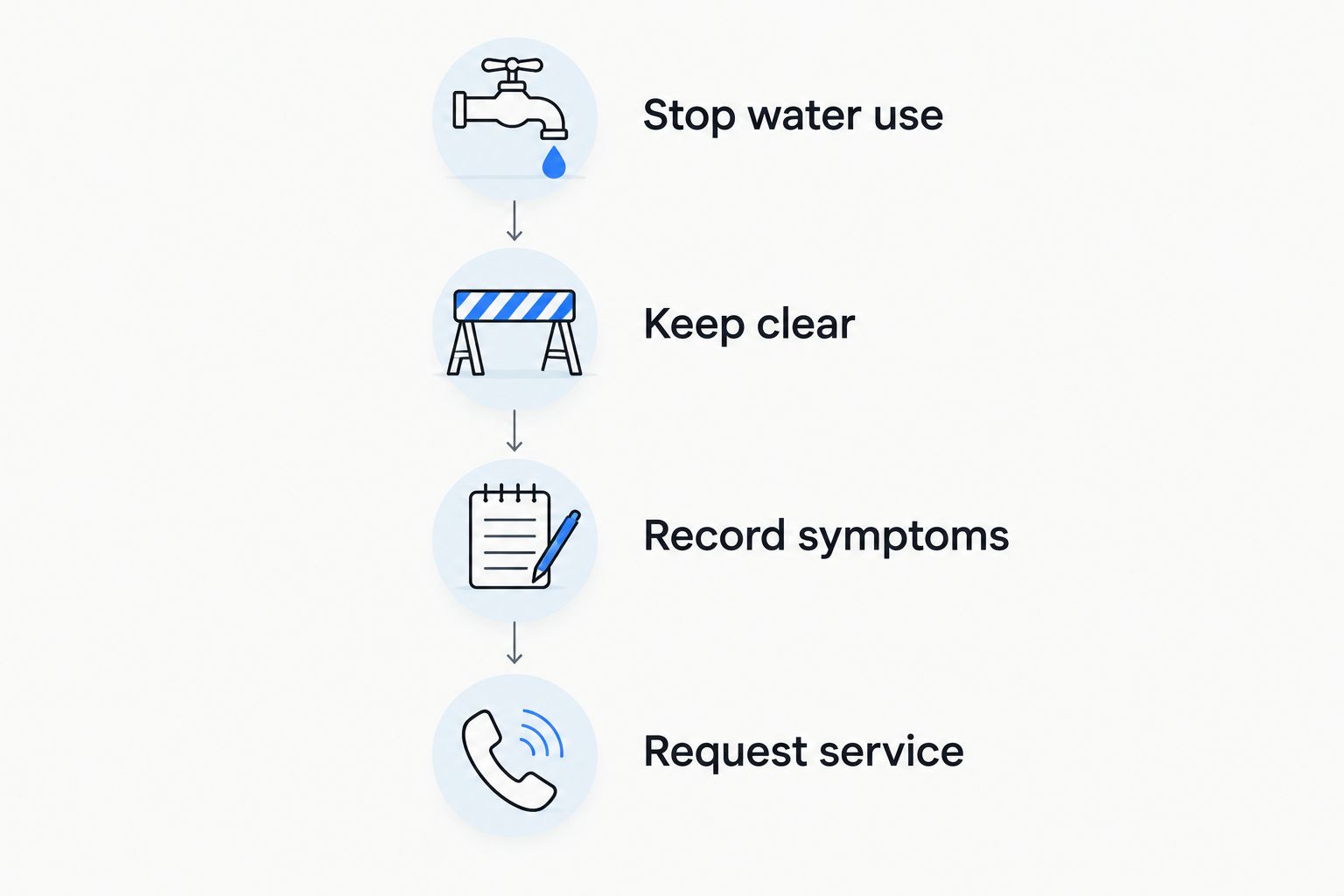
Turning off the household water supply does not clear a sewer blockage or stop wastewater entering from outside your home. If sewage continues rising despite no household water use, tell the plumber and contact your sewer utility to report the backup.
For an active backup in 2026, Mainline Plumbing offers 24/7 availability and connects homeowners nationwide with vetted local licensed and insured plumbers. The connection service is not an on-site diagnosis; a local professional still needs to inspect the drainage system.
Why sewer-backup symptoms vary
The same complaint can have different causes because household drains connect in different ways. These factors explain why symptoms alone cannot identify the repair:
- Blockage location: A restriction in a shared branch affects the fixtures feeding that branch; a downstream restriction can affect more of the home.
- Partial or complete obstruction: Some wastewater can pass a partial blockage, so trouble can appear mainly during heavier discharge.
- Fixture elevation: Low drains provide an outlet when wastewater backs up to their level.
- Pipe condition: Roots, damaged joints, or a collapsed section can restrict flow and require more than clearing loose material.
- The receiving system: Public-sewer backups and septic-system problems can resemble a private sewer-line blockage.
Tell the plumber whether your home uses a public sewer or a septic system. If you do not know, say so rather than assuming the problem ends at the property line.
How does a plumber confirm a main sewer-line clog?
A plumber evaluates the affected fixtures, available access points, and drainage behavior. Depending on conditions, the next step can involve clearing the obstruction, inspecting the pipe with a camera, or both.
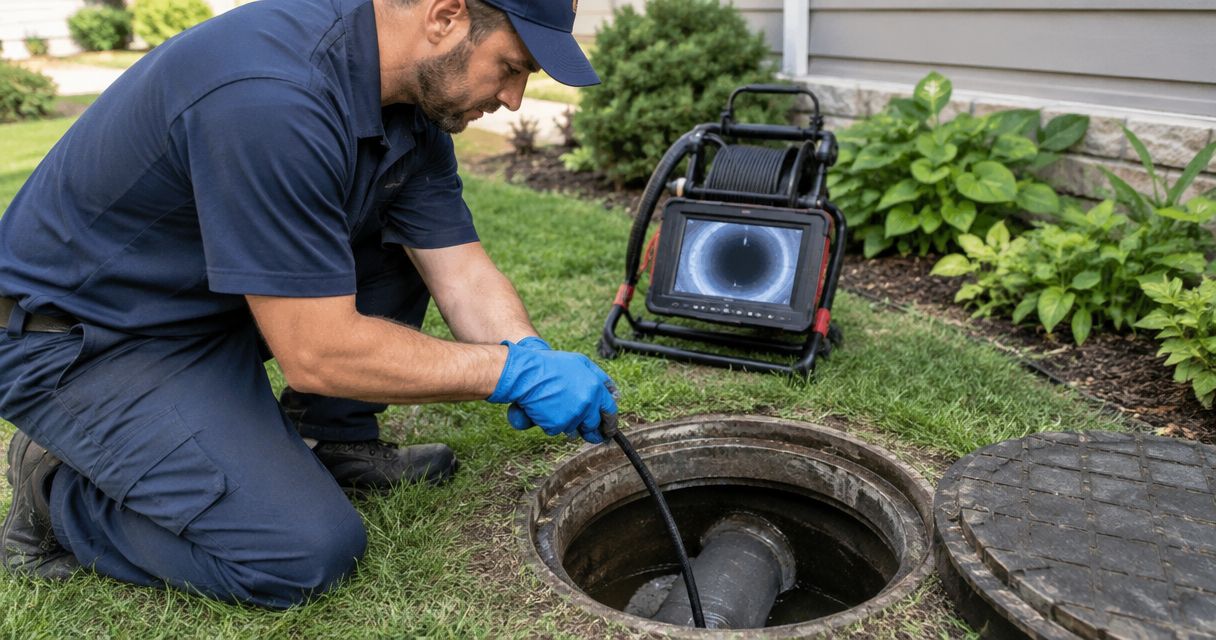
A sewer camera inspection helps show conditions inside accessible piping. Standing wastewater and debris can limit the view, so the plumber sometimes needs to establish flow before inspecting the pipe clearly.
| Option | Best for | Benefit | Limitation |
|---|---|---|---|
| Drain snaking | A blockage suited to mechanical clearing | Can open a path through an obstruction | Does not repair damaged pipe or necessarily remove all buildup |
| Hydro jetting | Suitable piping with buildup that needs thorough cleaning | Uses high-pressure water to clean inside the pipe | Requires professional assessment of pipe condition and suitability |
| Camera inspection | Finding visible defects and checking recurring problems | Shows the interior of the accessible pipe | Does not itself clear or repair a blockage; visibility can be limited |
Choose the method after diagnosis, not before. Restoring drainage and repairing a damaged sewer line are different jobs. Ask what caused the restriction, what evidence supports that finding, and what the proposed work will accomplish.
Can you have a clogged main sewer line without a backup?
Yes. A partial main-line blockage can cause several drains to slow before sewage backs up into the home. Multiple slow fixtures are a reason to arrange service, not a reason to keep flushing until the problem becomes obvious.
Does a sewer backup mean you need a new sewer line?
No. A sewer backup does not establish that the pipe needs replacement; a removable obstruction and a damaged pipe require different responses. For a 2026 repair decision, ask for inspection findings that explain why clearing, repair, or replacement fits the actual condition.
FAQ
What are the clearest main sewer line clogged signs?
The clearest main sewer line clogged signs are several slow drains, sewage returning through a low drain, and wastewater backing up in one fixture when another runs. Stop using water if sewage is backing up and arrange urgent plumbing service.
Can I flush the toilet if I think the sewer line is clogged?
Do not flush the toilet when sewage is backing up or flushing makes another fixture overflow. Each flush adds wastewater to a drainage system that is not carrying it away properly.
Does a gurgling toilet always mean the main sewer line is blocked?
No. A gurgling toilet can indicate restricted drainage or a venting problem. Gurgling together with several slow drains or a backup needs prompt investigation.
Can I pour drain cleaner into a suspected main sewer clog?
Do not add chemical drain cleaner to a suspected main sewer blockage or sewage backup. It can leave hazardous chemicals in standing wastewater; tell the plumber if you have already used any.
Should I open the sewer cleanout to release the backup?
Do not open a sewer cleanout during an active backup yourself. Wastewater can spill from the opening, so leave the cap in place and keep the area accessible for the plumber.
What if sewage keeps coming in after I stop using water?
Continued sewage entry without household water use needs urgent professional attention and a report to your sewer utility. Stopping household water use does not prevent wastewater from entering through an outside sewer problem.
Can a sewer camera clear the clog?
No. A sewer camera inspects the pipe; it does not remove the obstruction. The plumber may need to clear enough wastewater or debris to obtain a useful view.
One last thing
A drain that works again is not proof that the underlying problem is gone. If the same backup returns after clearing, ask what is causing the recurrence instead of treating each visit as an unrelated clog.
For your 2026 home-maintenance notes, record the affected fixtures, the work performed, and any inspection findings. Keep that record with your service paperwork so the next plumber has the history.
If several drains are struggling or sewage is returning, book service through Mainline Plumbing. Stop using water during an active backup and tell the responding local plumber exactly what you observed.
Book sewer-line service
Connect with vetted local licensed and insured plumbers. Available 24/7 nationwide.