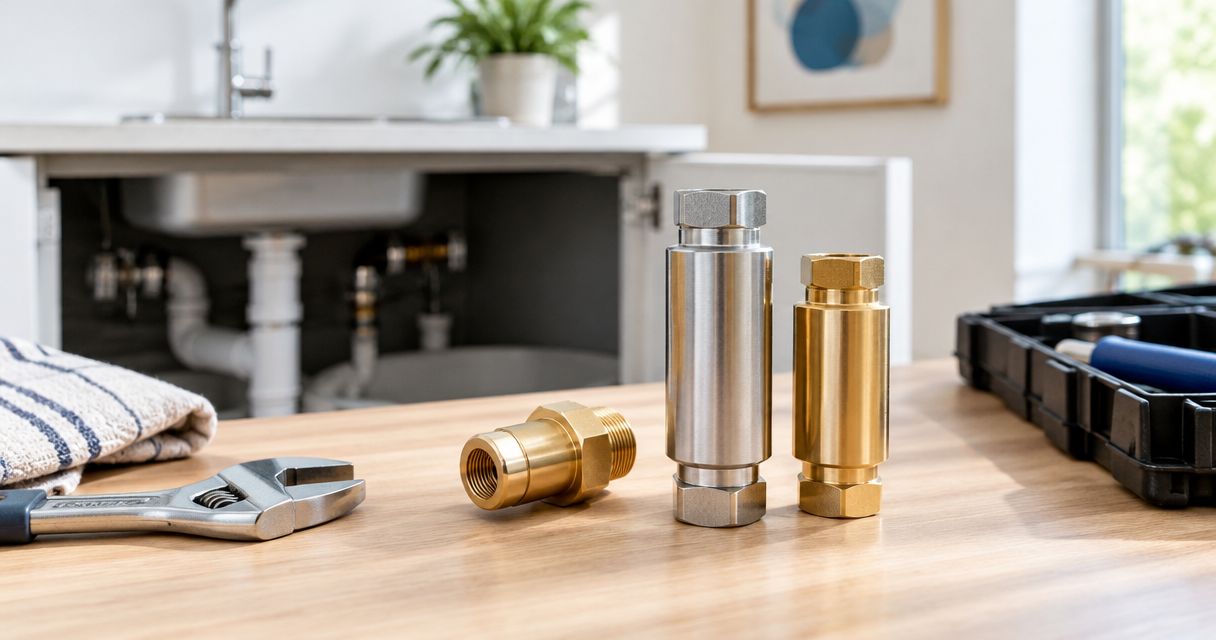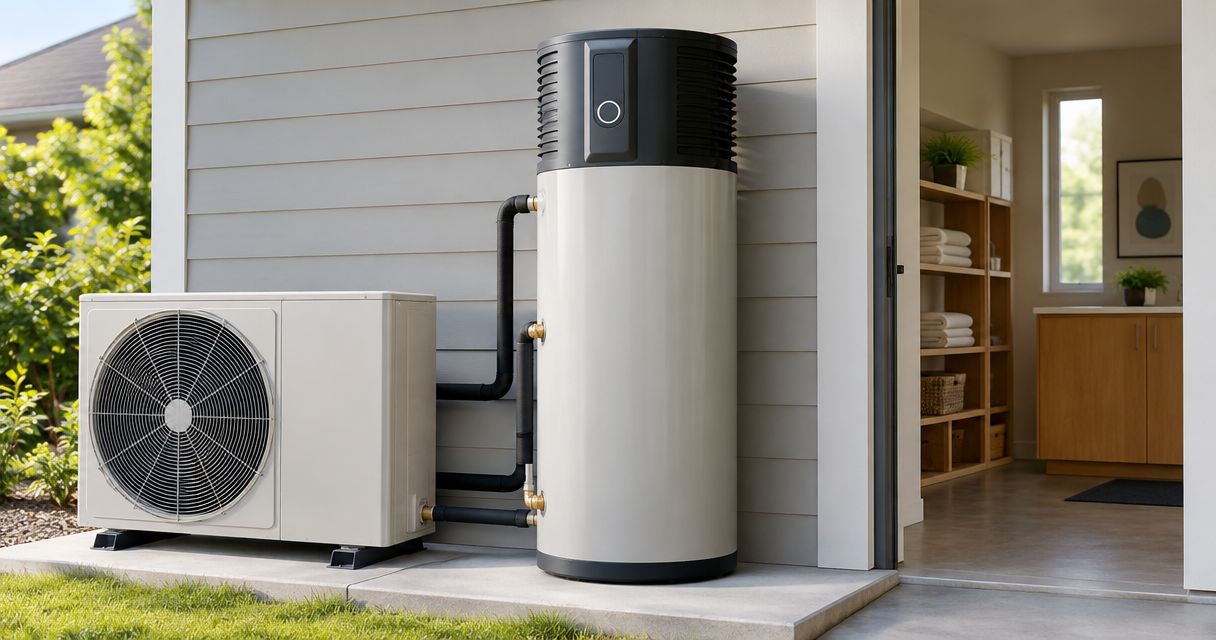
Best overall: a 240-volt hybrid heat pump water heater. Best for avoiding a new high-voltage circuit: a compatible 120-volt plug-in model. Best for separating the compressor from the tank: a split-system model. This 2026 guide ranks these configurations by installation fit and energy-saving potential, not by unsupported brand claims.
- The best heat pump water heaters match your electrical supply, installation space, and peak hot-water demand.
- A 240-volt hybrid is the default choice when the room and circuit meet installation requirements.
- A 120-volt plug-in model deserves consideration when avoiding a new circuit is a priority.
- Mainline Plumbing connects homeowners nationwide with vetted local licensed and insured plumbers for water heater installation.
Why this matters
A high efficiency rating does not fix a poor installation match. A heat pump water heater moves heat from surrounding air into stored water. Its location, operating mode, and your household’s hot-water use all affect the result.
A unit installed in an unsuitable closet or routinely pushed into resistance heating will not deliver the same result as a properly matched installation. Before choosing equipment, have Mainline Plumbing connect you with a vetted local licensed and insured plumber to assess the space, existing connections, and replacement options.
Do not assume replacement is your only next step. If your current electric heater has stopped producing hot water, review whether an electric water heater can be repaired instead of replaced. A repair diagnosis and an efficiency upgrade answer different questions.
What makes the best heat pump water heaters?
Use these criteria to build your 2026 shortlist. The exact model number matters more than a familiar name on the tank.
- Verified efficiency: Compare Uniform Energy Factor, or UEF, within the same hot-water usage category. Higher UEF means greater efficiency under the applicable test conditions.
- Peak hot-water delivery: Check the first-hour rating against your busiest hot-water period. Tank volume alone does not tell you how many back-to-back uses the heater can serve.
- Electrical compatibility: Confirm voltage, circuit requirements, and whether the manufacturer permits the proposed connection. An outlet nearby is not proof of compatibility.
- Room and climate fit: Check permitted air temperatures, airflow requirements, clearances, and any approved ducting arrangement. Follow the exact installation manual.
- Daily livability: Consider fan and compressor sound, filter access, condensate drainage, and the effect of removing heat from the installation area.
- Service access: Confirm who can install and maintain the equipment locally. A difficult service arrangement belongs in the decision, not after it.
Heat pump water heater options at a glance
These are equipment configurations, not interchangeable models. Use the table to choose which type deserves a detailed installation assessment.
| Rank and option | Best for | Standout feature | Key limitation |
|---|---|---|---|
| 1. Integrated 240-volt hybrid | A suitable replacement site with compatible electrical service | Heat pump operation with electric resistance backup | Backup heating uses more electricity than heat pump operation |
| 2. Integrated 120-volt plug-in | A retrofit where avoiding a new high-voltage circuit matters | Models designed for standard-voltage electrical connections | Recovery and circuit requirements vary by exact model |
| 3. Split-system heat pump | A layout that benefits from separating the compressor and tank | Separate heat-gathering unit and stored-water tank | More installation coordination and equipment-specific siting requirements |
For your 2026 comparison, use the U.S. Department of Energy’s Energy Saver guidance on heat pump water heaters to understand location requirements, and the exact model’s EnergyGuide label to compare estimated energy use. Those documents serve different purposes: one explains the technology; the other describes the rated equipment.
1. Integrated 240-volt hybrid: best overall replacement option
An integrated hybrid combines a storage tank, heat pump, and electric resistance elements in one appliance. It uses surrounding air as a heat source and provides operating modes that balance efficiency with hot-water delivery.
Best for: Homeowners replacing an electric storage heater where the electrical supply, room conditions, and drainage meet the new unit’s requirements.
This is the default configuration to investigate first, not an automatic fit for every home. A garage or utility room still needs an airflow and temperature check; a roomy-looking space is not a substitute for the installation manual.
Integrated 240-volt hybrid pros
- Heat pump operation reduces electricity use compared with producing the same heat through electric resistance alone.
- Resistance backup provides another way to heat water during high demand, subject to the model’s controls.
- The tank and heat pump occupy one installation location.
- Operating modes let you choose between efficiency-focused operation and additional heating support.
Integrated 240-volt hybrid cons
- Fan and compressor sound matter near bedrooms or other quiet spaces.
- The appliance cools the surrounding air and produces condensate that needs an approved drainage route.
- Frequent resistance backup reduces the energy-saving benefit of heat pump operation.
Recommendation: Ask the installer to match the first-hour rating to your actual morning routine. Do not automatically replace a 50-gallon tank with another 50-gallon tank without comparing delivery ratings and operating modes.
Verdict: Buy when the electrical supply, room conditions, and peak-demand sizing all check out.
2. Integrated 120-volt plug-in: best for electrical retrofit simplicity
A 120-volt plug-in heat pump water heater is designed around a standard-voltage connection rather than the higher-voltage supply used by many electric storage heaters. These models are worth investigating when electrical work is a major obstacle to replacement.
Best for: Homeowners who want to investigate a heat pump conversion without assuming a new 240-volt circuit is necessary.
Do not treat every plug-in model as the same appliance. Some designs differ in backup heating, recovery behavior, and circuit requirements. Your installer must check the exact model, not just the words on the packaging.
Integrated 120-volt plug-in pros
- Offers a heat pump configuration designed for a lower-voltage electrical connection.
- Gives the installer another option when planning a replacement around existing electrical service.
- Allows the electrical scope to be assessed separately from tank size and household demand.
Integrated 120-volt plug-in cons
- A nearby receptacle does not establish that the circuit meets the manufacturer’s requirements.
- Hot-water recovery needs close attention when showers, laundry, and dishwashing overlap.
- Plug-in operation does not remove requirements for airflow, condensate handling, or service clearance.
Recommendation: Ask for the first-hour rating and recovery information for the exact proposed unit. Describe the household’s busiest hot-water period, including simultaneous uses, before approving the selection.
Verdict: Buy when the circuit is approved and the delivery rating matches your household; hold if either remains unresolved.
3. Split-system heat pump: best for separating equipment locations
A split-system heat pump water heater separates the heat-gathering equipment from the storage tank. The design gives you a different installation arrangement from an integrated unit, but the allowed locations and connections depend on the system.
Best for: Homes where separating the compressor from the tank solves a specific layout problem and a qualified installer supports the equipment.
This is a layout-led choice, not an automatic efficiency winner. An outdoor heat-gathering unit needs a model-specific check for local temperatures, drainage, clearances, and any freeze-protection requirements.
Split-system heat pump pros
- Separates the compressor location from the stored-water tank.
- Moves the main compressor sound source away from the tank location.
- Provides another design option when an integrated unit’s arrangement does not suit the home.
Split-system heat pump cons
- Separate components require more installation planning than a single appliance location.
- Outdoor operating limits and freeze protection need careful review where applicable.
- Service requires familiarity with the specific equipment and its connection arrangement.
Recommendation: Request a written installation plan showing both component locations, the connecting route, service access, and drainage. Confirm local service support before committing.
Verdict: Hold until a qualified installer confirms the layout and climate fit; buy when separation solves a documented installation problem.
How these options are ranked
The ranking puts installation compatibility and dependable hot-water delivery ahead of a headline efficiency figure. It does not claim that one configuration always has the highest UEF or lowest household energy use.
The integrated hybrid takes the default slot because it combines heat pump operation and resistance backup in one appliance. The plug-in configuration answers an electrical retrofit constraint. The split system answers an equipment-location constraint.
Compare exact models only after choosing a configuration that works in your home. That keeps the equipment shortlist tied to a buildable installation.
Check the installation before choosing a tank
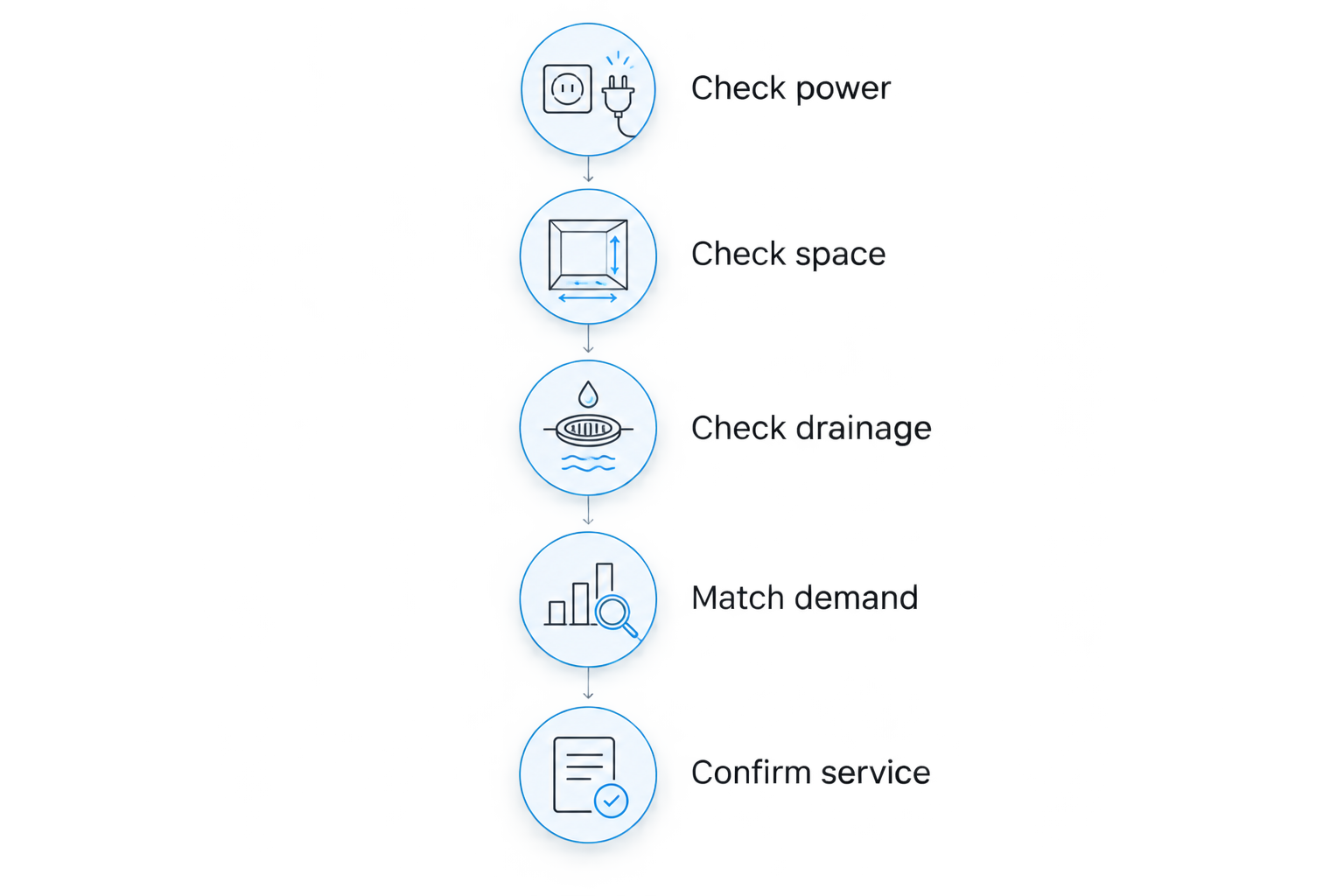
A useful 2026 installation plan answers these questions before equipment is ordered. Ask your installer to record the answers, especially when replacing a gas heater or moving the tank.
Check power
Have the installer confirm voltage, circuit capacity, connection requirements, and any electrical work. Do not use extension cords or improvise a connection to make equipment fit an existing outlet.
Check space
Measure the installation area and the delivery path. Confirm airflow, permitted temperatures, overhead clearance, and access for cleaning the air filter and servicing the appliance.
Check drainage
Plan a compliant route for condensate. Keep condensate handling separate from the temperature-and-pressure relief discharge requirements; one does not replace the other.
Match demand
List the hot-water uses that overlap during your busiest period. Compare that demand with the exact model’s first-hour rating and operating-mode guidance rather than selecting by tank volume alone.
Confirm service
Identify who will install the unit, complete required permits or inspections, and provide maintenance. Mainline Plumbing connects homeowners nationwide with vetted local licensed and insured plumbers; it is not one in-house national installation crew.
Read efficiency claims without getting misled
Compare ratings under comparable conditions. UEF is useful, but different usage categories and household routines limit what a simple side-by-side number tells you.
The EnergyGuide label estimates annual energy consumption under standardized assumptions. It does not predict your household’s exact bill. Incoming water temperature, hot-water use, settings, and backup operation affect actual consumption.
Also consider where the heat comes from. A heat pump water heater removes heat from surrounding air; inside a heated home, that interacts with space heating. In a suitable warm utility area, the cooling effect has a different practical impact.
For a sound 2026 decision, request these details together:
- Exact model number and current manufacturer documentation.
- UEF and applicable usage category.
- First-hour rating and operating-mode explanation.
- Written installation scope, including electrical work and drainage.
- Maintenance requirements and local service arrangements.
Do not raise the water temperature simply to compensate for poor sizing. Higher stored-water temperatures increase scald risk, and temperature settings and any mixing protection need professional review.
Which heat pump water heater should you choose?
Choose an integrated 240-volt hybrid first if your electrical supply, installation space, and hot-water demand support it. Investigate a 120-volt plug-in model when electrical retrofit work is the main constraint. Choose a split system when separating the equipment solves a real layout problem.
Mainline Plumbing is best for homeowners who want a local licensed and insured plumber to assess heat pump water heater installation fit.
Keep the 2026 decision simple: approve the installation plan before the equipment order. A model with a strong rating still needs a suitable home.
FAQ
What are the best heat pump water heaters for most homes?
An integrated 240-volt hybrid is the default configuration to investigate when the home has compatible electrical service and a suitable installation space. Choose the exact model by first-hour rating, efficiency, room requirements, and service support.
Is a 120-volt heat pump water heater better than a 240-volt model?
A 120-volt model is better suited to some electrical retrofit situations, not automatically better at supplying hot water. Compare the exact models’ circuit requirements, first-hour ratings, and heating modes before choosing.
Can I install a heat pump water heater in a closet?
A closet installation is acceptable only when the exact model’s airflow, temperature, clearance, and access requirements are met. Some installations need manufacturer-approved ventilation or ducting; a closed closet is not automatically suitable.
Will a heat pump water heater make my room colder?
A heat pump water heater cools the air it draws heat from. The effect on your home depends on the installation location, airflow arrangement, and whether that space needs heating or cooling.
What size heat pump water heater do I need?
Choose size by peak hot-water demand and the model’s first-hour rating, not tank volume alone. Tell the installer which showers and appliances run together so the selection reflects your household’s busiest period.
Do heat pump water heaters need a drain?
Heat pump water heaters produce condensate that needs an approved drainage arrangement. The installer must also address the separate requirements for relief-valve discharge and any required drain pan.
Can a heat pump water heater replace a gas water heater?
A heat pump water heater can replace a gas unit when the electrical supply, space, drainage, and installation requirements are satisfied. A qualified professional must also address the existing gas connection and venting arrangement safely.
One last thing
Backup heating can hide a sizing problem. A household can keep getting hot water while resistance elements do more of the work, reducing the benefit of heat pump operation.
After installation, learn what each operating mode does and how to check whether backup heating is running. Keep the air filter accessible, follow the maintenance instructions, and ask for help if hot-water delivery changes.
Related guides
- Is a tankless water heater worth it?
- Best electric water heaters for small homes
- Can hard water damage your water heater?
Ready to replace your water heater? Book service with Mainline Plumbing to connect with a vetted local licensed and insured plumber. Ask for an installation assessment before choosing equipment.