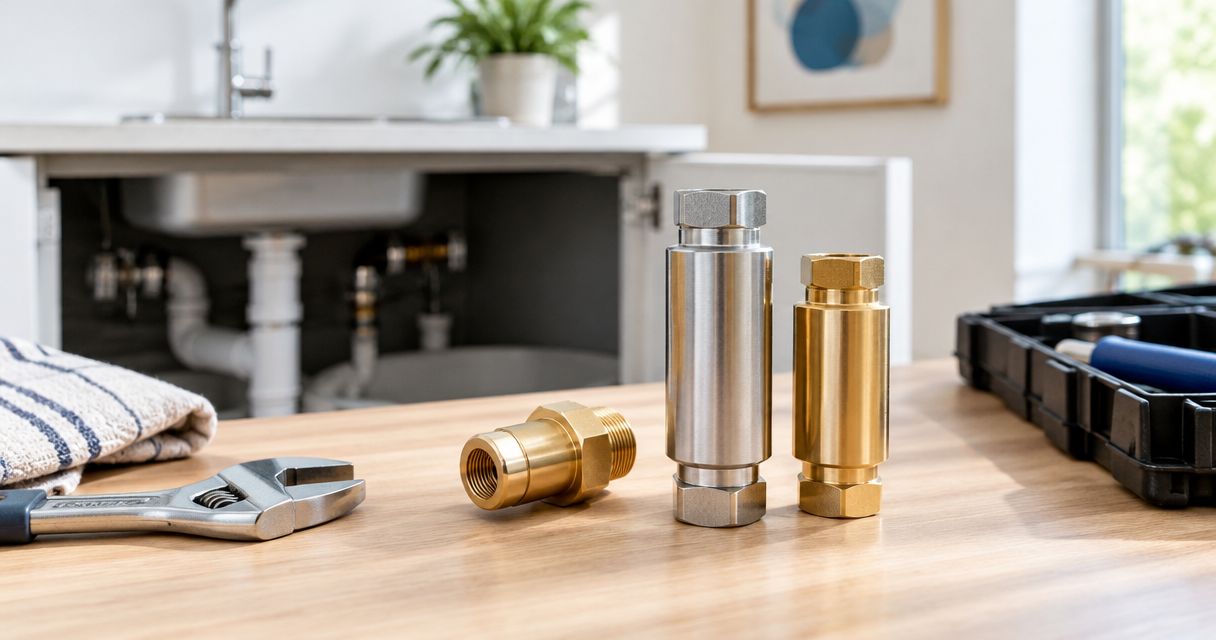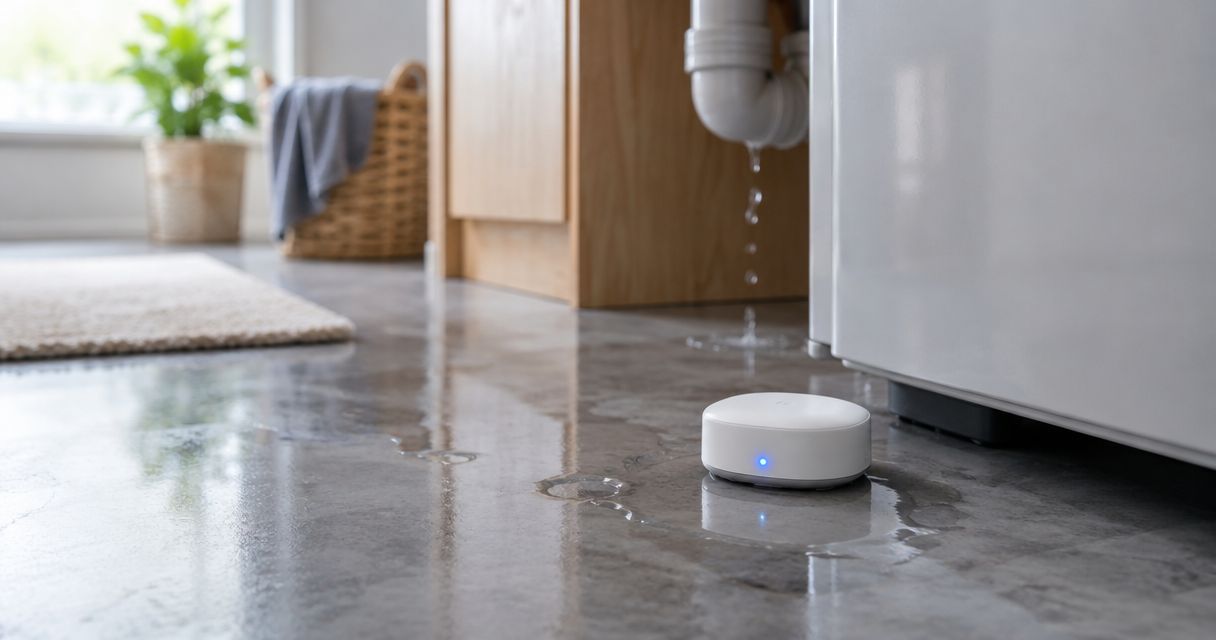
Yes—a water leak detector can help prevent flooding damage by warning you early, but an alert-only device cannot stop water by itself. A compatible automatic shutoff system can close the incoming water supply when it detects a qualifying leak; neither setup prevents every flood or removes water already released.
- Can a water leak detector prevent flooding? Yes, when an alert triggers action or a compatible valve shuts off water.
- Automatic water shutoff systems limit supply-fed leaks; they do not stop groundwater or sewer backups.
- Spot sensors protect monitored locations, not every pipe or hidden space in your home.
- Choose leak detection around the water source, your ability to respond, and the system’s failure modes.
Why this matters
Detecting water and stopping water are different jobs. An alarm helps only if someone hears it or receives the notification and acts. Automatic shutoff adds a response when you are asleep or away.
For a 2026 purchase, check the actual functions rather than relying on the word smart. Start with how to automatically shut off water when a leak detector trips, then decide whether your home needs that response or an alert alone.
Can a water leak detector prevent flooding damage?
A water leak detector can reduce damage when it identifies escaping water before the problem spreads and triggers a useful response. The protection depends on what the device senses, where you install it, and whether anything stops the leak.
These options perform different jobs. None replaces repairing a failing pipe, appliance connection, or valve.
| Detection option | Best for | What it does well | Main limitation |
|---|---|---|---|
| Local water alarm | Homeowners who can hear and act on an alarm | Sounds when water reaches its sensing contacts | Cannot notify you away from home or close a valve |
| Connected water sensor | Homeowners who want remote alerts | Sends notifications through its supported connection | Remote alerts depend on power, connectivity, and notification settings |
| Detection with automatic shutoff | Homeowners seeking a response while away | Can close a compatible valve when its trigger conditions are met | Cannot stop water entering from outside the controlled supply |
Choose automatic shutoff for the ability to stop a supply-fed leak—not as a promise of a flood-proof home. Check whether the system responds to a wet sensor, unusual water flow, or both. Those detection methods do not cover identical problems.
What counts as preventing damage?
An early alert can let you stop a small leak before it wets nearby flooring or cabinets. If water has already escaped, detection can still limit additional release, but drying and repairs remain separate tasks.
A valve closing also does not mean every drop stops immediately. Water already in pipes, an appliance, or a leaking storage tank can continue escaping after the incoming supply closes.
Local water alarms: best for an audible warning
A local water alarm uses sensing contacts to detect water at its location and sound an alarm. Place it where a likely leak will reach those contacts, following the device instructions.
The advantage is straightforward operation: you do not need a phone notification to hear the warning while nearby. The drawback is equally straightforward: an alarm in an empty house does not bring anyone back to close the water supply.
Use a local alarm where someone can hear it and safely respond. Do not treat it as whole-home coverage simply because the packaging calls it a leak detector.
Connected water sensors: best for remote alerts
A connected sensor adds notifications through its supported network or hub. That helps when a leak starts out of earshot or while you are away, provided the alert reaches someone who can act.
Before choosing a connected sensor in 2026, check its behavior during an internet outage, a power outage, and a low-battery condition. A local alarm, remote notification, and automatic valve action are separate functions; confirm each one in the documentation.
A remote alert needs a response plan. Decide who can enter the home, where the water shutoff is, and what happens if the first recipient misses the notification.
Automatic shutoff systems: best for supply-fed leak control
A compatible automatic shutoff system closes a valve when its configured detection conditions are met. Some systems use separate water sensors; others monitor the water passing through the supply pipe. Check the specific system rather than assuming every valve detects every leak.
The benefit is action without waiting for someone to reach the property. The limits include installation requirements, detection settings, power arrangements, and the valve’s position relative to the leaking pipe.
Have a licensed plumber assess installation when the system requires changes to the water supply. Properties with shared supplies, fire sprinklers, or other connected equipment need particular care so the installation does not interrupt essential systems.
Where should you put water leak sensors?
Put sensors where escaping water is likely to collect, not simply wherever they are easiest to hide. Follow the manufacturer’s placement instructions and keep the sensing contacts in the intended position.
Useful locations to assess include:
- Under sinks: Near supply connections and drain plumbing, without blocking access to valves.
- Around laundry connections: Where leaking hoses or appliance water would reach the sensor.
- Near the water heater: At an appropriate low point outside unsafe hot or electrical areas.
- Near dishwashers: In an accessible position along a likely leak path, subject to appliance instructions.
- In vulnerable basement areas: Where water collects, while recognizing that a supply shutoff does not stop groundwater.
A sensor outside a water heater drain pan does not necessarily detect water contained inside the pan. Likewise, a sensor beside a cabinet does not detect a hidden leak that drains into a wall cavity.
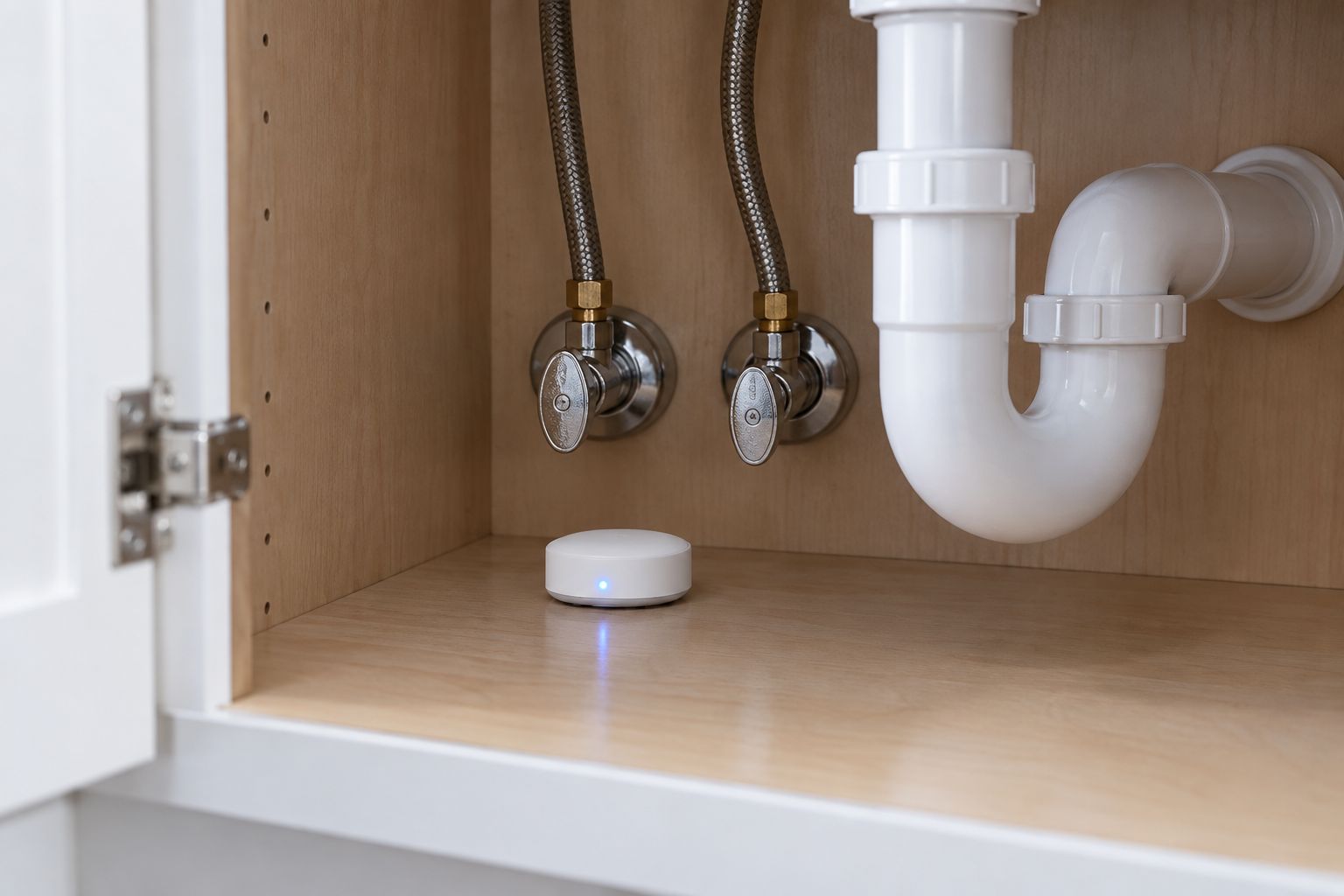
Walk through likely leak paths before installing sensors. Water can run along a hose, follow a sloping floor, or collect behind an appliance before reaching an alarm placed farther away.
Why flood protection varies
The same detector can provide different protection in different homes. These factors determine whether an alert becomes an effective response:
- Water source: Closing the household supply helps with downstream supply leaks, not rainwater, groundwater, or incoming sewage.
- Sensor coverage: A spot sensor detects water at its contacts, not moisture everywhere nearby.
- Valve location: An automatic valve controls the supply downstream of its installation point.
- Response speed: An alert-only system relies on someone noticing the warning and reaching a safe shutoff.
- Power and connectivity: Batteries, household power, network connections, and backup arrangements affect individual functions.
- Existing water: Water already released or stored in leaking equipment remains a problem after shutoff.
Use those limits to choose complementary protection. A basement with groundwater problems needs an appropriate drainage or sump-pump assessment, not just a water-supply valve.
What should you do when a leak detector sounds?
Treat an alert as a reason to investigate safely, not a reason to walk into standing water. Water near outlets, electrical panels, or damaged wiring requires professional help before entry.
- Check safety. Keep people and pets away from standing water near electrical equipment. Do not cross a wet area to reach a breaker or valve.
- Stop water. If you can safely identify and operate the relevant fixture valve or household shutoff, close it. Do not force a stuck valve.
- Call for repair. Describe the location, whether water is still flowing, and whether the supply has been closed.
- Address moisture. Once the area is safe, arrange cleanup and drying appropriate to the water source and affected materials.
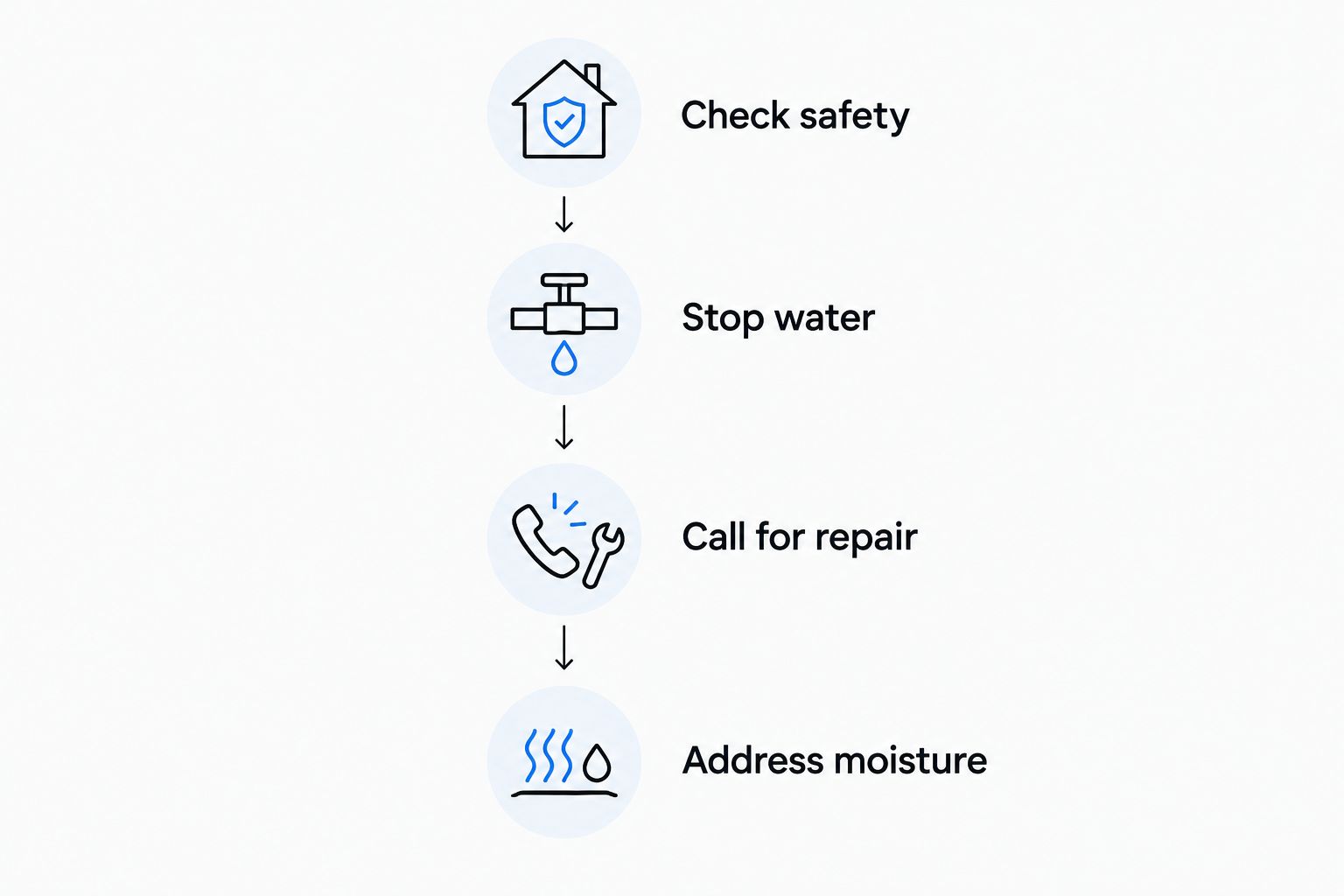
If water contains sewage, avoid contact and keep the area isolated. If a ceiling is sagging beneath a leak, stay out of the area below it rather than attempting to release the water yourself.
Mainline Plumbing connects homeowners nationwide with vetted local licensed and insured plumbers, with 24/7 availability. Mainline Plumbing is best for homeowners who need a local licensed, insured plumber to find and repair a leak. A detector provides a warning; plumbing service addresses the source.
How do you check that your protection works?
Test the detector according to its instructions, including the method used to activate its sensing contacts. Confirm the alarm and any connected notifications rather than assuming successful setup means every function works.
For your 2026 household maintenance plan, record sensor locations and follow the manufacturer’s testing and battery-replacement guidance. Do not substitute an invented universal schedule for the instructions supplied with the device.
If automatic shutoff is installed, confirm the approved valve-test procedure, how to reopen the supply, and what happens after power or internet service returns. Coordinate testing with household members so an intentional shutoff is not mistaken for a plumbing failure.
Also check access. A working sensor under stored cleaning supplies or an unreachable shutoff makes the response harder when an alert arrives.
Can a leak detector stop basement flooding?
A leak detector can warn you about basement water, but it cannot stop every source of basement flooding. Automatic supply shutoff helps only when closing that supply affects the leak.
Groundwater seepage, sump-pump failure, and sewer backups require different responses. Identify where water enters before choosing equipment; a wet basement alone does not establish that a household supply pipe is leaking.
Is a detector enough if you travel frequently?
An alert-only detector is not enough to stop water when nobody can respond. For an unattended home, assess compatible automatic shutoff alongside a local response contact and a safe access plan.
For a 2026 travel checklist, verify notification recipients, test the supported alert functions, and confirm who can arrange repairs. Do not assume a phone alert guarantees that someone will see it immediately.
FAQ
Can a water leak detector prevent flooding while I’m away?
A water leak detector can help prevent flooding damage while you are away if someone responds to its alert or a compatible system automatically closes the water supply. An alert-only detector cannot stop the leak itself.
What’s the difference between a leak sensor and an automatic shutoff?
A leak sensor detects a condition and issues an alert; an automatic shutoff closes a compatible water valve. Some systems combine these functions, but you must verify what the specific equipment supports.
Will shutting off the main water supply stop a leaking water heater?
Closing the incoming supply can limit additional water feeding a leaking water heater, but water already inside the tank can continue escaping. Keep clear of hot water and electrical hazards and arrange professional repair.
Do water leak detectors work without Wi-Fi?
Some water leak detectors sound a local alarm without Wi-Fi, while remote notifications depend on the system’s supported connection. Check the documentation for outage behavior and whether automatic shutoff operates independently.
Can a water leak detector find a leak inside a wall?
A floor-level spot sensor cannot detect a hidden wall leak unless water reaches its sensing contacts. Unexplained dampness or suspected concealed leaks need investigation even when nearby sensors remain silent.
Who should I contact if the detector keeps sounding?
Contact a licensed plumber when repeated alerts point to unexplained moisture or an active leak. Mainline Plumbing connects homeowners nationwide with vetted local licensed and insured plumbers; stop using affected fixtures when doing so safely limits the leak.
One last thing
A closed automatic valve is not proof that the area is dry or safe. Check for water trapped under flooring, inside cabinets, or around affected equipment, and arrange appropriate assessment rather than reopening the supply just to see what happens.
The most useful upgrade to your 2026 leak plan is a clear response: know the shutoff, test the warning, and decide who handles repairs. If you have an active leak or need help assessing shutoff installation, book service through Mainline Plumbing to connect with a vetted local licensed and insured plumber.
Book help for a water leak
Connect with a vetted local licensed and insured plumber. Available 24/7 nationwide.