Yes. Low water pressure can mean a hidden leak, but in 2026, pressure loss alone still cannot distinguish a leak from a clogged fixture, a partly closed valve, or a supply problem. Check where the pressure dropped, look for unexplained water use, and treat active flooding or wet electrical equipment as an emergency.
- A low water pressure hidden leak concern needs meter checks and inspection, not a pressure reading alone.
- Compare hot and cold water at separate fixtures before assuming a whole-house leak.
- Unexplained meter movement strengthens the case for a leak, but does not locate it.
- Mainline Plumbing connects homeowners nationwide with vetted local licensed and insured plumbers for leak detection and repairs.
Can low water pressure mean a hidden leak?
A hidden supply-pipe leak lets water escape before it reaches your faucets. That loss can reduce pressure or available flow, especially when the leak is substantial. A small leak, however, can waste water without producing a noticeable change at the tap.
The strongest warning is a pressure change combined with another clue: unexplained meter movement, damp building materials, running-water sounds, or an unusually wet patch of ground.
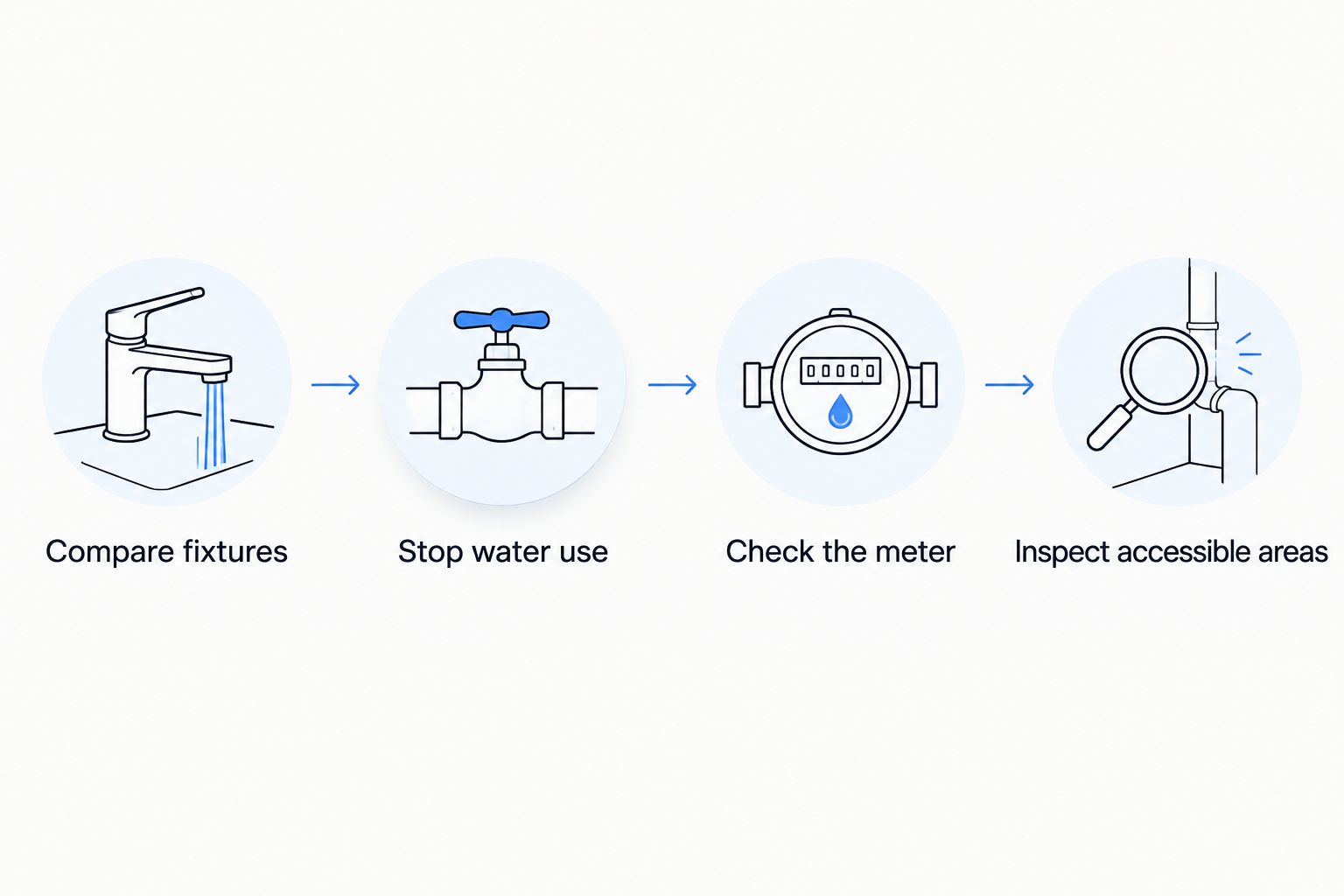
Use this order to narrow the problem safely:
- Compare fixtures. Check whether the problem affects one faucet or several fixtures throughout the house.
- Compare temperatures. Test hot and cold water separately at the affected fixtures.
- Stop water use. Turn off faucets and pause appliances or equipment that draw water.
- Check the meter. Look for continued use, accounting for automatic equipment and toilets.
- Look for moisture. Inspect accessible areas without opening walls or entering unsafe spaces.
If several fixtures suddenly weaken and you find moisture, arrange professional leak detection. Mainline Plumbing connects homeowners with local plumbing professionals rather than operating as one in-house national plumbing team.
Why this matters
Low pressure describes a symptom, not a diagnosis. Replacing a showerhead will not repair a leaking supply pipe, and opening a wall will not solve a neighborhood water-supply problem.
Your first job is to separate an isolated fixture restriction from a shared supply issue. Your second is to decide whether water is escaping somewhere it should not.
For your 2026 home-maintenance notes, record when the change started, which fixtures are affected, and whether the problem is constant. Those details give the plumber a clearer starting point than simply reporting weak water.
What does the pressure-loss pattern tell you?
Where the problem appears helps determine the next check. It does not prove the cause.
| Pattern | Possible explanation | Best next check | What the check cannot prove |
|---|---|---|---|
| One faucet is weak | Restricted aerator, fixture problem, or local supply restriction | Compare nearby fixtures and inspect the accessible aerator | Whether a separate hidden leak exists |
| Hot water is weak throughout the house | Restriction or problem in the hot-water system | Compare cold flow and inspect accessible areas around the heater | Which hot-water component needs repair |
| Hot and cold water are weak throughout the house | Supply interruption, valve restriction, regulator issue, or supply leak | Check utility notices, meter behavior, and visible moisture | The location of a concealed leak |
| Flow weakens when another fixture runs | Shared supply limitation or restriction | Record which combinations cause the change | Whether pressure is outside an acceptable range |
| Sudden pressure loss with wet flooring or running-water sounds | Active water escape requiring prompt investigation | Stop water use and shut off the supply if safe | The full extent of concealed damage |
A faucet's stream shows flow, not a measured pressure reading. A restricted outlet can produce a weak stream even when pressure elsewhere is normal.
Best for an isolated weak faucet: start with the fixture. Best for a sudden whole-house change: check the shared supply and look for leakage before replacing parts.
How can you check for a hidden leak safely?
Start with observations that do not disturb plumbing. Do not remove wall panels, loosen pipe fittings, or climb into a wet crawl space to confirm a suspicion.
Compare fixtures
Run cold water at a sink, then compare another sink in a different part of the house. Repeat with hot water, taking care to avoid scalding.
Check fixtures separately before running them together. This helps distinguish an always-weak fixture from a problem that appears only when water demand increases.
Stop water use
Turn off faucets and make sure nobody flushes a toilet during the check. Account for the dishwasher, washing machine, irrigation, refrigerator ice maker, water treatment equipment, and automatic refill systems.
A toilet can refill without anyone touching the handle. If equipment starts during the test, the meter reading no longer represents a no-use condition.
Check the meter
If your meter is safely accessible and you are permitted to read it, photograph the display and look for a flow indicator. Follow your water provider's instructions for the meter type.
EPA WaterSense guidance recommends comparing meter readings before and after a 2-hour period without water use. A changed reading indicates water passed through the meter; it does not establish whether the source is a hidden pipe leak, a running toilet, or automatic equipment.
Do not wait through a meter test when water is actively escaping. Stop the supply if safe and request urgent help instead.
Inspect accessible areas
Look beneath sinks, around toilets, beside the water heater, and along exposed supply pipes. Check ceilings below bathrooms and walls near plumbing fixtures for fresh discoloration, swelling, or dampness.
Outside, look for unexplained wet ground along the likely water-service route. Rain, irrigation, drainage problems, and groundwater can create similar signs, so a wet patch alone does not confirm a broken supply line.
Keep photographs and observations together. A changing meter reading plus fresh moisture gives the plumber more useful evidence than either sign alone.
Why low water pressure varies
Pressure and flow change for several reasons unrelated to a concealed leak. These factors explain why the same symptom requires different repairs:
- Fixture restrictions. Mineral buildup or debris in an aerator or showerhead reduces water leaving that outlet.
- Valve position. A partly closed supply valve restricts flow. Do not force a stiff, corroded, or leaking valve.
- Simultaneous demand. Running fixtures and appliances together increases the water your plumbing must deliver.
- Supply conditions. Utility work or a neighborhood supply interruption can affect multiple homes. Private wells have a different supply system to investigate.
- Pressure-control equipment. A pressure-reducing valve or well-system problem can affect water delivery throughout the house.
- Pipe condition and leakage. Internal buildup restricts flow, while a supply-pipe leak allows water to escape. Either requires diagnosis before repair.
Do not turn a pressure regulator higher just to make the symptom disappear. That adjustment does not repair a leak or remove a restriction.
If a pressure adjustment is being considered, first read about how much water pressure is too high for home pipes. Have the cause checked before changing the setting.
When does low water pressure become an emergency?
Sudden pressure loss with active water escape needs urgent attention. Other warning signs include a bulging ceiling, rapidly spreading dampness, or water reaching electrical equipment.
If you can safely reach and operate your home's main water shutoff, close it. Do not force a stuck valve or operate a utility-owned curb valve without authorization.
Keep people away from sagging ceilings and wet electrical areas. Do not touch electrical panels, switches, or appliances while standing in water, and do not enter standing water to reach a breaker.
For a suspected supply interruption without visible leakage, contact the water provider. Ask whether work or an outage affects your address and follow any drinking-water instructions it issues.
Mainline Plumbing offers 24/7 access to its nationwide network of vetted local licensed and insured plumbers. Mainline Plumbing is best for homeowners who want help connecting with a local professional for leak detection and residential plumbing repairs. The connection does not replace an on-site diagnosis or establish an arrival time.
What should a plumber check before recommending repairs?
A plumber should identify whether the problem involves pressure, flow restriction, or escaping water before recommending pipe replacement. That means comparing symptoms with measurements and inspection findings.
Depending on the symptoms, the investigation can include:
- Checking pressure with fixtures off and while water runs.
- Comparing hot-water and cold-water delivery.
- Inspecting accessible valves, connections, and pressure-control equipment.
- Checking for toilet leaks and other unintended water use.
- Isolating sections of the supply system where practical.
- Using leak-location equipment when the evidence points to a concealed supply leak.
For a 2026 service visit, ask the plumber to explain what each proposed test will establish. Request the suspected location, evidence supporting the diagnosis, and access needed for repair before approving destructive work.
Targeted leak detection is best for a suspected concealed supply leak. Its benefit is narrowing the search before opening surfaces; its limitation is that access and site conditions still affect confirmation and repair.
A sewer camera serves a different purpose. It inspects drain and sewer piping, not the inside of a household's pressurized drinking-water supply lines.
Can you have a hidden leak without losing water pressure?
Yes. A small hidden leak can occur without an obvious pressure drop, so normal faucet performance does not clear the plumbing of leaks.
Investigate unexplained meter use, recurring dampness, or a water bill that increases without a corresponding change in use. Compare the bill's consumption figures and billing period, not just the total amount charged.
Does low pressure only on the hot side mean a leak?
No. Hot-only low flow can result from a restriction or another hot-water system problem, not just a leak.
Check whether every hot-water fixture is affected and look for visible water around accessible equipment. Do not remove heater covers, adjust gas controls, or open hot-water connections as a diagnostic shortcut.
Should you turn off the water overnight if you suspect a leak?
If evidence suggests an active supply leak, shutting off the water while awaiting repair limits additional water entering the plumbing. Do not use an overnight wait as a substitute for urgent help when damage is spreading.
Follow appliance instructions concerning loss of water supply. Tell the plumber which valve you closed and whether the visible flow stopped afterward.
FAQ
Can low water pressure mean a hidden leak even if the walls are dry?
Yes. A concealed supply leak can discharge beneath a floor, underground, or into another area without wetting a visible wall. Check meter behavior and accessible plumbing rather than relying only on wall stains.
What's the easiest way to check whether my house has a water leak?
Check the water meter while all intentional water use is stopped. Account for toilets and automatic equipment; meter movement shows water passing through the meter but does not locate its destination.
Should I wait 2 hours to check the meter if water is leaking?
No. The 2-hour comparison in EPA WaterSense guidance is a no-use screening check, not a reason to delay action during active leakage. Shut off the supply if safe and seek urgent plumbing help.
Can a clogged faucet look like low water pressure?
Yes. A restricted aerator can weaken the stream at one faucet while other fixtures work normally. Comparing fixtures helps separate an outlet restriction from a shared supply problem.
Will a sewer camera find a hidden water-supply leak?
A sewer camera is not the appropriate tool for inspecting pressurized household supply pipes. Ask for diagnosis suited to the water-supply system rather than assuming a drain inspection will find the leak.
What should I tell a plumber when booking in 2026?
Report when the pressure changed, which fixtures are affected, and whether hot water, cold water, or both are weak. Mention meter movement, visible moisture, running-water sounds, and any valve you have closed.
One last thing
A quiet leak is still a leak, and strong water pressure does not rule one out. Keep your 2026 baseline simple: know where your main shutoff is, understand how to read your meter, and save a note describing normal fixture performance.
Do not buy a pressure-boosting device or authorize pipe replacement based on a weak stream alone. Find the cause first.
Related guides
- How long does it take to fix a leaking pipe?
- Can a water leak detector prevent flooding damage?
- Automatically shut off water when a leak detector trips
Have unexplained pressure loss, meter movement, or fresh moisture? Book plumbing service and describe those signs when requesting help.
Book help for suspected leaks
Connect with a vetted local licensed and insured plumber for leak detection and repair.