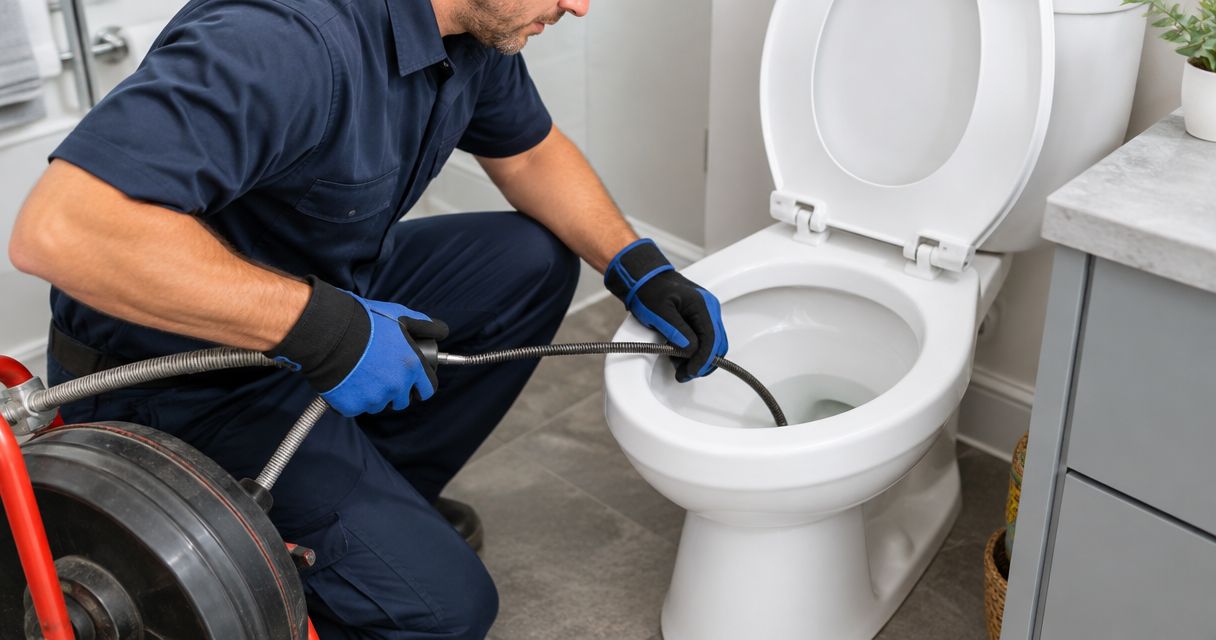
Yes, a plumber can snake a toilet without removing it by feeding a toilet auger through the bowl into the toilet’s curved internal passage. Removal becomes necessary when an object cannot be retrieved through the bowl, the blockage cannot be reached safely, or the toilet needs a separate repair. The deciding factor is where the obstruction sits—not simply whether the toilet is clogged.
- A plumber can snake a toilet without removing it using a toilet auger designed for the bowl’s curved passage.
- A trapped object or inaccessible obstruction can require toilet removal; a routine clog does not automatically require it.
- Multiple backed-up fixtures call for drain-line diagnosis, not repeated attempts through the toilet.
- Mainline Plumbing connects homeowners with vetted local licensed and insured plumbers for residential toilet clogs.
Why this matters
Removing a toilet means disconnecting its water supply, lifting the fixture, and replacing the seal before reinstalling it. Avoiding unnecessary removal keeps the work focused on the blockage. But refusing removal when an object is wedged inside can leave the cause unresolved.
Ask the plumber to explain the access problem before approving removal. If other fixtures also back up, review the signs your main sewer line is clogged. A toilet clog and a shared drain blockage need different approaches.
Can a plumber snake a toilet without removing it?
Yes. A toilet auger has a protective guide that sits in the bowl while a flexible cable travels through the toilet’s internal bend. The plumber turns and advances the cable to break through suitable material or catch an obstruction for retrieval.
For a toilet clog in 2026, the useful question is whether the plumber can reach and clear the obstruction through the bowl. The table below shows the main options and their limits.
| Approach | Best for | Main advantage | Main limitation |
|---|---|---|---|
| Toilet plunger | A soft blockage near the toilet outlet | Uses pressure without feeding a cable into the toilet | Does not reliably retrieve a solid object |
| Toilet auger through the bowl | A reachable blockage inside the toilet or near its outlet | Works without lifting the toilet | Limited reach; forcing it can damage the fixture |
| Toilet removal | A wedged object or obstruction that needs access from below | Exposes the toilet outlet and floor connection | Requires lifting, a new seal, and careful reinstallation |
| Drain-line access | A blockage beyond the toilet or affecting several fixtures | Addresses the shared pipe rather than just the bowl | Requires locating suitable access and choosing appropriate equipment |
A successful flush afterward matters, but so does the diagnosis. If the toilet has repeatedly clogged, ask whether the plumber found the cause or only opened a temporary path through it.
Toilet augering: best for a reachable toilet clog
A toilet auger, also called a closet auger, is different from a general-purpose drain snake. Its guide helps protect the visible porcelain while directing the cable into the toilet’s passage. That protection depends on using the tool correctly; exposed metal can still scratch the bowl.
Common manual toilet augers include 3-foot and 6-foot cable lengths. Those lengths describe the tool, not a promise that every obstruction within that distance is reachable. The toilet’s shape, cable path, and type of obstruction all affect access.
A plumber generally works through this sequence:
- Check nearby fixtures. Determine whether the problem appears limited to the toilet or affects a shared drain.
- Protect the area. Control the bowl’s water level and protect the surrounding floor from splashes.
- Position the guide. Seat the auger’s protective section in the bowl before advancing the cable.
- Work the blockage. Turn and feed the cable without forcing it against hard resistance.
- Test drainage. Withdraw the cable, assess anything recovered, and check the flush under controlled conditions.
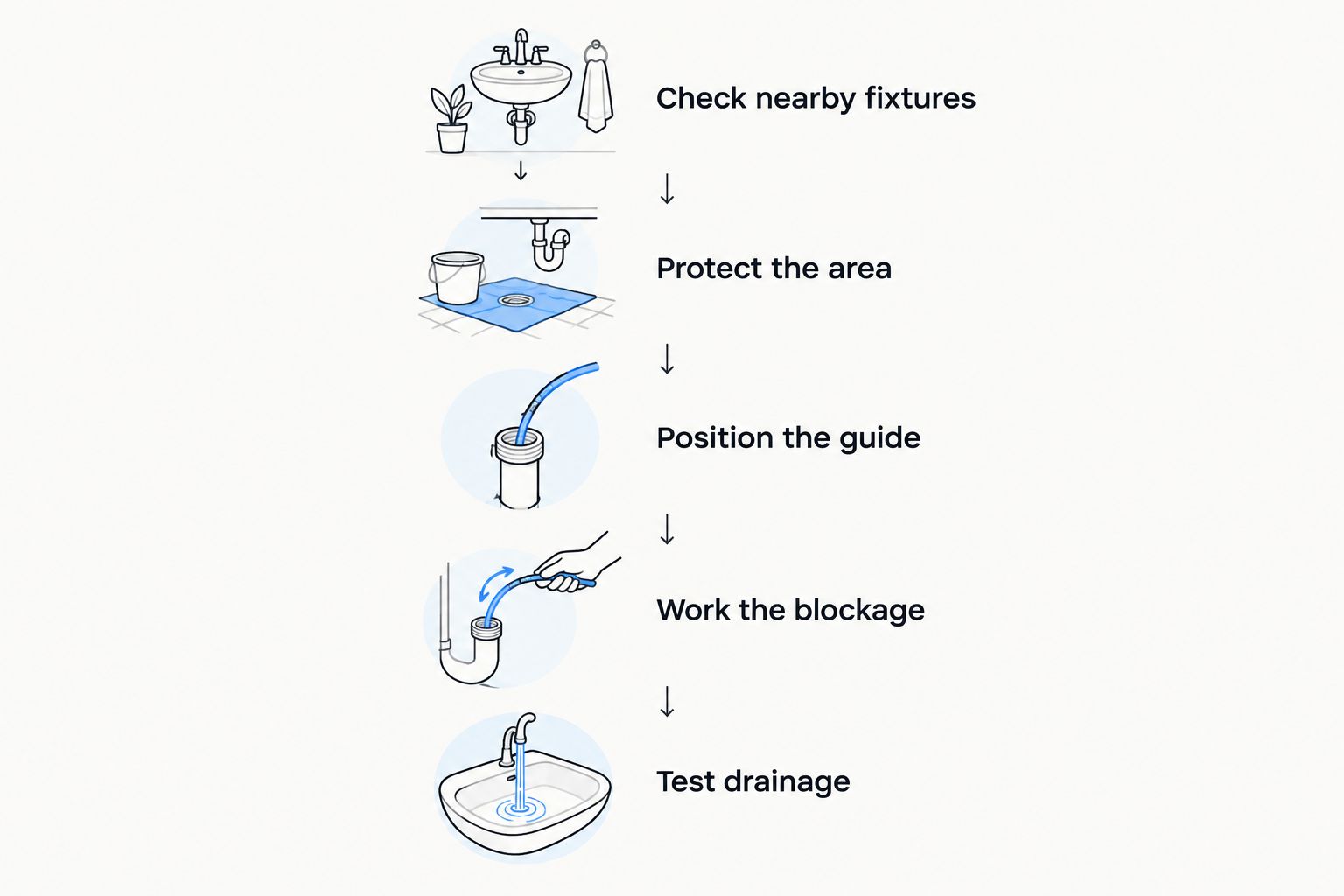
The benefit is straightforward: a reachable clog can be cleared while the toilet stays bolted down. The limitation is equally important. A cable is not a reason to keep pushing when an object needs retrieval or the resistance remains unexplained.
Toilet removal: best for a trapped object or outlet access
A toy, toiletry item, or other solid object can become lodged in the toilet’s bend. An auger sometimes catches it, but pushing can also move it farther into the passage. Tell the plumber immediately if you know something fell into the bowl.
Removal gives the plumber access to the underside of the toilet and the opening in the floor. That access can help retrieve an object, inspect the outlet, or distinguish a toilet obstruction from a blockage in the pipe below.
The trade-off is additional work. The plumber must handle a heavy, breakable fixture, replace the toilet-to-drain seal, secure the toilet, reconnect the supply, and check for leaks. Damaged mounting hardware or a damaged floor connection can require separate repairs.
For a 2026 service visit, ask this before approving the change in approach: What will removing the toilet let you inspect or reach that you cannot access now? A clear answer connects the work to the problem.
Drain-line access: best for a blockage beyond the toilet
When the toilet, tub, or nearby shower backs up together, the obstruction can be in a shared drain rather than inside the toilet. Repeatedly augering the bowl does not resolve a blockage beyond the tool’s useful reach.
A plumber can assess accessible cleanouts—purpose-built openings into the drainage piping—and choose suitable equipment from there. A camera inspection can help investigate recurring problems or suspected pipe damage. It does not replace clearing an obstruction that blocks the camera’s view.
The advantage is better access to the affected pipe. The limitation is that the cause still needs diagnosis: standing wastewater, inaccessible piping, or a heavy obstruction can restrict what the plumber can inspect immediately. Toilet removal is an access option, not an automatic cure for a sewer problem.
Why the approach varies
The right method depends on the obstruction and the condition of the fixture, not just how slowly the bowl empties.
- Blockage location. Material inside the toilet calls for different access than a blockage farther along the drain.
- What went down. Toilet paper and waste behave differently from wipes, plastic objects, and fabric.
- Other affected fixtures. Several backed-up drains point the investigation toward shared piping.
- Toilet condition. Cracked porcelain, rocking, or leakage at the base requires attention beyond clearing the passage.
- Previous attempts. Repeated clogs, unsuccessful augering, or a known dropped object change the next step.
- Available access. A usable cleanout can provide another route into the drain without lifting the toilet.
Describe what happened before the blockage, not just what the bowl looks like now. That history helps the plumber choose an approach without treating every clogged toilet as the same job.
What should you do while waiting for the plumber?
Stop flushing a toilet whose water level is rising. Another flush adds water to a bowl that already cannot empty normally. Keep children and pets away from any wastewater on the floor.
If the toilet continues filling, close its supply valve gently if you can reach it safely. Do not force a stuck or corroded valve. Closing that valve stops incoming tank water; it does not stop sewage backing up through the drain.
Use these safety rules for a clogged toilet in 2026:
- Stop using connected fixtures if wastewater is backing up elsewhere.
- Do not add chemical drain cleaner before plunging or augering.
- Tell the plumber about any cleaner already poured into the bowl.
- Avoid boiling water, which can damage the toilet.
- Do not reach blindly into the toilet or handle sewage without protection.
If water reaches electrical equipment or outlets, stay out of the affected area. Do not enter standing water to unplug equipment or reach a valve.
Should you try a plunger before calling?
A toilet plunger is a reasonable first step for an isolated, soft clog when the bowl has room for water movement. Use a toilet-style plunger with a flange that seals around the outlet. Begin gently to avoid splashing, then use controlled strokes while maintaining the seal.
Stop if the bowl approaches overflowing, a solid object is suspected, or other drains back up. Do not turn an uncertain blockage into repeated flushing and forceful plunging.
A plunger’s advantage is simplicity. Its limitation is that it moves water and pressure rather than showing you what is lodged inside. A toilet that drains after plunging but quickly clogs again needs investigation, not the assumption that the problem is finished.
Does a failed auger attempt mean the toilet must come off?
A failed auger attempt does not automatically mean the toilet must be removed. The plumber should reassess the blockage location, tool access, and symptoms in nearby fixtures before choosing the next step.
If the auger meets a suspected object inside the toilet, removal can provide useful access. If wastewater also rises in the shower, the next useful step can instead be examining the shared drain through a cleanout.
How do you know the toilet is actually clear?
The toilet should flush and refill normally without leakage or backup during controlled testing. The plumber should also check the nearby fixtures when the original symptoms suggested a shared drain problem.
A single successful flush does not explain recurring clogs. Before the visit ends, ask what was recovered, what caused the resistance, and what would justify further inspection if the symptoms return.
FAQ
Can a plumber snake a toilet without removing it in 2026?
Yes, a plumber can snake a toilet without removing it by using a toilet auger through the bowl. Removal is needed when the obstruction cannot be safely reached or retrieved that way, or when another repair requires lifting the toilet.
Will a drain snake scratch my toilet?
An exposed metal cable can scratch a toilet’s porcelain. A toilet auger has a protective guide, but correct positioning and careful handling still matter.
Can a plumber get a toy out without lifting the toilet?
A plumber can sometimes retrieve a toy through the bowl if it is reachable and can be caught safely. A wedged object can require removal so the plumber can reach it from the underside.
Should I keep flushing if the toilet drains slowly?
No, stop flushing when the bowl is draining poorly or the water level is rising. Repeated flushing can overflow the bowl without clearing the obstruction.
Does removing a toilet mean it needs replacing?
No, toilet removal does not automatically mean replacement. An undamaged toilet can be reinstalled with a new seal after the obstruction or connection problem is addressed.
Why does my shower back up when I flush the toilet?
Wastewater rising in the shower when you flush points toward a restriction in shared drainage piping. Stop using the affected fixtures and arrange a plumbing assessment rather than repeatedly augering the toilet.
Who can help with an overflowing toilet after hours?
Mainline Plumbing connects homeowners nationwide with vetted local licensed and insured plumbers and offers 24-hour availability. Report active overflow, other backed-up fixtures, and any chemical cleaner used when requesting service.
Related guides
- Is hydro jetting better than snaking for clogged drains?
- How do you know if you need a sewer camera inspection?
- Is it worth calling an emergency plumber for a slow drain?
One last thing
A toilet that drains slowly is not always blocked. A low tank water level or a flushing mechanism problem can produce a weak flush, so the plumber should check how the toilet operates before treating every symptom with a cable.
Mainline Plumbing is best for homeowners seeking a connection to a vetted local licensed and insured plumber for a residential toilet clog. The next step is a local assessment, not a promise that every toilet can stay in place.
For help in 2026, request plumbing service through Mainline Plumbing. Explain whether the bowl is rising, whether other drains are affected, and whether an object was flushed. Ask the plumber to identify the reason before removing the toilet.