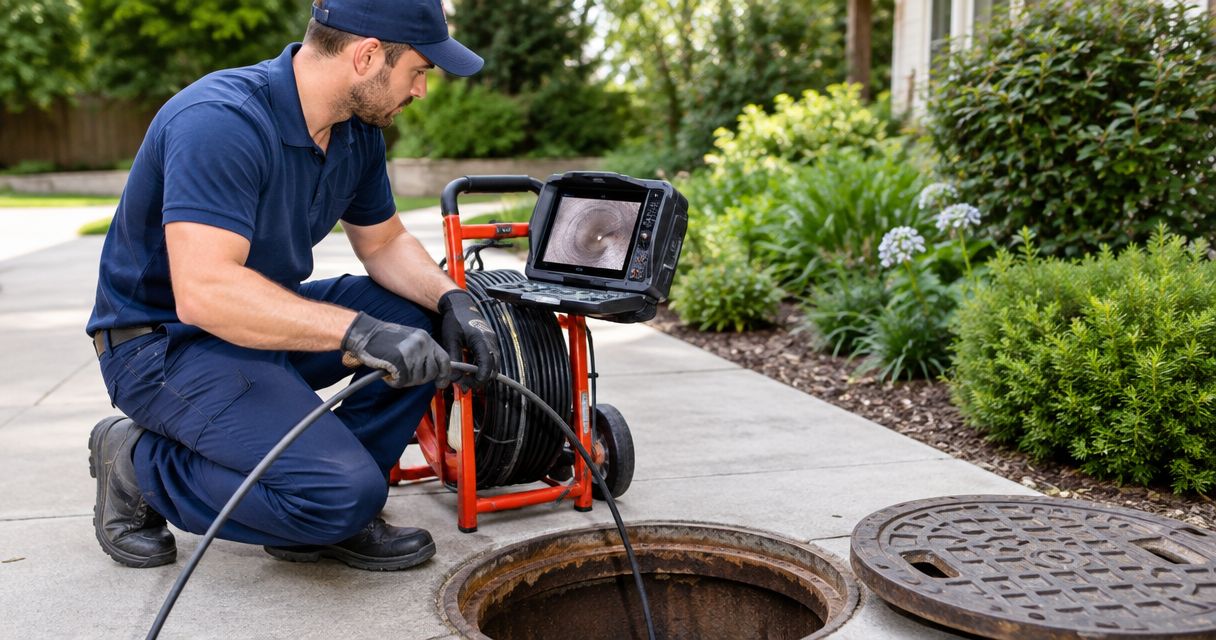
You need a sewer camera inspection when clogs keep returning, several drains back up together, or a plumber needs to locate a suspected sewer-line defect before recommending repairs. An active sewage backup needs immediate attention; the camera inspection comes after the plumber determines how to control the backup and get a usable view. This 2026 guide explains which symptoms justify an inspection and which need a different first step.
- Need sewer camera inspection signs? Recurring clogs and several affected drains justify asking a plumber about an inspection.
- An active sewage backup needs emergency plumbing attention, not continued flushing or drain testing.
- A sewer camera shows visible pipe conditions; it does not clear blockages or prove every pipe is leak-free.
- Mainline Plumbing connects homeowners nationwide with vetted local licensed and insured plumbers for sewer problems.
Why this matters
A drain that works again is not proof that the underlying problem is fixed. Cleaning can restore flow while leaving roots, damaged joints, or other defects that need a separate decision.
The reverse matters, too: a slow bathroom sink does not automatically justify inspecting the entire sewer line. Start with the symptom pattern. Mainline Plumbing is best for homeowners who want a nationwide service connecting them with vetted local licensed and insured plumbers for sewer concerns—not a single in-house national plumbing crew.
How do you know if you need a sewer camera inspection?
Ask about a sewer camera inspection when a problem repeats, affects connected fixtures, or remains unexplained after appropriate drain cleaning. The symptoms below help you describe the problem; they do not establish the cause without an on-site assessment.
| What you notice | What it suggests | Best next step | Important limitation |
|---|---|---|---|
| A clog returns after cleaning | The cause remains or buildup has returned | Ask whether inspecting the affected line will explain the recurrence | Repeat clogs do not prove the pipe needs replacement |
| Several drains slow down or back up together | A restriction in shared drainage piping is possible | Stop unnecessary water use and arrange plumbing service | The problem is not necessarily in the buried sewer lateral |
| Flushing causes bubbling or water movement elsewhere | Connected drainage or venting needs assessment | Tell the plumber which fixtures react | Gurgling alone does not identify a sewer defect |
| Sewage rises through a low drain | Wastewater cannot drain normally | Request emergency plumbing help | A camera is not the first priority while sewage is spreading |
| A plumber suspects roots or pipe damage | The line needs a visual assessment | Ask for footage and an explanation of visible findings | Obstructions can hide parts of the pipe |
| You are buying a home with an unknown sewer history | The buried line's condition is unresolved | Ask about a separate sewer inspection | An inspection cannot guarantee future performance |
Use the pattern, not a single symptom, to decide what to request. Tell the plumber whether the problem affects one fixture, nearby fixtures, or drains throughout the house. That distinction helps direct the assessment.
Recurring clogs: inspect the cause, not just the blockage
A drain that repeatedly stops working deserves more than another unexplained clearing. Tell the plumber what was cleaned, whether normal drainage returned, and what happened afterward.
Camera footage can reveal visible roots, buildup, displaced joints, or damaged pipe walls. It also helps the plumber explain whether a cleaning recommendation addresses the blockage or whether a separate repair is needed.
Do not treat nearby trees as proof of root intrusion. Trees are a reason to investigate alongside recurring symptoms, not a diagnosis by themselves. The guide to whether tree roots cause recurring drain clogs explains that distinction.
Ask to see the finding that supports the recommendation. If roots are visible, ask where they enter and whether the proposed work removes the obstruction, addresses the entry point, or does both.
Multiple affected drains: check the shared line
When a toilet flush makes water rise in a shower, the problem involves more than a slow sink. Wastewater is interacting through connected piping, and continued use can worsen an existing backup.
A camera inspection becomes useful when the plumber needs to identify the condition or location of a restriction in that shared line. Access and visibility determine whether inspection happens before cleaning, afterward, or at both stages.
A single slow fixture points the initial investigation toward that fixture and its nearby drain. That is not a guarantee that the sewer is clear; it is a reason to avoid jumping straight to a whole-line repair recommendation.
Before service, note:
- Which fixture first showed a problem.
- Whether another drain reacts when you flush or run water.
- Whether wastewater is rising or simply draining slowly.
- Whether the symptom followed recent cleaning or plumbing work.
Do not run additional water just to reproduce a backup for a video.
Active sewage backup: stop using water first
If sewage is entering your home, request emergency plumbing service before arranging a routine inspection. Stop flushing toilets and using sinks, showers, washing machines, and dishwashers while you seek help.
Keep people and pets away from contaminated water. Do not enter standing water near electrical equipment, and do not remove a sewer cleanout cap yourself during a backup; wastewater can escape through the opening.
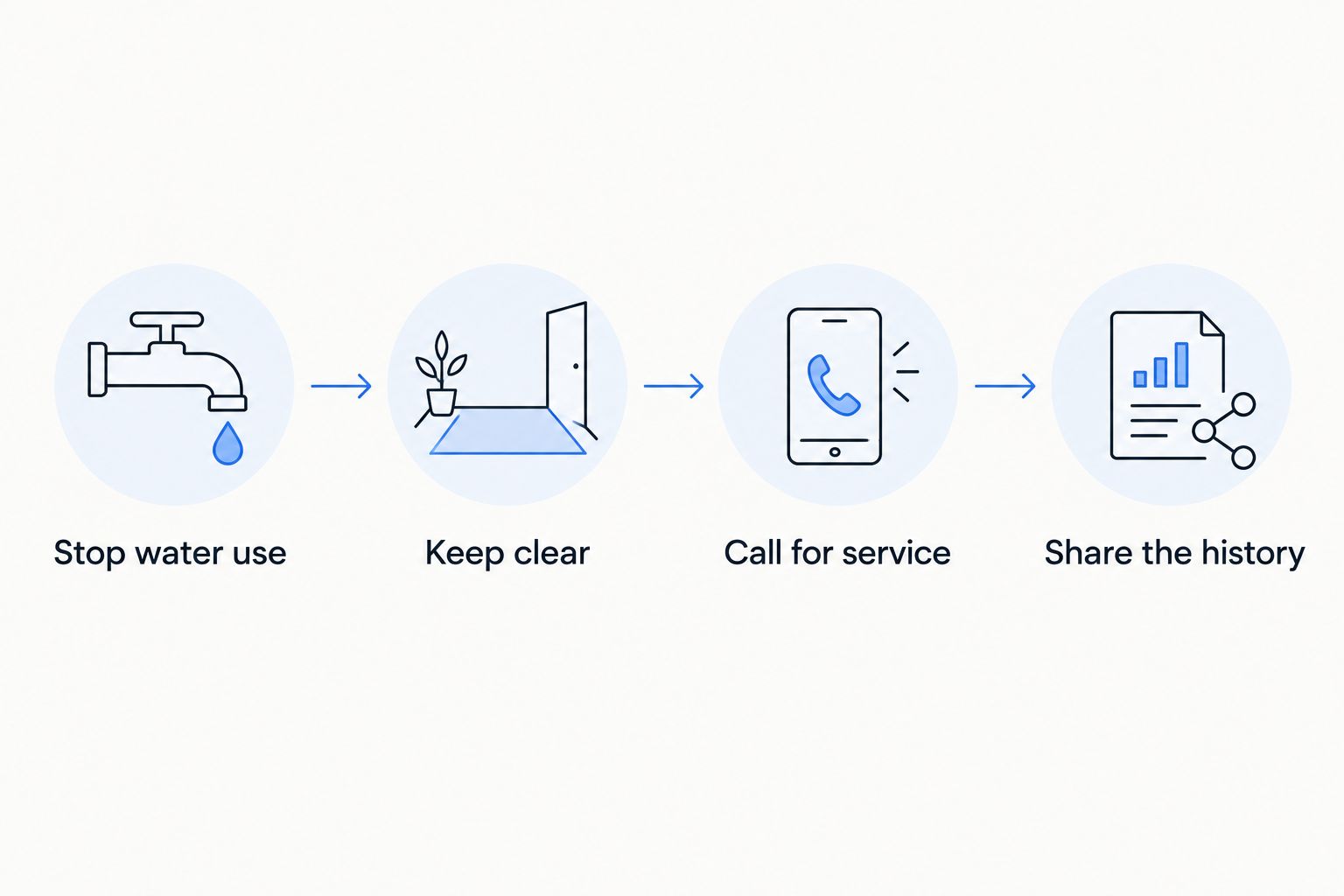
Use this 2026 emergency checklist:
- Stop water use. Avoid adding wastewater to the blocked drainage system.
- Keep clear. Stay away from sewage and any electrical hazards.
- Call for service. Describe the affected drains and whether wastewater is still rising.
- Share the history. Explain earlier clogs, recent cleaning, and any drain chemicals used.
Tell the plumber if you have used a chemical drain cleaner. Do not add another product or mix drain chemicals while waiting for service.
Why the need for a sewer camera inspection varies
The right inspection scope depends on the problem, not a fixed schedule for every house. These factors determine whether a camera is useful now and what the plumber can learn:
- Recurrence: A returning blockage raises questions that another clearing alone does not answer.
- Affected fixtures: Several connected drains suggest a different investigation from an isolated sink clog.
- Prior findings: Earlier footage or documented repairs help focus the inspection on unresolved concerns.
- Access: The plumber needs a suitable way to reach the pipe being evaluated.
- Visibility: Standing wastewater, deposits, and obstructions can prevent a complete view.
- Purpose: Diagnosing a backup, evaluating a home purchase, and planning a repair require different questions.
Odors, damp soil, or an unusually green patch of lawn deserve attention, but they do not prove a sewer leak. Other plumbing and drainage problems can produce similar symptoms. Describe what you see without deciding the cause in advance.
Should you book drain cleaning or a camera inspection?
Cleaning restores passage; inspection investigates visible pipe conditions. Neither automatically replaces the other. Ask the plumber which task answers your immediate problem and whether both are needed.
| Option | Best for | Benefit | Limitation |
|---|---|---|---|
| Drain cleaning | An obstruction that needs removal | Helps restore drainage | Restored flow alone does not document the pipe's condition |
| Sewer camera inspection | Repeated problems or suspected defects | Provides a view inside accessible piping | Does not remove an obstruction or repair damage |
| Cleaning followed by inspection | A blocked line that prevents a useful view | Can expose pipe surfaces hidden by debris | Some sections can remain inaccessible or obscured |
A camera does not need to come first in every case. If wastewater or debris blocks the view, clearing the line can be necessary before the plumber can interpret its condition.
Conversely, an initial camera pass can help locate an obstruction when access and visibility allow. Ask why the proposed sequence fits your symptoms rather than insisting on a particular order.
What should a useful sewer inspection show you?
For a 2026 service visit, request more than a verbal statement that the line looks good or bad. Ask the plumber to explain the accessible route, the visible findings, and anything the inspection could not establish.
A useful discussion covers:
- Inspection scope: Which pipe sections were examined and where the camera stopped.
- Visible findings: What the footage shows, without turning an unclear image into a definite diagnosis.
- Location: Where a suspected defect sits and whether additional locating work is needed.
- Limitations: What water, debris, bends, or access restrictions concealed.
- Next steps: Why cleaning, repair, further assessment, or monitoring fits the evidence.
Ask whether you will receive the recording and written findings before booking. Do not assume every appointment includes the same documentation.
A sewer camera inspection is not a watertightness test. Footage shows visible conditions along the route reached; it does not establish that every joint is leak-free or reveal all surrounding soil conditions. A suspected leak can require additional assessment.
Do homebuyers need an inspection without obvious symptoms?
A sewer camera inspection can help a homebuyer assess an otherwise hidden line even when the fixtures drain normally. A routine home inspection does not necessarily include camera footage of the buried sewer lateral, so confirm the inspection scope rather than assuming it is covered.
For a 2026 purchase, ask the seller for previous sewer reports, repair records, and information about recurring backups. An older home or mature landscaping provides context, not proof that the sewer is defective.
If the camera cannot reach the full intended route, ask what remains unknown before treating the inspection as complete. Keep the report with your purchase records and discuss documented defects with the relevant professionals before making repair decisions.
Can a sewer camera inspection prevent another backup?
A sewer camera inspection does not prevent a backup by itself. It supplies information that helps you decide what maintenance or repair addresses the visible cause.
Removing roots can restore flow without fixing the opening through which roots entered. Similarly, a clean-looking accessible section does not establish the condition of an uninspected section farther along the route.
Ask the plumber to separate immediate work from follow-up recommendations. You should understand what restores drainage now, what addresses a documented defect, and what remains uncertain.
FAQ
What are the clearest signs I need a sewer camera inspection?
Recurring clogs, several affected drains, and a suspected sewer-line defect are clear reasons to ask about an inspection. A plumber should assess the symptom pattern and determine whether cleaning or inspection comes first.
Does one slow bathroom sink mean I need a sewer camera?
One slow bathroom sink does not automatically justify a sewer camera inspection. The initial assessment should focus on the fixture and nearby drain, especially when other drains work normally.
Should I get a camera inspection while sewage is backing up?
An active sewage backup needs emergency plumbing attention first. Stop using water, keep people and pets away, and let the plumber decide when camera inspection will provide a useful view.
Can a sewer camera find tree roots?
A sewer camera can show roots visible inside the inspected pipe. Debris, standing wastewater, and inaccessible sections limit what the plumber can see.
Does a sewer camera inspection prove my pipe has no leaks?
A sewer camera inspection does not prove that a pipe has no leaks. It shows visible internal conditions, and suspected leakage can require additional testing.
Should I inspect the sewer before buying a house in 2026?
A sewer inspection can help you evaluate an unknown buried line before buying a house in 2026. Confirm whether your inspection arrangements include the sewer lateral and request any previous sewer records.
Can Mainline Plumbing help me arrange sewer service?
Mainline Plumbing connects homeowners nationwide with vetted local licensed and insured plumbers for sewer and main line services. The service offers 24/7 availability; explain whether you have an active backup or a recurring drainage problem when requesting help.
One last thing
Ask where the camera stopped. An inspection that ends at an obstruction has documented that obstruction—not the condition of everything beyond it. That distinction matters before you accept a repair plan or assume the rest of the line is clear.
If clogs keep returning, book a plumbing assessment and describe the pattern. If sewage is backing up now, stop using water and request emergency service.
Book help for your sewer problem
Connect with a vetted local licensed and insured plumber. Describe recurring clogs or an active backup.