Hydro jetting is better for widespread grease and sludge buildup in a sound drain line; snaking is better for a localized clog such as hair. Neither fixes a broken or collapsed pipe, so the right choice starts with the blockage and the pipe’s condition—not the most powerful machine.
- Hydro jetting vs snaking: match the drain cleaning method to the blockage and pipe condition.
- Hydro jetting washes pipe walls; snaking breaks through or retrieves a localized obstruction.
- Recurring sewer backups need diagnosis, not repeated clearing without checking the cause.
- Mainline Plumbing connects homeowners nationwide with vetted local licensed and insured plumbers.
Is hydro jetting better than snaking for clogged drains?
Hydro jetting wins on cleaning buildup along pipe walls. Snaking wins when a suitable cable can remove the specific obstruction. A drain that flows again is not necessarily a drain that has been thoroughly cleaned.
For your 2026 service decision, ask the plumber to explain what is blocking the line and why the proposed method fits. If clogs keep returning, review the signs you need a sewer camera inspection before authorizing another round of the same treatment.
| Method | Best for | What it does | Main advantage | Main limitation |
|---|---|---|---|---|
| Drain snaking | A localized hair clog or obstruction reachable with a suitable cable | Uses a rotating cable and attachment to retrieve or break through material | Targets a specific blockage | Can leave grease or sludge on pipe walls |
| Hydro jetting | Widespread soft buildup in a pipe assessed as suitable for jetting | Uses directed pressurized water to loosen and flush material | Cleans along the pipe rather than only opening a passage | Requires suitable access, equipment, and pipe condition |
| Pipe repair | A damaged section, failed joint, or collapsed pipe | Corrects the physical defect | Addresses a problem cleaning cannot fix | Requires a repair plan rather than another cleaning attempt |
Why this matters
Choosing a drain-cleaning method by strength alone misses the point. A cable that removes a hair wad can solve a bathroom drain problem without jetting, while punching a passage through accumulated kitchen grease can leave substantial buildup behind.
The reverse also matters. More cleaning pressure does not repair a pipe defect. If sewage keeps backing up because a section has collapsed or shifted, the next move is diagnosis and repair—not automatically a stronger cleaning tool.
Snaking: best for a localized clog
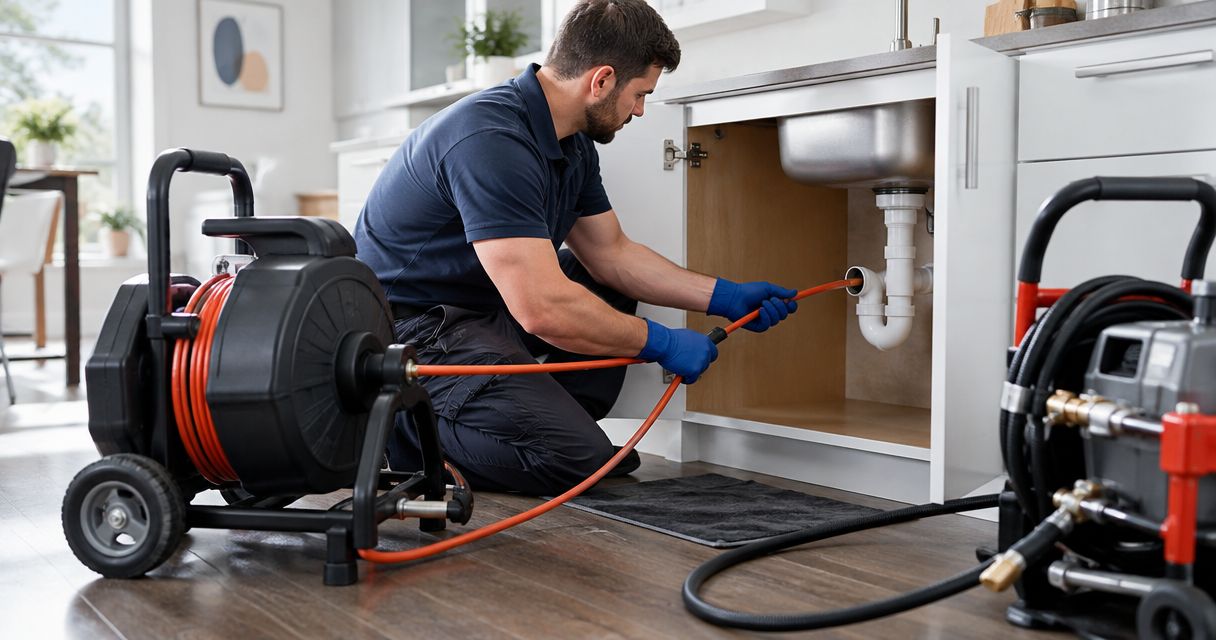
A drain snake feeds a flexible cable into the line. Depending on the attachment and blockage, it can pull material out, break it apart, or open a passage through it.
Snaking is a reasonable starting point when the problem appears limited to a fixture drain and the obstruction suits the equipment. Hair in a bathroom drain is a familiar example. A toilet blockage calls for equipment appropriate to a toilet, not simply any cable available.
What snaking does well
- Targets an obstruction: The cable works directly at the point it reaches.
- Retrieves some material: A suitable attachment can bring hair or debris back out.
- Restores drainage: Removing the blockage can return a fixture to normal use.
- Fits different access points: Professionals select the cable and attachment for the drain rather than forcing one tool everywhere.
The limitation is the cleaning result. Opening a channel through grease does not mean the surrounding pipe wall is clean. If the same drain slows again after clearing, ask whether material remains or another problem is restricting flow.
Snaking also requires judgment. Forcing a cable, using unsuitable equipment, or working through damaged piping can create problems. Stop a homeowner attempt when the cable binds, you cannot advance it safely, or another fixture starts backing up.
Choose snaking when a localized obstruction explains the symptoms and the plumber expects the correct cable to remove it. Do not treat repeated temporary relief as proof that another identical attempt will solve the underlying problem.
Hydro jetting: best for buildup in a suitable pipe
Hydro jetting sends pressurized water through a hose and nozzle. The water loosens material and carries it along the drainage system, with nozzle selection and operating settings matched to the work.
The practical difference is coverage. A snake works mechanically where its attachment contacts the blockage; jetting can wash buildup along the pipe wall. That makes jetting relevant when grease or sludge extends beyond a single obstruction.
What hydro jetting does well
- Washes pipe walls: It addresses deposits beyond a narrow opening.
- Flushes loosened material: Cleaning includes moving debris through the line.
- Treats extended buildup: It can address material distributed along a suitable pipe.
- Supports targeted cleaning: A professional selects the nozzle and approach for the line and obstruction.
Its limits deserve equal attention. Jetting needs appropriate access and a pipe that can tolerate the proposed cleaning. It cannot restore missing pipe, reconnect a separated joint, or correct a section that holds water because of its slope.
Hydro jetting is also not a pressure-washer attachment project for an unfamiliar sewer line. High-pressure equipment presents injury risks, and the operator must control where water and debris go. Keep this work with a trained professional.
Choose hydro jetting when the diagnosis points to removable buildup and the pipe assessment supports it. Decline the idea that jetting is automatically necessary because it sounds more thorough.
Why the right drain-cleaning method varies
Your neighbor’s successful cleaning does not identify what your drain needs. Use these factors to compare a recommendation in 2026:
- Blockage material: Hair, grease, roots, and foreign objects do not respond identically. Ask what evidence supports the diagnosis.
- Blockage location: A fixture trap, branch drain, and main sewer line require different access and equipment.
- Pipe condition: Cracks, corrosion, separated joints, and collapse change what cleaning can accomplish safely.
- Recurrence: A returning clog calls for an explanation of what remains or why new material keeps collecting.
- Access: The location and condition of a cleanout affect how the plumber can inspect and work on the line.
- Drainage pattern: A single slow sink and several backing-up fixtures point to different areas of investigation.
Pipe age alone does not settle the decision. An older line needs assessment, not an automatic ban on jetting; a newer line still needs the correct method and settings.
Ask the plumber to connect each recommendation to a finding. A clear explanation sounds like a description of your blockage, access, and pipe condition—not a blanket claim that one method is always best.
How should you choose between hydro jetting and snaking?
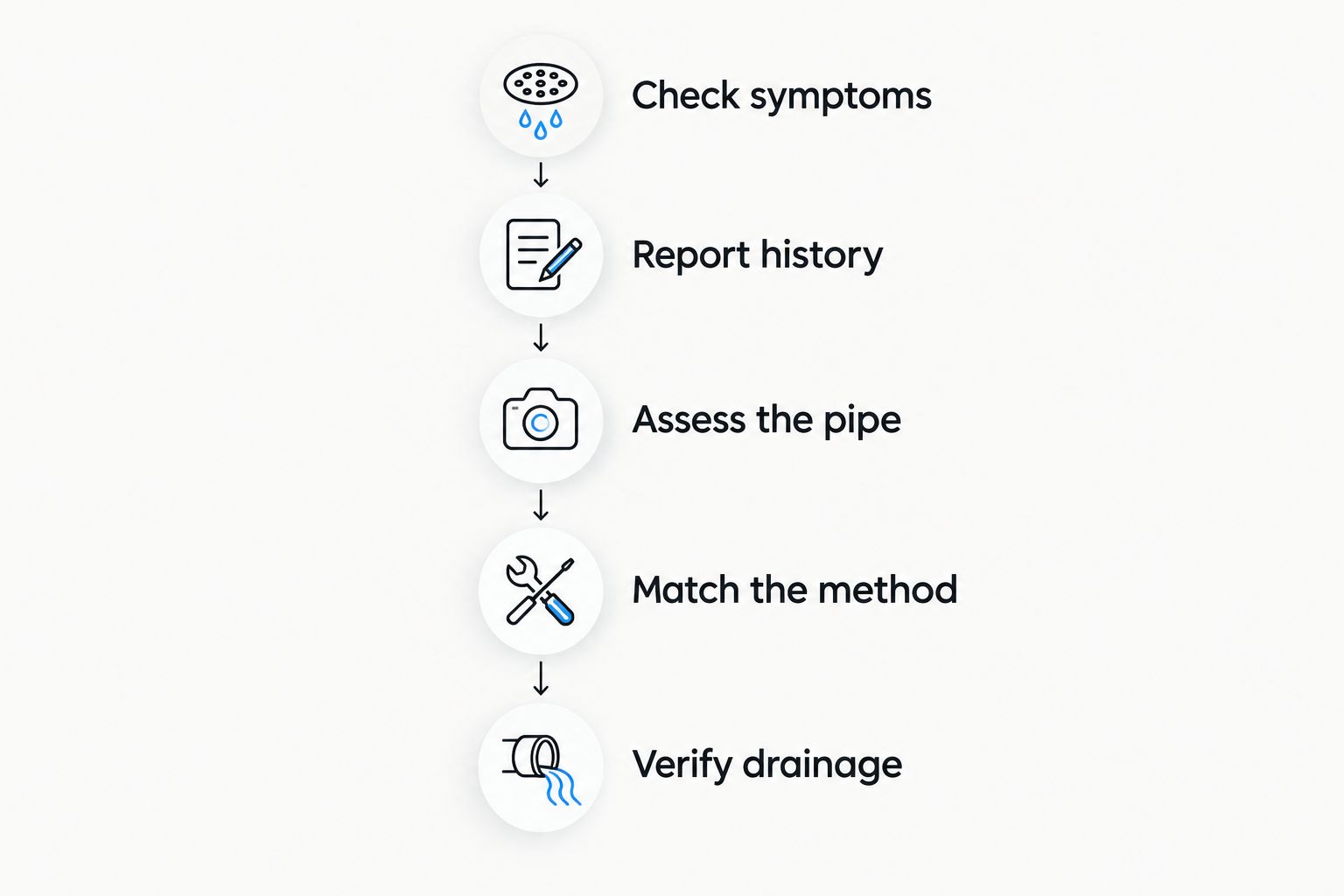
Use this 2026 drain-cleaning checklist before approving work. The goal is a justified treatment plan, not choosing equipment yourself. Tell the plumber what you have observed, then ask how the findings support the next step.
- Check symptoms. Note which fixtures drain slowly, where water backs up, and whether using one fixture affects another. Stop running water if it is returning into the home.
- Report history. Explain whether this is a new problem or a recurring clog. Tell the plumber about previous cable work, jetting, repairs, and any drain chemicals used.
- Assess the pipe. Ask whether the symptoms warrant camera inspection and whether the line is suitable for the proposed cleaning. A camera cannot always see clearly through standing water or a complete obstruction.
- Match the method. Request a plain-language explanation of why snaking, jetting, or repair fits the finding. If the plan changes during the visit, ask what changed.
- Verify drainage. Ask how the plumber will confirm the line drains and whether a follow-up camera view is appropriate. Understand any remaining defect before treating the job as finished.
A blocked line sometimes needs initial clearing before a useful camera inspection is possible. That sequence is different from skipping diagnosis altogether: the plumber should explain what can be seen now and what needs checking after flow returns.
When should you stop using water and book urgent service?
Stop using connected fixtures when wastewater is backing up into your home. Running more water to test the drain can add to the overflow. Keep children and pets away from sewage and avoid direct contact.
Multiple affected fixtures, a toilet that backs up when another fixture drains, or wastewater appearing at a low drain need prompt professional attention. Those symptoms warrant investigation of the shared drainage path; they do not prove the exact cause by themselves.
If wastewater reaches electrical equipment or outlets, stay out of the affected area. Do not enter standing water to reach a breaker or appliance. Get appropriate emergency help for an electrical hazard.
Mainline Plumbing offers 24/7 availability for connecting homeowners nationwide with vetted local licensed and insured plumbers. Describe the backup when requesting help so the local professional understands the urgency and affected fixtures.
Will hydro jetting stop recurring drain clogs?
Hydro jetting can address recurring clogs caused by removable buildup, but it does not guarantee that a drain will stay clear. Continued grease disposal, a foreign object, root intrusion, or a pipe defect can create another blockage.
Ask what the cleaning revealed and whether any defect remains. If roots entered through a joint, removing the roots does not seal that entry point. If the pipe has collapsed, clearing debris does not rebuild it.
For a recurring problem in 2026, request an explanation of the cause and next steps rather than accepting a maintenance schedule without a diagnosis. Keep any inspection footage and written findings for the next service visit.
Is hydro jetting safe for older pipes?
Hydro jetting is not automatically safe or unsafe because a pipe is old. Material, deterioration, joints, access, and the proposed cleaning approach determine whether it is appropriate.
Tell the plumber about known pipe damage and previous repairs. Ask what evidence supports jetting and whether inspection or a different approach should come first.
A camera can reveal visible internal problems, but it does not certify every aspect of a pipe’s structural strength. Avoid treating either a clear image or the absence of a visible crack as an unlimited safety guarantee.
Can you snake a drain before calling a plumber?
A homeowner attempt belongs only on a straightforward, accessible fixture clog with the correct tool and no backup warning signs. Follow the tool’s instructions, protect yourself from splashes, and stop rather than forcing equipment that binds.
Do not combine chemical drain products or add another cleaner to a drain that already contains one. Tell the plumber exactly what you used before service begins; trapped chemicals create a hazard during clearing.
A returning clog, several affected drains, sewage, or uncertainty about the pipe is a reason to book professional help. Repeated force is not a diagnosis.
FAQ
What's better for a kitchen grease clog, hydro jetting or snaking?
Hydro jetting is better suited to widespread grease buildup in a pipe assessed as suitable for jetting. Snaking can open a passage without removing all the surrounding deposits.
Is snaking enough for a shower drain full of hair?
Snaking can be enough when a suitable tool removes the hair obstruction. A drain that remains slow or clogs again needs further investigation.
Can hydro jetting damage my drain pipes?
Hydro jetting can damage unsuitable or deteriorated piping when the equipment or approach is inappropriate. Have a professional assess the line and explain the cleaning plan before work starts.
Do I need a sewer camera inspection before hydro jetting?
A camera inspection is especially useful when clogs recur or pipe damage is suspected. A complete blockage can require initial clearing before the camera provides a useful view.
Will snaking or hydro jetting fix tree roots permanently?
Neither method seals the opening that allowed roots into a pipe. Root removal and repair of the entry point are separate decisions.
Can I use my pressure washer to hydro jet a sewer line?
Do not treat professional sewer jetting as a household pressure-washer project. High-pressure water, contaminated wastewater, and unknown pipe conditions require suitable equipment and training.
Who can help me choose a drain-cleaning service?
Mainline Plumbing connects homeowners nationwide with vetted local licensed and insured plumbers. Explain whether one fixture is slow or several fixtures are backing up so the local professional can assess the problem.
One last thing
Water disappearing down the drain proves that a passage is open—not that the pipe is clean or repaired. Before closing out a 2026 drain-cleaning visit, ask what caused the blockage, what was removed, and whether anything remains that needs attention.
Mainline Plumbing is best for homeowners who want help connecting with vetted local licensed and insured plumbers for residential drain problems. Book service through Mainline Plumbing and describe the symptoms; let the diagnosis determine whether you need snaking, jetting, or repair.