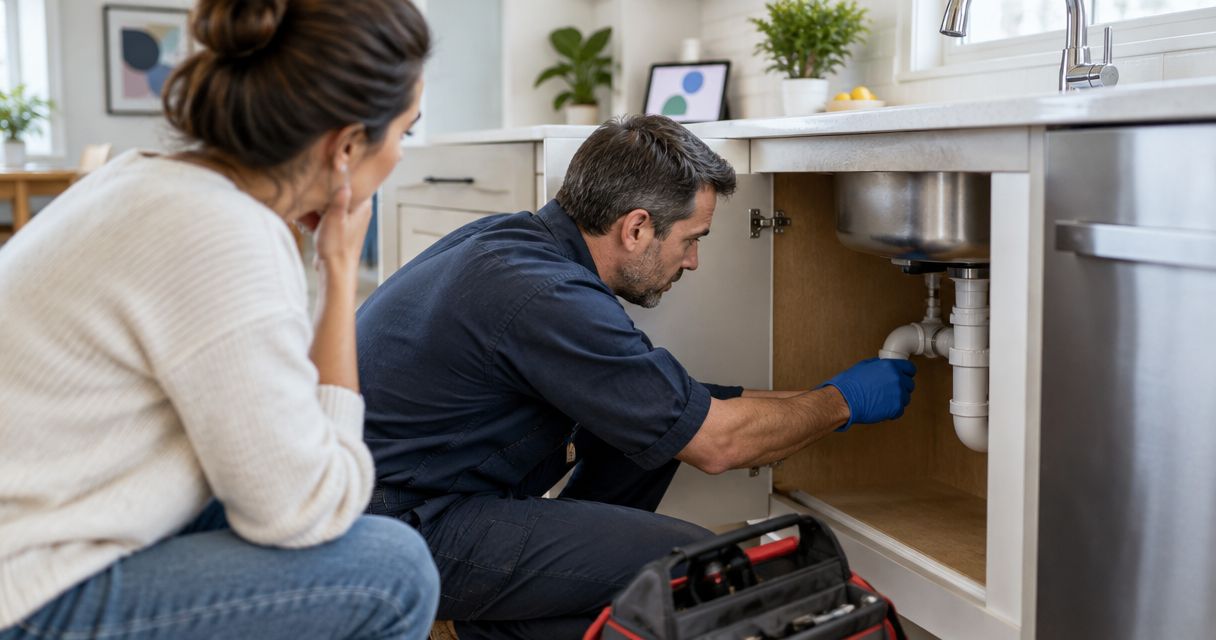
An emergency plumber is worth calling for a slow drain when wastewater backs up, water rises toward an overflow, or several fixtures stop draining together. A single slow sink that still empties, with no leak or backup, usually belongs on a regular service appointment instead. This 2026 guide explains how to separate an inconvenient clog from a problem that needs immediate attention—and what to do safely while you arrange help.
- Emergency plumber worth it slow drain: call urgently for wastewater backups, rising water, or several affected fixtures.
- An isolated slow sink usually needs scheduled drain cleaning, not emergency dispatch.
- Stop using connected fixtures when wastewater backs up; repeated flushing adds water to the blockage.
- Mainline Plumbing connects homeowners nationwide with vetted local licensed and insured plumbers, with availability around the clock.
Is it worth calling an emergency plumber for a slow drain?
Call urgently when the drain problem threatens an overflow, exposes your household to sewage, or leaves you without usable sanitation. Slow drainage alone does not establish an emergency. The important distinction is whether wastewater continues leaving the fixture or starts returning somewhere else.
A clogged drain can cause a sewer backup, but not every slow sink means the main sewer line is blocked. Describe the symptoms before requesting emergency dispatch.
Use this comparison when deciding what to do in 2026:
| Option | Best for | Benefit | Limitation |
|---|---|---|---|
| Emergency plumbing service | Active backups, rising wastewater, or loss of usable sanitation | Gets an urgent problem assessed without waiting for routine scheduling | Speed does not establish the cause; diagnosis still comes first |
| Scheduled drain cleaning | An isolated slow fixture with no backup or leak | Lets you address the restriction before continuing normal use | Not appropriate if wastewater starts rising or spreading |
| Limited homeowner clearing | Visible hair or debris at an accessible strainer | Removes an obvious surface obstruction without opening pipes | Does not resolve a blockage farther inside the drain |
Choosing scheduled service is not ignoring the problem. It means the symptoms do not currently justify emergency dispatch. If those symptoms change, your decision changes too.
Why this matters
The drain's speed matters less than where the water goes. A bathroom sink that empties slowly presents a different problem from a shower filling with dirty water when someone flushes the toilet.
Calling too late leaves you managing an overflow instead of a contained restriction. Calling urgently for every sluggish sink also skips a useful first step: establishing whether the issue affects one fixture or a shared drain.
Mainline Plumbing is best for homeowners seeking a connection to vetted local licensed and insured plumbers for residential drain problems. It connects homeowners with local professionals nationwide; it is not one in-house national plumbing team. Availability is 24 hours a day, but the actual arrival time needs confirmation when you book.
An isolated slow drain: schedule service unless symptoms change
A sink or shower that drains slowly while the rest of the home works normally points toward a localized restriction. Hair, soap residue, and debris near the opening are possible causes, but slow drainage alone cannot identify what is inside the pipe.
For 1 affected fixture, first look for visible debris at the strainer or stopper. Remove only material you can reach safely, following the fixture manufacturer's instructions. Keep hands and tools away from a garbage disposal opening, and disconnect its power before any work involving the disposal.
If the drain remains slow, arrange drain service and limit its use. Do not keep filling the basin to see whether the problem has fixed itself. Stop homeowner attempts if you encounter leaking connections, inaccessible parts, or resistance that would require force.
The benefit of this approach is restraint: you avoid treating every minor restriction as an emergency. Its limitation is equally important. A single affected fixture does not prove the blockage is shallow or harmless, especially when the problem keeps returning.
Several affected fixtures: request prompt assessment
For 2 or more affected fixtures, a shared drainage problem becomes a concern. Examples include a toilet gurgling while a shower drains or water appearing in a tub when another fixture empties. These symptoms need assessment rather than repeated attempts to clear each opening separately.
Escalate to emergency service if wastewater backs up, water keeps rising, or you have no usable toilet. If several fixtures are merely slow without rising water, stop unnecessary water use and describe the situation to a plumber for triage.
Several affected drains do not establish the exact cause. A restriction in shared piping, a sewer problem, or a septic-system issue can require different work. The useful information is which fixtures react together—not a homeowner diagnosis of the buried pipe.
Tell the dispatcher whether the symptoms affect one bathroom, different floors, or the whole house. That description helps explain the scope without taking anything apart.
Active sewage backup: stop water use and call now
Wastewater coming up through a shower, tub, toilet, or floor drain warrants urgent attention. Stop flushing toilets and using sinks, showers, washing machines, and dishwashers connected to the affected drainage system.
Keep children and pets away from the area. Avoid contact with sewage and do not enter standing water near outlets, appliances, or other electrical equipment. If electricity creates an immediate hazard, stay out and seek emergency assistance rather than attempting plumbing work.
Do not open a sewer cleanout during an active backup. Trapped wastewater can escape when the cap is loosened. Leave that assessment to the responding professional.
Shutting off the home's water supply can stop an incoming plumbing leak, but it does not clear a sewer blockage or prevent wastewater entering from an external sewer problem. Tell the plumber whether water is arriving from a supply pipe or rising through a drain; those are different emergencies.
Why the urgency of a slow drain varies
Use these factors to judge the situation. None requires you to dismantle plumbing or run more water through a suspected blockage.
- Direction of water movement: Water slowly leaving a sink differs from wastewater returning through a drain.
- Number of affected fixtures: One slow fixture suggests a different scope from several fixtures reacting together.
- Available sanitation: A slow guest-bathroom sink is less urgent than having no usable toilet.
- Containment: Water staying inside a fixture differs from water reaching floors, cabinets, or electrical equipment.
- Recurrence: A blockage that returns after clearing needs investigation, not the same temporary response indefinitely.
- Change in symptoms: New gurgling, rising water, or backup changes a routine service request into a problem requiring prompt reassessment.
Drain odor alone does not prove a main-line blockage. Report it alongside the other symptoms instead of using smell as the sole reason to diagnose a sewer failure.
What should you do before the plumber arrives?
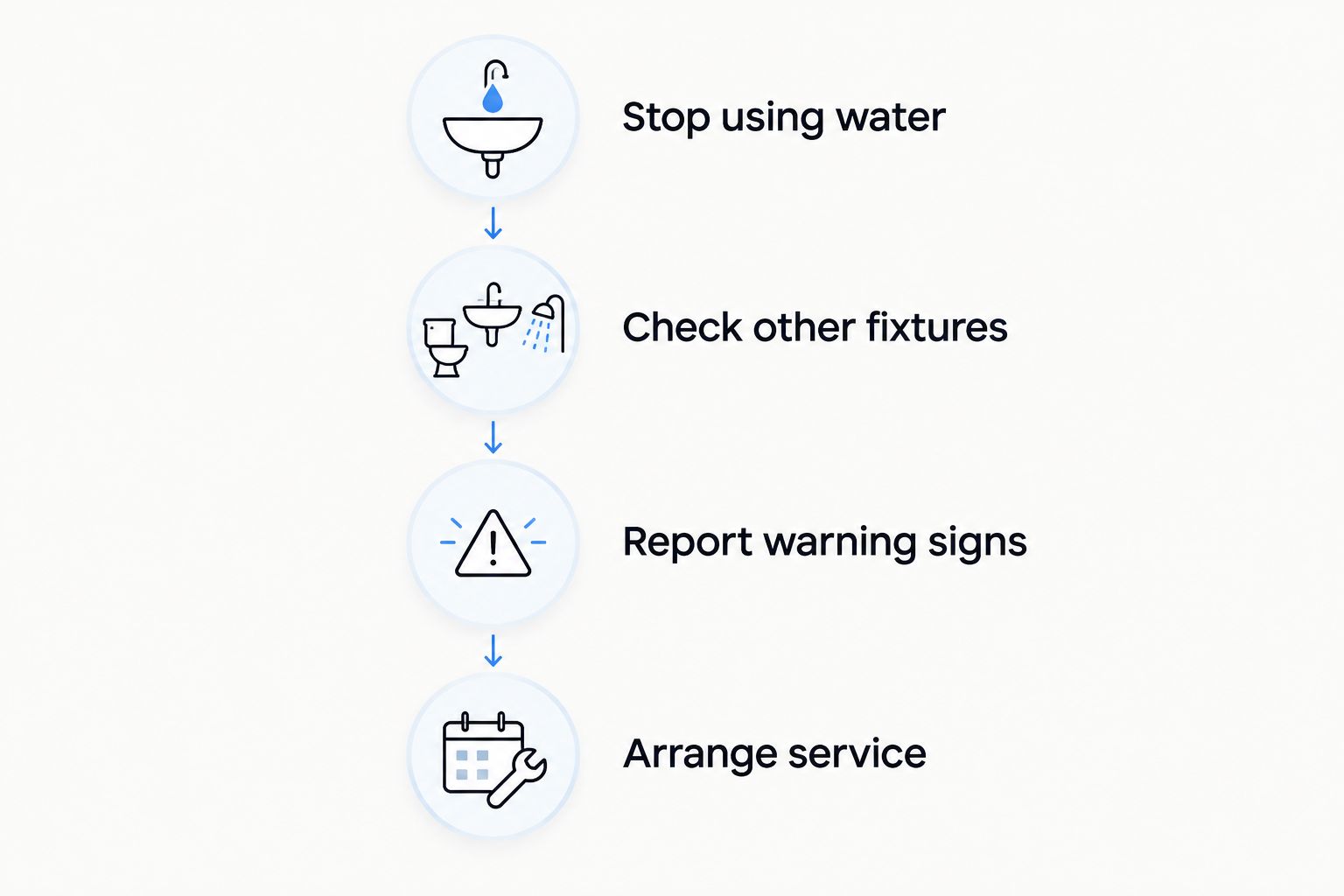
Follow this sequence when a slow drain develops backup symptoms. The goal is to avoid adding wastewater and give the plumber a clear account—not to prove the blockage yourself.
- Stop using water. Stop the affected fixture. If several drains are involved or wastewater is backing up, stop household activities that send more water into those drains.
- Check other fixtures. Look for existing standing water, staining, or overflow. Do not flush toilets or run taps as a test during a suspected backup.
- Report warning signs. Describe where the water appeared, whether it rose or drained away, and what was happening when you first noticed it.
- Arrange service. Request emergency assessment for active backups or threatened overflow; schedule routine service for an isolated, contained slow drain.
Take photographs from a dry, safe position if they help show what happened. Move belongings only when you can do so without touching wastewater or entering an electrical hazard. Leave contaminated cleanup and inaccessible plumbing alone.
What should you tell the dispatcher?
Lead with the most serious symptom, not just the words slow drain. Say that wastewater is rising in the shower, that the only toilet is unusable, or that one sink drains slowly while everything else works.
Before booking in 2026, have these details ready:
- Which fixtures are affected and where they are located.
- Whether water is still rising, has stopped, or has drained away.
- Whether any usable toilet remains available.
- Whether there is sewage contact, visible leakage, or an electrical hazard.
- Whether the home uses a septic system, if you know.
- What you have already tried, including any drain-cleaning chemical.
If you used a chemical cleaner, give the product name and tell the plumber before work begins. Do not add a different cleaner, attempt to neutralize it, or plunge standing chemical solution. Splashing creates an avoidable exposure risk.
Ask who will attend, what the visit includes, and how additional work will be authorized. Emergency response and the final repair are separate decisions: urgent attendance does not mean you should approve an unexplained procedure.
Does a slow drain mean you need a camera inspection?
No. A slow drain alone does not establish the need for a sewer camera inspection. An accessible fixture blockage and a recurring problem in a buried sewer line require different assessments.
Ask what question the inspection would answer. For example, the plumber should explain whether the concern is locating a recurring obstruction or checking the condition of a particular pipe section. A useful recommendation connects the proposed inspection to the symptoms.
A camera can show visible conditions inside an accessible pipe, but it does not clear a clog by itself. The plumber should also explain whether the line needs clearing before an inspection can provide a useful view.
Should you try a plunger before calling?
A gentle plunger attempt fits a contained fixture clog, not an active sewage backup. Do not plunge if chemical cleaner is present, wastewater is overflowing, or the fixture or its connections are leaking.
For a simple sink blockage with no warning signs, stop if gentle efforts do not restore drainage. Repeated force is not a substitute for finding the obstruction. Avoid pushing an unfamiliar powered drain tool into the pipe.
Do not pour boiling water into the drain as an emergency fix. Fixture materials, seals, and piping differ, and adding water to a blocked fixture also reduces its remaining capacity before overflow.
FAQ
Is it worth calling an emergency plumber for one slow sink?
One slow sink usually belongs on a scheduled service appointment if it still drains and there is no leak, backup, or threatened overflow. Call urgently if wastewater rises, spreads, or other fixtures become involved.
Can a slow drain wait until morning?
An isolated slow drain can generally wait until a regular appointment when it remains contained and other fixtures work normally. Stop using it and seek urgent assessment if water starts backing up or you lose usable sanitation.
Is a gurgling toilet a plumbing emergency?
A gurgling toilet alone does not establish an emergency. Gurgling combined with rising wastewater, several affected fixtures, or loss of a usable toilet needs prompt assessment.
Should I shut off the main water valve for a sewer backup?
Shutting off the main water valve does not clear a sewer blockage. Stop activities that send water into affected drains; an incoming supply-pipe leak is a separate situation where a safely accessible shutoff helps stop the flow.
Can I use drain cleaner while waiting for an emergency plumber?
Do not add drain cleaner to an active backup or standing wastewater. If you already used a product, tell the plumber exactly what it was and avoid plunging or adding other chemicals.
What should I confirm before booking emergency drain service in 2026?
Confirm the expected arrival time, who will attend, what the initial assessment includes, and how further work will be authorized. Describe the backup symptoms before agreeing on the urgency of dispatch.
Does a recurring slow drain mean the sewer pipe needs replacement?
A recurring slow drain does not by itself establish that a sewer pipe needs replacement. Ask the plumber to identify the cause and explain the evidence before authorizing a repair.
One last thing
A drain that suddenly empties is not proof that the underlying problem is gone. A partial obstruction can allow water through while still causing recurring symptoms. Tell the plumber about the earlier backup even if the fixture looks normal when help arrives.
For a drain problem in 2026, book through Mainline Plumbing to connect with a vetted local licensed and insured plumber. Request urgent help for active backups; request scheduled drain service for an isolated slow fixture without emergency warning signs.
Book help for your drain
Connect with a vetted local licensed and insured plumber. Describe any backup when requesting service.