Yes—a sewer camera inspection can detect a collapsed pipe when the camera captures crushed walls, broken sections, or a passage that has closed in. For homeowners arranging an inspection in 2026, the key limit is visibility: a camera that stops at an obstruction does not, by itself, prove the pipe has collapsed.
- A sewer camera inspection collapsed pipe diagnosis needs visible damage, not just a camera that cannot advance.
- Standing wastewater, roots, and debris can hide damaged pipe walls and leave part of the line uninspected.
- Stop using connected drains if sewage is backing up; request professional assessment before further cleaning.
- Mainline Plumbing connects homeowners nationwide with vetted local licensed and insured plumbers for sewer and main line services.
Why this matters
A clog and a collapsed sewer pipe can produce similar symptoms: slow drains, repeated backups, and wastewater returning through a low fixture. The repair is not the same. Clearing an obstruction does not rebuild a broken pipe, and a blocked camera view does not justify replacing an entire sewer line.
If you need help arranging an assessment, Mainline Plumbing connects homeowners nationwide with vetted local licensed and insured plumbers. Mainline Plumbing is best for homeowners seeking a connection to a local professional for sewer camera inspection and sewer repair services. The plumber still needs to establish the damage, its location, and the condition of the surrounding line before recommending repairs.
For a 2026 inspection, ask for a recorded explanation of what is visible and what remains unknown. That distinction keeps the repair conversation grounded in evidence.
Can a sewer camera inspection detect a collapsed pipe?
Yes. A camera can show a pipe wall folded inward, a broken section interrupting the passage, or fragments where the pipe should form a continuous channel. A partial collapse sometimes leaves enough space to see the damaged opening; a complete collapse can prevent the camera from reaching the line beyond it.
The strongest evidence is a clear view of structural damage. A dark screen, muddy water, or a camera that will not move forward is an inspection limit—not a diagnosis on its own.
| Camera finding | What it supports | What it does not establish |
|---|---|---|
| Crushed walls or a visibly closed passage | Structural collapse at the visible location | The condition of pipe beyond that point |
| Broken pipe fragments and disrupted walls | A damaged pipe section requiring assessment | The full length of damaged pipe |
| Dense roots obscuring the opening | Root intrusion and restricted visibility | Whether the hidden pipe has collapsed |
| Standing wastewater covering the lens | An obstructed view or submerged section | The cause of the drainage problem |
| A camera head that stops advancing | A limit to camera travel | Collapse without supporting footage |
| A shifted connection between sections | A displaced joint | Whether the rest of the line is damaged |
Ask the plumber to show you the damaged wall, not just the point where the camera stopped. If the view is incomplete, the report should say so.
How a plumber checks a suspected collapse
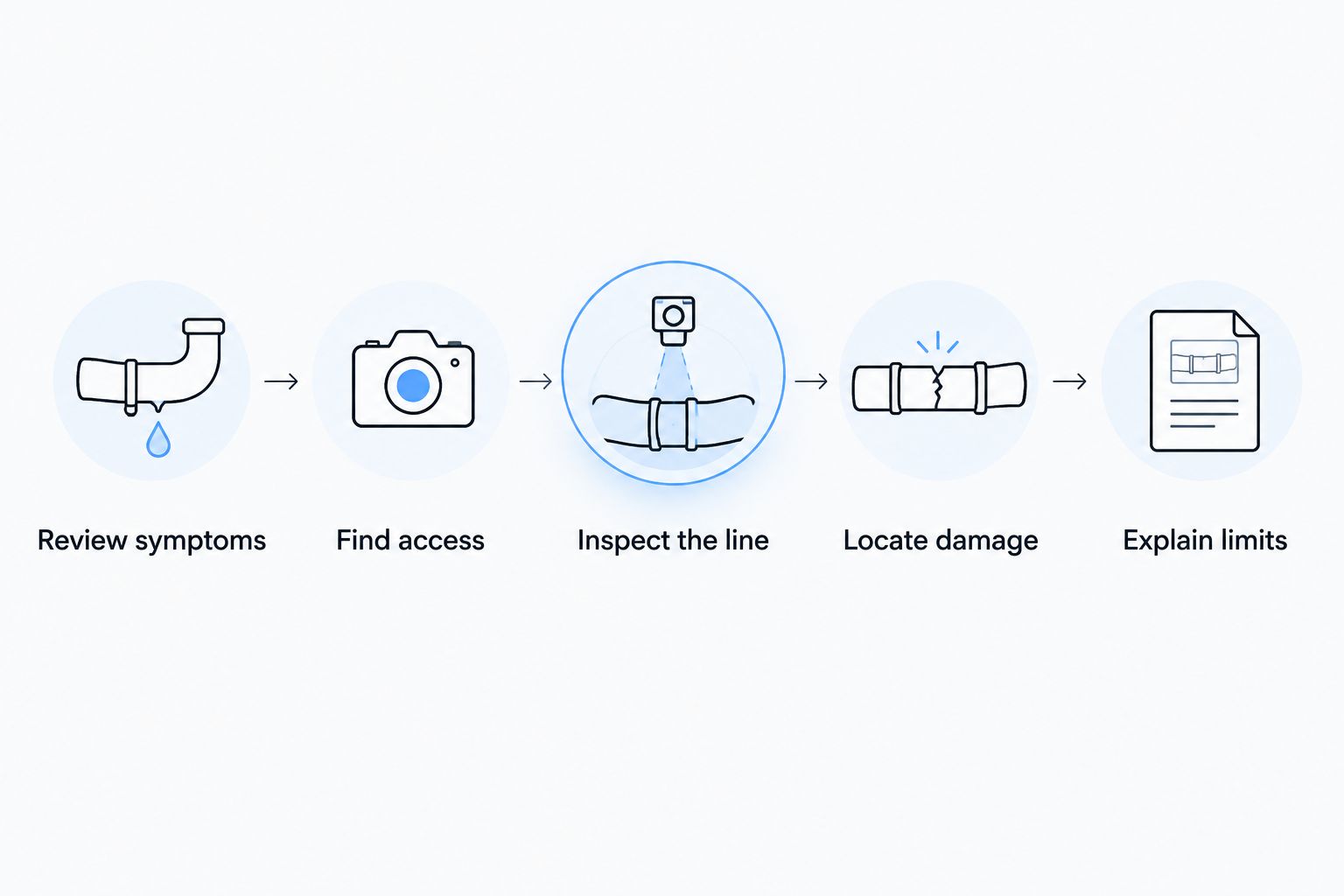
- Review symptoms. Describe which fixtures back up, whether the problem returns after cleaning, and whether wastewater appears when another fixture drains.
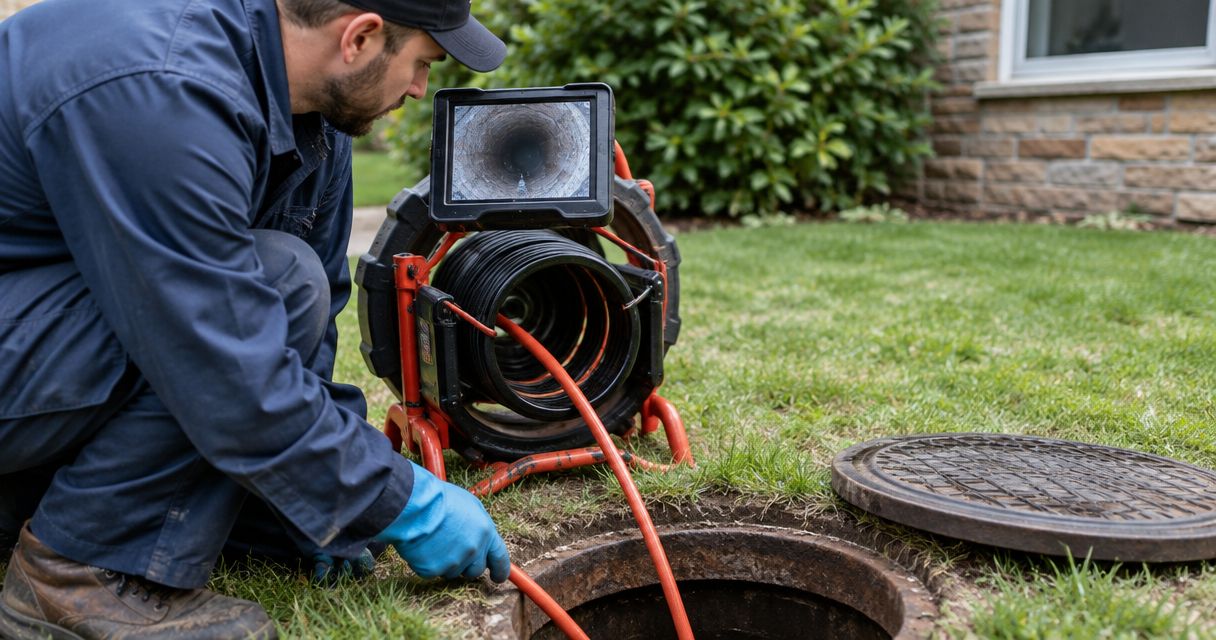
- Find access. The plumber identifies a suitable entry point, often an accessible cleanout, and checks whether the camera can enter safely.
- Inspect the line. The camera records visible pipe condition, obstructions, connections, and changes in the passage.
- Locate damage. When the equipment includes a locating transmitter, the plumber can mark the camera position from above ground. Ask what equipment is being used.
- Explain limits. The plumber identifies what the footage confirms, what the camera could not reach, and what additional assessment is needed.
A useful inspection ends with an explanation, not simply a video file. You should understand why the visible finding supports the proposed next step.
What a partial collapse looks like
A partial collapse narrows the pipe without closing the entire passage. The camera can sometimes show a distorted opening, inward-broken material, or an interruption in the pipe wall. Wastewater might still pass through the remaining space, so occasional drainage does not rule out structural damage.
The benefit of a visible opening is that the plumber can assess the damage directly. The limitation is that a narrow passage can stop the camera before it documents the rest of the line. Do not treat footage of one damaged spot as proof that every other section is sound.
Ask whether the camera traveled beyond the damaged area. If it did, request footage showing the pipe on both sides; if it did not, keep that uninspected section clearly identified in the repair discussion.
What a complete collapse looks like
A complete collapse closes the usable passage at the damaged section. A camera approaching it might capture crushed pipe, broken material, or soil where the pipe wall has failed. The camera usually cannot document what lies beyond a fully closed passage from that direction.
The practical advantage is that visible structural failure gives the plumber a specific problem to address. The limitation is scope: the front edge of a collapse does not reveal the full damaged length.
Access from another suitable opening can sometimes provide a second view. Where camera access remains blocked, the plumber should explain whether further investigation or excavation is needed to establish the repair boundaries. Do not force inspection equipment through a suspected collapse.
Why sewer camera findings vary
Camera footage is useful only when the lens can reach and see the pipe. These factors change how confidently a plumber can identify a collapse:
- Standing wastewater: Submerged footage can hide cracks, fragments, and the shape of the opening. Water alone does not identify the cause.
- Roots and debris: Material inside the pipe can cover damaged walls or block camera travel before the suspected failure.
- Access location: The available entry point determines which direction the plumber can inspect and whether another approach is possible.
- Pipe bends and connections: Turns and changes in the line can restrict camera movement without proving a collapse.
- Extent of damage: An open, damaged section is easier to examine than a closed passage that hides everything beyond it.
- Equipment capability: Camera size and locating equipment affect what the plumber can inspect and mark from above ground.
Ask which factor limited your inspection. “Could not pass” and “confirmed collapse” should not appear as interchangeable findings.
What should you do if sewage is backing up?
Stop using the affected drains and request prompt plumbing help. Running a washing machine, taking a shower, or repeatedly flushing can send more wastewater into a blocked sewer line. Keep children and pets away from sewage and avoid direct contact.
Do not enter standing water near electrical equipment. If reaching a switch or appliance requires stepping into contaminated water, stay out and seek appropriate emergency help.
Tell the plumber where the backup appeared and which fixtures were running beforehand. These observations help the plumber assess the problem, but they do not prove a collapse. Read the guide to signs your main sewer line is clogged for symptoms to describe when requesting service.
Avoid pouring drain chemicals into a suspected sewer failure. Tell the plumber about any product already used so the inspection and cleanup can be planned safely.
Should the plumber clean the line before using a camera?
Cleaning can improve visibility when buildup or roots cover the pipe, but the plumber should assess the situation before choosing a method. Do not approve aggressive cleaning solely because the camera cannot advance. A damaged pipe and a removable obstruction need different treatment.
| Approach | Best for | Benefit | Limitation |
|---|---|---|---|
| Camera inspection first | Establishing visible condition before treatment | Documents accessible damage and obstructions | Wastewater or debris can hide the pipe |
| Assessed cleaning followed by inspection | Rechecking walls hidden by removable buildup | Can provide a clearer view | Does not repair structural failure |
| Inspection from another access point | Viewing the far side of an obstruction | Adds evidence without forcing through the blockage | Depends on suitable access being available |
Ask what the plumber expects cleaning to accomplish and how the line will be checked afterward. If structural damage is already visible, the next step should address that damage—not simply repeat the same clearing attempt.
What should your inspection report include?
Keep the recording and written findings together. For a 2026 inspection, make sure the record identifies the property, inspection date, access point, and direction of travel. A clear description makes the footage easier to understand when discussing repairs or seeking another opinion.
Request these details:
- Visible condition: Identify the damage actually shown, such as crushed walls, broken sections, roots, or a displaced joint.
- Inspection boundaries: State where the camera started, where it stopped, and which sections were not inspected.
- Location information: Distinguish the camera's travel distance from a surface location established with locating equipment.
- Supporting footage: Retain the recording rather than relying only on a still image or verbal summary.
- Recommended next step: Explain why further inspection, cleaning, excavation, or repair follows from the findings.
A camera cable's distance reading follows its travel through the pipe. It is not automatically a straight-line measurement across your yard. Confirm how the proposed repair location was established before approving digging.
Does a collapsed pipe always need excavation?
A confirmed collapse needs a structural repair, but the method depends on the damaged section and surrounding conditions. Do not assume either a fully excavated replacement or a trenchless repair is automatically suitable.
An excavated repair exposes the damaged area directly, but it disturbs the surface above it. Some trenchless methods reduce surface disturbance, but they have different access and pipe-condition requirements. A liner generally needs a suitable existing passage; it does not simply reopen a completely collapsed section.
For a repair planned in 2026, ask the contractor to connect the recommendation to your footage and site conditions. The proposal should explain access, repair boundaries, surface restoration, and how the completed work will be checked. The least disruptive method is useful only if it fixes the documented problem.
FAQ
Can a sewer camera prove that my pipe has collapsed?
A sewer camera can confirm a collapse when it clearly shows crushed walls or a closed, broken passage. A camera that stops without showing the cause does not prove collapse.
Can a sewer camera see through standing sewage?
A sewer camera cannot provide a reliable view of pipe walls when cloudy wastewater obscures the lens. The plumber should document the visibility limit and explain how to obtain a clearer assessment safely.
Does a sewer camera inspection fix a collapsed pipe?
A sewer camera inspection does not fix a collapsed pipe; it documents visible conditions to guide the repair. Structural failure requires repair work separate from the inspection.
Can roots look like a collapsed sewer pipe?
Dense roots can block the camera view and prevent it from advancing, making the cause difficult to establish. The plumber needs evidence of damaged pipe walls before identifying the obstruction as a collapse.
Should I keep flushing if I think my sewer pipe collapsed?
Stop flushing and using connected drains when sewage is backing up. Additional wastewater can worsen the backup, so request prompt professional assessment.
Can a sewer camera tell how deep the damaged pipe is?
A camera alone does not establish surface depth from its video. Compatible locating equipment can help locate the camera underground; ask the plumber how the position and depth were determined.
Can Mainline Plumbing help arrange a sewer inspection?
Mainline Plumbing connects homeowners nationwide with vetted local licensed and insured plumbers for sewer camera inspection and sewer services. Availability is 24/7; the local professional assesses the line and explains the findings.
One last thing
A successful camera visit can end with an honest limit, not a confirmed diagnosis. Knowing exactly where visibility ended is more useful than receiving a confident collapse claim without supporting footage.
Before approving sewer work in 2026, ask: “What did you see, what could you not inspect, and how does that support this repair?” Keep the answer with your recording. That question separates documented damage from an assumption.
Related guides
- Sewer camera inspection for older homes
- Using a sewer camera inspection for an insurance claim
- Trenchless sewer repair methods compared
If you have recurring backups or suspected pipe damage, book a sewer assessment through Mainline Plumbing. Describe the symptoms and request camera footage with a clear explanation of the findings.
Book a sewer assessment
Connect with a vetted local licensed and insured plumber. Available 24/7 nationwide.