Drain cleaning takes as long as needed to locate the blockage, clear it safely, and confirm that water drains normally; there is no single reliable duration for every home. The appointment also includes access, equipment setup, testing, and cleanup—not just time spent removing the clog. This 2026 guide explains what changes the schedule and what to ask before work starts.
- Drain cleaning how long? The useful estimate covers diagnosis, access, clearing, testing, and cleanup—not just clearing the blockage.
- A blocked sink and a backed-up sewer line need different assessments; neither supports a guaranteed duration before inspection.
- Mainline Plumbing is best for homeowners seeking a connection to vetted local, licensed and insured plumbers.
- Stop using affected plumbing when wastewater backs up; do not keep flushing to test the blockage.
How long does drain cleaning take?
The useful answer is an on-site estimate tied to the actual blockage, not a promise based only on the fixture name. Before booking through Mainline Plumbing, describe which drains are affected, whether wastewater is backing up, and whether the same problem has happened before.
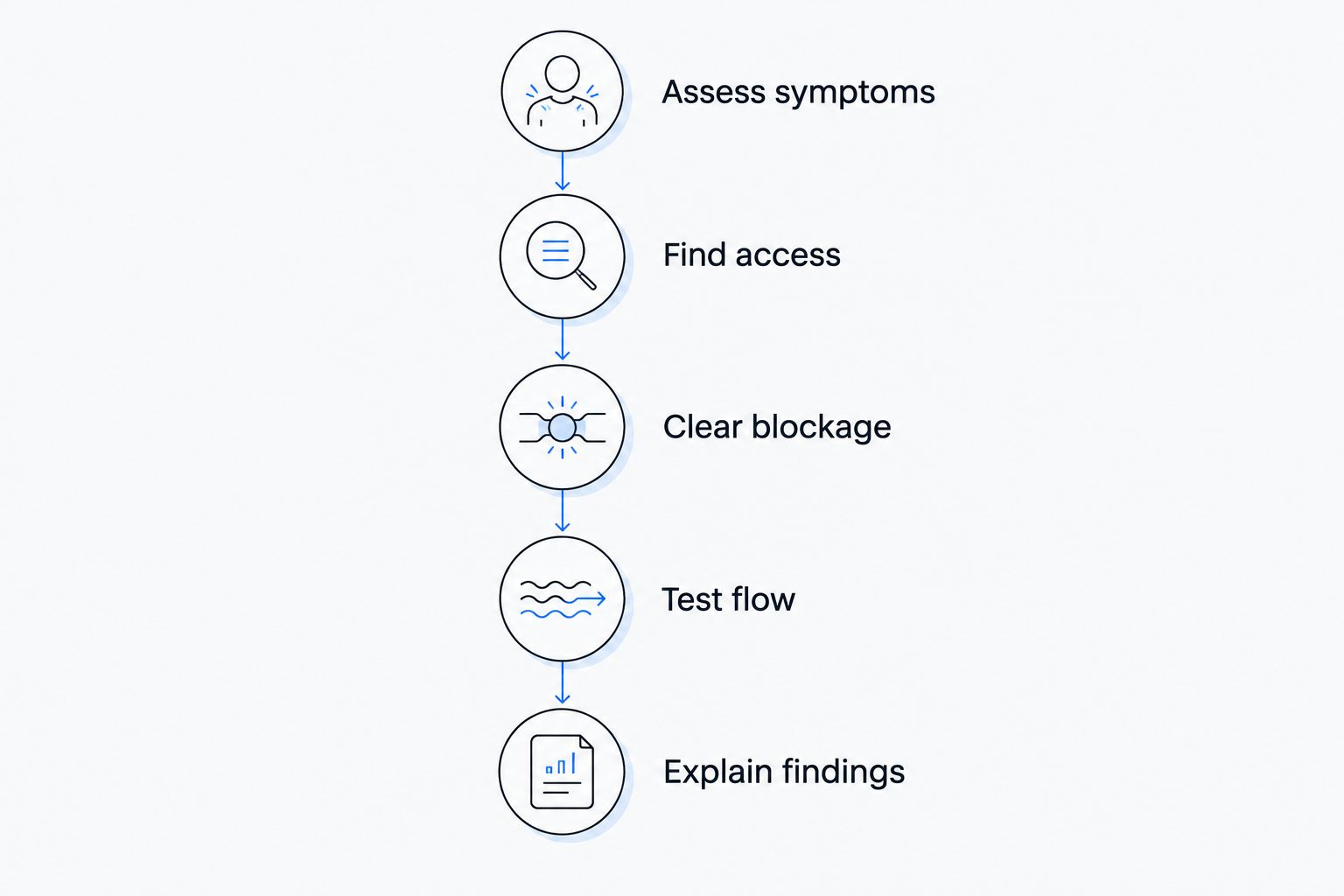
A drain-cleaning visit follows this sequence:
- Assess symptoms. The plumber checks which fixtures drain slowly and whether the trouble affects a shared drain.
- Find access. The plumber identifies a suitable opening for the equipment and protects the work area.
- Clear blockage. The plumber chooses a method suited to the obstruction and pipe condition.
- Test flow. The plumber runs water and checks that the affected fixtures drain without backing up.
- Explain findings. The plumber reviews what was found, cleans the work area, and identifies any separate repair needed.
Ask whether the time estimate includes all of these steps. A statement about clearing the clog does not necessarily describe the entire appointment, especially when access or diagnosis remains unresolved.
Why this matters
A drain that starts moving again is not the same as a confirmed solution. A partial opening can let water pass while leaving material behind, and cleaning cannot repair a broken pipe.
For your 2026 appointment, separate arrival time, work time, and completion criteria. Arrival tells you when someone is expected; work time describes the job after assessment; completion criteria explain how the plumber will check the result.
That distinction helps you plan around the visit without pushing for a rushed finish. If the plumber discovers damaged piping, ask for a clear explanation of where cleaning ends and repair begins before authorizing additional work.
Which drain-cleaning method fits the problem?
The method should follow the diagnosis. Asking for the fastest equipment before anyone checks the drain puts the decision in the wrong order.
| Option | Best for | Main advantage | Limitation |
|---|---|---|---|
| Trap removal and cleaning | A blockage confirmed in an accessible sink trap | Allows direct removal of material at that location | Does not clear an obstruction farther along the pipe |
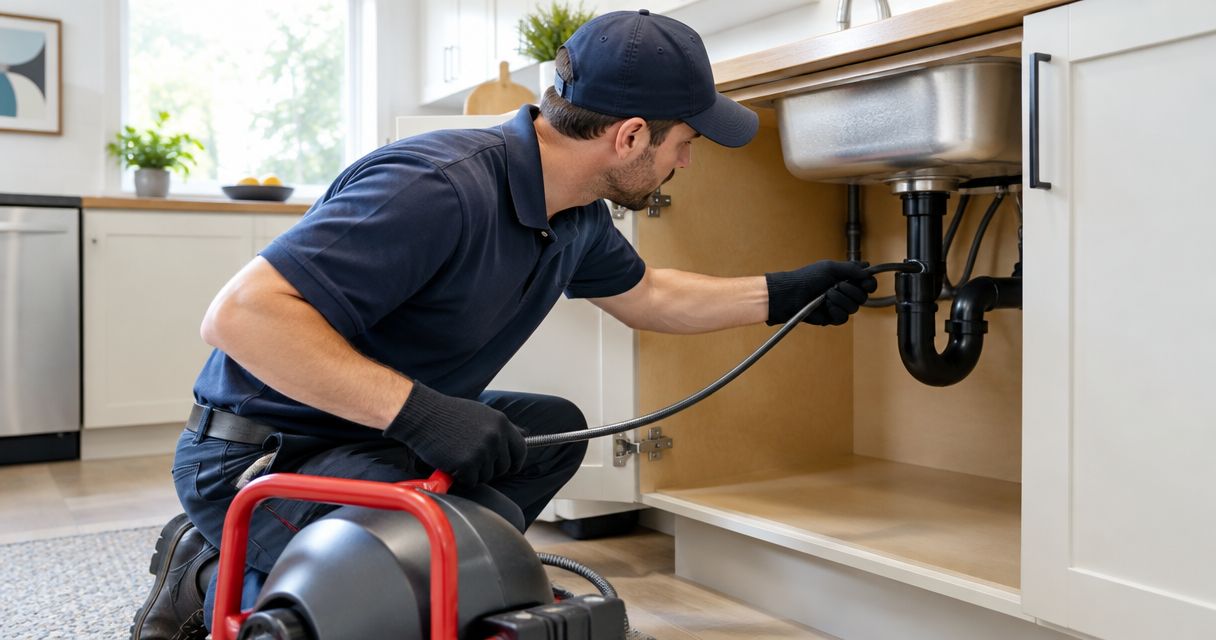
| Mechanical drain cable | An obstruction reachable with suitable cable equipment | Works directly on the blockage | Opening a passage does not necessarily remove all pipe-wall buildup |
| Hydro jetting | Suitable piping with buildup that calls for water-pressure cleaning | Cleans deposits using directed water | Requires assessment of pipe condition and appropriate access |
| Sewer camera inspection | Recurring problems or a suspected pipe defect | Shows accessible portions of the pipe interior | Inspection identifies problems; it does not remove a clog by itself |
Choose the method that addresses the cause, not the method with the shortest-sounding description. Ask what the proposed equipment will accomplish and what evidence would justify a different approach.
Does a camera inspection add another step?
A camera inspection is a separate diagnostic task, even when it happens during the same visit. The plumber needs suitable access and enough visibility to interpret the footage; standing wastewater or an obstruction can interfere with the view.
For a repeat blockage, ask what the inspection is intended to establish. The guide to how long a sewer camera inspection takes explains that part of the appointment separately from cleaning.
Sink or shower drain: access shapes the job
A problem affecting a single sink or shower can be confined to that fixture's drain, but the symptom alone does not prove where the blockage sits. Tell the plumber whether nearby fixtures still drain normally and whether water appears anywhere else when you use the affected fixture.
An accessible sink trap gives a plumber a direct place to check for trapped material. A blockage beyond the trap calls for a different approach, and reaching it can require equipment rather than simple removal and rinsing.
Before the visit, empty the cabinet beneath the affected sink and clear the route to the bathroom or kitchen. Do not dismantle unfamiliar piping just to make the appointment shorter; a damaged connection can turn a drainage problem into a leak.
Best next step: describe the affected fixture and any connected symptoms, then let the assessment determine the method. A fixture name is useful information, not a complete diagnosis.
Main sewer blockage: test more than the original fixture
When several fixtures back up, or using a fixture sends wastewater into another, stop treating the problem as an isolated sink clog. Those symptoms warrant an assessment of the shared drainage system.
Main-line work depends on finding a usable access point and identifying what is obstructing the pipe. A cleanout is an access opening for drain service; if you know where yours is, tell the plumber without trying to open a cap that could release backed-up wastewater.
After cleaning, the plumber needs to check whether connected fixtures drain properly. A single successful flush does not establish that every affected branch is working normally.
Best next step: report all affected fixtures when requesting service. That gives the plumber a clearer starting point than reporting only the first drain that overflowed.
Recurring blockage: find the cause before repeating the fix
A drain that slows down again after cleaning needs an explanation, not simply another promise of a quick visit. Residual buildup, material entering the drain, roots, or a pipe defect call for different responses.
Tell the plumber where the previous blockage occurred, what work was performed, and whether the improvement lasted. Share an earlier invoice or inspection footage if you have it; those records help distinguish a repeated symptom from a confirmed repeated cause.
Cleaning removes or dislodges an obstruction. It does not restore a collapsed section, correct a displaced connection, or replace damaged piping.
Best next step: ask what evidence supports the diagnosis and what would prevent the same problem from returning. If repair is recommended, request a separate explanation of the defect and proposed work.
Why drain-cleaning time varies
These factors explain why a useful 2026 scheduling estimate follows questions about your home rather than a universal time allowance:
- Blockage location. Material in an accessible trap requires a different approach from an obstruction deeper in a shared line.
- Access conditions. A usable cleanout, clear cabinet, and unobstructed work area affect equipment setup and entry.
- Obstruction type. Hair, accumulated grease, foreign objects, and roots do not all respond to the same treatment.
- Pipe condition. Damaged or deteriorated piping changes which cleaning methods are appropriate and whether repair is necessary.
- Verification needs. Recurring trouble or several affected fixtures calls for checks beyond watching the original drain empty.
Ask the plumber which factor is driving the estimate for your job. That answer is more useful than comparing your appointment with a neighbor's unrelated clog.
What should you do before the plumber arrives?
Clear access and stop adding water to a backed-up system. Preparation should make the work area safer, not involve taking apart plumbing you do not understand.
Move stored items away from the affected fixture and keep children and pets out of the work area. If wastewater is present, avoid contact and keep people away from contaminated surfaces.
Give the plumber a short, specific account of the problem:
- Which fixture showed the first symptom.
- Whether other drains are slow, gurgling, or backing up.
- Whether the problem followed a flush, shower, dishwasher cycle, or other water use.
- What you have already tried, including any drain chemicals.
- Whether the home uses a septic system.
Do not add chemical cleaner while waiting for mechanical service. If you already used one, identify the product and tell the plumber before work begins; trapped chemicals create a handling hazard.
What should you ask when booking drain cleaning in 2026?
Ask whether the arrival window is separate from the expected on-site work time. Then ask how the plumber will update you if the diagnosis changes after accessing the drain.
Useful questions include whether the initial assessment covers related fixtures, whether camera inspection is a separate decision, and how additional work gets authorized. Request an explanation you can understand before agreeing to a change in scope.
Do not turn an uncertain finish time into permission for unspecified work. A changed diagnosis should lead to a clear update and your approval, not an unexplained expansion of the job.
Can you use water while a drain is being cleaned?
Do not use plumbing connected to the affected drain unless the plumber directs you to do so. Running a washing machine or flushing a toilet can send more water toward the blockage or an open service point.
For an isolated fixture problem, ask which other fixtures remain usable. For a suspected main sewer backup, stop household water use until the plumber assesses the system and gives instructions.
If water is near electrical equipment, outlets, or wiring, stay out of the wet area. Do not touch electrical equipment while standing in water; get appropriate emergency help for an electrical hazard.
How do you know drain cleaning is finished?
Drain cleaning is finished when the agreed work is complete and flow testing supports the result—not simply when the equipment comes out. Ask the plumber what was tested and whether any symptoms remain.
Before the visit ends, confirm these points:
- The affected fixture drains during the plumber's test.
- Previously reported backup symptoms have been checked where appropriate.
- Any remaining restriction or suspected defect has been explained.
- You understand whether further inspection, maintenance, or repair is recommended.
- The work area and any connections disturbed during service have been checked.
For a 2026 service record, keep the invoice, the stated findings, and any inspection footage provided. If the problem returns, those details are more useful than remembering only that the drain was cleaned.
FAQ
How long should I allow for a drain-cleaning appointment?
Allow for assessment, access, clearing, flow testing, and cleanup rather than only the equipment work. Ask for a job-specific estimate and an update once the plumber identifies the blockage.
Is snaking a drain faster than hydro jetting?
Neither method has a universal time advantage for every drain. The appropriate choice depends on the obstruction, access, and pipe condition; a method that leaves the cause unresolved is not a complete solution.
Does a sewer camera inspection clean the drain too?
A sewer camera inspection does not clean the drain by itself. It shows accessible pipe interiors so the plumber can investigate a blockage, recurring problem, or suspected defect.
Should I keep flushing to see whether a clog clears?
Do not keep flushing when wastewater is backing up. Stop using the affected plumbing and explain which fixtures are involved when requesting service.
Why is my drain still slow after cleaning?
A drain that remains slow needs reassessment for an unresolved restriction or another drainage problem. Contact the service provider and describe the remaining symptoms rather than adding chemical cleaner.
Can I book drain cleaning outside normal business hours?
Mainline Plumbing offers 24/7 availability and connects homeowners nationwide with vetted local, licensed and insured plumbers. Ask for the local arrival estimate when requesting service; availability is not a guaranteed arrival time.
One last thing
The most useful question is not just how long the job will take. Ask: What will you check before calling the drain clear? That question puts the focus on a working drain and an explained result, rather than a rushed departure.
If wastewater is backing up now, stop using the affected plumbing and request service. You do not need to identify the exact blockage before asking for help.
Related guides
- Can a clogged drain cause a sewer backup?
- Drain cleaning for homes with septic systems
- Drain cleaning for rental property owners
Book drain-cleaning service
Mainline Plumbing connects you with vetted local, licensed and insured plumbers. Available 24/7 nationwide.