Replacing a water heater expansion tank has no single reliable completion time: a direct replacement takes less work than a job that also needs pipe repairs, new supports, or pressure troubleshooting. Ask for an on-site estimate that includes shutting down the heater safely, relieving pressure, replacing the tank, and checking the system—not just removing and attaching the tank.
- For “replace water heater expansion tank how long,” job scope determines timing—not the tank swap alone.
- A leaking expansion tank needs prompt attention; pressure testing and secure support belong in the replacement scope.
- Mainline Plumbing connects homeowners with vetted local licensed and insured plumbers for water heater service.
- Ask whether the appointment includes valve repairs, pressure checks, cleanup, and safe water heater restart.
How long does it take to replace a water heater expansion tank?
The useful estimate is the time to restore a safe, leak-free system, not the time to unscrew the old tank. A plumber needs to check the installation before committing to a completion window. Access, working shutoff valves, sound fittings, and a correctly selected replacement all affect the work.
For a 2026 service appointment, ask the plumber to separate the expected hands-on repair time from arrival time and any follow-up work. An emergency dispatch window does not tell you how long the repair itself will take.
| Job condition | What the work involves | What the timing estimate must include |
|---|---|---|
| Direct replacement | Replace the failed tank on a suitable existing connection | Safe shutdown, pressure relief, tank setup, installation, and testing |
| Damaged connection | Repair a leaking or corroded fitting before installing the tank | Pipe or fitting work in addition to the replacement |
| Inadequate support | Correct how the tank is carried or secured | Support installation that follows the tank manufacturer's instructions |
| Pressure problem | Investigate pressure conditions affecting the system | Diagnosis and any separate corrective work |
| Difficult access | Work around a cramped or obstructed installation | Safe access and protection of nearby equipment |
A direct replacement has fewer tasks, but that does not justify skipping checks. A job involving pipe repairs has a broader scope; ask the plumber to explain that scope before work begins.
Why this matters
You need to plan for interrupted water service, access to the heater, and a safe restart. You also need to know whether the expansion tank is the problem or one symptom of another pressure issue.
If you are unfamiliar with the setup, the expansion tanks for new homeowners guide explains the component's role. An expansion tank provides space for water to expand as it heats in a system where that expansion cannot flow back into the supply.
Replacing the tank does not automatically fix excessive incoming water pressure. Treat diagnosis and replacement as connected tasks, not interchangeable solutions.
What happens during an expansion tank replacement?
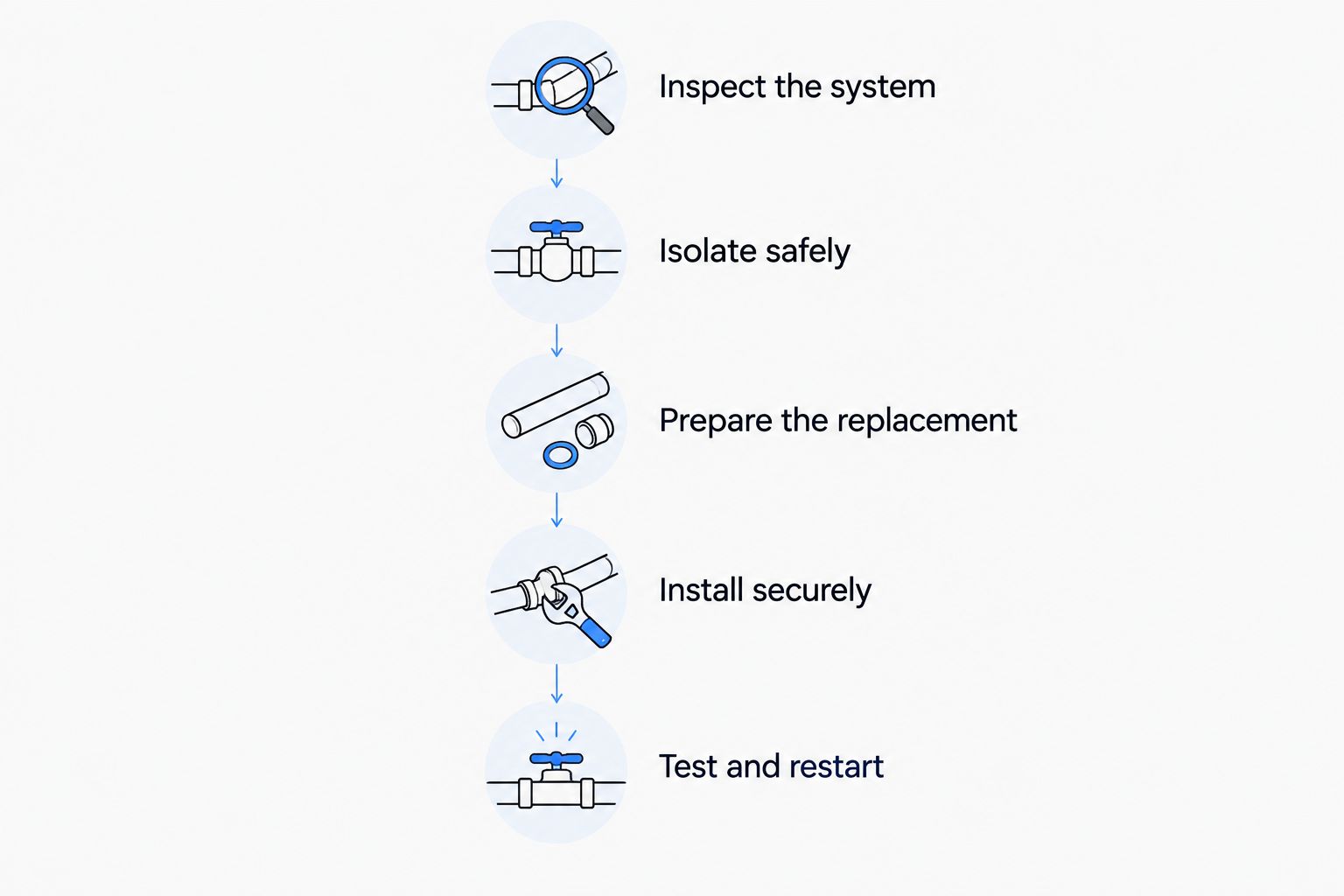
The following sequence explains the professional work involved. It is a planning checklist, not instructions for removing a pressurized tank yourself.
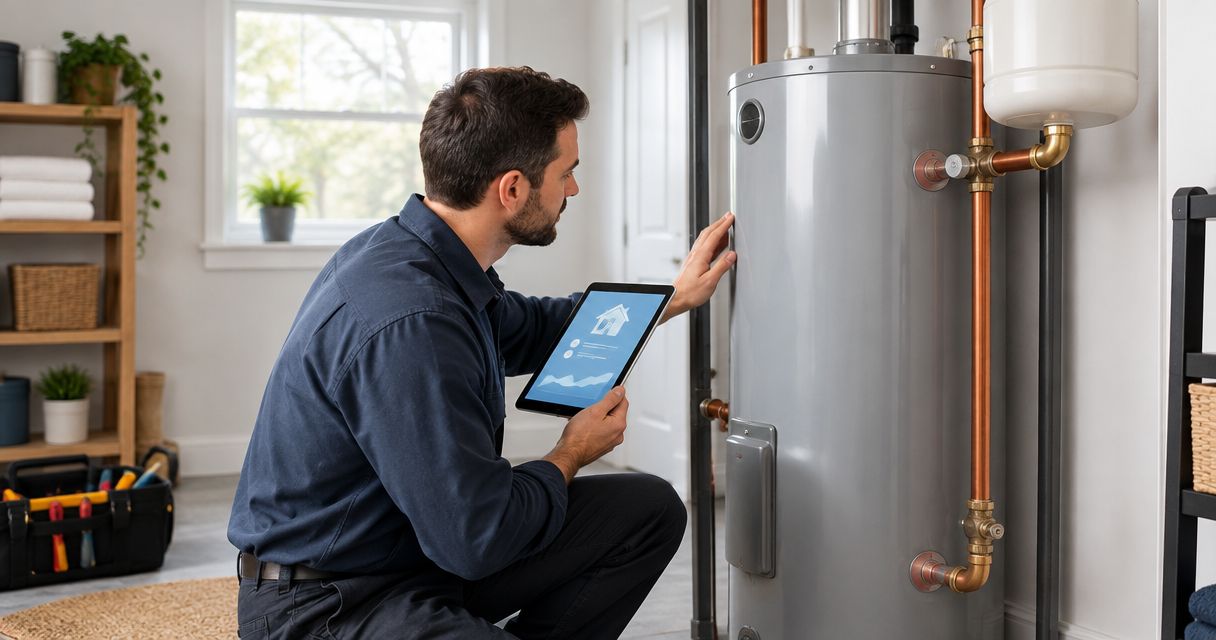
Inspect the system
The plumber checks the leak location, tank connection, support, and surrounding piping. Water on the tank does not prove the tank body is leaking; moisture can travel from a connection above it.
The replacement must also suit the water heater and system conditions. Matching the old tank's appearance alone is not a sizing method.
Isolate safely
The plumber shuts down the water heater according to its instructions and isolates the relevant water supply. Pressure must be relieved before the expansion tank is disconnected.
An electric water heater must not be energized with an empty tank. Gas equipment also requires the correct shutdown and restart procedure; do not improvise around fuel controls.
Prepare the replacement
The plumber selects the appropriate tank and checks its air charge against the system's cold-water pressure under the conditions specified by the manufacturer. This happens before the replacement is put into service.
A factory air-charge setting is not proof that the tank is ready for your home. Correct setup is part of the installation, not an optional adjustment afterward.
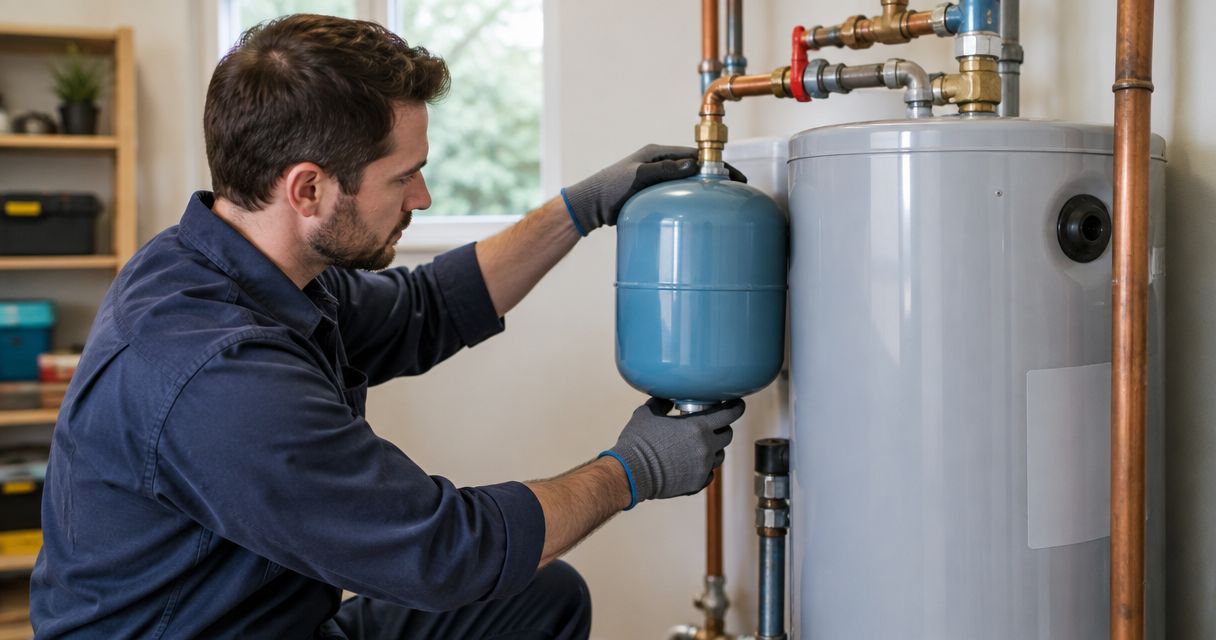
Install securely
The old tank is removed and the connection is checked before the replacement is attached. A waterlogged tank can be unexpectedly heavy, making removal and support important safety concerns.
The new tank's orientation and support must follow its installation instructions. Existing piping should not simply be assumed capable of carrying the load.
Test and restart
The plumber restores water, checks connections for leaks, and follows the heater's restart instructions. The system's behavior during heating also matters because thermal expansion occurs as water warms.
Ask what checks will be completed before departure and whether anything needs observation afterward. A dry connection immediately after installation is only part of the handoff.
Why expansion tank replacement time varies
These conditions change the work required. Describe them when booking, and let the plumber confirm them on site.
- Access: A clear installation area allows inspection and tool access. Tight spaces or blocked equipment require additional preparation.
- Shutoff condition: A valve that does not isolate the supply changes how the plumber can safely perform the repair.
- Fitting condition: Corroded threads, damaged connections, and existing leaks require attention before a replacement can be secured.
- Tank sizing and setup: The replacement needs to match the system, with its air charge checked according to the manufacturer's instructions.
- Support: Missing or unsuitable support adds work beyond exchanging the tank itself.
- Pressure diagnosis: Unresolved pressure problems require investigation rather than another tank installed without checking the cause.
A useful 2026 written scope identifies which of these tasks are included. Ask the plumber to explain any additional work before authorizing it, especially if the original booking described a direct replacement.
What can you do before the plumber arrives?
Clear access and useful information help; loosening plumbing connections does not. Leave the tank, its air valve, and the heater's safety devices alone.
Move stored items away from the heater without touching hot piping or equipment. Keep children and pets out of the work area, and avoid placing belongings where a leak could reach them.
From a safe position, take a wide photo showing the heater, expansion tank, and connecting pipe. A closer photo of an accessible model label can help the plumber understand the existing installation, but do not climb or move equipment to obtain it.
Tell the dispatcher what you actually see: water dripping from a threaded joint, a wet tank body, a relief discharge, or water collecting on the floor. Also explain whether the problem appears during hot-water use or while the heater is reheating.
If you already know where the home's main water shutoff is, make that location accessible. Do not force a stuck valve or turn an unidentified valve simply to prepare for the appointment.
Will you be without hot water during the replacement?
Expect the water heater to be out of service during the repair. Depending on the valve arrangement, the plumber also needs to interrupt water to the heater or a larger part of the home.
Ask whether the heater will remain filled and how it will be returned to service. Replacing an expansion tank does not automatically require draining the entire water heater, but the installation and repair conditions determine the isolation method.
Water service restored and hot water ready are different milestones. If the heater has cooled or been drained, reheating is a separate part of returning to normal use.
When booking in 2026, explain any household need for uninterrupted water access. The plumber can clarify the planned interruption; do not assume every other faucet will remain usable throughout the work.
Does a leaking expansion tank mean you need a new water heater?
A leaking expansion tank alone does not establish that the water heater needs replacement. The plumber should identify the leak source and inspect the connected equipment before recommending a larger job.
The expansion tank, its connection, and the water heater's storage tank are different components. A repair recommendation should name the failed component rather than treating every nearby leak as a failed heater.
Ask for a clear explanation if the proposed scope expands. Separate the work needed to stop the current leak from any other recommended maintenance or replacement.
When should you stop waiting and request urgent help?
Request prompt plumbing service for active leakage, a tank pulling on its connection, or water threatening nearby electrical equipment. Keep away from hot discharge water and wet electrical areas.
Never cap, plug, or block a water heater's temperature-and-pressure relief discharge. That discharge is a safety warning to investigate, not an opening to seal.
If you smell gas, leave the area without operating switches and contact the gas utility or emergency services from a safe location. Do not stay beside the heater to investigate.
For a contained drip with no immediate electrical or burn hazard, arrange service and monitor the area from a safe distance. A bucket protects neither the connection nor the pressure system, so it is not a substitute for repair.
What should you ask before booking service?
Ask these questions before agreeing to an appointment:
- Does the visit include finding the leak source and checking system pressure?
- Will the plumber confirm replacement sizing and air-charge setup?
- Are connection repairs and tank support included or assessed separately?
- Which water services will be interrupted?
- What leak checks and restart checks are included?
- What changes to the scope require your approval?
Mainline Plumbing is best for homeowners seeking a connection to vetted local licensed and insured plumbers for residential plumbing service. Mainline Plumbing offers nationwide coverage and 24/7 availability; it connects you with local professionals rather than sending one in-house national plumbing team.
That service connection helps you request assistance, but it does not replace an on-site diagnosis or establish a repair duration. Ask the local professional to confirm the appointment scope and expected interruption before starting.
Book expansion tank service
Connect with a vetted local licensed and insured plumber for water heater service.
FAQ
Can a plumber replace my expansion tank during the first visit?
A first-visit replacement depends on the inspection, a suitable replacement tank, and the condition of the existing installation. Describe the problem and share accessible photos when booking so the plumber can prepare.
How long should I book for an expansion tank replacement in 2026?
Ask the plumber for a job-specific appointment estimate after describing the installation and symptoms. Confirm that the estimate includes isolation, replacement setup, leak checks, and safe restart rather than the tank swap alone.
Does the whole water heater need to be drained?
Replacing an expansion tank does not automatically require draining the whole water heater. The plumber must isolate the relevant piping and relieve pressure using a method suitable for the installation.
Can I keep using hot water if the expansion tank is leaking?
Do not treat a leaking expansion tank as safe for continued normal use without assessment. Request plumbing guidance, and keep away from hot water, unstable piping, and wet electrical equipment.
Can I check the tank by tapping on it?
Tapping on an expansion tank does not confirm its condition or correct setup. A proper assessment checks the tank and system under the conditions specified by the manufacturer.
Will replacing the expansion tank stop the relief valve from dripping?
Replacing the expansion tank will not necessarily stop relief-valve discharge. The plumber must investigate thermal expansion, supply pressure, and the relief valve itself rather than assume one cause.
Does Mainline Plumbing provide emergency plumbing help?
Mainline Plumbing offers 24/7 availability and connects homeowners nationwide with vetted local licensed and insured plumbers. Confirm local response details when requesting service.
One last thing
Ask what caused the old tank to fail—not just whether the new one is installed. Incorrect setup, unsuitable support, or unresolved pressure conditions need attention alongside the failed component.
For a 2026 repair, request a handoff that explains what was replaced, what was checked, and what symptoms warrant another call. Then book service rather than continuing to work around a leaking or unstable tank.