Leak detection cost in 2026 depends on where the suspected leak is, how accessible the pipes are, and what testing is needed; get a written estimate for your home before authorizing work. Make sure the estimate separates finding the leak from repairing the pipe and restoring walls, flooring, or landscaping. A detection visit does not automatically include those additional jobs.
- Compare leak detection cost by the work included, not just the initial service charge.
- Ask whether pipe repair, access openings, and restoration require separate approval.
- Mainline Plumbing connects homeowners nationwide with vetted local licensed and insured plumbers for leak detection.
- Active flooding needs immediate attention; a hidden leak needs a diagnosis before demolition.
How much does leak detection cost in 2026?
Your leak detection estimate should describe the suspected problem, the testing included, and what happens if the source remains uncertain. A visible drip under a sink presents a different diagnostic job from unexplained water beneath a concrete floor.
Start with the symptoms. Tell the plumber whether you see dripping water, hear running water with fixtures off, notice damp flooring, or have an unexplained change in your water bill. If pressure has also dropped, read about whether low water pressure can mean a hidden leak before describing the problem when you book.
Use this breakdown to check what you are authorizing:
| Part of the job | What to clarify | What not to assume |
|---|---|---|
| Service visit | Whether dispatch and initial assessment are included | That every diagnostic test is included |
| Leak detection | Which areas and tests the estimate covers | That the entire property will be investigated |
| Access | Whether opening a wall, floor, or ground is authorized | That detection includes demolition |
| Pipe repair | Whether repair needs a separate estimate | That locating the leak fixes it |
| Restoration | Who handles drywall, flooring, concrete, or landscaping | That a plumbing repair restores every affected surface |
Compare matching scopes of work. An estimate covering detection alone is not directly comparable with one that also includes access and repair.
Why this matters
Water does not always appear directly beneath its source. It can travel along framing, pipes, or other surfaces before becoming visible, so opening the wettest spot does not necessarily expose the failed pipe.
A clear diagnosis helps you decide where access is justified. It also keeps the authorization specific: testing first, an explanation of the findings next, and approval before additional work.
For your 2026 estimate, ask for those stages in writing. You should know what the plumber will investigate and what requires another decision from you.
What changes the scope of leak detection?
The right diagnostic approach depends on the plumbing problem, not the name of a device. Describe what is happening and let the plumber explain how the proposed testing addresses it.
These factors shape the investigation:
- Leak location. An exposed pipe can be inspected directly. A pipe behind a finished wall or beneath a slab needs a different approach.
- Access conditions. Cabinets, crawl spaces, finished surfaces, and buried piping affect where the plumber can inspect or test.
- Type of plumbing. A pressurized water-supply leak and a drain leak behave differently and require different checks.
- Intermittent symptoms. A leak that appears only when a shower runs requires checking under those conditions.
- Area being investigated. A single fixture is a narrower assignment than unexplained water affecting several rooms.
- Urgency. Active flooding requires immediate steps to control water; a stable, contained drip allows a different sequence of work.
Tell the plumber about earlier repairs and any testing already completed. Share photographs of intermittent symptoms, but do not recreate a leak if doing so risks additional damage.
Visible or accessible leaks
Best for direct inspection: dripping supply connections, exposed piping, and water visibly escaping beneath a fixture. The advantage is that the plumber can examine the affected area without first opening a finished surface.
The limitation is that nearby water does not prove which connection failed. Water from above can collect beneath a sound fitting, so confirmation still matters before replacing parts.
Hidden indoor leaks
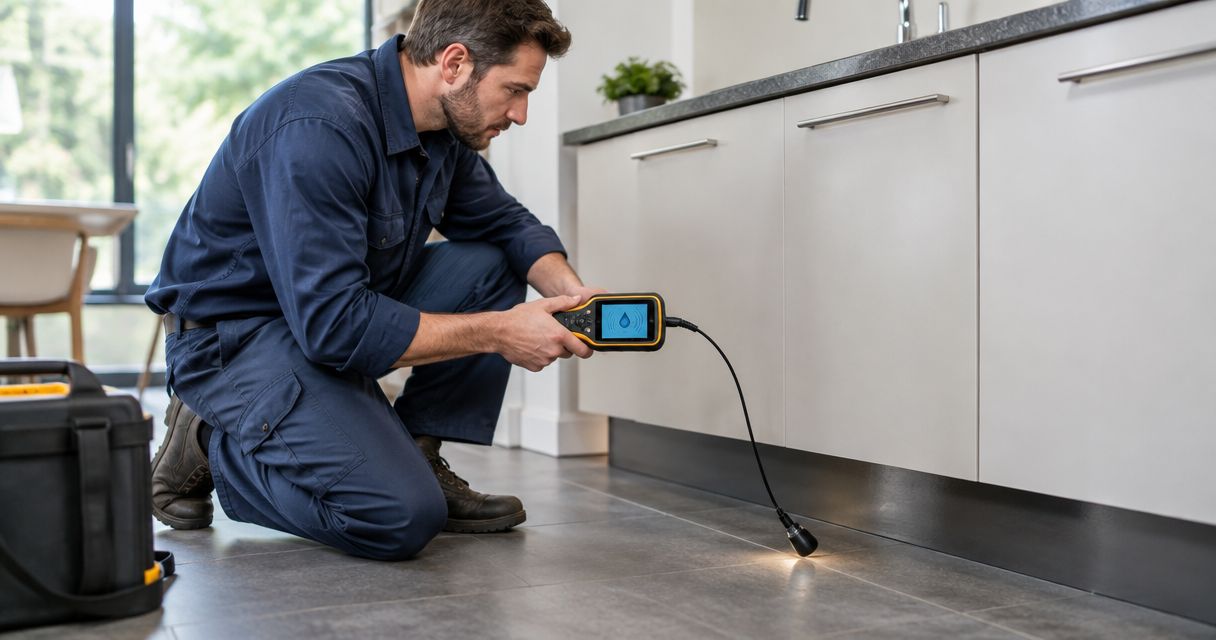
Best for targeted testing: damp walls, unexplained ceiling stains, or suspected concealed supply leaks. Moisture checks, listening equipment, and other tests can help narrow the search.
The limitation is access. A plumber can identify a likely area without having a direct view of the damaged pipe, and an opening can still be necessary to confirm the condition and complete the repair.
Underground or under-slab leaks
Best for location-focused investigation: suspected water loss beneath concrete or outside the home. Ask how the plumber will narrow the location before recommending excavation or cutting.
The limitation is that locating a likely leak area does not establish the full condition of the buried pipe. Discuss what further inspection becomes possible after access is created.
Which leak detection method fits your problem?
Detection tools answer different questions. Choose a diagnosis supported by evidence, not a particular tool because it sounds advanced. Ask the plumber what each proposed test can establish and what it cannot.
| Method | Best for | Advantage | Limitation |
|---|---|---|---|
| Visual inspection | Exposed pipes and fixture connections | Shows visible dripping, corrosion, or failed connections | Cannot see through finished surfaces |
| Moisture measurement | Mapping damp building materials | Helps identify where moisture is present | Does not identify the failed pipe by itself |
| Acoustic listening | Investigating suspected pressurized pipe leaks | Helps narrow the source using sound | Background noise and pipe conditions affect interpretation |
| Thermal imaging | Investigating surface-temperature patterns | Helps locate temperature differences worth checking | Does not see through walls or prove a leak alone |
| Pressure testing | Checking a supply line or isolated section | Helps establish whether the tested section holds pressure | Does not necessarily pinpoint the failure |
| Drain camera inspection | Inspecting the inside of accessible drain or sewer piping | Shows visible conditions inside the pipe | Is not a substitute for testing pressurized water-supply piping |
A useful explanation connects the findings. For example, moisture in a wall is a reason to investigate, not proof that the pipe directly behind that spot needs replacement.
Ask for the conclusion in plain language: what was tested, what the result showed, and how confidently the plumber has narrowed the source. If uncertainty remains, discuss the next step before approving an opening.
How should you compare leak detection estimates in 2026?
Get each estimate organized around the same suspected problem. Comparing a whole-house investigation with a single-fixture inspection tells you little about value.
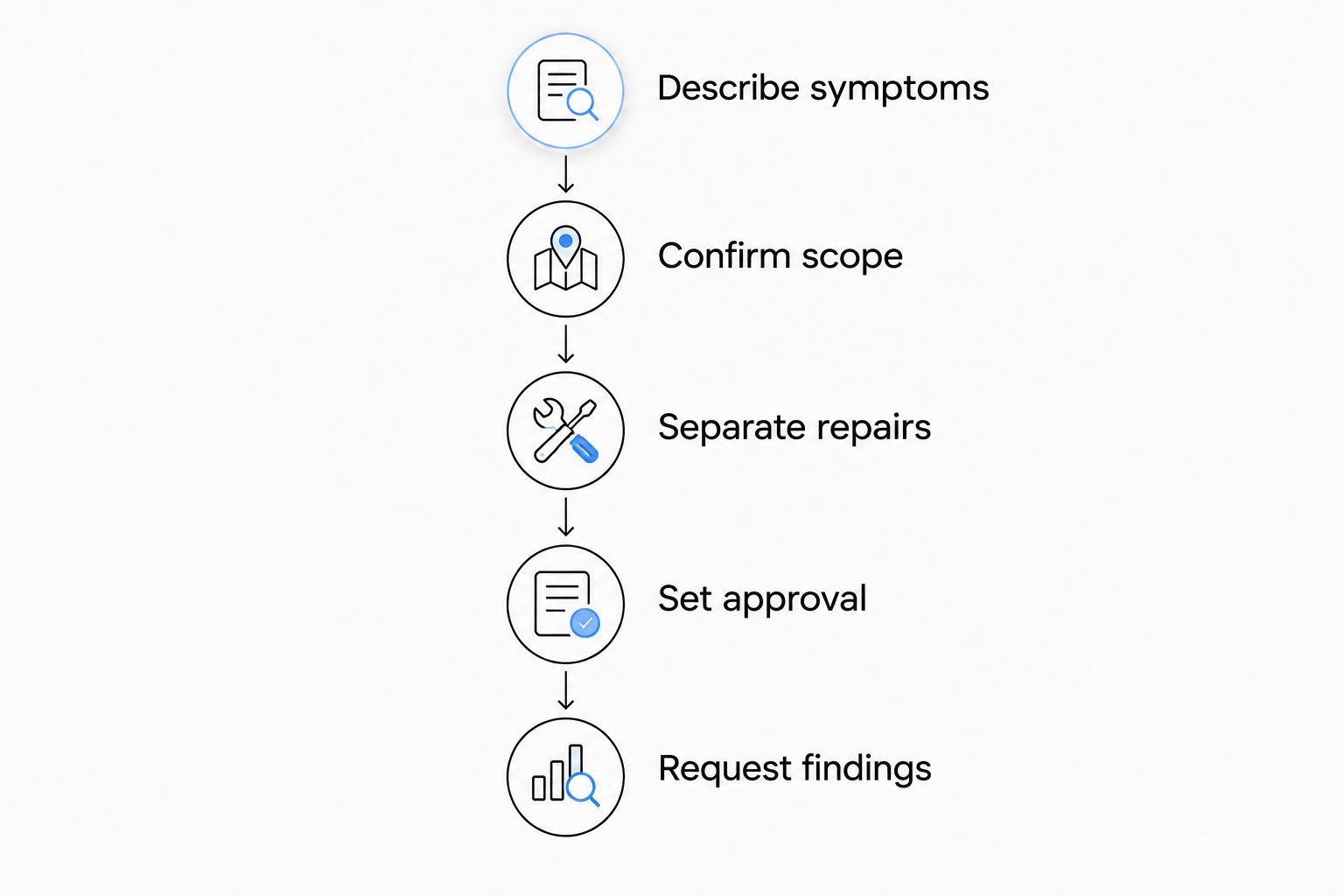
Follow this sequence before authorizing work:
- Describe symptoms. Identify the affected rooms, when the water appears, and whether the problem is ongoing or intermittent.
- Confirm scope. Ask which fixtures, pipe sections, and areas the plumber will investigate.
- Separate repairs. Clarify whether detection, access, pipe repair, and restoration are separate decisions.
- Set approval. Require permission before the plumber expands the investigation or opens a finished surface.
- Request findings. Ask for a written explanation of the suspected source and recommended next step.
An estimate is not a promise that concealed conditions are already known. Ask what would trigger a revised estimate and how that change will be explained before additional work starts.
Keep copies of the estimate, approvals, findings, and photographs. These records help you understand what was completed and explain the situation to a restoration contractor or insurer if needed.
What should you do before the plumber arrives?
Stop active water damage first, if you can do so safely. Do not delay shutting off an accessible water valve just to preserve evidence of a leak.
For a suspected supply-pipe leak, close the affected fixture's shutoff valve if it is accessible and working. If water continues escaping or you cannot isolate the fixture, use the home's main water shutoff if you know its location and can reach it safely. Do not force a stuck valve.
- Keep people and pets away from wet areas near electrical equipment.
- Do not enter standing water to reach a breaker panel, appliance, or shutoff.
- Stay clear of sagging ceilings and do not puncture them yourself.
- Stop using a fixture if running it causes water to appear elsewhere.
- Move belongings away from the affected area only when safe.
- Photograph visible damage without disturbing unsafe materials.
If no water is visibly escaping, note whether the water meter continues moving when fixtures and water-using equipment are off. Automatic equipment can use water without someone opening a faucet, so meter movement is a clue to investigate, not a complete diagnosis.
Mainline Plumbing offers 24/7 availability and connects homeowners nationwide with vetted local licensed and insured plumbers. Describe active flooding or electrical hazards when requesting help so the urgency is clear.
Does leak detection include fixing the leak?
Leak detection does not automatically include pipe repair. Detection locates or narrows the source; repair addresses the failed pipe, fitting, valve, or fixture.
Before booking in 2026, ask whether the plumber can discuss repair options after the investigation and whether a separate authorization is required. Also clarify who will close access openings and restore affected finishes.
Is a sewer camera inspection the same as leak detection?
A sewer camera inspection is not the same as water-supply leak detection. A camera shows visible conditions inside accessible drain and sewer piping, while a suspected pressurized supply leak requires testing suited to that system.
Describe the symptom rather than requesting a camera automatically. Water appearing when a shower drains points to a different investigation from unexplained meter movement with fixtures off.
Is it worth paying for detection before opening a wall?
Targeted detection is useful when the leak source is uncertain. It gives you evidence to discuss before authorizing damage to finished surfaces, but it does not guarantee that no opening will be needed.
If the failed connection is already visible and accessible, ask whether further detection serves a specific purpose. The next step should resolve an unanswered question, not repeat what direct inspection already established.
FAQ
How do I get an accurate leak detection cost estimate in 2026?
Get a written estimate describing the suspected leak, areas being investigated, and testing included. Ask whether service charges, access openings, pipe repair, and restoration are separate.
Can a plumber find a leak without cutting into my wall?
A plumber can use non-destructive checks to narrow a hidden leak's location, but an opening can still be necessary. Moisture measurements, listening equipment, and thermal imaging provide different kinds of evidence.
Does a wet ceiling mean the pipe directly above it is leaking?
A wet ceiling does not prove the pipe directly above the stain is leaking. Water can travel before appearing, and the source can involve plumbing, roofing, or another water-entry problem.
Should I turn off my water if I suspect a hidden leak?
Turn off the affected fixture or main water supply when water is actively escaping and you can reach the valve safely. Do not enter standing water near electrical equipment or force a stuck shutoff.
Will homeowners insurance cover leak detection?
Coverage depends on your policy and the circumstances of the loss. Ask your insurer about detection, access, pipe repair, and resulting damage separately, and keep photographs and written findings.
Can a sewer camera find a leaking water-supply pipe?
A sewer camera is designed to inspect accessible drain and sewer piping, not locate a pressurized water-supply leak. Ask for testing matched to the suspected plumbing system.
Who is Mainline Plumbing best for?
Mainline Plumbing is best for homeowners seeking a connection to vetted local licensed and insured plumbers for residential leak detection. The service connects homeowners nationwide rather than operating as a single in-house national plumbing team.
One last thing
Ask what happens if the first investigation does not locate the leak. Before approving a 2026 leak detection visit, clarify what findings you will receive, what further testing requires approval, and whether opening a surface is a separate decision.
Mainline Plumbing connects you with local professionals for residential leak detection and repair. Book service through Mainline Plumbing and describe the symptoms so you can discuss the right next step.