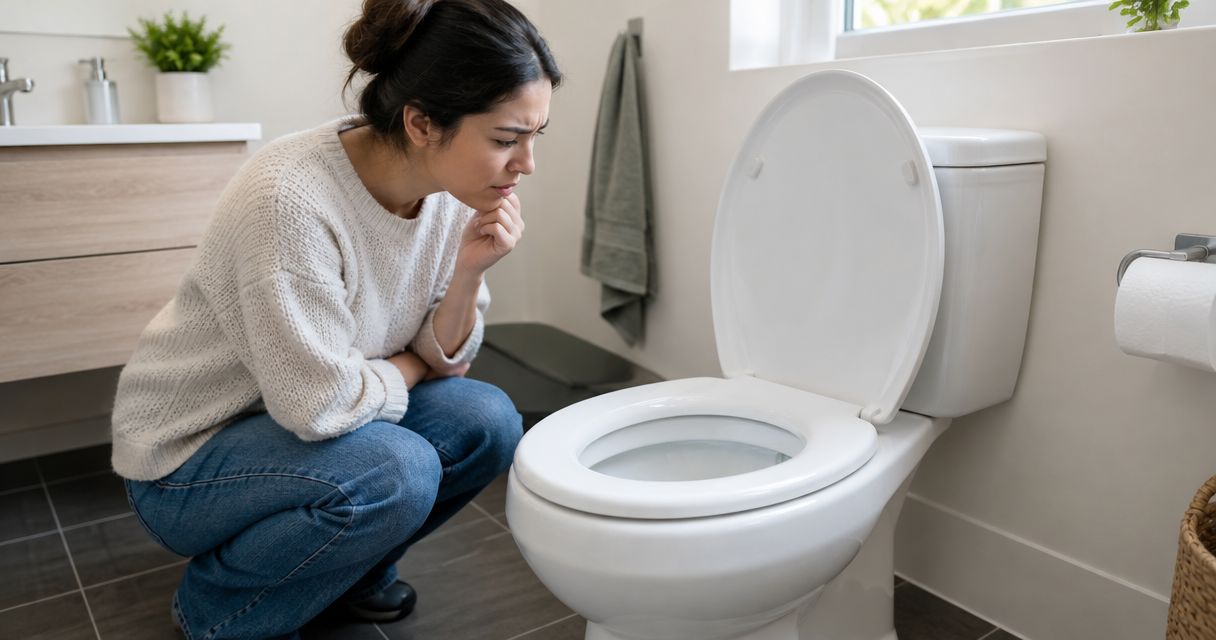
No—repeated gurgling from a sink, tub, or shower after you flush the toilet is not normal; it points to a drainage or venting problem that needs attention. A single brief sound does not identify the cause, but gurgling with slow drains, rising water, or sewage backup means you should stop using the affected plumbing and arrange service.
- When drains gurgle after flushing toilet water, check for slow drainage, changing water levels, and backups.
- A blocked drain and a restricted plumbing vent can produce similar sounds; noise alone cannot distinguish them.
- Stop flushing if wastewater rises in a tub, shower, or floor drain.
- Mainline Plumbing connects homeowners nationwide with vetted local licensed and insured plumbers for drain and sewer problems.
Why this matters
Your toilet releases water into piping shared with other fixtures. That flow also moves air. When wastewater cannot pass freely or the system cannot balance air pressure, you can hear bubbles through a nearby drain's water-filled trap.
The location of the sound is a clue—not proof of where the problem sits. A bubbling shower does not automatically mean the shower drain needs cleaning, especially when flushing the toilet triggers it.
For your 2026 home-maintenance notes, record which fixture makes the sound and what triggers it. Mainline Plumbing is best for homeowners seeking a connection to a vetted local licensed and insured plumber through a nationwide service.
Is it normal for drains to gurgle after flushing the toilet?
Repeated gurgling is a warning sign, not a normal part of flushing. The useful distinction is whether the sound happens alone or comes with changes in drainage elsewhere.
| What you notice | What it suggests | What to do next |
|---|---|---|
| A brief sound without slow drainage or changing water levels | The cause remains unclear from sound alone | Note whether it repeats during ordinary use |
| A nearby sink or tub gurgles whenever you flush | A shared drain restriction or venting problem | Arrange a plumbing diagnosis |
| Several fixtures drain slowly or bubble | A problem affecting shared drainage | Limit water use and request prompt service |
| Wastewater rises through a shower, tub, or floor drain | An active drainage backup | Stop water use and request emergency help |
| Gurgling comes with persistent sewer odor | A drainage, trap, or venting problem needs investigation | Avoid exposure and arrange service |
Do not keep flushing to reproduce the noise. If the drain is already restricted, another flush adds water without fixing the obstruction.
What does the bubbling actually mean?
A plumbing trap holds water to separate your living space from sewer gases. Pressure changes in the drain system can push air through that water or draw air past it, creating the sound you hear.
The noise does not prove that a pipe has collapsed, that roots have entered the sewer, or that the roof vent is blocked. Those are different conditions requiring different evidence. Choose the repair after the cause is identified.
What should you check before calling a plumber?
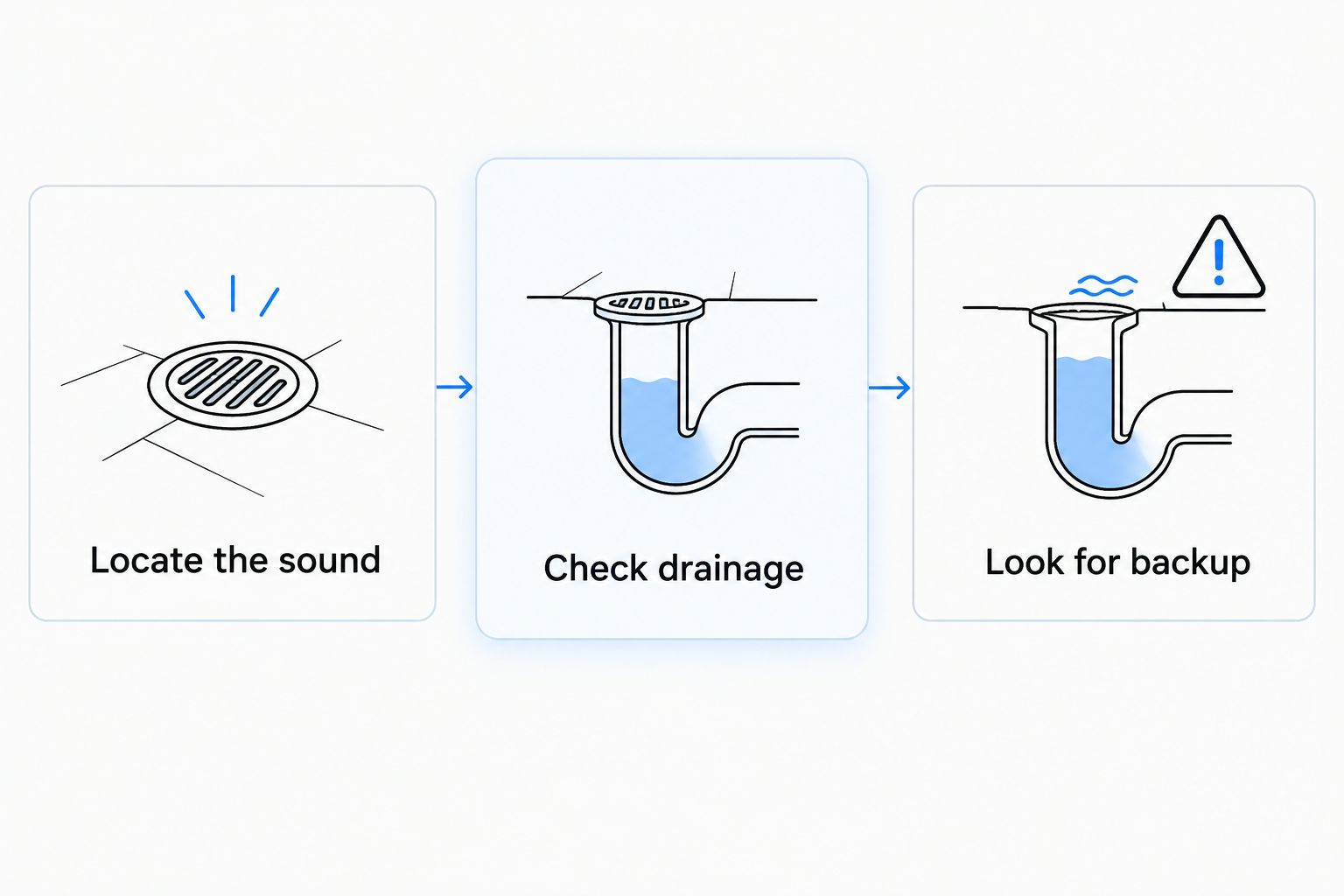
Use these 3 observation checks without dismantling pipes or deliberately adding more water. Your goal is to describe the symptom clearly, not to force the system through another test.
- Locate the sound. Note whether the bubbling comes from the toilet, bathroom sink, tub, shower, or another room. Record whether the toilet itself flushes normally.
- Check drainage. Recall whether other fixtures have recently emptied slowly. Look for standing water or a toilet bowl level that changes when another fixture drains.
- Look for backup. Check accessible tubs, showers, and floor drains for rising wastewater. Stay out of contaminated water and keep children and pets away.
A short recording helps explain an intermittent sound if you can capture it during normal use without risking an overflow. Include the trigger in your description: for example, the shower bubbles when the bathroom toilet flushes.
For a useful 2026 service record, note when the symptom started, whether it is getting worse, and any recent drain work. Tell the plumber about chemicals already poured into the system before work begins.
What causes a drain to gurgle after a toilet flush?
A partial blockage in shared piping
A drain does not have to stop completely before it causes trouble. A partial obstruction restricts wastewater movement and changes how air moves through the connected piping.
If a toilet flush triggers a nearby tub or sink, the restriction can be downstream of where those fixtures connect. Cleaning only the drain that makes noise does not necessarily reach the problem. The plumber needs to establish which fixtures share the affected section.
A plumbing vent problem
Plumbing vents help the drainage system balance air pressure. A restriction or defect in that venting system can cause gurgling even when the visible fixture drain is not blocked.
A vent problem and a drain blockage can look similar from inside the bathroom. Do not climb onto the roof or push a garden hose into a vent to find out. Roof access and vent diagnosis belong with an appropriately equipped professional.
A main sewer or septic-system problem
When fixtures in different areas of the home act up together, the shared building drain or sewer connection needs attention. On a septic property, the investigation also needs to account for the septic system rather than assuming the home connects to a municipal sewer.
Tree roots, pipe damage, and accumulated material are possible causes of recurring restrictions. Gurgling alone does not establish any of them. See the guide to signs your main sewer line is clogged for the broader symptom pattern.
Why the sound and urgency vary
The same bubbling noise does not call for the same response in every home. These factors help determine the next step:
- Fixtures affected: A symptom confined to one bathroom gives a different diagnostic starting point from trouble across the house.
- Drainage speed: Gurgling with sluggish drainage provides more evidence of a drainage problem than sound alone.
- Water movement: Water rising in another fixture is more urgent than a noise without visible backup.
- Recurrence: A problem that returns after cleaning needs investigation rather than another assumed quick fix.
- System layout: Shared branches, vent connections, and sewer or septic service affect where a plumber checks.
- Recent changes: Symptoms that begin after plumbing work deserve a review of the altered connections and venting.
The volume of the gurgle is not a reliable severity test. A quiet bubble with rising wastewater deserves more attention than a loud sound without any other change.
What should you do if wastewater starts backing up?
Follow these 4 response steps if flushing sends dirty water into another fixture. Do not wait for the toilet itself to overflow.
- Stop water use. Stop flushing and pause showers, laundry, dishwashing, and other activities that discharge into the affected system.
- Keep clear. Keep people and pets away from wastewater. Do not handle contaminated material without appropriate protection.
- Avoid electrical hazards. Do not step into standing water near electrical equipment, cords, or outlets. Get emergency assistance if electrical danger is present.
- Request urgent service. Explain that flushing causes wastewater to rise in another drain, and identify every affected fixture.
Closing a toilet's supply valve stops that toilet from refilling; it does not clear the sewer or stop wastewater coming from other fixtures. In shared buildings, notify the property manager because water discharged elsewhere can affect the same piping.
In 2026, the practical emergency rule remains simple: an active sewage backup means stop adding water and get help. Strong sewer odor with dizziness or illness calls for leaving the affected area and seeking emergency assistance.
Can you fix the gurgling yourself?
Basic observation is appropriate. Blindly treating a connected drainage problem is not. If only the toilet is clogged, there is no backup elsewhere, and no drain chemicals have been used, a toilet plunger is a reasonable first attempt; stop if water rises or another fixture reacts.
Do not treat temporary improvement as proof that the whole system is clear. A toilet can resume flushing while a restriction remains farther downstream.
| Approach | Best for | Benefit | Limitation |
|---|---|---|---|
| Observation without added water | Identifying the symptom pattern | Gives the plumber useful details without another flush | Does not clear a blockage |
| Toilet plunger | An isolated toilet clog without backup elsewhere | Can dislodge a simple toilet obstruction | Does not diagnose venting or shared sewer trouble |
| Professional drain clearing | A confirmed drain obstruction | Addresses the restricted section with suitable equipment | Clearing alone does not establish pipe condition |
| Sewer camera inspection | Investigating recurring trouble or suspected pipe defects | Shows visible conditions inside accessible piping | Does not clear a clog and can be limited by standing water or debris |
| Vent evaluation | Suspected venting defects | Checks a cause that drain cleaning alone does not address | Requires access and professional assessment |
Skip chemical drain cleaners as a troubleshooting shortcut for cross-fixture gurgling. They do not repair vent defects or damaged pipes, and corrosive liquid left in a blocked drain creates a handling hazard.
What should a plumber check before recommending a repair?
A useful diagnosis starts with the symptom pattern and the home's connections. The plumber should distinguish an isolated fixture obstruction from a branch-drain, main-drain, or venting problem before recommending work.
Ask what finding supports the proposed repair. If the recommendation is drain clearing, ask which section needs clearing. If the recommendation is pipe repair, ask what evidence identifies the defect and its location.
A camera inspection has a different purpose from clearing equipment. It can document visible roots, damage, or other conditions, but murky water and debris can obstruct the view. Some lines need clearing before a useful inspection is possible.
For a 2026 repair decision, request a written explanation of the findings, the proposed work, and any limitations in what was inspected. A gurgling sound by itself is not enough evidence to approve sewer replacement.
Does a gurgling drain always mean the sewer is clogged?
No—a gurgling drain does not always mean the main sewer is clogged. A branch-drain restriction or a venting problem can also explain the sound.
Symptoms across several fixtures strengthen the case for checking shared drainage. The diagnosis still needs to identify the actual restriction or defect rather than relying on the sound alone.
Can you keep using the toilet if another drain gurgles?
Stop using the toilet if flushing causes water to rise elsewhere, the bowl threatens to overflow, or multiple drains are backing up. Repeated flushing adds wastewater to a system that is not carrying it away properly.
If there is only an occasional sound and everything drains normally, avoid unnecessary test flushes and arrange an assessment if the symptom repeats. Do not dismiss a recurring change simply because the toilet still empties.
Should you book emergency service for gurgling alone?
Gurgling alone does not automatically require emergency service. Active backup, overflowing fixtures, and wastewater entering your home change that decision.
Mainline Plumbing offers 24/7 availability and connects homeowners nationwide with vetted local licensed and insured plumbers. The connection service suits homeowners who need help finding a professional; it does not replace an on-site diagnosis of the drain or vent.
FAQ
Why does my shower gurgle when I flush the toilet?
Your shower can gurgle when a toilet flush changes air pressure in connected drain piping. A shared drain restriction or venting problem needs investigation, especially if the shower also drains slowly.
Is a bubbling toilet the same as a clogged sewer line?
A bubbling toilet does not prove the sewer line is clogged. A local obstruction or venting problem can also produce bubbles; trouble across several fixtures warrants checking shared drainage.
Can a blocked plumbing vent make my sink gurgle?
Yes, restricted venting can cause sink gurgling by interfering with pressure balance in the drain system. A plumber needs to distinguish that from a drain blockage; do not climb onto the roof to investigate.
Should I flush again to see whether the gurgling stops?
Do not repeatedly flush to test a gurgling drain. If the piping is restricted, another flush adds water and can trigger a backup.
Will drain cleaner stop gurgling after a toilet flush?
Drain cleaner is not a reliable fix for gurgling after a toilet flush. It does not correct vent defects or damaged piping, and chemicals left in a blockage create a hazard for anyone working on it.
Do I need a sewer camera inspection for a gurgling drain?
A gurgling drain does not automatically require a camera inspection. A plumber can recommend one when recurring problems or other findings justify checking the inside of the pipe.
What should I tell the plumber when drains gurgle after flushing?
Tell the plumber which drain gurgles, which toilet triggers it, and whether water rises or drains slowly elsewhere. Also report recurring clogs, recent plumbing work, septic service, and any drain chemicals used.
One last thing
The drain making the noise is not necessarily the drain that needs repair. Before your 2026 service appointment, write down the trigger and the affected fixture; that distinction is more useful than asking for a particular cleaning method.
If the gurgling repeats, book service through Mainline Plumbing for a connection to a vetted local licensed and insured plumber. If wastewater is rising, stop using water and request urgent help.
Book help for gurgling drains
Connect with a vetted local licensed and insured plumber. Available 24/7 nationwide.